Loyalty Events: Ideas and Execution
A loyalty event is a members-only evening that gives your best guests something they cannot buy on a normal visit: first taste of a new menu, a seat at the chef's table, or a night with the people who make the restaurant what it is. Done well, one evening can do more for retention than a year of stamp cards, because guests do not stay loyal to a discount — they stay loyal to a place where they belong.
Key takeaways
- Loyalty events work because they create belonging, not just savings — a guest who has laughed with your chef will not switch restaurants for a 10% voucher.
- The best formats for small restaurants are tastings, chef's-table nights, seasonal launches and member appreciation evenings — not galas.
- A first event for 20 to 40 guests typically costs €300 to €1,500, and a modest ticket or set-menu price usually covers the food cost.
- Invite twice as many people as you can seat, give at least three weeks' notice, and make the invitation personal — a mass email is not an invitation.
- Judge the night on three numbers: attendance rate, new sign-ups or referrals, and visits in the 60 days after — not on how full the room felt.
- Four to six events a year is the sweet spot: often enough to keep the programme alive, rare enough to stay special.
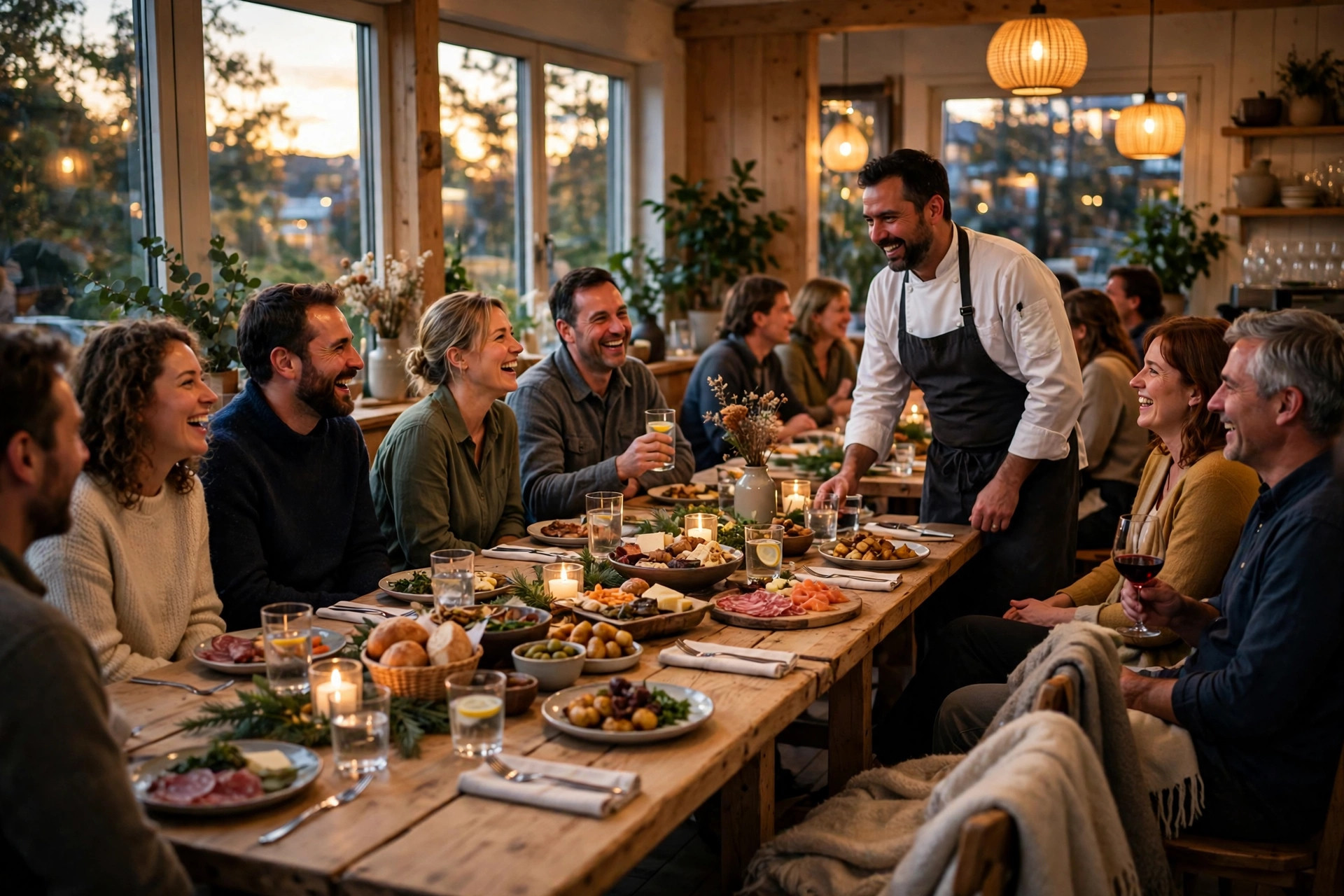
Every restaurant has regulars who would notice if the doors closed. The question is whether those regulars know that you notice them. A points balance on a receipt does not tell them. A stamp card does not tell them. An evening built for them, with their name on the invitation and a dish that exists only that night, tells them in a way no discount ever will. That is the whole case for loyalty events, and it is why the biggest chains in the world run members-only weeks and fan festivals even though they already have sophisticated points programmes: the points keep guests coming back, but the events make guests care.
This guide is written for independent restaurants, cafés and bars in the Nordics and beyond — places with 20 to 120 seats, a small team, and no events department. It covers the twelve event formats that actually work at that scale, what each one costs, how to plan one in eight weeks without derailing normal service, and how to tell afterwards whether the night earned its money. If you do not yet have a loyalty programme to attach events to, start with our comparison of restaurant loyalty programmes compared and our guide to launching a digital stamp card — events work best as the reward layer on top of a simple programme, not as a replacement for one.
Why events beat discounts
A discount changes what a guest pays. An event changes how a guest feels about your restaurant, and feelings are what keep people coming back when a competitor opens next door with lower prices. Three mechanisms explain why. First, exclusivity: an invitation that not everyone receives makes the recipient feel chosen, and chosen people behave like insiders — they bring friends, they defend you online, they forgive an off night. Second, memory: psychologists have long known that people remember experiences far longer than transactions, and a guest who remembers laughing over a tasting menu in your dining room carries that memory into every future decision about where to eat. Third, community: at a good event, guests meet each other, not just you. When regulars start recognising each other, your restaurant stops being a vendor and becomes their place — and people do not abandon their place lightly.
There is also a hard commercial reason. Discounts train guests to wait for the next discount, and every discounted visit costs you margin on a guest who might have paid full price. Events, by contrast, usually generate revenue: a ticket price, a set menu, drinks sold on the night, and the return visits that follow. A members' tasting that charges €35 a head for a five-course set menu is not a cost centre; it is a profitable service that also happens to build loyalty. The same cannot be said of a 20% voucher emailed to everyone on your list.
What the big chains get right — and what to steal
Large chains run members-only weeks where loyalty members get a free item every day for a week, and they report that their loyalty mix — the share of sales from members — spikes every time and stays higher afterwards. The lesson for a small restaurant is not the scale but the structure: a defined window, a clear member benefit, and a reason to visit more than once. Your version might be a members' week where regulars get a free dessert with every main, or a three-night tasting series where each night features a different course. Borrow the rhythm, not the budget.
Guests do not stay loyal to a discount. They stay loyal to a place where they belong — and belonging is built in a room, not on a receipt.
Twelve event ideas that work
Not every format suits every restaurant. A fine-dining room and a neighbourhood pizzeria need different evenings, and the list below is organised by what each format does best. Pick one for your first event; do not try to combine three formats into one night.
1. The new-menu tasting
Invite 20 to 40 regulars to taste the next season's menu before anyone else, at a members-only price or free with a set menu. Guests vote on dishes, and the winning dishes go on the menu with the tasters' names attached in the description — "as chosen by our members" is a line that costs nothing and delights everyone. This is the single best first event for most restaurants because it is easy to run, it genuinely improves your menu, and it gives guests a story to tell.
2. The chef's table
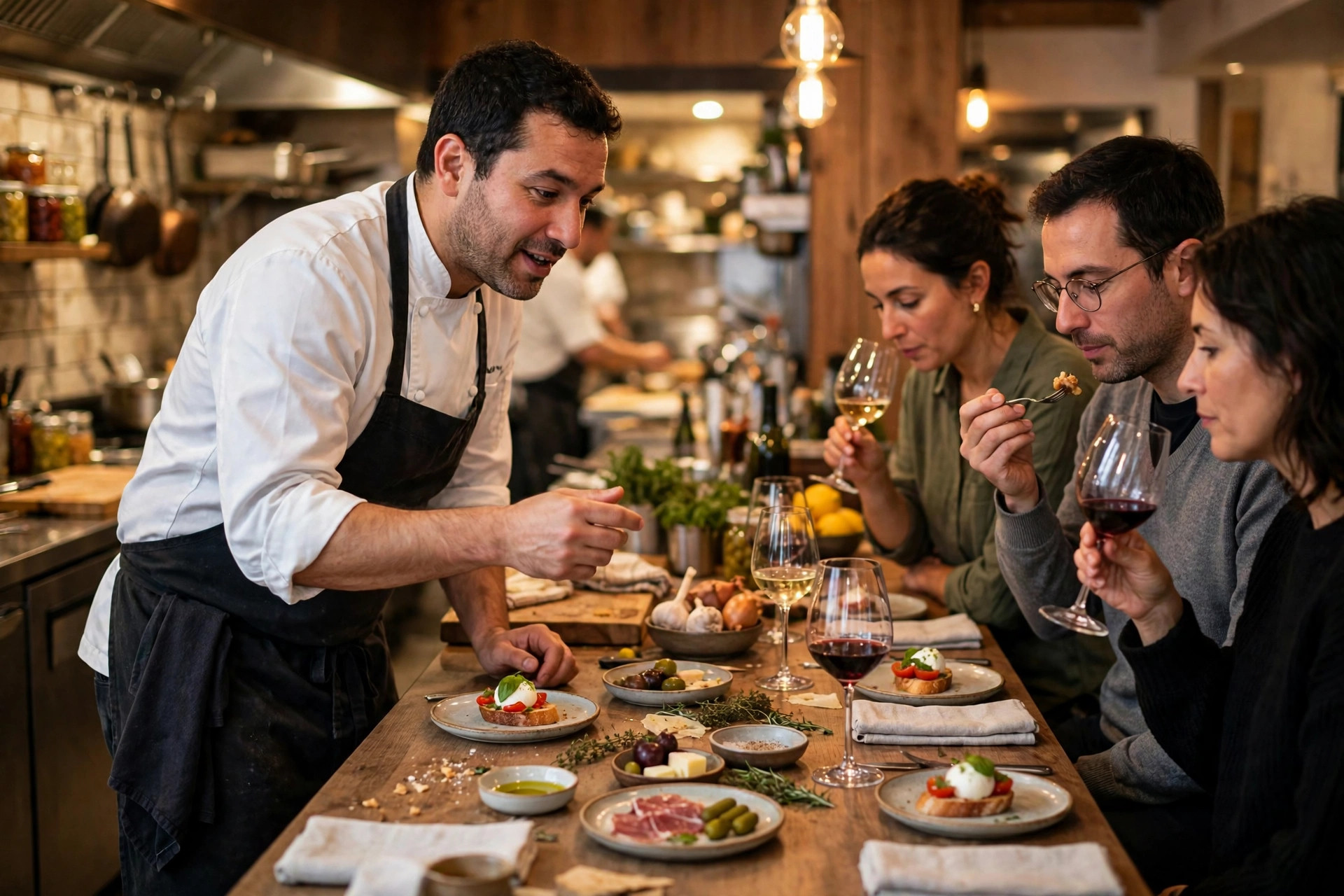
Eight to twelve seats at or near the kitchen pass, one long menu, the chef explaining each course. Charge a premium — this is a product, not a freebie — and reserve it for your top tier or your longest-standing regulars. Scarcity is the point: a chef's table that anyone can book is just a table.
3. The seasonal launch party
Mark the change of season the way Nordic restaurants already mark it in their kitchens: a crayfish evening in August, a mushroom and game night in autumn, a Lucia or glögi evening in December, a spring asparagus dinner. Seasonal launches work because the calendar does your marketing for you — guests already expect something to happen, and your event gives them somewhere to go for it.
4. The member appreciation evening
Once a year, thank everyone. A relaxed evening with canapés, a free drink on arrival and live music, no agenda and no sales pitch. The only rule: no selling on the night. The moment an appreciation evening turns into a pitch, guests feel tricked, and the goodwill you built evaporates. Keep it generous, keep it short, and let the room do the work.
5. The behind-the-scenes tour and tasting
Open the kitchen, the cellar or the bakery at a quiet hour and walk guests through how a dish is made, a wine is chosen or bread is baked. Food lovers love process, and a guest who has watched your baker shape sourdough at dawn will never again compare your bread to a supermarket loaf. This format costs almost nothing beyond staff time and samples.
6. The cooking class or workshop
Teach guests to make your signature pasta, roll sushi, mix a house cocktail or bake your bread. Charge €40 to €80 a head, cap the group at 12 to 16, and send everyone home with a recipe card and a reason to return — the dish tastes better at your place, and now they know why. Classes also produce excellent photos and social content, because guests post their own creations.
7. The wine, beer or cocktail pairing night
Partner with a local brewery, winery or importer: they supply the drinks and often the expertise, you supply the food and the room. Pairing nights attract a different crowd from your usual regulars — drink enthusiasts who may become regulars — and the supplier partnership keeps your costs down. Agree in writing who pays for what before you announce anything.
8. The community table night
One long table, a fixed menu, strangers seated together, a host who introduces people. Community tables suit neighbourhood restaurants and cafés whose regulars already greet each other, and they are the cheapest format to run because the format itself is the entertainment. Some restaurants run these monthly and find they develop their own following independent of any programme.
9. The family or kids' event
A Saturday pizza-making morning, a pancake workshop, a children's tasting menu: events for families solve a real problem for parents — what to do with the kids — and they create the next generation of regulars. Keep it short (90 minutes), keep it messy-friendly, and price it per family rather than per child.
10. The anniversary or birthday celebration
Your restaurant's birthday is a legitimate reason for a party, and regulars love being part of a milestone. Invite the guests who were there in year one, show old photos, bring back a retired dish for one night only. Anniversary events double as content: a "ten years of" story is one of the few marketing messages that genuinely interests people.
11. The charity or local-cause dinner
A set menu where a share of the ticket goes to a local food bank, youth club or neighbourhood project. Cause dinners attract guests who would not come for a discount, they give local press a reason to cover you, and they let regulars feel good about a night out. Choose a cause your guests actually care about, and publish the amount raised afterwards.
12. The members-only preview hour
The lightest-touch format of all: members get the restaurant to themselves for the first hour of a Friday service, with a welcome drink and first pick of the evening's specials. It costs you one drink per guest and an hour of exclusivity, and it makes members feel like insiders every single week. If you are nervous about running a full event, start here.
What loyalty events actually cost
Costs vary more by format than by city, but the ranges below are realistic for an independent restaurant in the Nordics in 2026, assuming you use your own room and your own staff. Treat them as planning estimates, not quotes: your food cost percentage and your local wage levels will move them up or down. The key insight is that the food is rarely the biggest cost — staff time and lost normal-service revenue are, which is why quiet nights and closed-evening events need different maths.
| Format | Guests | Typical cost (estimate) | Revenue lever |
|---|---|---|---|
| New-menu tasting | 20–40 | €300–€1,000 | Set menu €25–€45 a head |
| Chef's table | 8–12 | €200–€600 | Premium ticket €75–€150 a head |
| Seasonal launch party | 40–80 | €800–€2,500 | Ticket or set menu, drinks sales |
| Member appreciation evening | 40–100 | €600–€2,000 | None on the night; return visits |
| Behind-the-scenes tasting | 10–20 | €100–€400 | Small ticket €10–€25 |
| Cooking class / workshop | 12–16 | €200–€500 | Ticket €40–€80 a head |
| Pairing night (with supplier) | 20–40 | €300–€900 | Ticket €45–€75 a head |
| Community table night | 16–30 | €150–€500 | Fixed menu €30–€50 a head |
Three budgeting rules keep events profitable. First, price the ticket to cover food cost plus a contribution to staff time — a ticket that covers only ingredients leaves you paying your team to work for free. Second, decide in advance whether the event replaces normal service or sits alongside it: a closed-evening event must earn at least what a normal evening earns, or it needs a loyalty justification you can state in one sentence. Third, cap the freebies: one welcome drink, one tasting portion, one gift — generosity that is bounded feels curated, while open-ended freebies feel chaotic and cost far more than planned.
The break-even check
Before announcing any event, run this five-line check: expected guests × ticket price, minus food cost, minus extra staff cost, minus drinks and materials. If the result is negative, either raise the ticket price, cut the guest list, or accept the loss deliberately as a loyalty investment — and write down which one you chose. An event that loses money by accident is a mistake; an event that loses money on purpose, with a target for return visits, is a strategy.
Picking the right event for your restaurant
Match the format to your restaurant type, not to what looked good on someone else's social media. A café with 30 seats and a strong morning crowd will get more from a Saturday baking workshop than from a gala dinner, because its guests are already there in the morning and already love the product. A fine-dining restaurant with a tasting menu will get more from a chef's table than from a community night, because scarcity and craft are what its guests value. A family restaurant will get more from a kids' pizza morning than from a wine pairing, because its guests decide where to eat based on what the children enjoy.
Also match the format to your goal. If your problem is that regulars visit rarely, run a seasonal series that gives them four dates a year to look forward to. If your problem is that nobody knows you exist, run a cause dinner or a supplier pairing night that gives local press and the supplier's audience a reason to notice you. If your problem is that guests love you but never bring anyone, run a tasting where every member may bring one guest free — which is, in effect, a referral event wearing an invitation's clothes. And if your problem is simply that your loyalty programme feels invisible, run a member appreciation evening and make the programme the guest of honour: a short welcome speech, a visible sign-up desk, and a reason to join on the night.
The one-question test
Before committing to a format, ask: "What will guests tell their friends the next day?" If the answer is "that the food was nice," the event is not distinctive enough — guests say that about any good dinner. If the answer is "that they tasted a dish nobody else has tried, met the chef, and sat next to a couple they now have dinner plans with," you have an event worth running. Distinctiveness is the product; dinner is just the setting.
The eight-week planning timeline
Eight weeks is enough for a first event without rushing, and short enough that enthusiasm survives. Shorten it to four weeks only for the lightest formats, such as a preview hour or a community table, where the room and the menu already exist.
Weeks 8–7: Decide and cost
Choose the format, the date (a normally quiet night — Sunday to Wednesday for most restaurants), the guest count, and the ticket model. Run the break-even check above, book the staff, and decide what the one distinctive thing is. Write it down in one sentence; that sentence becomes the invitation.
Weeks 6–5: Build the invitation list
Pull your best guests from your loyalty list, your booking system and your own memory — the people whose names your staff know. Aim for twice your seat count. Prepare the invitation, the booking page and the reminder sequence. If your website cannot take bookings for a special event, a simple form on your site works: a PowerfulWebsite site (from €59/mo, with the build itself free) can host an event page and a sign-up form without a separate ticketing tool, which is one less system to manage on the night.
Weeks 4–3: Invite and promote
Send personal invitations first — email or message to named guests, not a mass blast — then open remaining seats to the wider list. Post about the event on social media, but do not rely on social media to fill the room: your list is your audience, and social posts are the echo. Confirm the menu, the drinks, the music and the photography plan.
Weeks 2–1: Confirm and prepare
Send a reminder one week before and a final confirmation two days before, including the time, the dress code if any, and what is included in the ticket. Brief every staff member on the running order: who welcomes guests, who explains the food, who handles sign-ups for the programme, and who takes photos. Print the guest list — phones die, paper does not.
The week after: Follow up
Send a thank-you message within 48 hours with photos from the night, and include one clear next step: the next event date, a booking link, or an invitation to bring a friend next time. Thank-you messages are where most of the return-visit value is created, and they are also the step most restaurants skip. Do not skip it.
Invitations that fill the room
The invitation is the event, in miniature. A good one answers four questions in the first three lines: what is happening, when, why this guest in particular, and what they get that nobody else gets. "You are invited to our autumn menu tasting on Thursday 12 November at 18:30, because you have been one of our regulars since we opened, and you will taste six dishes before anyone else" fills a room. "Join us for a special evening!" fills nothing, because it could be any restaurant, any evening, for anyone.
Personal beats polished. An email that starts with the guest's name and one true detail — "you always order the mushroom risotto" — outperforms a designed flyer sent to a thousand people, because guests can tell the difference between being invited and being marketed to. That is also why the invitation list matters more than the invitation design: fifty personal invitations to real regulars will beat five hundred generic ones every time. For the mechanics of writing emails guests actually open, see our guide to email open rates: 9 ways to lift them.
Handling no-shows
Free events typically see 20 to 40 percent no-shows; ticketed events see under 10 percent. If your event is free, over-invite by a third and send a confirmation message two days before asking guests to confirm or release their seat. If your event is ticketed, state clearly whether tickets are refundable or transferable — transferable is friendlier and costs you nothing, since the seat is still filled. Either way, never seat a half-empty room in silence: have a small reserve list of staff friends, suppliers or late regulars you can call on the day.
A mass email is not an invitation. Fifty personal invitations to real regulars will beat five hundred generic ones every time.
Running the night itself
On the night, three roles matter more than any decoration: a host, a storyteller and a closer. The host greets every guest by name at the door, because being recognised is half the loyalty effect. The storyteller — usually the chef or the owner — explains the food, the wine or the occasion in short, human sentences, not a lecture; two minutes per course is plenty. The closer is the person who, near the end of the evening, thanks guests, mentions the next event or the programme, and makes joining effortless — a sign-up sheet, a QR code on the table, a staff member with a tablet. Without a closer, the goodwill of the evening evaporates at the coat rack.
Flow matters more than luxury. Guests should never stand around wondering what happens next, so publish a simple running order even for a casual evening: welcome drinks at 18:30, first course at 19:00, chef's welcome at 19:30, and so on. Keep speeches under five minutes total — guests came for dinner and company, not for a presentation. And protect normal service: if the event shares the room with regular diners, seat event guests together and brief staff on which tables get which menu, because nothing kills an exclusive evening faster than the next table ordering the same dish à la carte.
Photos and consent
Take photos — they are the follow-up content and the social proof for the next event — but ask before photographing faces closely, and tell guests at the start that photos will be taken and where they will appear. In the Nordics, guests generally accept event photography when it is announced, and resent it when it is sprung on them. A simple line from the host covers it: "We will take a few photos tonight for our newsletter; tell us if you would rather not be in them."
Measuring whether it paid off
Judge an event on numbers, not on atmosphere. A room that felt wonderful but produced no return visits was a party, not a loyalty investment — enjoyable, but not repeatable on business grounds. Track four numbers for every event, and compare them to the same period before the event.
The four numbers
First, attendance rate: confirmed guests divided by invited guests, and actual arrivals divided by confirmations. This tells you whether your invitation and your pricing worked. Second, programme growth: new loyalty sign-ups on the night and in the following week, because an event that does not grow the programme has not done its main job. Third, return visits: how many attendees visited again within 60 days, and how that compares with your normal repeat rate. Fourth, direct revenue: ticket and drinks revenue on the night, minus costs, plus the revenue from those return visits. If the fourth number is positive on the night itself, excellent; if it is negative but the third number is strong, the event may still be a good investment — but only if you can show the maths.
Also collect one qualitative measure: ask three guests, the next day, what they would tell a friend about the night. If the answers are specific — a dish, a moment, a person — the event worked. If the answers are generic — "it was nice" — the format needs a sharper distinctive element next time. Keep a one-page event note after each event: format, guest count, costs, the four numbers, and what to change. After three events you will have a playbook that no consultant could sell you, because it is based on your guests, not on averages.
Mistakes to avoid
The most common mistake is inviting everyone. An event open to all is not a loyalty event; it is a promotion, and it teaches your best guests that their loyalty buys them nothing special. The second mistake is over-programming: a schedule packed with speeches, games, auctions and presentations leaves guests no time to do the thing events are actually for, which is talking to each other. The third is under-staffing the follow-up: the thank-you message, the photos, the next invitation — all of it planned before the event, not improvised the week after when everyone is tired.
Other mistakes are smaller but still costly. Do not run your first event on a Friday or Saturday, when you sacrifice your best revenue night for an experiment. Do not let a supplier or sponsor turn the evening into their sales pitch. Do not forget dietary requirements on the invitation — a guest with an allergy who was not asked will remember the oversight longer than the evening. Do not announce a recurring series before the first event has happened; promise the next date only after the first night proves the format. And do not judge the first event too harshly: the first one teaches you the room, the timing and the list, and the second one is usually much better. Budget for two events before deciding whether the format works.
An event that loses money by accident is a mistake. An event that loses money on purpose, with a target for return visits, is a strategy.
Frequently asked questions
How much does a restaurant loyalty event cost?
A small members-only tasting for 20 to 30 guests typically costs €300 to €1,500 in food, drink and staff time, depending on whether you charge a ticket price. A larger appreciation evening for 60 to 100 guests can run €1,500 to €5,000. Charging a modest ticket price or asking guests to pre-pay for a set menu usually covers most of the food cost.
How many guests should I invite to a loyalty event?
Invite roughly twice as many people as you can seat, because a 40 to 60 percent acceptance rate is normal for a free invitation. For a first event, aim for 20 to 40 guests: large enough to feel like an occasion, small enough that you and your staff can talk to everyone in the room.
Do loyalty events work for small restaurants?
Yes, and often better than for large ones, because the appeal is intimacy: guests get the chef's attention, a dish nobody else has tried, and a room full of people who already like the place. A 30-seat restaurant running a monthly tasting for 20 regulars can build stronger loyalty than a chain running a gala for 500.
How often should a restaurant run loyalty events?
Four to six times a year is the sweet spot for most independent restaurants: roughly once a season, plus one flagship event such as an anniversary or a new-menu launch. More often than monthly and the events stop feeling special; less often than twice a year and guests forget the programme exists.
Should loyalty events be free for members?
Not necessarily. Free events feel generous but attract no-shows; a small ticket price of €10 to €25, or a set-menu price, commits guests and usually covers your food cost. The best model for most restaurants is a free invitation with a paid set menu, or a members-only price that is clearly below the normal menu price.
What if nobody comes to my loyalty event?
If fewer than a third of invitees respond, the problem is usually the invitation, not the idea: it went to the wrong people, arrived too late, or never explained what makes the night worth leaving home for. Send personal invitations to your 50 best guests first, give at least three weeks' notice, and always state the one thing guests get that they cannot get on a normal visit.
Want a website that fills your events?
PowerfulWebsite builds your restaurant's website free — you only pay from €59/mo. It includes everything: domain, hosting, maintenance and updates, plus an event page and sign-up form your guests can actually use.
See the packages