Community Management for Restaurants: Comments and DMs
Restaurant community management means treating every comment, DM, tag and mention as part of the guest journey — and answering them fast, in the right place, in your restaurant's own voice. It matters because the comment section is public: a question left unanswered for three days tells every future guest how you treat people, and a DM that waits until midnight is a table that stays empty. The system in this guide takes about fifteen minutes a day.
Key takeaways
- Comments are public and DMs are private — reply to questions in public, move complaints and bookings to DM.
- Target under one hour for DMs and booking questions during opening hours, within 24 hours for everything else.
- Triage every message into three buckets: book, answer, or escalate — and clear the booking bucket first.
- Use the AAAA method for complaints: acknowledge, take accountability, act, and thank the guest.
- Automate the first 30 seconds (acknowledgement, menu links), never the resolution.
- One named person owns the inbox, with one trained backup; the whole routine takes about 15 minutes a day.

Somewhere between the lunch service and the dinner prep, your restaurant's Instagram gets a DM: "Do you have a table for six tonight? One of us is coeliac." At the same time, someone comments under yesterday's dish photo: "Is this on the menu this weekend?" And on Facebook, a guest from last Saturday writes that the service was slow. None of these people phoned. None of them emailed. They messaged, because that is how guests talk to restaurants now — and the restaurants that answer well fill more tables than the ones that don't.
This guide is a complete system for restaurant community management in the Nordics: how fast to reply, how to sort the flood, what to say in public and in private, how to handle complaints without making them worse, which tools are worth paying for, and how to fit the whole job into about fifteen minutes a day. It is written for small teams — an owner, a manager, maybe one person who helps — not for chains with a social media department.
Why the comment section is a sales channel
Most restaurants treat comments and DMs as admin — a chore to clear when there is a spare moment. That framing costs money. The comment section is the last thing a potential guest reads before deciding to book, and it is the first place they look for evidence of how a restaurant treats people. A thread full of quick, warm, specific replies reads as good service. A thread full of unanswered questions reads as a restaurant that does not care — and guests draw that conclusion about the dining room, not just the Instagram account.
The numbers back this up. Hospitality brands receive far more inbound messages than the average business — Sprout Social's 2025 benchmarks put travel and hospitality at 127 inbound engagements a day, 52% above the cross-industry average — while answering only a small fraction of them. And their own research finds that nearly three in four social users say they will buy from a competitor if a brand does not respond on social media. The gap between the messages arriving and the messages answered is, for a small restaurant, the single cheapest source of new bookings available: the people are already talking to you.
There is also a timing problem most restaurants miss. Guests are most active — and most likely to be planning a visit — outside office hours: Friday evenings, Saturday mornings, Sunday afternoons. Those are precisely the hours when nobody is watching the inbox. A booking question asked at 11:00 on a Saturday and answered at 09:00 on Monday is a lost booking, because the guest ate somewhere else on Saturday night. The fix is a triage system, a few saved replies, and a routine that covers the peak windows.
Finally, community management compounds. Every answered question is visible to hundreds of silent readers who had the same question and now don't need to ask. Every warm reply to a happy guest is a public review that cost nothing. Every complaint handled gracefully proves your restaurant can be trusted when things go wrong — which, for many guests, is more reassuring than a page full of five-star reviews.
When a prospective guest sees an unanswered question from three days ago, they don't just observe that one interaction. They draw a conclusion about how you treat your guests.
How fast should you reply?
Speed is the one thing guests judge instantly and remember longest. But "fast" means different things for different messages, and a small restaurant cannot — and should not — try to answer everything in five minutes. What it can do is set clear targets, publish them internally, and hit them consistently. Here is a realistic set of targets for a single-location restaurant:
- DMs and booking questions, during opening hours: under 1 hour. These are buying signals. A guest asking about tonight is deciding now.
- Comments with a question: same day, ideally within a few hours. The question is public, so the answer advertises your service to everyone reading.
- Positive comments and tags: within 24 hours. A thank-you that arrives the next morning still lands; one that never arrives tells the guest their praise went nowhere.
- Complaints, in public or by DM: acknowledge within 1–2 hours during opening hours, resolve within 24 hours. The acknowledgement is what stops the situation escalating; the resolution can take a little longer.
- Everything else (mentions, shares, story replies): within 24–48 hours, or a quick like and a short reply when you next open the app.
Outside opening hours, the honest answer is that nobody is watching — and that is fine, as long as guests know it. Set an auto-reply on Instagram and Facebook that says when you will answer: "Thanks for your message! We reply during opening hours, Tue–Sun 11:00–22:00, usually within an hour. For tonight's table, book here: [link]." That one message does three jobs: it manages expectations, it gives the guest a booking link so they don't have to wait, and it proves the account is alive. Without it, a guest messaging at 23:00 assumes the restaurant is ignoring them, and by morning they have booked elsewhere.
Measure the number that matters: median first-response time, per channel, per week. Instagram and Facebook both show it in their business tools. If your median is over two hours for DMs during service, the problem is not effort — it is that nobody owns the inbox at the right hours. The fix is a rota, not a pep talk.
The 15-minute rule
Check the inbox three times a day — mid-morning, mid-afternoon, and one hour before dinner service — for about five minutes each. That covers the peak planning windows (lunch decisions, evening plans, weekend bookings) without chaining anyone to a phone. Anything urgent outside those windows gets the auto-reply and a human answer at the next check.
The triage system: sorting comments and DMs in minutes
The reason most inboxes feel overwhelming is not volume — a typical small restaurant gets a dozen or two messages a day — it is that every message looks equally urgent. Triage fixes that. Open the inbox, sort each item into one of three buckets, and work the buckets in order: book, answer, escalate.
Bucket 1: Book — answer first
Anything that could become a reservation: "table for four on Friday?", "do you cater private events?", "is the terrace open tonight?", "can I book the chef's table?" These get answered before anything else, because they have a deadline — tonight, Friday, the event date — and because a delayed answer is a lost sale. The reply should confirm or move the guest forward in one message: the date, the time, the party size, and either a confirmation or the booking link. Never reply to a booking question with "check our website" and nothing else; that is the digital equivalent of hanging up.
Bucket 2: Answer — routine questions
Opening hours, the menu, allergens, location, parking, gift cards, "is this dish still available?" These are the bulk of the inbox, and they should take seconds each, because the answers are written in advance as saved replies. Keep a short list — ten to fifteen replies — covering the questions you get every week, in each language you serve guests in. In the Nordics that usually means the local language plus English, and in Helsinki, Stockholm or Oslo, a short answer in the guest's language earns disproportionate goodwill. Update the saved replies whenever the menu changes.
Bucket 3: Escalate — complaints, allergies, money
Complaints, food safety concerns, allergy questions, refunds, and anything involving a staff member's conduct go to the owner or manager — not to whoever happens to be holding the phone. The first reply is still fast: acknowledge, apologise briefly, and say who will follow up and when. Then move it off the public channel and handle it properly, with the facts checked first. Speed of acknowledgement matters here; speed of resolution matters more, and guessing is worse than waiting an hour to get it right.
One more habit makes triage work: clear the inbox to zero at the end of each check. Archive what is answered and star what is waiting on the guest. An inbox with 47 unread messages is a source of dread; an inbox at zero is a five-minute job.
Replying to comments: what to say, in public
Comments are a performance. Not in the dishonest sense — in the literal sense that every reply is read by far more people than the person it is addressed to. A guest deciding whether to book reads your replies to other guests and imagines how you would treat them. That changes what a good reply looks like: it should be warm, specific, and useful to the silent reader as well as the commenter.
The anatomy of a good public reply
Four elements, in order. First, the person's name if you know it — it costs nothing and changes the tone completely. Second, something specific to what they said, not a generic "Thank you for your comment!" A reply that could be pasted under any post is worse than no reply, because it proves nobody read the comment. Third, the answer or the next step, in one sentence. Fourth, an invitation to continue: a question, a recommendation, or the booking link when it fits. "Thanks, Anna — yes, the mushroom risotto is on the menu all through November. If you like it, the chanterelle starter is the one to try with it. Hope to see you soon!" That is a reply that also sells the starter to everyone reading.
Positive comments: don't waste them
A guest who takes the time to say the food was wonderful has given you free marketing. Thank them by name, pick one detail from their comment to reflect back, and ask a gentle follow-up: "So glad you enjoyed the tasting menu — was the dessert the favourite, or the main?" Questions keep the conversation alive, and a living comment thread signals to the algorithm — and to future guests — that this is a restaurant people talk to. If a guest posts a photo of your food, ask permission to repost it. User-generated content is the most trusted advertising a restaurant has, and asking permission is also the legally safe way to use it.
Questions in comments: answer where everyone can see
When someone asks a factual question in a comment — hours, allergens, the menu, whether you take walk-ins — answer it in the comment, not in a DM. The next fifty people with the same question will read your answer and never need to ask. If the question needs personal details (a specific booking, a dietary requirement with medical implications), answer the general part publicly and move the specifics to DM: "Yes, we can absolutely cater for coeliac guests — I'll DM you the details so we can get it exactly right." That single sentence reassures every coeliac reader while protecting the guest's privacy.
For ready-made wording across the most common situations, our 10 review reply templates adapt well to comments, and our guide to replying to negative reviews covers the harder cases in more depth.
Replying to DMs: the private conversation that books tables
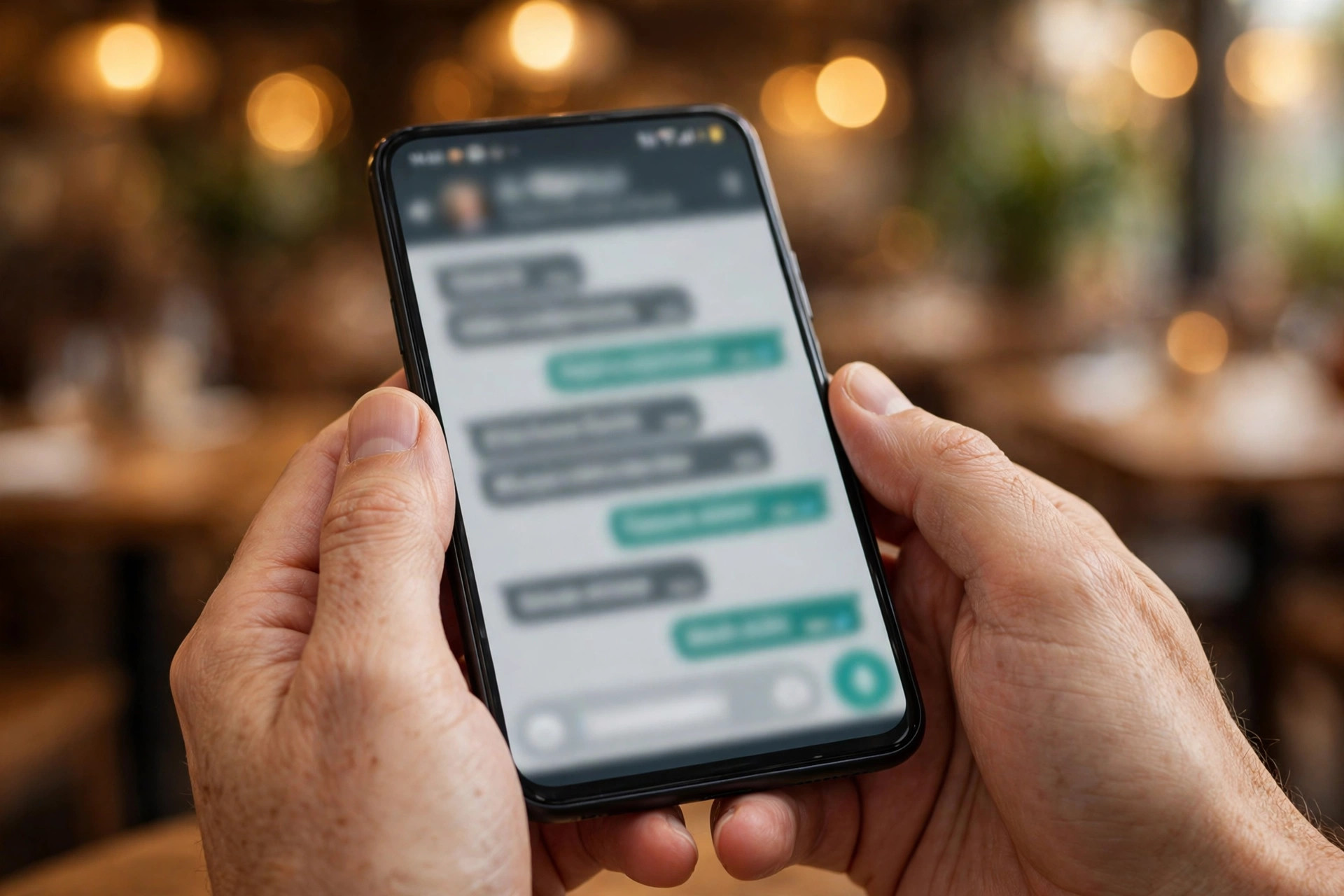
DMs are where the money is. Comments are public and performative; DMs are where guests ask the questions they will not ask in public — the allergy, the proposal, the big group, the complaint, the "can you do something special for my mother's 70th?" Treat DMs as the phone line: they deserve the same care, the same speed, and the same standard of service as a call to the restaurant.
Match the guest's tone, then lead
A DM is more personal than a comment, so the reply can be warmer and less formal than a public post. Match the guest's energy: a short, casual message gets a short, friendly reply; a long, careful message about an allergy gets a careful, thorough answer. But always lead the conversation toward a conclusion. DMs drift — three messages in, nobody has confirmed anything — so the restaurant's job is to gently close: "So that's Friday at 19:00 for six, one coeliac — shall I confirm that for you?" A DM that ends with a confirmed table is a sale; a DM that ends with "let us know!" is a maybe.
Booking requests: confirm in the DM, send to the link
Guests will keep booking by DM whether your system supports it or not, so make it work. Keep the booking link in your saved replies and send it with the confirmation details already filled in by the conversation — date, time, party size, any dietary notes. If your booking system cannot take the reservation from a link, confirm it directly in the DM and add it to the book yourself. Either way, never make the guest repeat the whole conversation on another channel. And remember that DMs arrive in languages you may not expect: a tourist writing in English, a local writing in Swedish, a guest writing in Finnish at 22:40. A short, correct reply in the guest's language is worth more than a perfect reply in yours. Keep the booking link short and the message shorter than the guest's.
What never to do in a DM
Never discuss refunds or compensation in detail over DM — move it to email or phone, where there is a proper record. Never ask a guest for payment details in a DM, and never send a payment link by DM unless it is your official, published booking system; scammers impersonate restaurants exactly this way. Never share another guest's information. And never leave a DM on "seen" with no reply: in messaging, silence reads as a deliberate answer. Even "Thanks — I'll check with the kitchen and come back to you by 15:00" is a complete reply.
Negative comments and complaints: the AAAA method
Every restaurant gets complaints online eventually, and the restaurants that handle them well often end up with more loyal guests than the ones that never get complained about. The reason is simple: future guests trust a restaurant that responds to criticism gracefully more than one with a suspiciously perfect record. The method is AAAA — acknowledge, accountability, action, appreciation — and it works for almost every situation.
Step by step
Acknowledge: recognise the guest's experience without deflecting. "I'm sorry your meal arrived cold — that must have been disappointing, especially on a birthday." The guest needs to feel heard before they can hear anything else. Accountability: take responsibility clearly, without excuses. "This falls below the standard we hold ourselves to" is enough; a paragraph about how busy the kitchen was is not. Action: say specifically what you are doing or have done. "I've shared this with the kitchen team, and we've changed how we hold plates during the rush." Vague promises ("we'll look into it") convince nobody; a concrete step does. Appreciation: thank the guest for telling you. "Thank you for giving us the chance to fix this" turns a critic into a collaborator.
Then move the conversation out of public view: "Please send us a DM or call us, and the manager will personally take care of it." The public reply shows everyone that you respond; the private conversation is where the details, the apology and any goodwill gesture belong. Never argue in public, never discuss compensation publicly, and never reply when angry — draft it, wait twenty minutes, and have someone else read it. A calm reply posted an hour later does far more good than a defensive one posted in two minutes.
What not to do
Do not delete genuine complaints: deletion looks like a cover-up and is almost always screenshotted. Do not reply with a copy-pasted corporate paragraph that ignores what the guest actually said. Do not blame the guest, the supplier, the weather or the previous shift. And do not let a complaint sit while you decide what to do — an acknowledgement within a couple of hours buys you the time to investigate properly. For complaints involving illness, injury, discrimination or harassment, get advice before making any written admission of liability or financial commitment; the wording matters, and your insurer or a lawyer should see it first. Our social media crisis plan covers the escalation ladder for situations that go beyond a single unhappy guest, and our viral bad-review playbook covers the day a complaint escapes your page entirely.
The goal of every complaint reply is for it to feel like it was written by a real person who genuinely cares — because it was.
Trolls, spam and fake reviews
Not every negative message deserves a reply. Knowing which ones to engage with and which to ignore is a skill, and getting it wrong in either direction costs you: engaging with a troll feeds it, while ignoring a genuine complaint looks like indifference. Sort by intent. A genuine complaint has specifics — a date, a dish, a detail only a real guest would know. A troll has generalities, provocation and an audience in mind. Spam has a link, a prize, or a crypto tip.
Spam and scams: hide, block, report
Hide spam comments rather than deleting them: hiding makes the comment invisible to everyone except the poster, which removes the spam without notifying the spammer or starting a public argument. Block repeat offenders and the accounts that post "win a free dinner" links under every post. Report impersonation accounts and phishing DMs to the platform. And warn your followers if a fake account is messaging them pretending to be you — a single Story post ("we will never ask for payment by DM") protects your guests and your reputation at the same time.
Trolls: don't feed them
A troll wants a reaction, and the worst response is a long, earnest defence. If the comment is abusive, hide it and block the account. If it is merely provocative but harmless, ignore it — silence is a complete answer, and other readers can tell the difference between a restaurant ignoring a troll and a restaurant ignoring a guest. The rule is one voice, one message, and the message is never an argument.
Fake reviews: report, reply once, move on
A review from someone who never ate at your restaurant — a competitor, a bot, a case of mistaken identity — should be reported through the platform's process, with any evidence you have (no booking under that name, the date you were closed). Reply once, briefly and factually: "We have no record of a visit matching this review, and we've reported it to the platform. Genuine guests are always welcome to contact us directly." Then stop. Engaging further gives the fake review more visibility than it deserves. For the full process, including when to involve a lawyer, see our guide to handling fake reviews.
Tools and automation: what actually helps
A shared inbox is the single most useful purchase a restaurant can make for community management, because the core problem is not writing replies — it is that messages live in four different apps, on two different phones, and nobody knows what has been answered. The right tool depends on how many messages you get, not on how many features the vendor lists.
| Tool | What it covers | Price (vendor-listed, Oct 2026) | Best for |
|---|---|---|---|
| Meta Business Suite | Instagram, Facebook, Messenger, WhatsApp messages and comments | €0 | One location, light traffic — the free starting point |
| ManyChat | Instagram, Messenger, WhatsApp, TikTok, SMS; multi-step DM flows | From $14/mo (annual billing) | Automated comment-to-DM funnels, e.g. "comment MENU for the menu" |
| BetterSocials | Comments and DMs across six platforms, AI replies in your voice | From $29/mo | AI-assisted replies and keyword DMs for small teams |
| Agorapulse | Shared inbox plus scheduling, review management | From $79 per user/mo | Teams that also answer Google reviews in one place |
| Hootsuite | Inbox plus scheduling, approvals and reporting | From $99 per user/mo | Teams that need approvals across several accounts |
| Sprout Social | Smart Inbox, analytics, listening, team routing | From $199 per seat/mo | Groups and chains routing messages across locations |
Start free. Meta Business Suite holds Instagram, Facebook, Messenger and WhatsApp messages plus comments on your Facebook and Instagram posts in one inbox, with fixed templates for FAQs and opening hours — and it costs nothing. That covers most single-location restaurants completely. Move to a paid tool when templates stop covering the questions you get, when two or more people need to share the inbox with assignments, or when you want automations beyond fixed replies, such as a comment containing the word "menu" triggering a DM with the menu link. Watch how each tool charges: ManyChat bills per active contact, so a viral month raises the bill; Sprout, Hootsuite and Agorapulse charge per seat, so each extra team member raises it.
Automation: the 30-second rule
Automate the first thirty seconds, never the resolution. An instant reply that says "Thanks for your message — we reply within the hour during opening hours" is good service. An instant reply that pretends to answer a complaint is not, and guests can tell the difference immediately. Useful automations for a restaurant: keyword DMs (comment "MENU" and get the menu link), instant replies for first-time messages, away messages outside hours, and a booking-question alert that flags the message for a human. What to avoid: fully automated complaint handling, AI replies that invent facts about your menu or opening hours, and any automation that answers in a language the guest did not use. Check the automation monthly — menus change, hours change, and an automation that sends last season's menu is worse than no automation at all. For a broader view of what AI can and cannot do for restaurant content, see our guide to AI tools for restaurant content.
Automate the first thirty seconds, never the resolution. A canned answer to a real complaint does more damage than a slow human one.
Who replies? Staffing, tone and the daily routine
Community management fails when it belongs to everyone, because then it belongs to no one. One named person should own the inbox — usually the owner or the manager — with one trained backup who covers days off and holidays. Everyone else in the team should know who that person is, and should send screenshots of anything they spot rather than replying themselves. Two people replying from the same account without coordination produce contradictory answers, different tones and double replies, and guests notice.
Tone guidelines: one page, on the wall
Write a one-page tone guide and keep it where the inbox is checked. It should cover: how you greet guests, how you sign off, the words you always use (and the ones you never use), how formal to be in each language, and the escalation list — the topics that always go to the owner. The guide keeps the voice consistent when the backup is on duty, and it is also what makes AI-assisted replies safe: the tool can only write in your voice if your voice is written down. Our brand voice guide is the longer version of this exercise, and it is worth doing properly once rather than improvising every reply.
The daily routine, end to end
Three checks a day, five minutes each: mid-morning (catch the lunch planners), mid-afternoon (catch the evening planners), and one hour before dinner service (catch the tonight deciders). At each check: open the unified inbox, triage into book / answer / escalate, answer the booking bucket first, clear the routine questions with saved replies, acknowledge anything escalated and hand it to the owner, then archive everything answered so the inbox returns to zero. On Friday and Saturday, add a fourth check before the evening rush. On Sunday evening, spend ten minutes reviewing the week: how many booking questions came in, how fast the median reply was, which saved reply needs updating, and whether any complaint needs a follow-up call. That review is where you see the return on the work — the bookings that started as a DM. Track those numbers alongside your other marketing: our guide to the five social media metrics that matter shows which are worth watching and which are vanity.
The payoff is not abstract. A restaurant that answers its comments and DMs well is, in the eyes of every silent reader, a restaurant that looks after its guests. The work takes fifteen minutes a day, a one-page tone guide, a dozen saved replies and a free inbox tool. What it returns is the cheapest marketing a restaurant has: guests who were already talking to you, turned into guests sitting at your tables. Start tomorrow morning, with the three checks and the triage buckets.
Frequently asked questions
How fast should a restaurant reply to comments and DMs?
Aim for under one hour for DMs and booking questions during opening hours, and within 24 hours for everything else. Comments with questions should be answered the same day. Speed matters because a guest asking about tonight's table is deciding now — a reply after midnight is a table that stayed empty. Set an auto-reply outside hours so guests know when to expect a human answer.
Should you reply to negative comments publicly or in private?
Do both: acknowledge the complaint briefly in public, then move the conversation to a DM, email or phone. The public reply shows other readers that you take feedback seriously; the private conversation is where you can ask for details and fix the problem without performing for an audience. Never argue, never get defensive, and never discuss compensation in public.
Should restaurants use automated replies for comments and DMs?
Use automation for instant acknowledgement and for routing — sending the menu link when someone comments 'menu', or confirming a booking enquiry arrived. Do not automate the whole conversation. Guests can tell when a reply is a bot, and a canned answer to a real complaint does more damage than a slow human one. The rule: automate the first 30 seconds, never the resolution.
Who should reply to comments — the owner or staff?
One named person should own the inbox, usually the owner or a manager, with one trained backup for days off. Staff can help with routine questions if they have written tone guidelines and a list of answers, but complaints, allergies and anything involving money should go to the owner or manager. Never let several people reply from the same account without coordination — contradictory answers look worse than slow ones.
What should you do with spam or troll comments?
Hide spam and obvious scams, and block repeat offenders — hiding keeps the comment invisible to others without notifying the poster, which avoids a public fight. Do not feed trolls with replies, and do not delete genuine complaints: deletion looks like a cover-up and is usually screenshotted. For fake reviews, use the platform's reporting process and reply once, briefly, stating the facts.
How do you handle a booking request that arrives by DM?
Treat it like a phone booking: confirm the date, time, party size and any allergies in the DM, then send the guest to your booking link or confirm the table directly — whichever your system supports. Never leave a booking request unanswered because it came through the 'wrong' channel. If your booking system has a link, keep it in your saved replies so the answer takes ten seconds.
Want a website that brings table bookings?
PowerfulWebsite builds your restaurant's website for free — you only pay the monthly plan from €59/mo. Everything included: domain, hosting, maintenance and updates.
See the packages