Gluten-Free and Special Diets on Your Menu
A gluten-free menu is not a favour you do for a few guests — it is how you win the whole table. Around one in a hundred people in Western countries has coeliac disease, and many more avoid gluten, lactose or animal products; when the person with the restriction cannot eat at your restaurant, their companions eat elsewhere too. This guide shows Nordic restaurant owners how to serve special diets safely, legally and profitably.
Key takeaways
- Treat every gluten-free request as seriously as an allergy: for coeliacs, even crumbs cause harm, so the safest policy is to handle all gluten-free orders with the same care.
- EU Regulation 1169/2011 requires allergen information for 14 allergens in every dish; using the term "gluten-free" legally means under 20 mg/kg.
- Cross-contact — not the recipe — is where most incidents happen: shared fryers, flour dust, utensils and sauces are the classic traps.
- You do not need a separate gluten-free menu. Clear symbols with a legend, or a dedicated section, both work — consistency across menu, website and staff answers is what matters.
- Special diets pay: the guest who can eat brings friends, family and repeat visits, and the ingredient premiums are small next to a lost table of six.
- Your website should do the filtering work: per-dish dietary marks and a filterable digital menu answer the question before the guest ever calls.
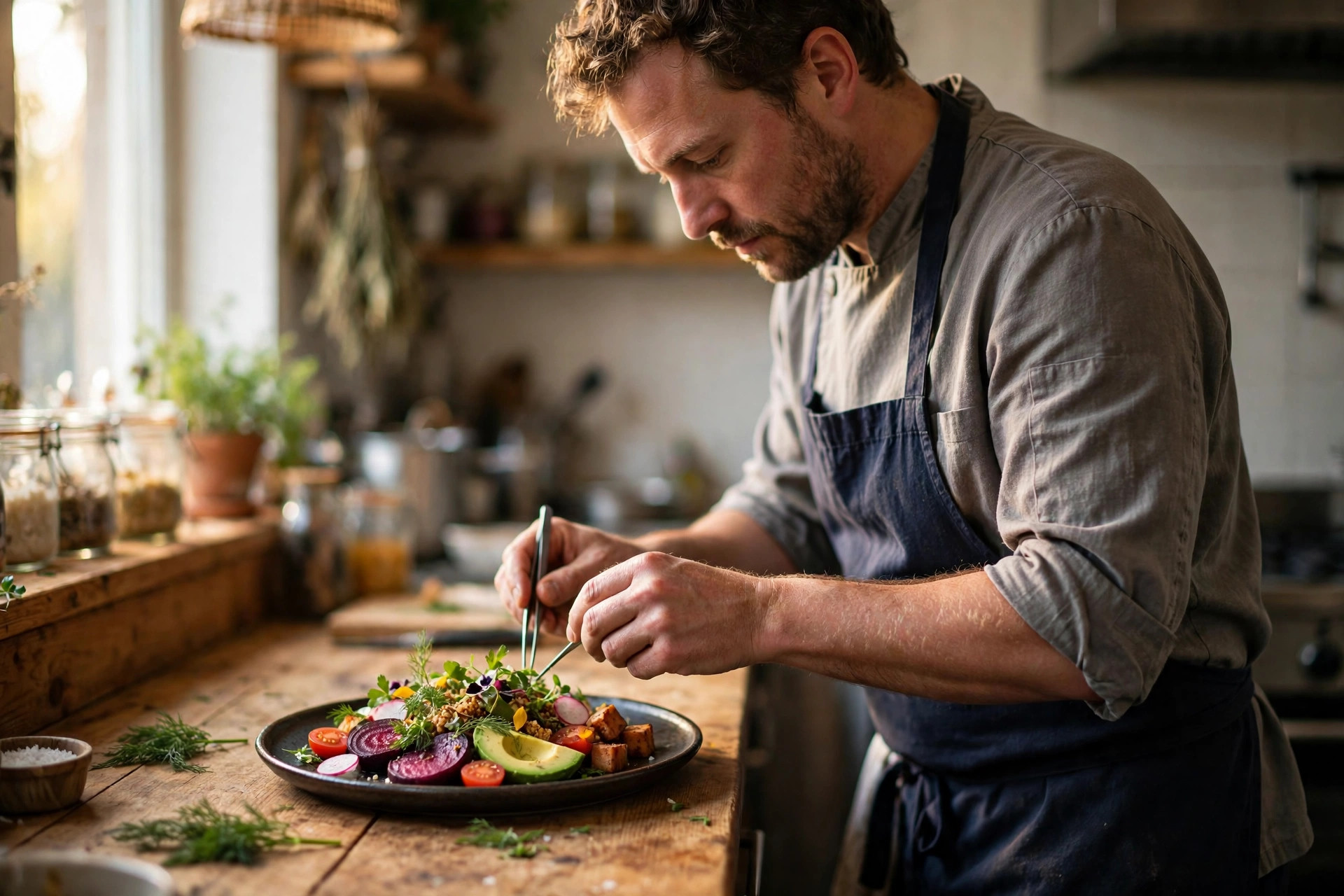
Every restaurant owner in the Nordics knows the moment. A table of six is deciding where to eat on Friday. Five of them would happily come to your place. The sixth has coeliac disease, and she is the one choosing — because she has to be. She checks your menu online, finds nothing marked, no mention of gluten-free anywhere, and the group goes somewhere else. You did not lose one guest. You lost six.
This is the economics of special diets in one scene, and it plays out in Helsinki, Stockholm, Oslo and every tourist town in between, every single week. The guest with the restriction is the veto guest: they decide for the group. Restaurants that serve them well do not just gain one loyal customer — they gain that customer's entire social circle, because the veto guest becomes the person who suggests your restaurant every time.
This article is the practical manual: the medical differences that matter in a kitchen, what EU law actually requires, how to design options guests trust, the cross-contact protocol that works on a busy night, what it really costs (with honest estimates), and how to train staff and present it all on your website. No scare tactics, no invented statistics — just the system.
Why special diets decide where the whole table eats
Think about how groups choose restaurants. It is never a vote — it is a process of elimination. Each person silently crosses off the places they cannot or will not go, and the group converges on somewhere nobody objects to. The person with a dietary restriction has the strongest veto in the group, because their veto is non-negotiable: it is medical, not a matter of taste.
This gives special-diet handling an outsized return. Most restaurant marketing fights for marginal gains — a slightly better photo, a slightly punchier headline. Serving coeliacs, lactose-intolerant guests and vegans well is not marginal. It unlocks entire parties that were previously closed to you, and it does so with remarkable loyalty: people who struggle to eat out remember the places where it was easy, and they return with friends, family and colleagues.
The Nordic angle
The Nordics are, if anything, ahead of the curve here. Awareness of coeliac disease is high — Finland's coeliac organisations commonly cite roughly 2% of the population, among the highest reported rates anywhere — and lactose intolerance is unusually common in Finland in particular. Add large numbers of international tourists, business travellers with corporate dining budgets, and a strong culture of eating out in groups, and the veto-guest dynamic is stronger here than in most markets. A Stockholm restaurant that handles special diets confidently is also handling the conference dinner of twelve, the family celebration of eight, and the tourist couple who checked the menu online before they ever left their hotel.
You never lose just the guest with the restriction. You lose everyone who was coming with them.
The second-order effect matters too: special-diet competence signals kitchen competence in general. A guest who sees careful allergen marking, knowledgeable staff and a confident answer about cross-contact concludes — correctly — that this is a kitchen that pays attention. That impression colours the whole meal.
Coeliac disease is not a preference
Your kitchen needs to distinguish four different things that all arrive at the table sounding like "no gluten, please" — because they require different levels of care, and confusing them is how incidents happen.
Coeliac disease
An autoimmune condition: gluten triggers the immune system to attack the small intestine. It is lifelong, it is serious, and the dose that causes damage is tiny — crumbs, a shared toaster, oil that fried breaded food. There is no "a little bit is fine." Around one in a hundred people in many Western countries has it, and many remain undiagnosed, which means some of your guests are coeliac without knowing it.
Wheat allergy
A different mechanism — a true allergy, which can in rare cases cause anaphylaxis. Wheat-allergic guests must avoid wheat specifically, but may tolerate rye, barley or oats. In practice, kitchens handle it with the same seriousness as coeliac disease, because the consequence of getting it wrong is immediate and severe.
Non-coeliac gluten sensitivity and IBS
Real symptoms, less clearly defined mechanisms. These guests genuinely feel better avoiding gluten, but trace cross-contact is unlikely to harm them the way it harms a coeliac. They still deserve accurate information and a proper gluten-free dish — just without the emergency protocols.
Lifestyle choice
Some guests avoid gluten because they prefer to. Serve them just as well and never interrogate anyone's medical history at the table. The operational rule that keeps everyone safe is simple: treat every gluten-free request with coeliac-level care unless you have a clear reason not to. It costs you nothing extra per order, and it removes the entire category of "we didn't realise it was serious" incidents.
For someone with coeliac disease, "just a little" is never harmless — and "I think it's fine" is never an answer.
What EU law requires your kitchen to do
The legal baseline is the same across the EU and the EEA, which covers Finland, Sweden and Norway alike. Regulation (EU) No 1169/2011 — the Food Information to Consumers Regulation — requires allergen information for 14 listed allergens in all non-prepacked food. Every dish you serve is non-prepacked food. The obligation applies regardless of restaurant size.
The 14 allergens include cereals containing gluten (wheat, rye, barley, oats and their hybridised strains), crustaceans, eggs, fish, peanuts, soybeans, milk, nuts, celery, mustard, sesame, sulphites, lupin and molluscs. Note that it is the cereals that are listed, not gluten as an abstract substance — and oats are explicitly included, which surprises kitchens that treat oats as the automatic safe substitute.
The "gluten-free" threshold
If you use the words "gluten-free" on your menu, you are making a regulated claim. Under Commission Implementing Regulation (EU) No 828/2014, "gluten-free" means the food contains no more than 20 mg of gluten per kilogram. There is also a "very low gluten" category at under 100 mg/kg, but it applies only to foods specially processed to reduce gluten — in practice, restaurants should work with the 20 mg/kg standard or avoid the term.
The legal minimum, in one paragraph
You must make allergen information for the 14 allergens available for every dish. Member states set the delivery method: Finland, Sweden and Norway all permit verbal information in some form, but it must be backed by written documentation (a recipe file or allergen matrix) and guests must be told they can ask. Enforcement is national — municipal food inspectors in Finland, Livsmedelsverket's local counterparts in Sweden, Mattilsynet in Norway — and the first document an inspector asks for is your written allergen record. For the full deep-dive, see our guide to EU allergen labelling rules for restaurants.
One more legal reality worth stating plainly: a guest harmed by your food does not need a regulation to sue you. The allergen rules set the minimum; your actual protection is the system this article describes. Courts and insurers both look at the same question — did you have a working process, or were you improvising?
Designing gluten-free options guests trust
Guests with restrictions read menus the way a programmer reads code — scanning for the markers that tell them whether the author thought about them. A menu that marks nothing tells them nobody thought about them. You do not need a long gluten-free list. You need a credible one.
Three models that work
Model 1: mark naturally gluten-free dishes. Many dishes are already gluten-free by recipe — grilled fish, risottos, most salads, dishes built on rice or potatoes. Mark them with a clear symbol and a legend. This is the cheapest model and it works beautifully for Nordic kitchens, where the cuisine already leans on fish, potatoes, root vegetables and dairy.
Model 2: mark adaptable dishes. Dishes that can be made gluten-free with a defined swap — gluten-free pasta instead of wheat pasta, a different thickener in the sauce, no croutons. Mark them "available gluten-free" and define the swap in the kitchen so it happens the same way every time.
Model 3: a separate gluten-free menu. A dedicated card or menu section. It feels safest to nervous guests and is easy to keep accurate, but it can also feel like a second-class experience — and it doubles your menu maintenance. Most restaurants do best with models 1 and 2 combined.
The credibility rules
- Never mark a dish you cannot defend. One incident destroys more trust than ten unmarked dishes.
- Cover the whole meal. A gluten-free main with no gluten-free starter or dessert option tells the guest they are an afterthought. You need at least a credible path through all courses.
- Do not surcharge punitively. Gluten-free ingredients cost more — that is real — but a visible "gluten-free supplement" reads as a tax on illness. Fold the cost into your pricing like any other ingredient cost.
- Keep the marking identical everywhere. Printed menu, website, delivery listings, what staff say. Contradictions destroy confidence instantly.
For how to present the marking itself — symbols, legends, placement — our guide to digital menus done right covers menu design in depth, including how dietary filters work on screen.
The hidden gluten traps in a professional kitchen
Recipes are the easy part. The incidents happen in the gaps between recipes — the shared equipment, the bought-in products, the habits. Walk your kitchen with this list once, and you will find at least two of them.
The fryer
The single most common trap. Chips fried in oil that also cooked breaded fish, calamari or onion rings are not gluten-free, no matter what the recipe says. If you cannot dedicate a fryer, you cannot honestly serve fried gluten-free food. (See the cost table below — a dedicated countertop fryer is one of the cheapest serious investments a kitchen can make.)
Flour in the air
Wheat flour stays airborne for hours and settles on every surface. If your kitchen bakes bread or dusts with flour during service, anything plated nearby is exposed. The practical fixes: prep gluten-free orders before flour work begins, or in a physically separated area — and never plate a gluten-free dish next to the pastry section.
Sauces, stocks and thickeners
Gravy thickened with wheat flour. Soy sauce (most standard soy sauce contains wheat — gluten-free tamari is the swap). Teriyaki glaze. Spice mixes and rubs with wheat starch as an anti-caking agent. Stock cubes and powders. Beer in batter or cheese sauce. Each is innocent-looking and each is routine in professional kitchens. The fix is a bought-in products audit: every packet, bottle and tub gets checked once, and the approved list goes on the wall.
The pass and the small things
The shared toaster. The grill that just had breaded schnitzel on it. The tongs that flipped the burger bun. The wipe-down cloth that has been everywhere. The garnish station where croutons live next to the herbs. Cross-contact is a hundred small contacts, and the protocol in the next section exists to make the safe behaviour the default rather than a heroic effort.
Audit your bought-in products once and you will find gluten in at least three places you never suspected. Every kitchen does.
A cross-contact protocol that survives Friday night
A protocol that only works when the kitchen is calm is not a protocol — it is a hope. The system below is designed for the worst case: full dining room, tickets spilling off the rail, the junior cook on the pass. It works because it is driven by the ticket, not by memory.
The gluten-free ticket protocol
- Flag the ticket. Every gluten-free order gets a visible mark — a coloured sticker, a stamp, a capital "GF" — that the whole line can see. No verbal-only flags.
- Prep first or separate. Gluten-free components are prepared before flour is in the air, or in the designated zone. If neither is possible, the dish waits for a cleaned station — it does not get improvised.
- Clean tools, every time. Freshly washed board, knife and utensils, or the dedicated colour-coded set. Fresh cloth for the wipe-down. Clean hands or fresh gloves for plating.
- Clean heat. A pan or grill surface cleaned before the gluten-free item goes on — or the dedicated equipment. Never the shared fryer, never the shared toaster.
- Sauces from the approved list. Only sauces and garnishes from the audited gluten-free list go on the plate. When in doubt, it stays off.
- One person owns the plate. The chef or shift lead checks the flagged plate before it leaves the kitchen. This takes five seconds and catches most errors.
- Serve with the information. The server delivering the dish confirms it is the gluten-free version — "here is your gluten-free salmon" — closing the loop with the guest.
- Log the incident, not just the success. Any near-miss gets written down and discussed. Protocols improve from near-misses, not from good intentions.
Make the default the safe behaviour
The deeper principle: do not rely on vigilance. Rely on setup. Colour-coded boards remove the decision of which board to grab. The sticker on the ticket removes the decision of whether this order is special. The approved-sauces list removes the decision of whether the demi-glace is safe. Every decision you remove is a failure mode you delete. Kitchens that run this way do not find gluten-free orders stressful — they find them routine, which is exactly what you want.
What it really costs
Owners consistently overestimate the cost of serving special diets and underestimate the cost of not serving them. Here are honest, labelled estimates for a typical small Nordic restaurant — your numbers will vary, but the order of magnitude is what matters.
| Item | Typical cost (estimate) | Notes |
|---|---|---|
| Gluten-free flours, pasta, crumbs | 30–80% premium over standard equivalents | Wholesale; the premium shrinks as volumes grow |
| Dedicated countertop fryer | €300–600 one-off | The single highest-impact purchase |
| Colour-coded boards, knives, utensils | €40–80 one-off | Purple is the common allergen colour in professional kitchens |
| Staff training | 30–60 minutes per person | Your time; refresh twice a year |
| Bought-in product audit | Half a day, once | Then 15 minutes whenever a supplier changes a product |
| Menu update (symbols, legend) | €0 with a digital menu | A reprint cycle cost with paper menus |
| Allergen matrix documentation | A few hours, once | Then maintained as part of recipe development |
Put it together and the serious version of this project — real protocol, real equipment, trained staff — costs a small restaurant on the order of €500–1,000 in one-off spending plus a modest ongoing ingredient premium. Now set that against the revenue side: the veto-guest dynamic from the first section means every group you currently lose to a competitor's better-marked menu is a table of four, six or eight walking past your door. One such table on a busy weekend covers the fryer. A month of them covers the whole programme. This is not charity work — it is one of the cheapest customer-acquisition investments a restaurant can make, because the customers it acquires bring their friends.
The question is not what gluten-free costs you. It is what the table of six that went elsewhere cost you.
Beyond gluten: the other diets to plan for
Once the gluten system works, the same machinery — matrix, symbols, ticket flags, trained staff — handles every other diet at marginal extra cost. Here is the priority order for a Nordic restaurant.
Lactose: the easy win
Lactose intolerance is unusually common in Finland — often cited at around one in six people — and less common but still significant in Sweden and Norway. The good news: Nordic supply chains solved this decades ago. Lactose-free milk, cream and butter are standard wholesale items at small premiums, and most kitchens can switch their dairy to lactose-free without changing a single recipe. If you do one thing after gluten, do this.
Vegan and vegetarian
Steadily growing, and heavily over-represented among the young urban guests who also post about restaurants online. The marking approach is identical to gluten — symbols, legend, a credible path through all courses — and our guide on how to present vegan options on your menu covers the menu-design side in detail.
Nuts, eggs, fish, sesame
These are already in your 14-allergen matrix, so the documentation exists. The operational question is whether you can offer credible dishes free of each — nut-free desserts are the classic gap, since so many desserts lean on nuts. One genuinely nut-free dessert option closes it.
Halal and other religious requirements
In Helsinki, Stockholm and Oslo, halal is a real and growing demand segment. Full halal certification is a serious commitment involving the entire supply chain; many restaurants instead take the honest middle path of clearly marking dishes with no pork and no alcohol. Whatever you offer, the rule from the gluten section applies double: never promise what the kitchen cannot defend. A wrong halal assurance is a trust catastrophe, not a minor error.
Training your staff: the 30-minute script
Equipment and matrices are useless if the server panics when a guest says the word "coeliac." The training does not need to be long — it needs to be specific. Thirty focused minutes beats a whole afternoon of vague food-safety slides.
The five things every server must be able to do
- Name the options without asking the kitchen. Every server should be able to list the gluten-free starters, mains and desserts from memory, or know exactly where the current list lives. "Let me check" is fine; "I have no idea" is not.
- Ask the one question, kindly. "Just so the kitchen prepares it correctly — is this an allergy or a preference?" Asked warmly, once, this is standard professional practice, and it tells the kitchen which protocol to run.
- Flag the ticket properly. The server is the start of the ticket protocol. If the flag does not go on at order time, nothing downstream works.
- Never guess. "I'm not certain — let me check with the kitchen" is always the right answer. Guessing about allergens is the single most dangerous thing a server can do.
- Deliver with confirmation. "Here is your gluten-free dish" at the table closes the loop and gives the guest a final chance to catch an error.
Run it as a drill, not a lecture
Role-play beats slides. One person plays the nervous coeliac guest, another the server; run through the order, the ticket flag, the kitchen handoff and the table delivery. Do it twice a year and whenever the menu changes significantly. New hires get the drill in their first week — before they take a solo table, not after.
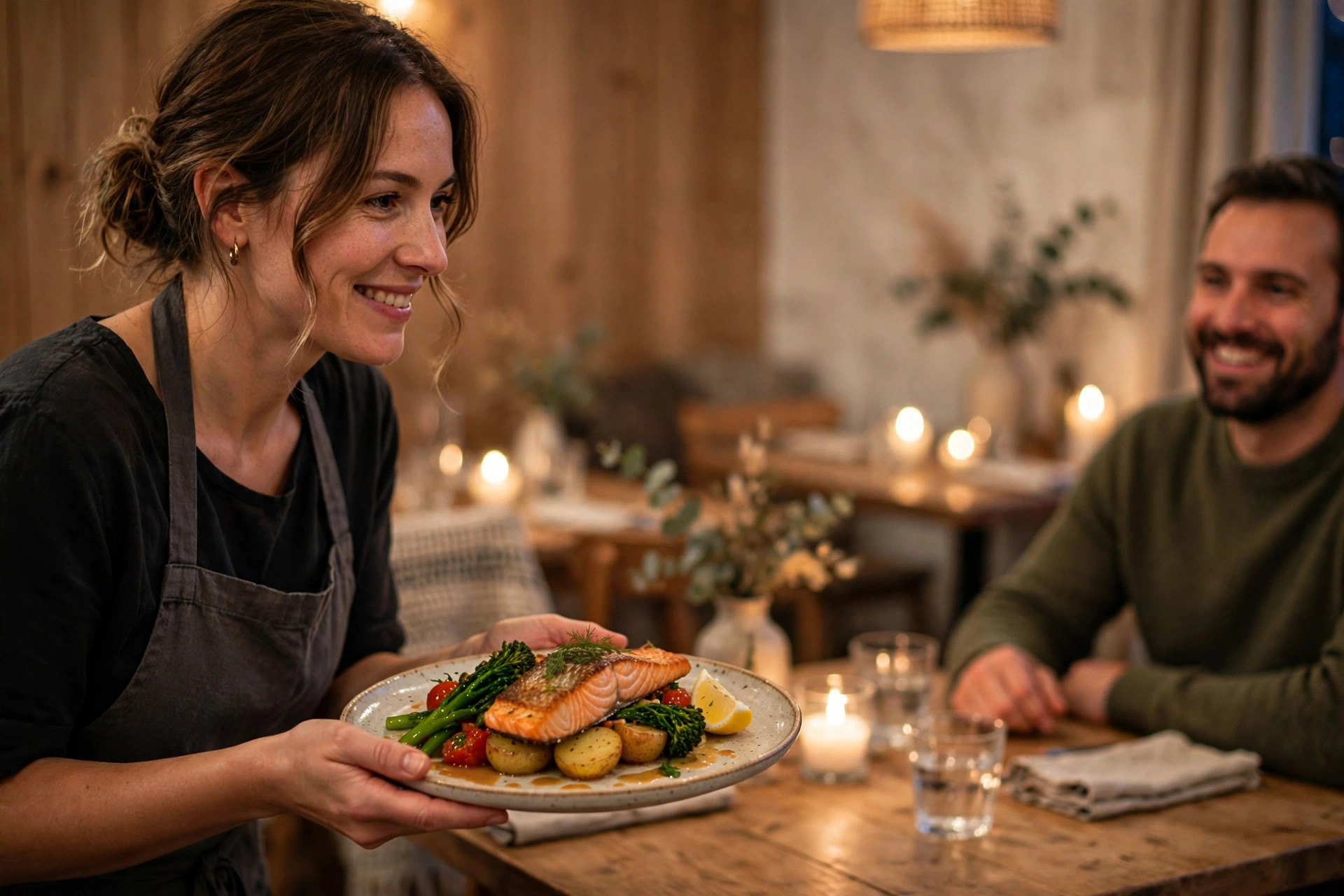
Put it on your website — where the decision happens
Remember the veto guest from the opening scene. She did not call you. She checked your menu online at 6pm on a Thursday, found nothing, and chose the competitor. The decision happened on a phone screen, and your website was the entire sales conversation.
This is why the digital menu matters as much as the kitchen protocol. Allergy-aware guests research before they visit — it is one of the most consistent behaviours in this segment. Your website needs to answer their questions without a phone call: which dishes are gluten-free, what the symbols mean, whether you handle coeliac-level preparation, and how to contact you with questions. A filterable digital menu — tick "gluten-free" and see only safe dishes — answers it in seconds. Paper menus and PDF downloads cannot do this, which is one more reason the digital menu approach keeps winning.
The website is also where consistency lives or dies. If your printed menu marks the salmon gluten-free but the website menu is six months out of date and does not, the guest trusts neither. One menu, maintained in one place, published everywhere — that is the standard. PowerfulWebsite builds restaurant websites free — plans start at €59/month — and every plan includes a digital menu page with per-dish allergen notes, dietary filters and multilingual support, so the menu your guests check at 6pm is the menu your kitchen actually serves.
The checklist
- Dietary symbols on every dish, on the website menu — identical to the printed menu.
- A filter or dedicated view for gluten-free, lactose-free and vegan dishes.
- A short, honest statement of your cross-contact approach — one paragraph is enough.
- A visible contact route for questions (and a kitchen that can actually answer them).
- The menu updated the same day the kitchen changes it — no exceptions.
Do the kitchen work from the earlier sections, put it on the website with this checklist, and you have closed the loop: the veto guest finds you, trusts you, books you, and brings the other five.
Frequently asked questions
Is it safe for coeliacs to eat at a restaurant that also serves gluten?
It can be, if the kitchen runs a proper cross-contact protocol: separate or thoroughly cleaned preparation areas, dedicated or freshly cleaned utensils and boards, a fryer that never touches breaded food, and a ticket system that flags gluten-free orders for the whole line. What makes it unsafe is not the presence of gluten in the building — it is the absence of a system. If your kitchen cannot describe its protocol in one minute, it should not promise coeliac-safe meals.
Do EU rules require restaurants to label gluten-free dishes on the menu?
EU Regulation 1169/2011 requires allergen information for 14 allergens — including cereals containing gluten — for all non-prepacked food, which covers every restaurant dish. It does not require you to offer gluten-free dishes or to use the words “gluten-free” on the menu, but if you do use that term, the dish must meet the legal threshold of under 20 mg/kg. Member states set the exact delivery method, and several Nordic countries allow verbal information backed by written documentation.
How do you stop gluten cross-contact in a busy kitchen?
The reliable system has five parts: flag gluten-free orders on the ticket so the whole line sees them; prepare them first or in a dedicated zone before flour is in the air; use dedicated or freshly washed boards, utensils and cloths; never use the shared fryer, toaster or grill without cleaning it first; and plate with clean hands or fresh gloves. Written as a short checklist by the pass, this works on a Friday night because it does not depend on anyone remembering — it depends on the ticket.
How much does adding gluten-free options cost a restaurant?
Less than most owners fear. Gluten-free flours and pastas typically cost 30–80% more than their standard equivalents at wholesale (estimates), a dedicated countertop fryer costs roughly €300–600 as a one-off (estimate), and a set of colour-coded boards and utensils is in the €40–80 range (estimate). The largest cost is staff training time. One saved table of four to six guests on a busy weekend typically covers the equipment many times over.
Should I offer a separate gluten-free menu or just mark dishes on the main menu?
Both work; consistency matters more than the format. Marking dishes on the main menu with a clear symbol and legend keeps gluten-free guests in the normal dining experience, which most prefer. A separate gluten-free menu can feel safer and is easier to keep accurate. Whichever you choose, the marking must match what the kitchen actually does, and it must match everywhere: printed menu, website, and what your staff say.
Which special diets should a Nordic restaurant plan for beyond gluten?
Lactose intolerance is the big one — it is unusually common in Finland, often cited at around one in six people — and lactose-free dairy is standard in Nordic supply chains, so this is an easy win. Then vegan and vegetarian (growing steadily), nut allergies, egg, fish and shellfish, sesame, and halal requirements in larger cities. Covering gluten, lactose and vegan well handles the large majority of special requests a Nordic restaurant will ever see.
Want a menu page that answers dietary questions before guests call?
PowerfulWebsite builds your restaurant's website for free — you only pay from €59/month. Every plan includes a digital menu page with per-dish allergen notes, dietary filters and multilingual support.
See the plans