Loyalty Data and Privacy: What GDPR Means for You
GDPR does not ban restaurant loyalty programmes — but it does decide how you may collect, store and use member data. In short: you need a lawful basis for every use of guest data, separate consent for marketing, a clear retention period, and a plan for guest requests and breaches. Get those four things right and a loyalty programme is fully compatible with the law.
Key takeaways
- GDPR applies the moment a loyalty programme holds a name, email, phone number or visit history — even for a single-location restaurant.
- Running the programme and sending marketing are two different purposes that need two different legal justifications.
- Consent must be unbundled, active and recorded: no pre-ticked boxes, no marketing hidden inside programme sign-up.
- Keep member data only as long as necessary, and write the retention period into your privacy notice.
- Guests can ask to see, correct or delete their data — you have one month to respond.
- A data breach that risks guests' rights must be reported to your supervisory authority within 72 hours.
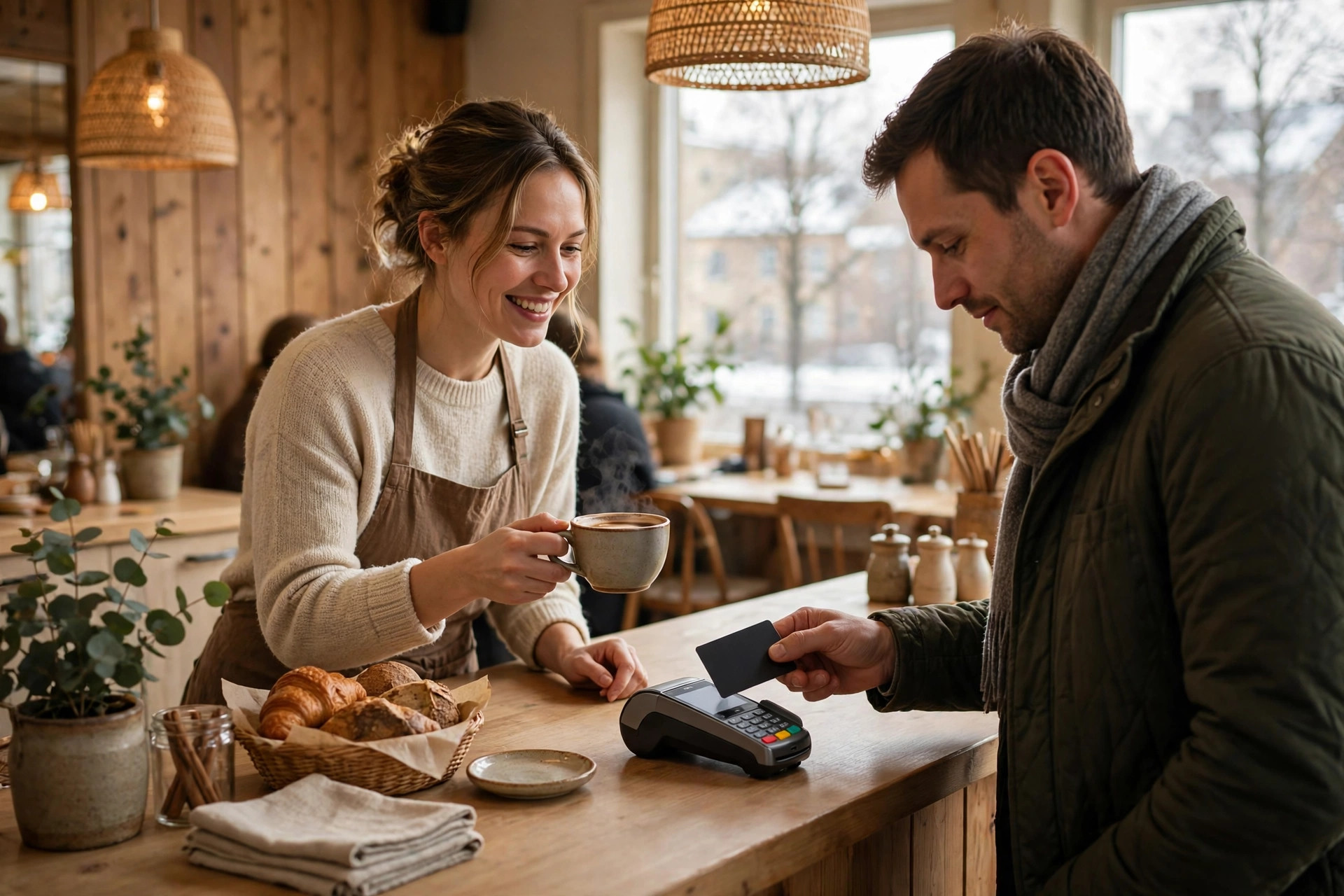
Your loyalty programme knows a lot about your guests. It knows their names, their email addresses, how often they visit, what they order, and how much they spend. That is exactly the kind of information the General Data Protection Regulation (GDPR) exists to protect — and it applies to your restaurant whether you have one table or one hundred, because the regulation covers any business that processes the personal data of people in the EU and EEA. This article is written for restaurant, café and bar owners in the Nordics. It is practical guidance, not legal advice: for a specific dispute or a complex setup, talk to a lawyer. But for the everyday decisions — sign-up forms, email campaigns, choosing a loyalty app — the rules below will keep you on the right side of the law and, just as importantly, keep your guests' trust.
What GDPR actually requires from a restaurant
The GDPR is a single EU regulation that has applied since May 2018, and it is enforced in each country by a national supervisory authority: the Data Protection Ombudsman (Tietosuojavaltuutettu) in Finland, the Swedish Authority for Privacy Protection (IMY) in Sweden, and Datatilsynet in Norway (Norway applies the GDPR through the EEA agreement). The headline fines get all the attention — up to €20 million or 4% of worldwide annual turnover for the most serious infringements, and up to €10 million or 2% for lesser ones — but for a small restaurant the realistic risk is different. Regulators in the Nordics typically act on complaints: a guest who cannot unsubscribe, a member whose deletion request is ignored, or a breach that is never reported. The enforcement record shows that even small businesses, including restaurants, have been fined — one Spanish restaurant, for example, was fined €9,600 for using guest-related material without a lawful basis. The lesson is not that fines are lurking around every corner; it is that the basics matter, and they are not hard.
At its core, GDPR rests on a handful of principles that translate neatly into restaurant practice. Processing must be lawful, fair and transparent. You collect data for a specified purpose and do not quietly reuse it for something else. You collect only what you need. You keep it accurate and up to date. You keep it no longer than necessary. You protect it with appropriate security. And you must be able to demonstrate all of this — the accountability principle. That last point is why documentation matters more than most owners expect: a regulator does not only ask what you did, but whether you can show it. A consent record, a short data map, a privacy notice and a retention rule are the evidence.
The controller–processor split, in plain terms
Your restaurant is the data controller for its loyalty programme: you decide why member data is collected and what happens to it, so the legal obligation sits with you. The loyalty app, booking system or email platform that stores and processes the data on your instructions is a processor. That distinction matters when you choose software. The right question is not whether a vendor claims to be "GDPR compliant" in the abstract, but whether it gives you the mechanics you need: separate consent capture per purpose, a timestamped consent record, an easy way to honour a deletion request across every connected system, and a data processing agreement (DPA) you can actually sign. If a vendor cannot offer those, it is the wrong vendor for a loyalty programme, however good its rewards features look.
What counts as personal data in your restaurant
Personal data is any information relating to an identified or identifiable person. In a loyalty programme, that covers far more than the obvious fields. A name and email address are personal data, of course. So is a phone number, a date of birth collected for a birthday reward, a home address on a delivery account, and a guest's order history when it is linked to their identity. Even a loyalty card number counts, because it can be traced back to the person holding the card. Device identifiers and IP addresses in your booking or ordering system can also be personal data. The practical test is simple: if a piece of information, alone or combined with something else you hold, can point to a real person, treat it as personal data.
Some data deserves extra care. Dietary information can reveal health information — a gluten-free requirement, for instance, can indicate coeliac disease — and health data is a special category under GDPR that needs a higher standard of protection. Allergies noted on a booking are operationally necessary, but they should not be copied into a marketing profile, shared with staff who do not need them, or kept after the visit. The same applies to notes about guests: a comment like "difficult customer" or "always complains" in a loyalty profile is personal data too, and the guest has the right to see it if they ask. If you would not want a guest reading a note about themselves, do not write it down.
If a piece of information can point to a real person, treat it as personal data — including loyalty card numbers, order histories and staff notes.
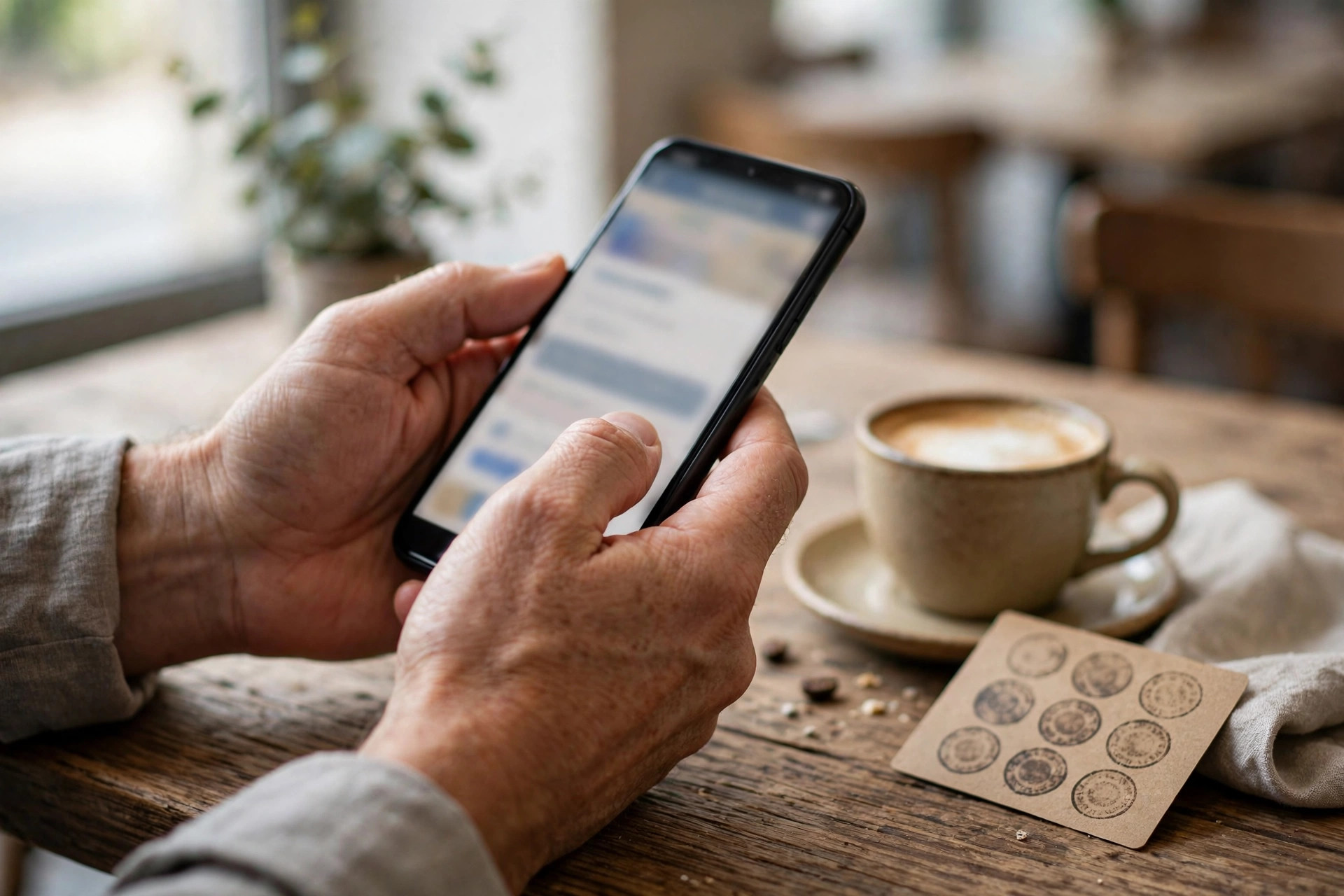
There is one genuine shortcut worth knowing. A purely anonymous paper stamp card — no name, no phone number, no email, just stamps — collects no personal data at all, so GDPR barely touches it. That is one reason paper cards remain popular with small cafés. But the shortcut ends the moment you connect the card to a person: writing a name on it, linking it to a phone number at the till, or typing the stamps into a spreadsheet. At that point the full regulation applies, and the fact that the data started on paper makes no difference. For a deeper comparison of programme models, including stamp cards, see our guide to restaurant loyalty programmes compared.
Consent, contract or legitimate interest?
Every use of personal data needs a lawful basis, and GDPR offers six. For a restaurant loyalty programme, three do almost all the work: consent, contract and legitimate interest. The mistake most programmes make is picking one basis and stretching it across everything. GDPR requires a basis per purpose, and the purposes in a loyalty programme are genuinely different: running the programme, sending marketing, and profiling guests for personalised offers are three separate decisions, not one.
| Purpose | Usual lawful basis | What it means in practice |
|---|---|---|
| Running the programme: tracking points, issuing rewards | Contract | The guest joined the programme and reasonably expects you to run it. No separate marketing consent needed for this alone. |
| Marketing emails and texts about offers | Consent (or soft opt-in where it applies) | Separate, active opt-in. Must be as easy to withdraw as it was to give. |
| Personalised offers based on order history | Consent | Profiling for marketing needs its own consent; do not bundle it with programme sign-up. |
| Service messages (booking confirmations, reward expiry reminders) | Contract or legitimate interest | Messages the guest needs to use the programme. Keep them strictly about the service. |
| Fraud prevention and programme security | Legitimate interest | Protecting the programme from abuse, balanced against guests' privacy. |
| Accounting and tax records | Legal obligation | Transaction records kept as long as tax law requires, even after a member leaves. |
Consent is the basis most owners reach for, but it is also the most demanding. It must be freely given, specific, informed and unambiguous — an active choice, not silence or a pre-ticked box. And consent can be withdrawn at any time, which means a consent-based process must be built to stop quickly. Contract is often the better basis for running the programme itself: when a guest joins, there is an agreement that you will track their visits and give them rewards, and processing their data to do that is necessary to perform it. Legitimate interest can cover things like fraud prevention, but it requires a balancing test — your interest against the guest's privacy — and it is not a shortcut for marketing, where the ePrivacy rules (see below) usually demand consent anyway. Picking the right basis per purpose, and writing the choice down, is the single most useful compliance exercise a restaurant can do.
The ePrivacy overlay: why marketing needs its own rules
GDPR is not the only law in play. The ePrivacy rules, implemented nationally in each Nordic country, govern electronic marketing — emails, texts and push notifications — and they generally require prior opt-in consent before you send marketing messages. Some countries recognise a "soft opt-in" exception: if you collected the address during a sale or negotiation, you may market similar products or services to that customer, provided you gave them a clear chance to opt out at collection and in every message. The details differ by country, and the exception never covers cold lists or purchased contacts. Our guide to building an email list from zero, GDPR-safe, walks through compliant list-building step by step. The safe default for a loyalty programme is simple: ask for marketing consent separately, record it, and honour every unsubscribe immediately.
Consent done right: unbundled, recorded, withdrawable
Three conditions do most of the work in consent, and each one maps to a concrete design choice on your sign-up form. First, consent must be unbundled: joining the programme cannot be conditional on accepting marketing. A guest must be able to join, earn points and redeem rewards without agreeing to receive promotional emails. If your form has a single "I agree to everything" checkbox, it fails this test. Second, consent must be affirmative: a pre-checked box, an inactivity timeout or a sentence buried in terms and conditions does not count. The guest must take a positive action — ticking an empty box, tapping "yes, send me offers" — for each purpose separately. Third, consent must be recorded: you need to be able to show who consented, to what wording, on what date, and through what interface. Your loyalty platform should store that record automatically; if it does not, keep your own log.
Withdrawal deserves the same attention. GDPR requires that withdrawing consent is as easy as giving it. If a guest joined with one tap, they cannot be made to call a phone line or write a letter to leave. Every marketing email needs a working unsubscribe link, and the unsubscribe must actually work across your systems — a guest who unsubscribes from emails should not keep receiving texts from a different tool that nobody synced. Review your own sign-up flow once a quarter as if you were a new guest: can you join without accepting marketing? Is every checkbox empty by default? Does the unsubscribe link work? Those three questions catch most real-world failures.
What about children and family programmes?
If your loyalty programme targets families — a kids-eat-free club, for example — be careful with children's data. GDPR sets the age of digital consent at 16 by default, though member states may lower it (Finland and Sweden set it at 13, Norway at 13 for information society services). In practice, the safest approach for a restaurant is to collect the parent's details, not the child's, and to avoid marketing directed at children entirely. A birthday club for children should run through the parent's email address, with the parent's consent.
Map your loyalty data before you fix anything
Before you rewrite a single form, spend an hour mapping where loyalty data actually lives in your business. Most restaurants are surprised by the answer. Data typically sits in more places than the loyalty app: the booking system holds names and phone numbers, the email platform holds the marketing list, the ordering system holds delivery addresses, the point-of-sale holds transaction histories, and at least one spreadsheet holds a list someone exported "just in case". Each of those is a copy that needs the same protections — and the same deletion when a guest asks.
A usable data map does not need software. A simple table answers the essential questions for each system: what data does it hold, why do we hold it, where did it come from, who can access it, how long do we keep it, and what happens when a guest asks us to delete it. Work through it with whoever runs each system — often the manager, the person who does the marketing, and whoever set up the booking tool. The exercise usually surfaces two or three quick wins: an old export that can be deleted, a shared login that should be individual, or a marketing list that includes people who never consented. Fixing those is worth more than any policy document. And the map itself is exactly the kind of record the accountability principle asks you to keep.
Your loyalty data lives in more places than your loyalty app: the booking system, the email platform, the till, and at least one forgotten spreadsheet.
Security basics that actually matter for a restaurant
GDPR requires "appropriate technical and organisational measures" — a phrase that sounds expensive but mostly means sensible basics. Use individual logins, not one shared password for the loyalty dashboard. Turn on two-factor authentication wherever it is offered. Limit access so that only staff who need member data can see it; a server does not need the full export. Keep software updated, especially the tablet or phone that runs the loyalty app. And think about the physical side: a printed member list left by the till, or a loyalty tablet left logged in during service, is a data protection failure as surely as a hacked database. If you use a website to run sign-ups, make sure it uses HTTPS and a proper consent banner — a site built on PowerfulWebsite includes these basics as standard, but whatever platform you use, check.
Your privacy notice, in plain language
Transparency is a legal requirement, not a courtesy. When you collect personal data, you must tell guests who you are, what you collect, why, on what lawful basis, how long you keep it, who you share it with, and what rights they have — at the time you collect it, in clear and plain language. A privacy notice linked from your sign-up form and your website covers this, but only if guests can actually find and understand it. The long legal document hidden three clicks deep on a website is not transparency; a short, readable notice at sign-up, with a link to the full version, is.
Write the notice for a real guest, not a lawyer. Name your restaurant as the controller, with contact details. List each purpose separately — running the programme, sending offers, personalising rewards — with its lawful basis. State your retention period honestly: "We keep your membership data while your membership is active, and delete it 24 months after your last visit" is a real promise a guest can understand. Name the categories of recipients: your loyalty platform, your email provider, your booking system. And explain rights in plain words: guests can ask what you hold, correct it, delete it, take it elsewhere, or complain to the supervisory authority. If you operate in several Nordic languages, publish the notice in each language you collect data in. A Finnish guest signing up in Helsinki should not have to decipher an English-only notice.
Retention periods restaurants actually use
- Active membership data: kept while the membership is live.
- Inactive members: deleted or anonymised after 12–24 months without a visit (choose one period and state it).
- Marketing consent records: kept while consent is live, plus a short period afterwards to prove an unsubscribe was honoured.
- Transaction and accounting records: kept as long as tax law requires — this is a legal obligation, separate from marketing data.
- Booking details: deleted once the visit is complete, unless the guest is a loyalty member who expects the visit to count.
Your vendors are part of your compliance
Every vendor that touches member data is part of your GDPR picture, and your responsibility does not end at the contract signature. You need a data processing agreement (DPA) with each processor — the loyalty platform, the email service, the booking system, the delivery aggregator where it processes your customer data on your behalf. The DPA must say what the processor may do with the data, require it to keep the data secure, oblige it to help with guest requests, and require it to delete or return the data when the contract ends. Reputable vendors offer a standard DPA; if a vendor will not sign one, that is a red flag, not a negotiation point.
Transfers outside the EU and EEA deserve a specific question. If your loyalty platform stores data in the United States or another country without an adequacy decision, the transfer needs an approved safeguard, typically the EU standard contractual clauses, and the vendor should be able to explain which one it uses. This is a standard question for any SaaS vendor and a reasonable one to ask before you commit. Also ask what happens to your data if you leave: can you export member records, and does the vendor delete its copies? A loyalty programme is a long-term asset; being unable to leave with your own member list is a business risk as well as a compliance one. For a related view on using data responsibly, see our guide to using booking data for marketing, GDPR-safe.
When a guest asks: access, deletion, portability
Guests have rights over their data, and a loyalty programme makes those rights concrete. The right of access means a guest can ask what you hold about them and get a copy. The right to rectification means they can correct a wrong email address or name. The right to erasure — the "right to be forgotten" — means they can ask you to delete data you no longer have a lawful reason to keep. The right to data portability means they can ask for their data in a structured, commonly used format. And the right to object means they can object to processing based on legitimate interest, including profiling for marketing.
The procedure matters as much as the principle. You have one month to respond to a request, extendable by two further months for complex requests if you tell the guest why. You must verify the requester's identity proportionately — asking a guest to confirm the email address on the account is reasonable; demanding a passport copy for a loyalty card deletion is not. When you delete, delete everywhere: the loyalty platform, the email list, the spreadsheet export, and ask your processors to delete their copies too. Keep a short log of requests and how you handled them; it is both good practice and evidence of accountability. And remember the accounting exception: you may keep transaction records the tax law requires, but you must stop using that data for marketing and loyalty purposes, and you should explain that clearly to the guest rather than refusing the request outright.
A deletion request is a trust test: handle it quickly and completely, and the guest remembers the respect, not the exit.
Data breaches: the 72-hour rule
A personal data breach is any incident that leads to accidental or unlawful destruction, loss, alteration, unauthorised disclosure of, or access to personal data. For a restaurant, that could be a stolen tablet logged into the loyalty dashboard, a member list emailed to the wrong address, a ransomware incident on the back-office computer, or a loyalty app vendor telling you its database was exposed. Not every incident must be reported: the duty to notify your supervisory authority applies when the breach is likely to result in a risk to people's rights and freedoms. But the assessment itself must happen fast, because the clock starts when you become aware of the breach, not when you finish investigating.
If notification is required, you have 72 hours to report to your supervisory authority — the Data Protection Ombudsman in Finland, IMY in Sweden, Datatilsynet in Norway. The report covers the nature of the breach, the categories and approximate number of people affected, the likely consequences, and the measures you have taken or plan to take. If you cannot provide everything within 72 hours, report what you have and follow up; the regulator would rather hear early and incomplete than late and polished. If the breach is likely to result in a high risk to guests — for example, exposed passwords combined with email addresses — you must also tell the affected guests without undue delay, in clear language, explaining what happened and what they should do. Your processors must tell you without undue delay if they suffer a breach, which is another clause to check in the DPA. Write a one-page breach plan now, while nothing is on fire: who decides, who reports, and which authority to contact. The plan costs an hour; a breach without one costs far more.
The one-page GDPR checklist for loyalty programmes
Compliance is not a project with a finish line; it is a set of habits. But a new or existing programme can be brought up to a solid standard with the following checklist, worked through once and then reviewed annually or whenever you change systems.
- Lawful basis per purpose. Write down the basis for running the programme, for marketing, and for personalisation. Separate consent for marketing from programme sign-up.
- Consent mechanics. Empty checkboxes by default, one per purpose, with a timestamped record. Withdrawal as easy as sign-up; unsubscribe in every message.
- Data map. One page listing every system that holds member data, what it holds, who can access it, and how long it is kept.
- Privacy notice. Short, plain-language, at sign-up and on your website, in every language you collect data in.
- Retention rule. A defined inactivity period after which member data is deleted or anonymised — and a calendar reminder to run it.
- DPAs signed. A data processing agreement with every vendor that touches member data, including your loyalty platform and email provider.
- Access control. Individual logins, two-factor authentication where offered, and access limited to staff who need it.
- Guest-request procedure. A named person, a one-month response target, and a deletion routine that covers every system and processor.
- Breach plan. One page: who decides, who notifies the supervisory authority within 72 hours, and how affected guests are told.
- Annual review. Re-check consent wording, retention runs, vendor list and access permissions once a year, and whenever you switch systems.
None of this requires a lawyer on retainer or expensive software. It requires decisions, written down, and followed. And there is a commercial upside that most compliance writing misses: guests who trust you with their data join more readily, stay longer, and complain less. A loyalty programme that is transparent about what it collects and careful with what it holds is not just legally safer — it is a better loyalty programme. If your website, sign-up forms and privacy notice need bringing up to this standard, PowerfulWebsite builds restaurant websites with GDPR basics — consent banners, privacy pages and secure forms — included from the start, with the build itself free and plans from €59/mo.
Frequently asked questions
Do I need consent to run a restaurant loyalty programme under GDPR?
You need a lawful basis for every use of guest data, but it is not always consent. Running the programme itself — tracking points and issuing rewards — can usually rest on contract, because the guest joined the programme and expects you to run it. Marketing emails and texts, and profiling guests for personalised offers, normally need separate, freely given consent. Keep the two decisions apart: joining the programme must not force a guest to accept marketing.
Can I email loyalty members without asking first?
Only in narrow cases. In most of the EU, electronic marketing needs prior opt-in consent, and each message must offer an easy opt-out. A soft opt-in exception exists in some countries for existing customers, covering similar products and services, but it does not cover every message or every country, and it never replaces the need for a clear unsubscribe in every email. When in doubt, ask for consent and keep the record.
How long can I keep loyalty member data?
Only as long as necessary for the purpose you collected it for. A common approach for restaurants is to keep active member data while the membership is live, then delete or anonymise it after a defined period of inactivity — for example 12 to 24 months without a visit — unless tax or accounting law requires keeping transaction records longer. Write the period down in your privacy notice and stick to it.
What must I do if a guest asks me to delete their data?
Respond within one month, confirm what you hold, and delete the personal data you no longer have a lawful reason to keep. You may keep what the law requires you to keep — for example accounting records — but you must stop using the data for marketing and loyalty purposes, and you must pass the deletion request on to any processor holding the data, such as your loyalty app provider.
What happens if my restaurant has a data breach?
If personal data is lost, stolen or exposed, assess the risk immediately. If there is a risk to guests' rights and freedoms, you must notify your national supervisory authority — in Finland the Data Protection Ombudsman, in Sweden IMY, in Norway Datatilsynet — within 72 hours of becoming aware of the breach. If the risk is high, you must also tell the affected guests without undue delay.
Do paper stamp cards avoid GDPR?
A purely anonymous paper stamp card with no name, phone number or email attached collects no personal data, so GDPR barely touches it. The moment you write a name or phone number on the card, link it to a booking, or move the data into a spreadsheet or app, GDPR applies in full. Paper is not a loophole; it is only simpler because it holds less data.
Want a website that brings table bookings — and handles privacy properly?
PowerfulWebsite builds your restaurant's website free — you only pay from €59/mo. Everything included: domain, hosting, maintenance and updates, plus GDPR basics like consent banners and privacy pages.
See the packages