No-Shows: 8 Ways Restaurants Can Cut Them Down
The most effective way to reduce restaurant no-shows is a system, not a single trick: confirm every booking automatically, make cancelling a one-tap action, and back the commitment with card details or a deposit on high-risk bookings. Restaurants that do all three routinely cut no-show rates from double digits to low single digits — and recover thousands in revenue per year.
Key takeaways
- A table for two that no-shows costs roughly €55–70 in lost revenue — a few ghost tables per weekend add up to thousands per year.
- Automated confirmation reminders are the single highest-impact move: industry data points to 30–50% fewer no-shows.
- Make cancelling easy. A hard-to-cancel booking becomes a no-show; an easy one becomes a free table you can resell.
- Card guarantees and deposits work best on large parties, set menus and peak nights — apply them consistently and disclose them at booking.
- Measure your own no-show rate before and after each change, and handle the policy with warmth: strictness without hospitality costs you regulars.
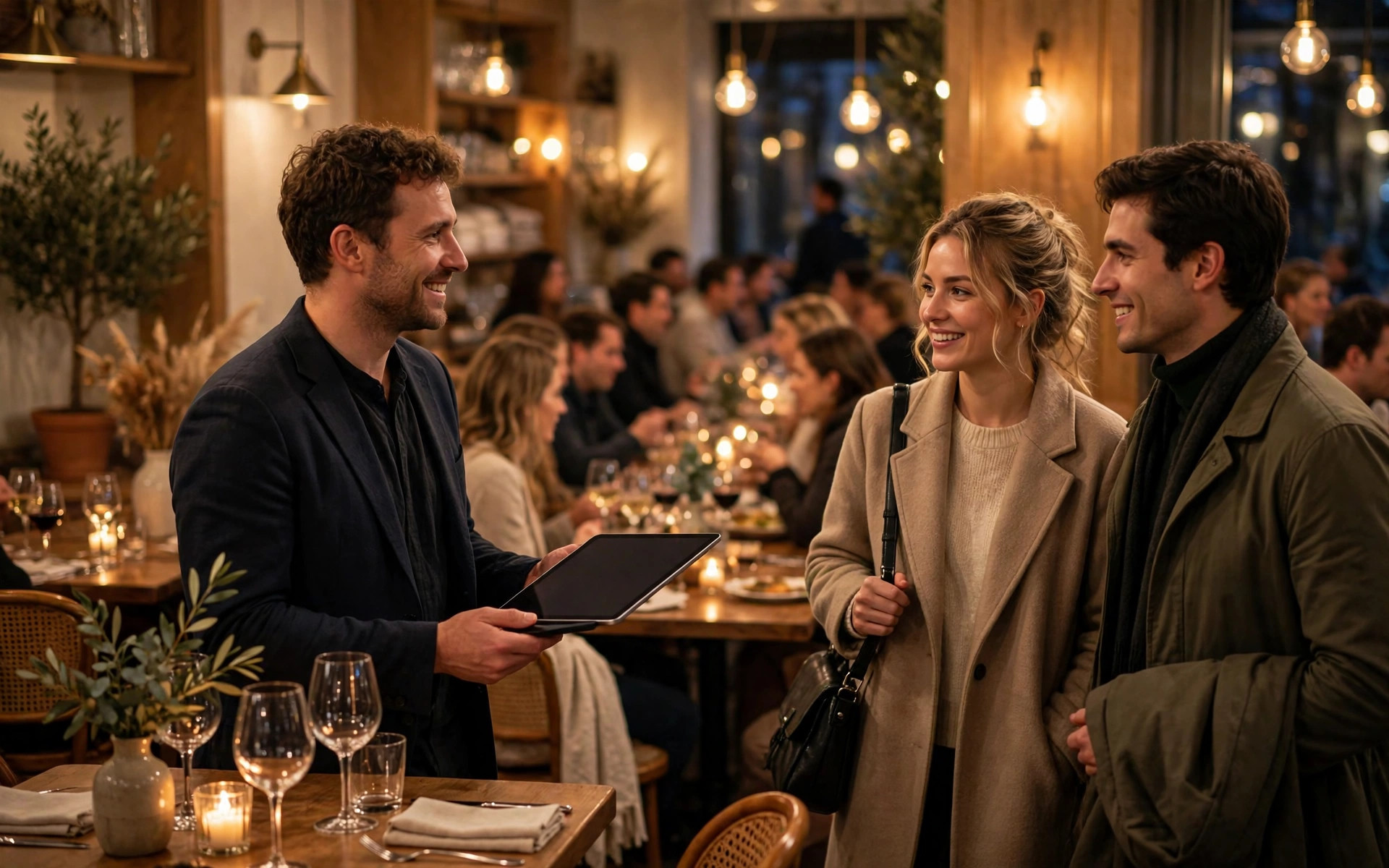
A no-show is the quietest way a restaurant loses money. The table sits empty, the mise en place was prepped, the staff were scheduled — and nobody walked in. Unlike a bad review or a slow Tuesday, no-shows feel unavoidable, a cost of doing business that owners sigh about and absorb.
They are not unavoidable. Over the past few years, booking platforms and payment systems have turned no-show prevention into a solved engineering problem: confirmations, reminders, card guarantees, deposits, waitlists. The restaurants still drowning in no-shows are mostly the ones relying on a phone, a paper book, and hope.
This guide is written for restaurant, café and bar owners in the Nordics — and anyone running a small independent restaurant anywhere. It covers the eight levers that actually move the needle, what each one costs to implement, what the reported impact is, and the hospitality mistakes to avoid so your anti-no-show system doesn't cost you the guests who do show up.
What no-shows really cost
Before picking tactics, it helps to know what you're fighting. Every empty reserved table carries three costs at once: the lost cover (revenue from guests who never arrived), the displaced demand (the walk-ins or waitlist guests you turned away to hold the table), and the wasted labour and prep (the section you kept open, the food you prepped, the staff you rostered).
Industry surveys give the problem a scale. A Zonal/Go Technology report found that around 14% of British guests admit to failing to turn up without telling the venue — a £17.59 billion problem for UK hospitality. A Lightspeed survey found 27% of diners admitted to a no-show in the past year, with 18–29-year-olds the worst offenders at 54%. OpenTable's 2026 Restaurant Impact Report put the cost of a single no-showed table for two at roughly £55.70 — call it €55–70 in the Nordics — and found 60% of operators had to turn away other bookings because of ghost tables.
Do the arithmetic for a modest restaurant: four no-showed tables of two on a busy Friday, at €60 each, is €240 gone in one evening. Over 50 weekend nights a year, that's €12,000 — before you count the guests you turned away at the door. No-show reduction isn't a hospitality nicety. It's revenue protection, and it's usually the highest-ROI project a restaurant can run.
The hopeful part: the same OpenTable report found no-show rates fell 6% year-on-year where restaurants used confirmation reminders and deposits, and 83% of diners recognised that not honouring a reservation harms the restaurant. Most guests are decent people — they just need the booking to feel like a real commitment rather than a casual maybe.
Why guests no-show: the real reasons
- They forgot. Booked weeks ago, life happened. The most common reason — and the most preventable.
- Plans changed and cancelling was hard. A survey found 47% of no-shows blamed last-minute plan changes or realising it was too late to cancel.
- They hedged. Booked two restaurants for the same evening to keep options open. Deposits kill this behaviour instantly.
- It got too expensive. Around 29% of no-shows in one survey said they decided the evening would cost too much — a menu-pricing and expectation problem.
- Cancelling felt awkward. If the only way to cancel is calling during service and apologising to a stranger, many guests simply don't.
1. Confirm every booking twice
The single biggest lever is confirmation. A guest who actively confirms is far more likely to show up than one who booked three weeks ago and hasn't thought about it since. Build a two-touch flow: an immediate confirmation when the booking is made, and a reminder closer to the visit — typically 24–48 hours before, with a second nudge a few hours ahead for same-week bookings.
Make confirming effortless. A one-tap "Confirm / Change / Cancel" set of buttons in a text or email turns a passive booking into an active commitment — and, just as importantly, gives you early warning when a table is about to open up, so you can release it to your waitlist instead of discovering it at 19:45.
How to set it up
If you use any modern booking system (DinnerBooking, resOS, TheFork, or even a decent form plugin), automated reminders are a built-in feature — usually free by email, a few cents per SMS. Email is fine and free; SMS gets read. For high-value bookings — large parties, tasting menus, New Year's Eve — add a personal touch: a short call or a message from a real person on the day. One restaurateur's rule of thumb: automate everything, but personally confirm anything you'd cry about losing.
What to watch out for
Reminders fail when they feel like spam or arrive at odd hours. Keep the tone warm and branded — "Hi Anna! Just confirming your table for four tomorrow at 19:00 at Restaurant Aalto. We can't wait to see you. Plans changed? Tap here to move or cancel." — and send them at civilised times. Also: every reminder must carry the cancel link. A reminder without an easy exit just nags; a reminder with an easy exit converts a silent no-show into a cancellable table.
2. Make cancelling painlessly easy
This one feels counterintuitive: to reduce no-shows, make it easier for guests to bail. But the logic is airtight. A guest whose plans changed will either cancel (good — you can resell the table) or no-show (bad — you discover the empty table too late). The easier cancelling is, the more of the second group becomes the first group.
Around 44% of diners say a difficult booking or cancellation process makes a restaurant less appealing, and guests who find cancelling arduous simply choose to do nothing instead. The fix is a one-click cancellation link in every confirmation and reminder — no login required, no phone call, no guilt-trip form with five mandatory fields asking why.
Set a cancellation window that fits your restaurant
State your terms clearly at booking: for example, free cancellation until 24 hours before, a fee after that. Shorter windows (same-day) suit casual spots with walk-in demand; longer windows (48–72 hours) suit fine dining and set menus where prep starts early. Whatever you choose, put it in the written confirmation — terms that appear only after the fact feel like a trap, terms agreed at booking feel like a fair deal.
And when someone cancels, thank them. A short "Thanks for letting us know — we hope to see you another time" costs nothing and keeps the door open. Guests who cancel politely are guests who rebook.
3. Take card details as a guarantee
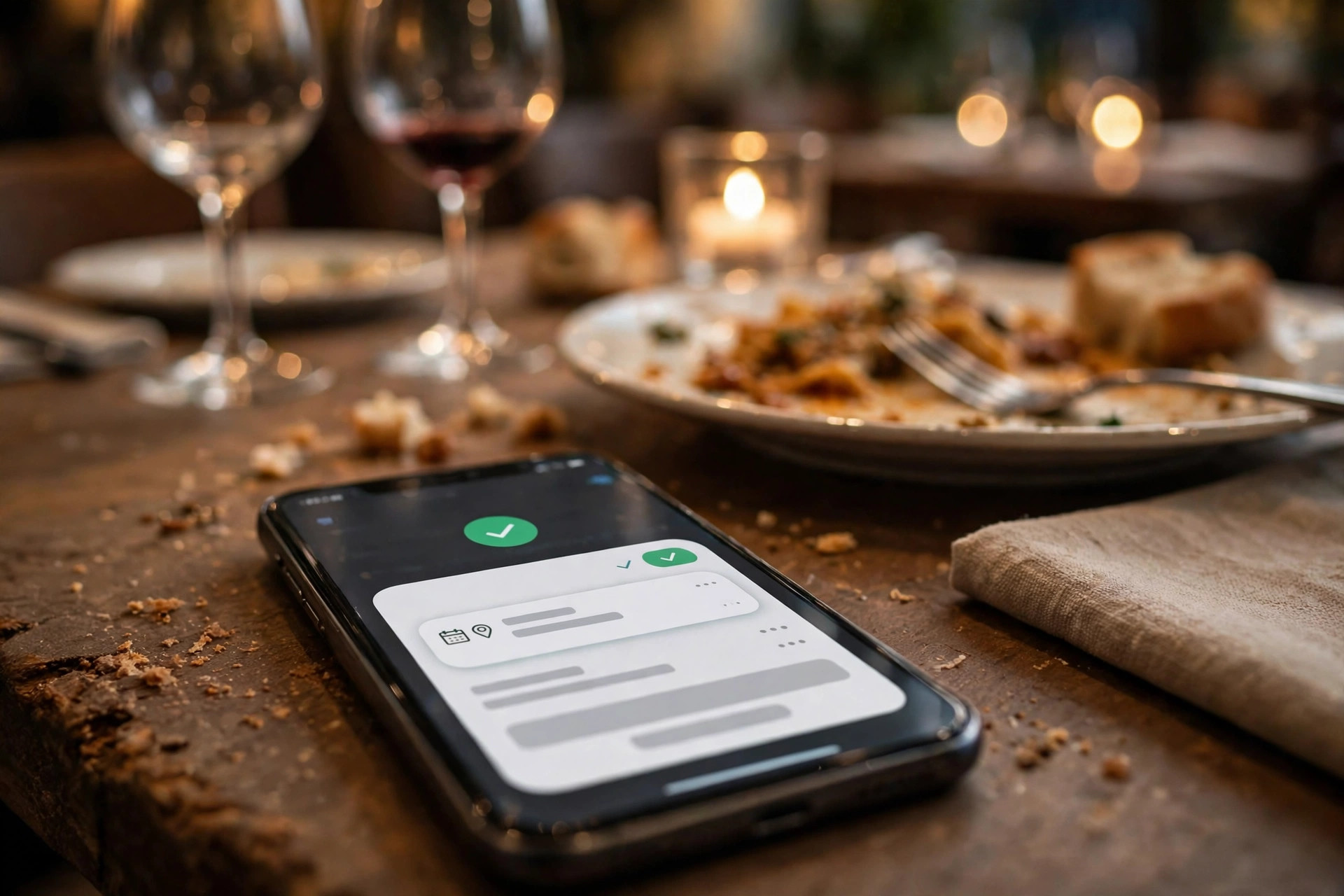
A card guarantee means the guest provides card details at booking, and you charge a pre-agreed fee only if they no-show or cancel too late. The card itself isn't charged upfront — it simply turns the booking into a commitment with consequences. Industry compilations report this as the highest-impact single measure, cutting no-shows by up to 65% where applied to peak hours and large tables.
Guest attitudes have shifted decisively. A Barclays-backed survey found about a third of UK restaurants already take card details at booking, and US research found that diners with prior experience of card guarantees were significantly more comfortable with them than those without — familiarity breeds acceptance. In the Nordics, where card payments are the norm for everything, guests are generally comfortable with the mechanics; what matters is the framing.
How to frame it without sounding hostile
Never present it as a punishment. Present it as standard practice that protects the experience for everyone: "To confirm your table we take card details — you won't be charged anything. If you need to cancel, just let us know 24 hours ahead." Collect the details through your booking system's secure payment flow (Stripe or equivalent), never by asking guests to email card numbers — that fails both security and GDPR expectations.
Start with the highest-risk bookings
You don't need card guarantees on every Tuesday lunch for two. Apply them where the pain is: parties of six or more, Friday and Saturday evenings, tasting menus, private rooms, and peak dates. A tiered policy — no guarantee for small off-peak bookings, guarantee for everything else — gets you most of the benefit with the least friction.
4. Charge deposits on high-risk bookings
A deposit goes one step further than a card guarantee: money actually changes hands (or is authorised) at booking, and it's refunded or deducted from the bill when the guest arrives. Deposits are the nuclear option of no-show prevention — reported to cut no-shows by around 55% — and they have a psychological edge: a guest who has already paid €30 per person does not casually pick another restaurant.
Deposits are standard and expected in specific situations across the Nordics: set and tasting menus (where the kitchen buys and preps for your exact party), private dining rooms, large group bookings, and peak dates like New Year's Eve and Valentine's Day. For these, guests barely blink — a deposit signals a serious restaurant.
Set the amount with care
Typical practice: 10–30% of the expected bill per person, or a fixed per-person amount (roughly €20–50 in the Nordics — treat these as starting estimates, not rules). Too small and it doesn't change behaviour; too large and it suppresses bookings. One useful test: the deposit should be large enough that abandoning it stings a little, and small enough that paying it feels trivial next to the evening's total cost.
The operational side
Deposits create admin: refunds, partial refunds, disputes, accounting. Run them through your booking or payment system so the money trail is automatic — manual deposit handling (bank transfers tracked in a spreadsheet) is where mistakes and bad reviews are born. And publish a crystal-clear refund policy: full refund with X hours' notice, forfeited after that, no exceptions for regulars either. Consistency is what makes a deposit policy feel fair instead of arbitrary.
5. Set a no-show fee — and mean it
The no-show fee is the card guarantee's teeth: a fixed amount charged to the card on file when a guest neither shows nor cancels in time. OpenTable reports that restaurants using deposits and fee-backed guarantees through its system cut no-shows by 60% globally — the vendor's own figure, but directionally consistent with independent surveys in which 44% of diners said a small deposit or card hold would make them honour or properly cancel a booking.
The fee has to be real to work. A policy you never enforce is worse than no policy: staff learn to ignore it, guests learn it's theatre, and the one time you do enforce it feels arbitrary. Decide the amount (common estimates: €20–50 per person), write it into the booking terms, and apply it every single time — including to the charming regular who "just forgot." Especially to them, because everyone else is watching.
Handle the awkward conversation well
Charging the fee is the easy part; the phone call afterwards is the hard part. Keep it factual and kind: "As mentioned in your confirmation, we charge €30 per person for tables cancelled with less than 24 hours' notice. The charge has been applied." Offer to convert it into credit for a future visit — many restaurants find this defuses anger and actually brings the guest back. What you must not do is argue, apologise excessively, or waive it inconsistently. A fee with exceptions for people who complain is a fee that trains guests to complain.
Deposit vs no-show fee: which to choose?
- Deposit: money moves upfront. Strongest commitment signal; more admin (refunds); best for set menus, events, large parties.
- No-show fee: card held, charged only on failure. Lighter at booking; needs reliable card collection and consistent enforcement; best for à la carte peak nights.
- Hybrid: card guarantee for standard bookings, deposit for high-risk ones. Most Nordic independents land here.
- Neither: viable only if you have strong walk-in demand and a waitlist — i.e. you can refill a ghost table in minutes (see way 7).
6. Overbook strategically
Airlines have done it for decades, and the math works for restaurants too: if your data says 10% of reservations no-show on Fridays, taking a few extra bookings compensates for the expected loss. This is a complement to prevention, not a substitute — it accepts that some no-shows will survive your system and prices them in.
The key word is strategically. Overbooking blindly is how you end up with a queue of angry guests at 20:00. Base it on your own numbers: track no-shows by day of week, party size and booking channel for a month, then overbook only the segments with predictable, stable no-show rates. Small parties on busy nights are the safest overbook candidates; large parties and tasting menus — where a surprise extra table breaks the kitchen — are not.
Protect the guest experience
Have a plan for the night the math fails and everyone shows up: a comfortable waiting area, a genuine apology, a drink on the house, and realistic wait times. Train the host stand on the script before you need it. And never overbook the first seating of the evening — a delay at 18:00 cascades through every seating after it.
7. Run a waitlist that fills the gaps
Even the best prevention system leaks. A waitlist converts leaks into revenue: when a table frees up — from a cancellation, a shortened meal, or a no-show you release after your grace period — you fill it within minutes instead of watching it sit empty.
The mechanics matter. A waitlist scribbled on paper and called manually dies the first busy night. Use your booking system's automated waitlist: guests join online when you're fully booked, and the system texts them in order when a table opens, with a short claim window (typically 10–15 minutes). Every release-and-fill cycle should take minutes, not a host's entire evening.
Release no-showed tables fast
Set a clear hold policy — the industry standard is 15–30 minutes past the reservation time — and stick to it. At minute 20 with no word from the guest, the table goes to the waitlist. Communicate this at booking ("we hold tables for 20 minutes") so it never feels like a surprise. A table released at 19:20 can still do a full turn; a table held hopefully until 20:30 cannot.
8. Track repeat offenders
Here's an uncomfortable truth from the data: no-shows concentrate. A small number of guests account for a disproportionate share of ghost tables — the serial hedgers who book three restaurants every Friday and pick one at 18:00. Your booking system's guest history is the tool that exposes them.
Set a simple policy: one no-show gets the benefit of the doubt and a friendly reminder of your terms. Two no-shows in a defined period means card guarantee or deposit required for all future bookings. Three, and the guest books by phone only — or not at all. This isn't about punishment; it's about allocating your tables to guests who respect them.
Use the data for more than policing
The same guest history that flags offenders reveals your best customers: the regulars who always show, always on time. Treat them accordingly — priority on the waitlist, the good table, a note in the system about their preferences. A no-show policy that only punishes feels oppressive; one paired with visible care for reliable guests feels like standards. Which is exactly what it is.
Finally, review your own numbers monthly: no-show rate by day, by party size, by channel. You'll quickly see which of the eight levers is doing the work and which segment still bleeds. The restaurants with the lowest no-show rates aren't the strictest — they're the ones that measure, adjust, and treat the booking as the start of the guest experience, not an administrative chore. If your phone bookings are part of the problem, our phone booking script guide covers the call flow, the reservation record, and the confirmation routine that stops no-shows at the source.
| Measure | Reported impact | Effort / cost | Best for |
|---|---|---|---|
| Automated confirmation reminders | 30–50% fewer no-shows | Low — built into most booking systems | Every restaurant, every booking |
| Easy one-click cancellation | Converts silent no-shows into re-bookable tables | Low | Every restaurant |
| Card guarantee | Up to 65% fewer no-shows | Low — needs a payment-enabled booking flow | Peak nights, large parties |
| Deposit / prepayment | Around 55% fewer no-shows | Medium — refund admin | Set menus, events, repeat offenders |
| No-show fee, enforced | Around 60% fewer no-shows (platform-reported) | Low — needs consistent enforcement | À la carte, high-demand nights |
| Strategic overbooking | Offsets expected losses | Low — needs your own data first | Restaurants with walk-in demand |
| Automated waitlist | Fills freed tables in minutes | Medium — system feature | Fully-booked nights |
| Guest history tracking | Stops serial offenders | Low — built into booking CRMs | Repeat-booker restaurants |
Frequently asked questions
How common are restaurant no-shows?
Industry data suggests no-show rates of 10–20% are common, with peaks during busy Friday and Saturday services. A UK survey by Lightspeed found that 27% of diners admitted to being a no-show in the past year, while a Zonal/Go Technology report found 14% of guests fail to turn up without telling the venue. The good news: OpenTable's 2026 Restaurant Impact Report found no-show rates fell 6% year-on-year where restaurants used confirmation reminders and deposits.
Is it legal to charge a no-show fee in the Nordics?
In general, yes — provided the fee is clearly disclosed and agreed to at the time of booking, and the amount is reasonable in relation to your actual loss. Put the policy in writing on your website and in the booking confirmation, and collect card details through a compliant payment provider. This is general information, not legal advice: if you plan to charge substantial fees, check your local consumer-protection rules first.
How much should a restaurant no-show fee or deposit be?
Common practice in the Nordics is a card guarantee with a no-show fee of roughly €20–50 per person, or a deposit of 10–30% of the expected bill — these are estimates, not fixed rules. Set menus and tasting menus often carry higher deposits, sometimes the full menu price. Start small, communicate the fee clearly at booking, and apply it consistently.
Do booking reminders really reduce no-shows?
Yes — reminders are consistently the highest-impact, lowest-friction measure. Industry compilations report 30–50% fewer no-shows after adding automated confirmation reminders. The reminder must include a one-tap cancel option: many silent no-shows are guests who forgot or whose plans changed and who would have cancelled if cancelling were easy.
What is the difference between a deposit and a no-show fee?
A deposit is money collected (or authorised) in advance, typically refundable on arrival — it guarantees the guest turns up because they have already paid something. A no-show fee is charged after the fact from card details taken at booking. Deposits feel stricter but require no chasing; fees feel lighter at booking time but require collection systems and sometimes awkward conversations.
What if guests refuse to give card details when booking?
Give them alternatives rather than losing the booking. Offer phone booking with a personal confirmation call, a smaller deposit via a payment link, or bookings without card guarantee on quieter nights. Reserve card guarantees for the highest-risk bookings — large parties, peak nights, set menus — and keep the policy friendly and clearly explained rather than confrontational.
Want a website that fills tables instead of chasing no-shows?
PowerfulWebsite builds your restaurant's website for free — you only pay from €59/month. Online booking with confirmations, reminders and card guarantees built in. Everything included: domain, hosting, maintenance and updates.
See the packages