TripAdvisor for Restaurants: Setting Up Your Profile
Claiming your TripAdvisor restaurant profile is free and takes about an afternoon — but most restaurants leave half the fields empty, which quietly costs them bookings. The short version: register in the Management Center, claim or create your listing, complete every field including photos and a menu link, add a reserve button, and answer every review. This guide walks through each step, with the Nordic specifics that global guides miss.
Key takeaways
- Claiming and managing your restaurant's TripAdvisor listing is free — paid extras (sponsored placement, the reserve button) are optional, not required.
- Complete listings win: restaurants with 20+ reviews and 11+ photos see roughly double the engagement of empty ones, per TripAdvisor's own figures.
- Your listing often already exists, created from public data — claim it before it fills up with reviews you cannot answer.
- Link your menu to a real HTML menu page on your own website, not a PDF — AI assistants and guests both prefer it.
- Respond to every review, especially the bad ones: TripAdvisor reports twice the engagement for listings whose owners reply.
- For Nordic restaurants, TripAdvisor peaks in the tourist season — set up once, and it works for you every summer.
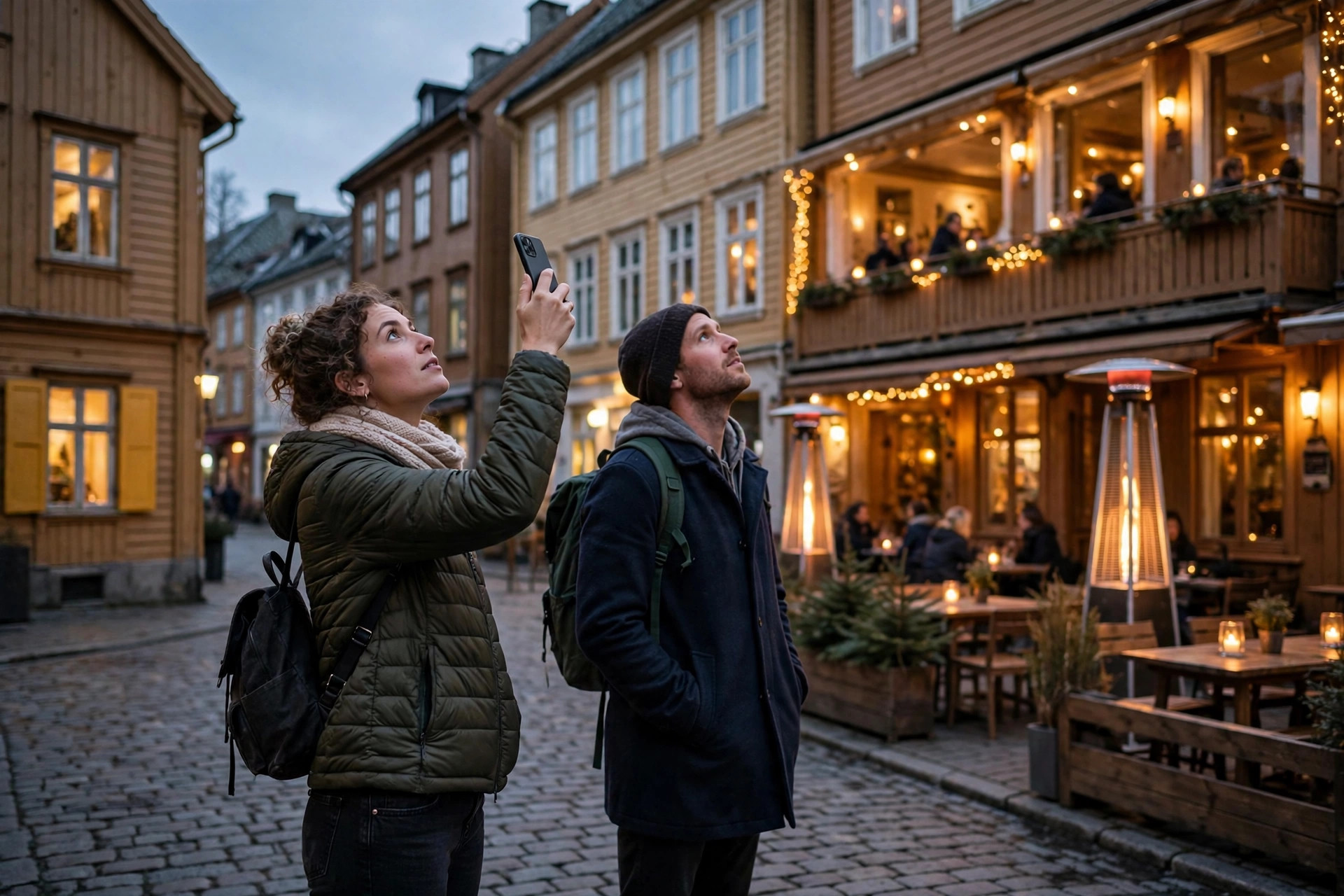
Picture a couple stepping out of a hotel in Bergen in July. They have one free evening, no reservations, and no idea where the locals eat. One of them opens TripAdvisor, taps "restaurants near me," and starts scrolling. Your restaurant might be fifty metres away — but if your profile has no photos, no hours, a three-year-old menu and twelve unanswered reviews, they will never notice you. That is the whole argument for setting up your TripAdvisor profile properly: it is not a vanity page. It is a decision tool for the exact guests who are hardest to reach any other way.
This guide covers the complete setup for restaurants: why TripAdvisor still earns its place in your marketing in 2026, how to claim and verify your listing step by step, how to complete every field that matters, photo and menu strategy, the truth about the reserve button and what it costs, how to build and protect your review base, and the Nordic specifics — tourist seasons, languages, and the booking platforms your guests actually use. No prior experience required; by the end you will have a profile that converts browsers into booked tables.
Why TripAdvisor still matters in 2026
It is fashionable to dismiss TripAdvisor as a relic of the 2010s, displaced by Google and Instagram. That view confuses local discovery with travel discovery. Google dominates the moment someone searches "restaurant near me" from their home suburb — the locals already know their neighbourhood. TripAdvisor dominates a different moment entirely: the traveller who just arrived, does not know the city, and is choosing dinner for tonight in a place where they know no one. For a restaurant in a tourist-facing city, that moment is worth real money.
The platform's own long-running diner surveys (surveying its own user base, so read them with the usual grain of salt) consistently report that the overwhelming majority of respondents say TripAdvisor content — reviews, photos and owner engagement — influenced their restaurant choice while travelling, and a similarly large share say they prefer it over Google or Facebook when picking restaurants away from home. Whether you trust the exact numbers or not, the directional signal matches what every hotel concierge in a Nordic capital will tell you: tourists plan and choose differently from locals, and TripAdvisor is where many of them plan.
Google wins the guest who lives near you. TripAdvisor wins the guest who just landed near you.
| TripAdvisor | Google Business Profile | |
|---|---|---|
| Core audience | Travellers planning and choosing in an unfamiliar city | Locals and "near me" searchers already in the area |
| Review style | Longer, moderated before publishing; detail-rich | Short, instant, high volume; unverified by default |
| Seasonal peak (Nordics) | Summer tourist season, Christmas and northern-lights months | Year-round, steadier local flow |
| Cost to set up | Free; reserve button is a paid booking product | Free, including posts, menus and Q&A |
| Owner's main lever | Review volume, recency and response rate | Profile completeness, categories, photos and reviews |
There is a second reason the profile matters even when the traveller searches elsewhere: TripAdvisor listings rank. Search for a restaurant name plus "reviews" and the TripAdvisor page is usually near the top of the results. That means your profile functions as a second review surface on Google's own search pages — the stars, the review count and your management responses all show up in the decision flow even for guests who never open TripAdvisor directly. A neglected profile is a billboard for neglect on the search page itself.
Finally, there is a practical angle: the marginal cost of doing this right is tiny. Claiming is free, completion takes an afternoon, and maintenance is a few minutes a week. Few marketing tasks offer that return ratio — free access to an audience of guests who are literally deciding where to eat tonight, in your neighbourhood, right now.
Before you claim: get these ready
Verification goes much faster when you have everything in front of you before you start. TripAdvisor will check that you actually own or manage the restaurant, so the details you submit need to match the real world — your signage, your business registration, and what a guest finds when they walk past your door.
The identity documents
Have your exact business name as it appears on your signage and official records, your full street address, and a phone number where TripAdvisor can reach you during the verification process. Many restaurants stumble here because the name on the door differs from the legal name — TripAdvisor cares about the name guests know you by, so use the public-facing name. If the restaurant is part of a group or a franchise, be clear about which location you are claiming; each physical location gets its own listing.
The content assets
Prepare ten to twenty good photos before you touch the Management Center: two or three of your best dishes, your dining room at its busiest and warmest, your terrace or bar area, the exterior so guests recognise the door, and a couple of staff-in-action shots. Do not use stock photography or heavily filtered images — TripAdvisor's photo guidelines favour authentic imagery, and guests spot fakes instantly. Have your menu link ready, ideally pointing at a proper HTML menu page on your own website (more on that below), plus your regular opening hours, your cuisine categories, and the price range band that honestly describes you.
The 20-minute pre-claim checklist
Exact public name · full address · local phone number · website URL · cuisine type and secondary cuisines · meals served (breakfast, lunch, dinner, brunch) · price range · regular opening hours · 10–20 real photos · menu page link on your own site. With these in hand, the claiming flow itself takes about twenty minutes; only the verification step adds waiting time.
Claiming and verifying your listing, step by step
The owner-facing side of TripAdvisor is the Management Center at tripadvisor.com/owners. Everything about your listing — the details, the photos, the reviews, the responses — is managed from there. Registration is free.
Step 1: check whether a listing already exists
Search TripAdvisor for your restaurant by name and city. In most cases you will find a listing already — TripAdvisor creates entries from public data, and guests may have been reviewing you for years without you knowing. This is the single most important reason to claim: an unclaimed listing collects reviews you cannot answer and displays details you cannot correct. If you find it, do not create a second one; choose "Claim your listing" (or "Own or manage this property? Claim your listing for free") on the listing page.
Step 2: request a new listing if none exists
If no listing exists — common for brand-new restaurants — request one through the Management Center with your contact information and business details. You will answer detailed questions about the property: category, cuisine, price information, amenities and recommended length of visit. Take the description fields seriously here; the text you write becomes the public description of your restaurant, and most owners write it once and never touch it again.
Step 3: upload a photo and submit
Submit at least one representative photo of the business with your request. For claiming an existing listing, submitting the claim starts the verification process; for new listings, TripAdvisor reviews your submission and typically confirms it within about five business days — allow a full working week in practice.
Step 4: verify ownership
TripAdvisor verifies that you actually own or manage the business before handing you control. Methods vary but typically include a verification postcard mailed to the business address with a code, an email to the business domain, or a phone call. Video or document verification may be requested in some cases. Complete this step promptly: your profile only becomes fully manageable once verification is done, and pending claims can stall.
Two edge cases are worth knowing. If the listing is already verified by someone else — a former manager, a franchisor, even an enthusiastic fan — do not create a duplicate; request ownership transfer through the Management Center instead. And if you find multiple listings for the same location, report the duplicates and get them merged: split listings fragment your reviews and dilute the ranking that the combined review count would give you. Remember that your listing probably already exists and guests may already be reading it — claiming it is not starting from zero, it is taking back control.
Completing every profile field
Claiming is the handshake; completion is the work. A listing with just a name and an address is a placeholder, and travellers scroll past placeholders. Work through every field below — nothing here is optional if you want the profile to pull its weight.
Business details: name, contact and location
Your name must match the signage exactly — no keyword stuffing, no branch suffixes, no "best pizza" embellishments. The address must be the real, findable address, and the map pin must sit on your actual front door. TripAdvisor lets guests navigate to you directly, and a pin on the wrong street is a one-star review waiting to happen. The phone number should be a number a human answers during opening hours; the website link should go to your own domain, not to a third-party ordering page, so the traffic stays yours.
Cuisine, meals and price range
Choose the cuisine categories that match how travellers describe you, not how you describe yourself. A wood-fired pizza place in Turku is an "Italian" and "Pizza" restaurant in TripAdvisor's taxonomy before it is anything else. Select all the meals you serve — breakfast, brunch, lunch, dinner — because travellers filter by meal: a family hunting Sunday brunch will never see a listing that only ticks "dinner." Set the price range honestly. Understating it fills you with guests who flinch at the bill; overstating it filters out guests who would have loved you.
Special diets, features and amenities
TripAdvisor offers filters for vegetarian, vegan, gluten-free and other dietary needs, plus features such as outdoor seating, wheelchair access, free Wi-Fi, parking, live music and private dining. Tick everything that is genuinely true. Dietary filters are disproportionately powerful: a vegan traveller in a new city will shortlist from the vegan-filtered results, and being in that shortlist is worth more than being tenth in the general ranking. The same logic applies to families (high chairs, kids menu) and business travellers (Wi-Fi, quiet areas).
Opening hours — including the ones that change
Enter your regular hours, then immediately think about the exceptions: national holidays, midsummer, Christmas week, your summer terrace season, the two weeks you close in February. TripAdvisor travellers arrive disproportionately at exactly these moments — the guest standing outside your door on a public holiday is a guest who checked somewhere and got it wrong, or checked nowhere at all. Updating holiday hours is a five-minute job that prevents one-star reviews from people who walked there for nothing. Set a recurring reminder: every holiday, update the hours first.
Photos: the highest-leverage upload
If you do one thing beyond claiming, upload photos. TripAdvisor's own research reports that restaurants with 11–20 photos get roughly twice the diner interaction of restaurants with no photos. Diners shop with their eyes — the photo strip is the first thing a traveller sees after your name, your rating and your price band, and it does more persuasion than any description you could write.
What to shoot
Aim for a spread that answers the traveller's unspoken questions: What does the food look like? What does the room feel like? Will I find the door? A practical mix is three to four hero dish shots, three to four dining-room shots (day and evening), the terrace or bar, two exterior shots from the street, and two or three staff or kitchen moments. Change the featured image with the seasons — a terrace shot in June, a candlelit room in December — so the profile looks alive whenever someone looks at it.
Quality beats quantity, but quantity has a number
You do not need a professional photographer, but you do need light, focus and honest representation. Shoot in daylight or warm evening light, keep plates clean, and never post a dish that looks better than the one a guest will receive — the gap between the photo and the plate is where disappointment reviews are born. As an owner you can upload an unlimited number of photos, but aim past the 11–20 threshold that TripAdvisor's research highlights, then keep adding a few every month so the strip stays fresh.
Your photos answer three questions before a guest reads a single word: does the food look good, does the room feel right, and will I find the door?
Menu link and the reserve button
Two links on your profile do most of the converting: the menu and the booking action. Getting both right is the difference between a profile that informs and a profile that books.
The menu: link to your own site, in HTML
Add your menu as a website link in the Management Center, pointing at your own website's menu page. This is deliberately better than uploading a PDF or a photo of the menu: an HTML menu page stays current whenever your site does, every click becomes traffic on your own domain, and — increasingly important — AI assistants and search engines can read the dish names, descriptions and prices, quote them to guests, and send you customers who already know what they want to eat. If your menu page is currently a PDF download, fixing that is one of the highest-value web tasks a restaurant can do; our guide to digital menus done right walks through the migration. The same logic applies to multilingual menus: an English (and, in the Nordics, often a second-language) menu page on your own site serves the TripAdvisor traveller far better than a PDF in your local language.

The reserve button: what it costs and what it really is
The prominent "Reserve" button that appears on some TripAdvisor restaurant listings is a paid feature tied to TripAdvisor's booking products, chiefly TheFork — the reservation brand TripAdvisor owns. You enable it through the Management Center after signing up for a compatible booking plan, and the cost model is typically commission per seated guest or a subscription tier, varying by market. This is the part most guides gloss over, so here is the honest Nordic caveat: TheFork's coverage in the Nordics is limited, and many Nordic restaurants simply cannot use the button. The practical workaround is not to chase it — it is to make the two links you do control unbeatable. Your profile's website link should land on a page with a booking button that takes under a minute to use, and that booking should live on your own site or a Nordic platform your guests trust, such as DinnerBooking. A traveller who taps through to a clean booking flow converts; one who taps through to a generic homepage does not. For the full comparison of booking approaches, see online booking vs phone.
Reviews: getting them and answering them
Everything so far sets the stage; reviews are the performance. TripAdvisor's popularity ranking — the number that puts you #47 or #3 among restaurants in your city — factors in review quality, quantity and recency, so the profile rewards restaurants that steadily accumulate genuine reviews and punishes stagnation. TripAdvisor reports that restaurants with over 20 reviews see roughly twice the engagement of those with none, and those with over 40 recent reviews see roughly three times the engagement. The message is not "get more stars" — it is "get more reviews, steadily, forever."
How to get more reviews without breaking the rules
Start with the obvious and the allowed: put a small, elegant prompt on the receipt or the bill folder, add a review link to your post-visit thank-you email, and train staff to ask satisfied guests — at the right moment, when the plates are cleared and the mood is good — whether they would share their experience on TripAdvisor. Never offer discounts, freebies or any incentive for reviews: it violates the platform's guidelines and, when discovered, the damage to trust far outweighs the extra stars. Never buy reviews either. Also worth knowing: TripAdvisor lets you respond to reviews, but not to solicit them selectively — asking only happy guests to review while steering unhappy ones elsewhere can backfire if it becomes obvious. The sustainable approach is a simple, honest system applied to everyone.
Responding: the part owners skip, and should not
Respond to every review. Positive ones get a short, specific thank-you — mention the dish they liked, not a copy-pasted "thanks for visiting." Negative ones get a calm, professional response that acknowledges the specific complaint, says what you are doing about it, and offers a direct contact. TripAdvisor's data suggests managers who respond to even a small share of reviews see roughly twice the diner engagement of those who never respond, which makes sense: future guests read your replies far more carefully than they read the complaint. A gracious reply to a one-star review is an advertisement for how you handle problems. Our companion piece on replying to negative reviews has five copy-ready templates for the common situations.
Review response rhythm
Check the Management Center twice a week. Thank every positive review within a few days. Answer every negative review within 48 hours — calmly, specifically, never defensively. Once a month, read your recent reviews as a batch and look for patterns: the same complaint three times is not three complainers, it is an operations note.
The Nordic playbook: seasons, tourists and languages
Global TripAdvisor guides assume a steady year-round flow of visitors. Nordic restaurants do not have that: they have a summer peak, a Christmas peak, and long quiet stretches between. Your TripAdvisor strategy should match that rhythm.
Seasonality is your calendar
For restaurants in Helsinki, Stockholm, Oslo, Bergen, Reykjavik and the Baltic-facing cities, TripAdvisor traffic concentrates heavily in June–August and again around Christmas markets and the northern-lights season. Two practical consequences: first, your profile must be at its absolute best by late May — photos current, hours correct, menu linked, reviews answered — because that is when the year's biggest audience arrives. Second, the quiet months are your review-building window: the local guests you serve in February are the reviewers whose fresh, recent reviews will still count when the summer travellers shortlist you. Recency matters in the ranking, so a steady drip through winter beats a frantic sprint in June.
Languages: English is the traveller's language
Write your profile description in English first, even if your primary clientele is local. The traveller audience that TripAdvisor brings you reads English; a Finnish- or Swedish-only description is invisible to them. If you serve significant German or French visitor flows — common in Lapland, the fjords and the archipelagos — a second short description in that language is worth the hour it takes. And answer English-language reviews in English, always: the reply is read by the next English-speaking guest deciding whether to book.
Local platforms, not imported defaults
Guides written for the US market will tell you to connect OpenTable or TheFork to your TripAdvisor profile. In the Nordics, your guests book through Nordic systems — DinnerBooking is strong in Denmark, and various local and pan-Nordic tools cover Sweden, Norway and Finland. Where a direct TripAdvisor reserve-button integration does not exist for your platform, the website link on your profile must carry the load: make sure it points at your booking page, not your homepage. Also remember that Nordic guests expect card-friendly, no-deposit booking flows and clear cancellation terms — friction that an American guide would never mention is the friction that loses you the table.
A Nordic restaurant's TripAdvisor profile should be at its best by late May — because that is when the year's biggest audience arrives.
Seven mistakes that hold back TripAdvisor profiles
Most of the profiles underperforming in your city are not underperforming because of bad food — they are underperforming because of the same handful of avoidable errors. Check your own profile against this list.
- Never claiming the listing. The profile exists, guests review it, and you cannot answer. This is the most expensive mistake because it is free to fix.
- A wrong or drifting map pin. Check it on a phone, not just a desktop. If the pin drops guests on the wrong street, fix it in the Management Center before the next bad review about "impossible to find."
- Stale hours, especially holidays. Nothing generates angrier reviews than a closed door during stated opening hours. Update every holiday, every season change.
- Menu as a photo or a PDF. Unreadable to search engines, unreadable to AI assistants, annoying on a phone. Link to an HTML menu page on your own site.
- Three photos from 2019. Fewer than eleven photos puts you below the threshold TripAdvisor's own data associates with double engagement. Fresh photos are free.
- Ignoring reviews, or only answering the nice ones. Future guests read the silence around a bad review as an admission. Answer everything.
- Website link pointing nowhere useful. The link on your profile should land on a page where a guest can see the menu and book a table in under a minute — not a generic homepage. If your site cannot do that today, that is the website problem to fix; it is exactly what a proper restaurant website is for.
None of these requires a budget. All of them require the one afternoon most owners keep postponing. Your competitors are postponing it too — which is why doing it this week is a competitive advantage, not just housekeeping.
Frequently asked questions
Is TripAdvisor free for restaurants?
Yes. Claiming your restaurant listing, verifying it, adding photos, your menu and business details, and responding to reviews costs nothing. TripAdvisor charges for extras: sponsored placement that puts your restaurant above organic results, and booking products — the reserve button typically routes through TheFork, TripAdvisor's booking brand, which charges per-seat commission or a subscription depending on the plan. For most independent restaurants the free listing plus a good free setup is enough.
How do I claim my restaurant on TripAdvisor?
Go to tripadvisor.com/owners and open the Management Center. Search for your restaurant by name and city — if a listing exists (and one often does, created from public data), choose "Claim your listing" and follow the verification steps. If no listing exists, request a new one with your name, address, phone, cuisine type and opening hours. TripAdvisor verifies ownership before giving you control, usually by postcard, email or phone, and the listing typically goes live within a few business days of verification.
Can I remove a negative review from TripAdvisor?
Only if the review violates TripAdvisor's guidelines — fake content, spam, conflicts of interest, hate speech or second-hand stories, for example. You cannot remove a review simply because it is negative or you disagree with it. Flag guideline violations from the Management Center; TripAdvisor's moderation team reviews them and the process can take days to weeks. For legitimate criticism, a professional management response is far more effective: future guests read your reply, not the complaint.
How do I add a menu to my TripAdvisor profile?
In the Management Center, add your menu as a website link pointing to your own site's menu page — this is the cleanest option because the menu stays current whenever your site does, and every click becomes a visit to your own domain. Make sure that menu page is a real HTML page with dish names, descriptions and prices, not just a PDF download: Google and AI assistants can read the HTML version, quote your dishes, and send you the guests. Avoid photo-only menus for the same reason.
How do I add a reserve button to my TripAdvisor profile?
The prominent reserve button on TripAdvisor listings is a paid feature tied to TripAdvisor's booking products, primarily TheFork, and you enable it through the Management Center after signing up for a compatible booking plan. Note that TheFork's coverage in the Nordics is limited, so many Nordic restaurants cannot use it — the practical alternative is making sure your profile's website link points to your own booking page or a Nordic booking platform such as DinnerBooking, and that the booking button there takes under a minute to use.
Is TripAdvisor or Google more important for restaurants?
They serve different moments. Google dominates local discovery — the "restaurant near me" searches from people who already live nearby — while TripAdvisor is strongest with travellers planning ahead and choosing restaurants in an unfamiliar city. For Nordic restaurants the split is seasonal: a Helsinki or Stockholm restaurant may get most of its TripAdvisor traffic in the summer tourist months, while Google carries the year-round local trade. Doing both properly is the answer; neither replaces the other.
Want a website that turns TripAdvisor clicks into table bookings?
Your TripAdvisor profile brings the travellers — your website closes the deal. PowerfulWebsite builds your restaurant's website for free; you only pay from €59/mo, with the menu, booking flow and local SEO handled. See what your site could look like.
See the packages