Restaurant Influencer Marketing: Guide + Contract Template
Restaurant influencer marketing means partnering with local food creators — typically micro-influencers with 5,000 to 50,000 followers — who visit your restaurant and share it with their audience. The most cost-effective setup for an independent restaurant is 3–5 local creators per campaign, each invited for a hosted meal plus a modest fee (typically €100–€400 in the Nordics), with a simple written agreement covering deliverables, usage rights and advertising disclosure.
Key takeaways
- Micro food creators (5k–50k followers) usually outperform big names for restaurants: their audiences are local, engaged and actually within visiting distance.
- Budget roughly €100–€400 per collaboration in the Nordics for micro-creators — a hosted meal alone is often enough for nano-creators (under 5k followers).
- Always vet before you invite: check audience location, engagement rate and content quality. Follower count alone tells you almost nothing.
- Use a written agreement even for free-meal collaborations — it protects both sides and clarifies what "a post" actually means.
- Track results with a unique promo code or booking link; expect the visit spike within 1–2 weeks, not years.
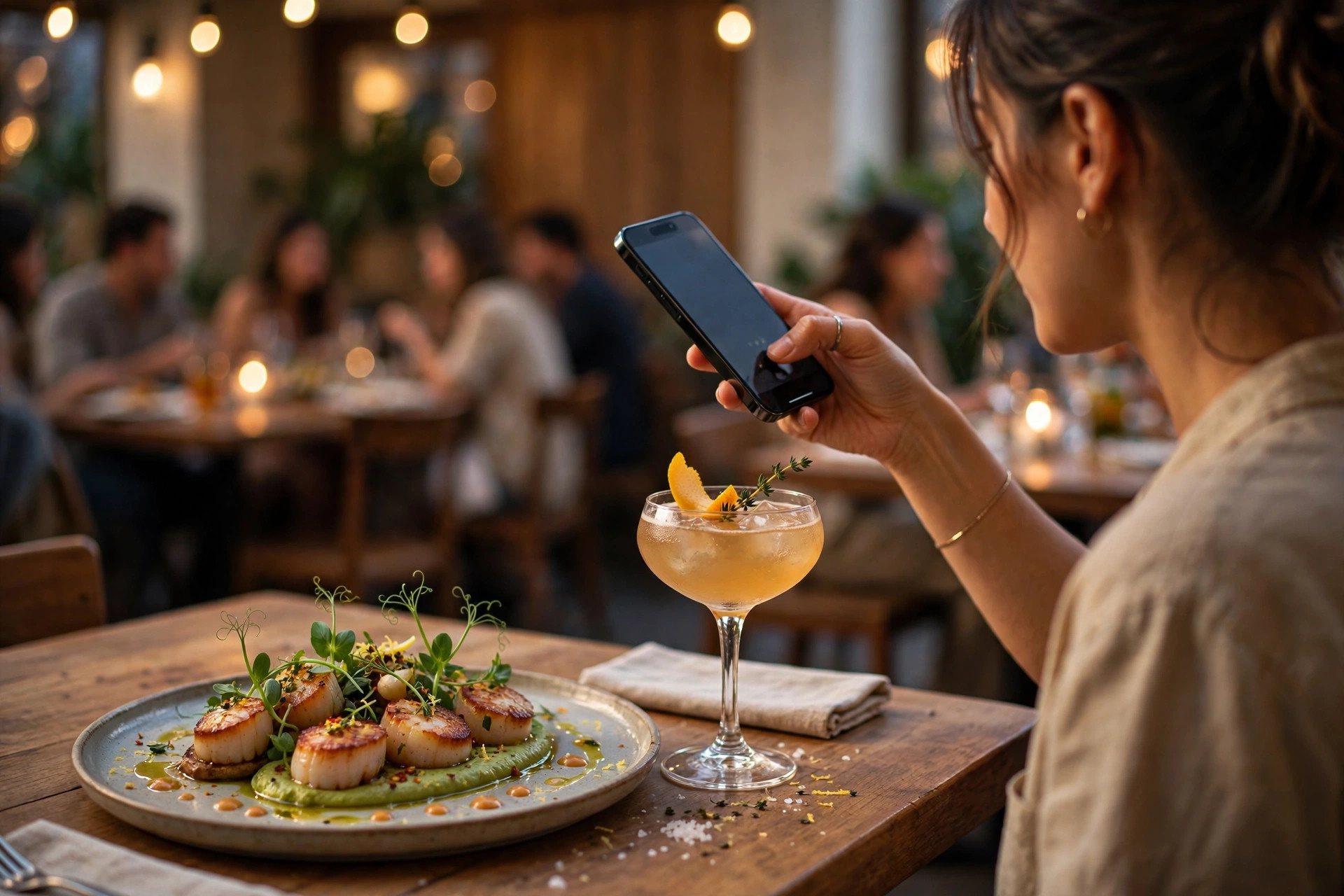
This guide is written for independent restaurant, café and bar owners who keep hearing that "influencers" are the answer to quiet weekdays — and who want an honest, practical answer instead of hype. We will cover how restaurant influencer marketing actually works, what it costs in the Nordic market in 2026, how to find and vet the right local creators, what to offer them, the contract clauses that matter (with a template you can copy), and how to measure whether it was worth it. If you run a single location with a tight marketing budget, this is written for you.
What is restaurant influencer marketing?
Restaurant influencer marketing is the practice of partnering with content creators — people who publish food and lifestyle content on Instagram, TikTok or YouTube — to introduce your restaurant to their audience. In exchange, you typically provide a hosted (free) meal, a fee, or both, and the creator publishes agreed content: a reel of your dishes, a review-style video, stories from the visit, or some combination.
Think of it as word of mouth with a camera. Traditional word of mouth reaches the diner's friends; creator word of mouth reaches thousands of strangers who have already decided they trust this person's taste. Food is one of the best-performing categories for this kind of content because it is visual, emotional and tied to a concrete action (book a table tonight) rather than a vague brand impression.
The model only works when the audience is local. A creator with 500,000 followers spread across three countries can do almost nothing for a 40-seat restaurant in Turku or Bergen. A creator with 12,000 followers who all live in your city and actively hunt for new lunch spots can fill your weekend. This single insight — local relevance beats raw reach — is the foundation of everything that follows in this guide.
What it looks like in practice
A typical collaboration goes like this. You identify a local food creator whose content and audience fit your restaurant. You send a short, specific invitation. You agree in writing on what they will publish (say, one Instagram reel and three stories), when, and what they get in return (a hosted dinner for two plus a fixed fee). They visit on a agreed date, film and photograph their meal, publish within a few days, and tag your restaurant and its location. You reshare their content, track any promo code, and measure the effect on bookings over the following two to four weeks.
What it is not
It is not free advertising, and it is not a review. The moment you pay — or even provide a high-value meal with a contract attached — you are buying reach and creative work, not a guaranteed opinion. Reputable creators will not promise a positive review, and you should not ask them to. What you can reasonably expect is honest coverage: they film the experience, highlight what impressed them, and share it with people who trust their judgment. If that honesty makes you nervous, the right answer is better food and service, not a stricter contract.
Why micro food creators win for restaurants
Creators are usually grouped into tiers by follower count, and each tier serves a different purpose. For a restaurant that needs tables filled this month, the sweet spot is almost always the micro tier — and often the nano tier below it.
| Tier | Followers | Typical Nordic cost per post (estimate) | Best for |
|---|---|---|---|
| Nano | 1k–10k | Hosted meal often enough; €50–€150 if paid | Hyper-local buzz, authentic content, low risk |
| Micro | 10k–50k | €100–€400 + hosted meal | The restaurant sweet spot: local reach + real engagement |
| Mid-tier | 50k–500k | €500–€3,000 | Regional awareness, launches, new locations |
| Macro | 500k–1M | €3,000+ | Brand building for groups and chains |
| Mega / celebrity | 1M+ | €10,000+ | Rarely sensible for a single restaurant |
Why the small accounts win. Micro and nano food creators typically see engagement rates of roughly 4–8%, versus 1–2% for large accounts, according to industry reporting widely cited in 2026. Their followers chose them for local recommendations, comment on their posts, and actually act on them. A commonly cited industry rule of thumb puts sponsored post pricing around $10 per 1,000 followers on Instagram and TikTok — useful as a starting benchmark, but Nordic micro-creators often price below that, especially when a great meal is part of the deal.
The local-relevance argument
Ask yourself one question before looking at any creator's numbers: what share of their audience could realistically walk through my door? A Helsinki food account whose followers are 80% local is worth ten times a pan-Nordic lifestyle account with triple the followers. Check the creator's past posts: do they tag local restaurants? Do their followers comment things like "I have to try this place"? Is the audience speaking your language, in your city? If the answers are yes, you have found a candidate worth your budget.
The engagement maths
Engagement rate is the number that matters: average likes + comments + shares per post, divided by follower count. For a local food creator, 3%+ is healthy; 5%+ is excellent. Be suspicious of accounts with large followings and near-zero comments — that pattern usually means bought followers or an audience that stopped paying attention years ago. We will show you exactly how to check this in the vetting section below.
"A creator with 5,000 followers concentrated around your city may be more useful than a creator with 50,000 followers spread across several countries."
What does it cost in 2026?
Prices vary by city, platform and creator tier, and anyone who gives you a single number is guessing. But Nordic restaurant owners can work with these practical ranges — treat them as estimates for budgeting, not as quoted prices.
- Nano creators (1k–10k): very often happy with a hosted meal for two (typical value €60–€120) and nothing else. If you do pay cash, €50–€150 per reel is a common Nordic range.
- Micro creators (10k–50k): typically €100–€400 per reel plus the hosted meal. Stories bundled in are standard; a dedicated feed post may cost more than a reel in some niches.
- Mid-tier (50k–500k): €500–€3,000 per video, with the upper end reserved for creators with proven regional pull.
- Macro and above: out of scope for most independent restaurants — think €3,000 and up, usually handled through agencies or PR firms.
These are cash ranges. Remember that the hosted meal has a real cost to you: food cost, a table during service, staff time. Price it honestly. A "free" collaboration that occupies a prime Friday table for three hours while the creator films every course is not free — it is a marketing expense, and it should be measured like one.
The pricing models you will encounter
Hosted meal only. The classic restaurant deal. Works best with nano creators and genuine fans who were going to post anyway. Flat fee per post. The cleanest model: one reel + three stories for €250, agreed in writing. Package deals. Three visits over two months for a fixed sum — useful for launches and seasonal menus. Affiliate or promo code. The creator earns a small commission (or their followers get a discount) per tracked booking; good for extending a campaign cheaply. Ambassadorship. A monthly retainer for ongoing content; only makes sense once you have measured results from one-off collaborations.
How to budget your first campaign
Start with a test budget of €500–€1,000 total, split across three to five nano or micro creators rather than one bigger name. That gives you comparable data, diversifies the risk, and produces several pieces of content you can reshare and reuse. If the test produces measurable bookings, scale the format that worked. If it produces nothing, you have learned cheaply — which is exactly what a test budget is for.
How to find food creators in your city
The best local creators are rarely the first names that come to mind — they are the accounts your regulars already follow. Here is a practical search routine that takes about an hour.
Search Instagram and TikTok like a local
Start with your city's food hashtags: combinations of your city name with "eats", "food", "foodie", "restaurants" in your local language and in English (both get used in the Nordics). Then check the location tag of your restaurant and of nearby competitors — the people who post from those locations are your warmest leads. Finally, look at who your competitors' most engaged followers are: an account that comments enthusiastically on three rival restaurants' posts is a food lover with an audience, and probably open to an invitation from you.
Ask your own ecosystem
Ask your staff which food accounts they follow. Ask your suppliers — delivery drivers and produce reps visit every restaurant in town and know who films everywhere. And check your own tagged photos: guests who already post about your restaurant unprompted are your most credible potential partners. A creator who genuinely likes your food will always outperform a mercenary with better lighting.
Shortlist 8–10, contact 4–5
Build a simple shortlist with columns for handle, platform, followers, city fit, content quality and contact info. Expect roughly half to reply and half of those to convert into a collaboration — that is normal, not a sign your offer is weak. If you want help filling your feed while you search, our guide to TikTok for restaurants shows how to build your own short-form presence in parallel, so creator content lands on an active profile instead of a dead one.
How to vet creators before you invite them
A bad collaboration costs you a free table, staff time and — worse — content that makes your restaurant look cheap. Spend twenty minutes vetting each candidate with this checklist.
- Audience location. Scan recent posts and comments: are followers speaking your language, mentioning your city, tagging local places? If the audience is scattered across the globe, walk away no matter how pretty the feed is.
- Engagement rate. Take the average likes + comments of their last 9 posts and divide by follower count. Below 1% is a red flag; 2–4% is solid; 5%+ is excellent for food content. Compare it against their own history — a sudden drop suggests bought followers or audience fatigue.
- Comment quality. Real engagement looks like questions ("Is this the place near the harbour?"), tags of friends, and conversations. Hundreds of fire emojis and generic "nice pic" comments from accounts with no profile pictures suggest engagement pods or bots.
- Content quality and fit. Does their style match your restaurant? A moody fine-dining photographer is a poor fit for a bright family pizzeria, however talented. Watch two full videos: is the food the hero, and would you be proud to reshare this on your own channels?
- Sponsored content history. Check how they handle paid posts. Do they disclose partnerships clearly (as the law requires)? Do sponsored posts get reasonable engagement, or does the audience visibly switch off? Past restaurant collaborations are the best predictor of future ones.
- Consistency. An account that posted weekly for two years is a safer bet than one that posted daily for a month. You want a creator with a habit, not a hobby.
"Treat influencer selection like purchasing: defined specs, vetted vendors, measurable results. Hope is not a strategy."
The outreach message that gets answered
Creators — even small ones — receive a steady stream of vague invitations ("collab? DM me"). Yours will stand out by being specific, short and human. Instagram DM or email both work; DM is usually faster for nano and micro creators.
A DM template that works
"Hi [name] — I run [restaurant], the [cuisine] spot on [street] in [city]. I've been following your [city] food posts for a while and your video of [specific dish/place] was great. We'd love to invite you and a guest for dinner on us — our new [seasonal menu / signature dish] launches [date]. In return we'd ask for one reel and a couple of stories, whatever feels natural to you. Happy to put it in a short written agreement so we're both clear. Would you be up for it?"
Why this works: it names something specific they made (proving you are not mass-messaging), it states exactly what you want (one reel, a couple of stories), and it mentions the written agreement upfront, which signals professionalism and filters out creators who prefer handshake chaos. Keep it under 100 words. If there is no reply in five days, send one polite follow-up; after that, move on.
What to prepare before you send it
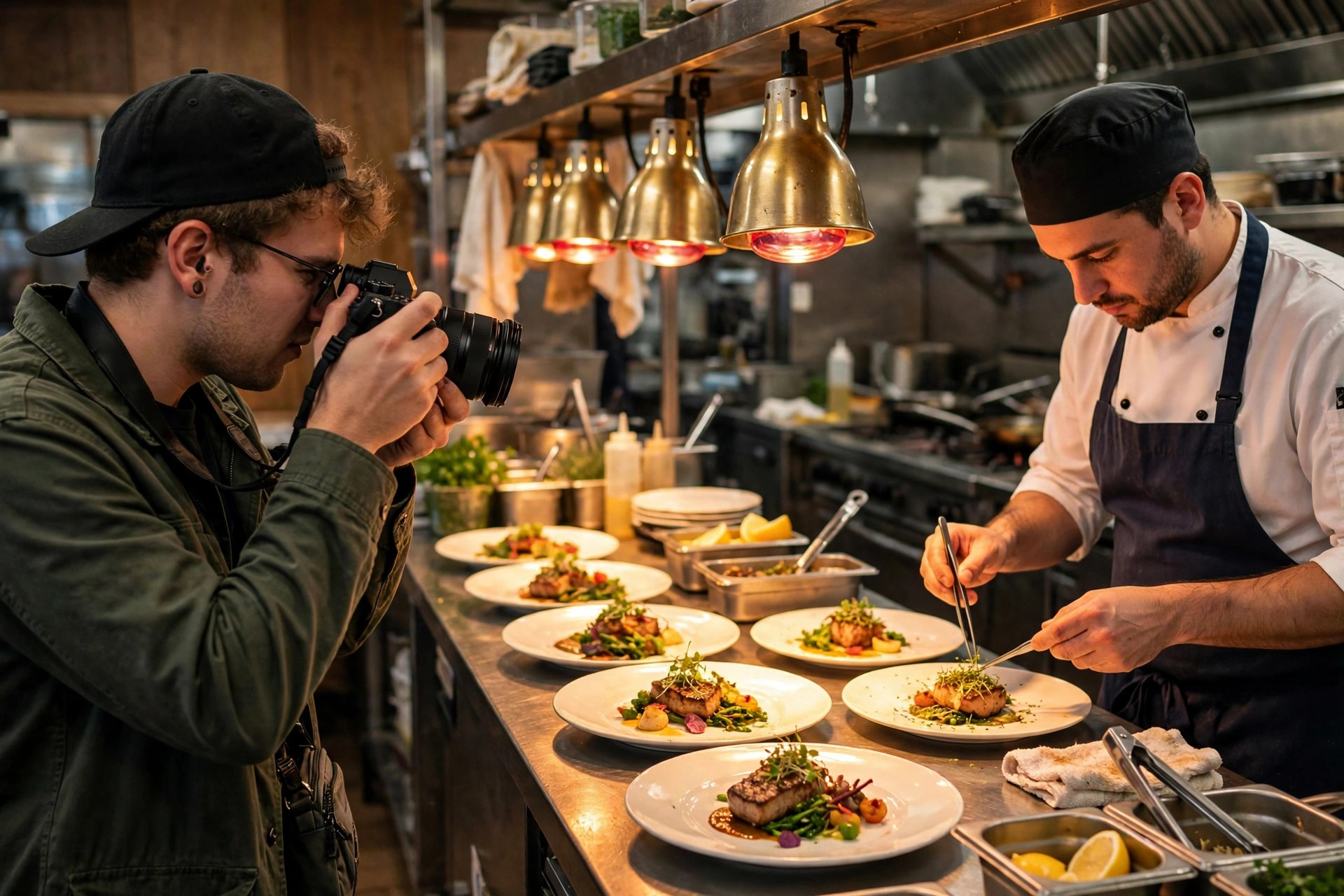
Decide your non-negotiables in advance: which dates are available (avoid Friday and Saturday prime time for filming visits — a creator's lighting setup at a packed table helps nobody), what the meal covers (a set menu keeps costs predictable), and your maximum fee. Having these answers ready makes you look professional and keeps negotiations short.
Gifted vs paid: what should you offer?
There are two legal categories of collaboration, and the distinction matters more than most restaurant owners realise.
Gifted (unpaid) collaborations
You provide a meal with no contract and no strings. The upside: zero cash cost and maximum authenticity. The downside: you control nothing — not whether they post, when, or what they say. Use this model only with genuine fans and nano creators, and accept whatever comes as a bonus, not a plan. Never expect coverage from a gifted meal; the moment you do, you have a paid collaboration without the paperwork, which is the worst of both worlds.
Paid collaborations
You pay money (or provide high-value product) and sign an agreement. In return you get what you are paying for: approvals, timelines and specific deliverables. This is the professional model, and it is the only one you should use once real money changes hands. Paid collaborations also trigger advertising disclosure obligations — in Finland, Sweden and Norway, consumer protection rules require marketing content to be clearly identifiable as advertising (labels like #mainos, #annons, #reklame, or the platform's "paid partnership" tag). Build the disclosure into your contract so the creator cannot forget it.
Disclosure is not optional
Nordic consumer authorities treat undisclosed influencer marketing as misleading advertising — and both the brand and the creator can be held responsible. Your contract should require the creator to mark every paid post clearly (platform "paid partnership" label plus a local-language hashtag such as #mainos / #annons / #reklame at the start of the caption). This is general information, not legal advice; when in doubt, check your national consumer authority's current guidance.
Which model for which situation?
New opening or relaunch: paid micro-creators, 3–5 of them, in the opening fortnight for concentrated buzz. Quiet weekdays: gifted nano creators and loyal regulars — low cost, steady trickle. Seasonal menu: one paid mid-tier creator for reach plus two micros for depth. Ongoing presence: a quarterly rhythm of gifted visits beats one big annual splash, because algorithms and audiences both reward consistency.
The contract: clauses + template
Even a one-page agreement transforms a collaboration. It forces both sides to be specific, it gives you usage rights to the content (the most undervalued asset in these deals), and it prevents the classic misunderstandings: "I thought you meant a reel and a post", "I didn't know you wanted approval first". Below are the clauses that matter, followed by a template you can adapt.
The clauses that matter
- Parties and date. Full names (or business names) of the restaurant and the creator.
- Deliverables. Exact formats and counts: "one Instagram reel (minimum 30 seconds), three Instagram stories, one TikTok video". Vague words like "some posts" are where disputes are born.
- Timeline. Visit date (or window) and publishing deadline, e.g. "content published within 7 days of the visit". Content has a shelf life; a reel posted two months later is nearly worthless.
- Approval. Whether you get to review content before publishing. Light-touch approval (one round of factual corrections) is standard; demanding creative control will drive good creators away.
- Usage rights. Can you repost their content on your channels? Use it in ads? For how long? Get this in writing — without it, you have no right to reuse the photos and videos you effectively paid for. A typical fair term: perpetual organic reuse with credit, paid-ad usage for 12 months by separate agreement.
- Disclosure. The creator must mark paid content as advertising per applicable law (platform label + local hashtag).
- Exclusivity. A short non-compete — e.g. no paid posts for direct competitors within 2 km for 30 days — is reasonable. A year-long blanket ban is not, and good creators will refuse it.
- Compensation and payment terms. Exact amounts, what the hosted meal covers, when payment is due (e.g. within 14 days of publishing), and who pays transfer fees.
- Cancellation. What happens if either side cancels, and who bears costs already incurred.
- FTC of the relationship. A line stating the creator is an independent contractor, not an employee — relevant for tax and liability in all three Nordic countries.
Copy-paste contract template
This is a sample template for illustration only — not legal advice. Have a local lawyer review it before use, especially for paid collaborations.
INFLUENCER COLLABORATION AGREEMENT

Between:
Restaurant: [Restaurant legal name], [address], [business ID]
("the Restaurant")
Creator: [Creator full name], [address]
("the Creator")
Date: [date]

1. COLLABORATION
The Creator will visit the Restaurant on [date] and create content
about the visit as specified below.

2. DELIVERABLES
- 1 Instagram reel (min. 30 sec) featuring [dishes/experience]
- 3 Instagram stories on the day of the visit
- 1 TikTok video (min. 30 sec)
The Creator will tag @[restaurant handle] and the restaurant's
location in every post.

3. TIMELINE
Visit: [date]. All content published within 7 days of the visit.

4. APPROVAL
The Restaurant may request one round of factual corrections
(names, prices, opening hours) before publishing. Creative
direction remains with the Creator.

5. USAGE RIGHTS
The Restaurant may repost the content on its own organic social
channels with credit to the Creator, indefinitely. Use of the
content in paid advertising requires separate written agreement.

6. DISCLOSURE
The Creator will clearly mark all paid content as advertising,
using the platform's "paid partnership" label and the hashtag
[#mainos / #annons / #reklame — choose per country] at the start
of the caption.

7. EXCLUSIVITY
For 30 days after publishing, the Creator will not publish paid
content for restaurants within 2 km of the Restaurant.

8. COMPENSATION
- Hosted meal for 2 (set menu, value approx. €[X])
- Fee of €[X], payable within 14 days of all content being published.

9. CANCELLATION
Either party may cancel with 72 hours' notice. Costs already
incurred (e.g. booked ingredients) are reimbursed against receipts.

10. INDEPENDENT CONTRACTOR
The Creator acts as an independent contractor, not as an employee
of the Restaurant, and is responsible for their own taxes.

Signatures:
_________________________        _________________________
Restaurant                       Creator
"The most undervalued asset in an influencer deal is not the post — it is the right to reuse the content afterwards."
How to measure ROI
Influencer marketing has a reputation for being unmeasurable. That reputation comes from people who never set up measurement. Here is how to do it properly with tools you already have.
Set up tracking before the visit
- Unique promo code. Give each creator their own code ("SARA15" for 15% off, or a free dessert). It is the single most reliable attribution method for restaurants, because it connects the post to the till.
- Trackable booking link. If you take online reservations, give each creator a UTM-tagged link (e.g. yoursite.com/book?utm_source=instagram&utm_medium=influencer&utm_campaign=sara). Your booking system or Google Analytics will show exactly which visits came from where — and a fast, mobile-friendly booking page converts far more of that traffic. (This is where your website earns its keep: if influencer traffic lands on a slow page with no online booking, you are paying for attention you cannot convert.)
- Ask at the door. For one week after each post, have staff ask new guests "how did you hear about us?" and tally the answers. Low-tech, surprisingly accurate.
- Baseline your numbers. Note your average covers, reservations and Instagram follower growth for the two weeks before the collaboration, so you can see the lift instead of guessing.
What good looks like
For a micro-creator campaign, realistic expectations: a visible reservation or walk-in bump within 3–10 days of publishing, 10–50 promo code redemptions per creator depending on audience size, and a follower-quality lift on your own profile (local followers, not bots). Content reuse value counts too — one good creator reel, reposted across your channels and possibly your Google Business Profile, can work for months. If a €250 collaboration brings 20 extra covers at a €35 average spend, the maths speaks for itself. If three creators in a row bring nothing, the problem is usually audience fit (wrong city, wrong demographic) — not the channel itself.
The review loop
After each collaboration, spend fifteen minutes writing down: what was agreed, what was delivered, what it cost (including the meal), and what it produced. This log becomes your playbook. Within three or four collaborations you will know your cost per acquired guest for this channel — and that number lets you compare influencer marketing honestly against every other marketing euro you spend.
Red flags and mistakes to avoid
- Paying for followers, not customers. A creator whose audience lives on another continent cannot fill your tables. Geography first, always.
- Skipping the agreement. "It was just a free meal" is how you end up with no post, a post six weeks late, or a dispute about usage rights. One page, every time.
- Letting creators order the whole menu. A set menu for hosted visits keeps food cost predictable and the kitchen sane. Creators who insist on ordering freely "for content" are telling you what the collaboration is really about. (And brief your staff: hosted guests still get full service, and the tipping question should be settled with the creator in advance, not with the waiter on the night.)
- Ignoring disclosure. Undisclosed paid posts put both you and the creator on the wrong side of Nordic consumer law. It is your brand on the line too.
- Judging by one post. A single collaboration is a test, not a verdict. Judge the channel after three to five creators, with tracking in place.
- Forgetting your own channels. Creator content landing on a dead Instagram profile or a website with no online booking wastes most of its value. Keep your own house in order first — our Instagram strategy guide for restaurants is a good starting point, and if your site is the weak link, PowerfulWebsite builds restaurant websites free of upfront cost, from €59/mo.
Frequently asked questions
How much should a restaurant pay an influencer?
For nano creators (1k–10k followers) a hosted meal is often enough; for micro creators (10k–50k) Nordic restaurants typically pay €100–€400 per reel plus the meal. These are estimates — always agree the fee in writing before the visit, and start with a small test budget of €500–€1,000 across several creators rather than one large payment.
Do I need a contract for a free-meal collaboration?
Yes — even a one-page agreement. Without it you have no say over what gets published, when, or whether you may reuse the content. The template in this article covers the essentials: deliverables, timeline, usage rights, disclosure and payment terms.
How do I find food influencers near me?
Search your city's food hashtags on Instagram and TikTok, check the location tags of your restaurant and nearby competitors, look at who engages most with rival restaurants' posts, and ask your staff and suppliers which local food accounts they follow. Shortlist 8–10, contact 4–5.
What is the difference between gifted and paid collaborations?
In a gifted collaboration you provide a meal with no contract and no expectations — anything the creator posts is a bonus. In a paid collaboration money changes hands (or a high-value meal plus a contract), which buys you agreed deliverables, timelines, approval rights — and triggers legal advertising disclosure obligations.
How long does it take to see results from influencer marketing?
Typically 3–10 days after the content is published, when the creator's audience acts on it. Track with a unique promo code or booking link, and compare against your baseline from the two weeks before the collaboration.
Should small restaurants pay influencers at all?
Many independent restaurants get excellent results from gifted collaborations with nano creators and genuine regulars — no cash needed. Pay when you want guaranteed deliverables, timelines and usage rights. Either way, vet the creator's audience location first: local reach is what fills tables.
Want a website that turns influencer traffic into bookings?
PowerfulWebsite builds your restaurant's website free — you only pay from €59/mo. Everything included: domain, hosting, maintenance and updates, with online booking that converts the attention your creators generate.
See the packages