Tasting Menu Marketing: How to Sell the Chef's Choice
A tasting menu is the most profitable seat in your restaurant — but only if guests understand what they are buying before they book. Market it as an experience with a clear price, a visible story and a booking button, and it fills tables that à la carte never reaches.
Key takeaways
- A tasting menu sells an experience, not a list of dishes — price it, photograph it and describe it that way.
- In the Nordics, food-only tasting menus typically run €85–€160 per person, with wine pairings adding €60–€120.
- Food cost usually lands at 22–30% of the menu price, and wine pairings are the highest-margin item on the table.
- Your website needs a dedicated tasting menu page with price, course count, duration and a booking button — not a PDF buried in the menu section.
- Prepayment or a deposit of €30–€50 per person is standard and protects the kitchen from no-shows.
- Most bookings come from special occasions, so market the occasion: birthdays, anniversaries, proposals, celebrations.
Every restaurant owner knows the feeling. The kitchen is at its best when the chef is free to cook what the season offers, not what a guest happens to pick from a long list. The tasting menu is the format that makes that possible — and it is also the format that turns an ordinary Friday into a €150-per-person evening. Yet most restaurants that run one treat it like a footnote: a line on the à la carte menu, a PDF, a price with no story attached. Then they wonder why it only sells on Saturdays.
This guide covers the marketing side: Nordic pricing, the website page, photography, social media and a 6-week launch plan — everything a restaurant owner needs to turn a good tasting menu into a booked-out one.
What a tasting menu is — and what it is not
A tasting menu, also called a dégustation menu, is a fixed sequence of small courses chosen by the chef. The guest does not order; they surrender to the kitchen. A typical menu runs 5–8 courses plus an amuse-bouche, bread service and petit fours, and the meal lasts two to three hours. The price is fixed and known in advance. That certainty — for the guest and for the kitchen — is the whole point.
It is worth being precise about what it is not, because confused guests do not book. A tasting menu is not a prix fixe menu: prix fixe gives a fixed price with a choice inside each course, while a tasting menu gives no choice at all. It is not a sharing menu, where dishes arrive in the middle of the table. And it is not simply a long à la carte meal with more courses. The difference matters for marketing, because each format promises a different evening. Prix fixe promises value and structure. A tasting menu promises the chef's vision, start to finish.
The chef's choice is the product
The phrase "chef's choice" is not a cute label; it is the product itself. Guests who book a tasting menu are buying trust in your chef and your kitchen. They are paying to be surprised, to eat things they would never have ordered, and to be looked after for an evening. That is why the marketing has to sell the chef, not the ingredients. A list of dishes reads like a shopping list. A story about the chef, the season and the idea behind the menu reads like an invitation.
This is where most restaurant marketing goes wrong. The website lists "7 courses, €120" and nothing else, as if the price were the selling point. The price is the barrier, not the attraction. The attraction is the experience: the chef's counter, the pacing, the wine, the room, the feeling of being taken care of. Every piece of marketing — the website page, the Instagram reel, the email — should answer one question: what will this evening feel like?
Who actually books a tasting menu
Understanding the buyer changes everything about how you market. Tasting menu guests are rarely your Tuesday lunch crowd. They are couples celebrating an anniversary, friends marking a birthday, a food-loving visitor planning a trip around a restaurant, or a local couple who have been meaning to try you for months. They book days or weeks ahead, they read reviews carefully, and they usually arrive with expectations set by your website and your social media.
That profile has practical consequences. First, the booking journey is longer: guests research, compare and discuss before they commit, so your website has to carry the sale without a server's help. Second, the occasion matters more than the price: a guest who is booking an anniversary dinner will pay €140 without flinching if the evening sounds special, and will hesitate at €95 if it sounds ordinary. Third, word of mouth is amplified — a great tasting menu evening becomes a story guests tell for weeks, and a disappointing one becomes a review.
Why tasting menus sell: the economics
Before the marketing, the numbers. A tasting menu is attractive to a restaurant owner for three reasons: revenue per cover, predictability, and waste. A table of four ordering à la carte in a mid-range Nordic restaurant might spend €45–€70 per person on food. The same four on a tasting menu spend €85–€160 each — and often add a wine pairing on top. Even after the higher food cost of premium ingredients, the revenue per seat is roughly double.
Predictability is the quieter win. When the chef knows at 8 in the morning that tonight's 40 covers will all eat the same seven courses, the kitchen can prepare with precision instead of guessing. Mise en place is tighter, the brigade is smaller, and service runs like a rehearsed performance rather than a series of surprises. Labour cost per cover falls even though the cooking is more ambitious, because the kitchen is doing one thing well instead of twenty things adequately — and waste falls too, since the kitchen buys for one menu instead of stocking everything on an à la carte list.
A tasting menu turns your kitchen from a short-order operation into a rehearsed performance — and the guest pays for the performance, not just the plate.
The table-turn trade-off
There is one honest cost, and any guide that skips it is selling a fantasy: a tasting menu table turns slowly. An à la carte table turns in 60–90 minutes; a tasting menu table takes 2.5–3 hours. Over an evening, that can mean one seating instead of two. The menu price has to cover the seat for the whole night, not just the food on the plate.
This is why pricing discipline matters so much. A tasting menu priced too low fills the room and still loses money, because the second seating you gave up was worth more than the margin you gained. The practical fix used by many Nordic restaurants is two seatings with a clear structure — for example, 17:30 and 20:30 — with the tasting menu available at both, and the à la carte menu running alongside for walk-ins. That way the format earns its keep without shutting out the guests who just want a main course and a glass of wine.
Revenue per available seat hour, sometimes called RevPASH, is the metric that settles the argument. Multiply your average spend per cover by the number of times a seat turns per hour. If a €120 tasting menu turns once in three hours, that seat earns €40 per hour. If a €55 à la carte average turns twice in the same three hours, the seat earns about €37 per hour — close, but the tasting menu still wins, and it wins with less waste and a better story. Run the numbers for your own room before you decide.
How much should a tasting menu cost in the Nordics?
The most common question guests ask — and the one most restaurants answer badly — is the price. In the Nordics, tasting menu prices cluster into clear bands, and knowing where you sit helps you price with confidence instead of guessing. These are typical ranges for 2026, food only, including VAT:
- Lunch tasting, 3–5 courses: €45–€75 per person. A good entry point for first-time tasting menu guests and for restaurants testing the format.
- Mid-range dinner, 5–7 courses: €85–€120 per person. The most common band for good restaurants in Helsinki, Stockholm, Oslo and Copenhagen outside the Michelin tier.
- Fine dining, 7–10 courses: €130–€180 per person. Ambitious kitchens with a strong reputation and a dedicated dining room.
- Top tier, Michelin-starred: €180–€280 per person. Copenhagen's best-known rooms sit at the top of this range; Geranium, for example, has long charged well above €200 for its menu alone.
Wine pairings typically add 40–60% of the menu price — roughly €60–€120 at the mid-range — and a non-alcoholic pairing of juices, teas and kombucha usually runs €45–€75. That pairing is not a side note; it is often the most profitable part of the evening, and we cover it in detail below.
A pricing method that actually works
Start from cost, not from the competition. Add up the ingredient cost of every course for one cover, including bread, butter, amuse-bouche and petit fours — the small items are where costing usually leaks. Divide by your target food cost percentage. For tasting menus, food cost typically runs 22–30% of the menu price, slightly higher than à la carte because the ingredients are better and the portions are small but numerous. If your total ingredient cost per cover is €30 and you target 27% food cost, the menu price is roughly €30 ÷ 0.27 = €111. Round to a clean number: €110 or €115.
Then check the anchor. Price the equivalent courses as if a guest ordered them à la carte. If the same seven dishes would cost €95 from your à la carte menu, the tasting menu should not be €85 — that undercuts your own menu and trains guests to expect a discount. Price it at or slightly above the à la carte equivalent, and justify the premium with the experience: the pacing, the extras, the chef's attention. A tasting menu that costs less than the sum of its parts is a pricing error, not a bargain. And state the full price honestly: Nordic guests expect VAT to be included, and a price that later grows by service charges and supplements feels like a trick. Put the menu price, the pairing price and the total on the same page.
Nordic pricing reality check
Alcohol taxes and labour costs make Nordic tasting menus more expensive to run than in most of Europe, but guests here are also used to paying for quality and they expect the price to include VAT and service. Do not import a €65 tasting menu price from a Spanish guide and wonder why the margin is gone. Price for your market, your costs and your city — and say the price out loud on your website.
Tasting menu vs à la carte vs prix fixe
Guests compare formats even when they do not know the names for them. A clear comparison on your website — or in the server's script — helps them choose the tasting menu with confidence instead of defaulting to the familiar à la carte. Here is how the three formats stack up for a restaurant owner:
| Factor | À la carte | Prix fixe | Tasting menu |
|---|---|---|---|
| Revenue per cover (typical) | €45–€70 | €55–€85 | €85–€160+ |
| Guest choice | Full choice | Choice within courses | Chef decides |
| Table turn | 60–90 min | 90–120 min | 2.5–3 hours |
| Kitchen predictability | Low | Medium | High |
| Food waste | Highest | Medium | Lowest |
| Wine pairing attach | By the glass | Occasional | 50–70% of tables |
| Best for | Walk-ins, casual dining | Weekday dinners, groups | Occasions, fine dining |
The table makes the strategic point: the formats are not competitors, they are a ladder. À la carte brings volume and walk-ins. Prix fixe lifts the average check on ordinary evenings and gives groups a simple decision. The tasting menu is the top of the ladder — the highest revenue per cover, the strongest story, and the format that builds your reputation. Most restaurants that succeed with tasting menus run all three, with the tasting menu positioned as the signature experience rather than the only option.
Marketing your tasting menu on your website
Most tasting menu bookings start on a phone, late at night, when a guest is planning something special. Your website is the salesperson in that moment — and it is usually failing. The typical restaurant website hides the tasting menu inside a PDF, or lists it as one line under "Menus" with no price, no photos and no booking button. A guest who has to email to ask the price has already started looking at your competitor.
The fix is a dedicated tasting menu page on your website. Not a section of the main menu page — a page of its own, with its own URL, its own photos and its own booking button. Search engines treat it as a distinct page, which means it can rank for searches like "tasting menu Helsinki" or "tasting menu Stockholm" while your homepage cannot. Guests treat it as a distinct experience, which is exactly the point.
What the page must contain
Every element below answers a question a real guest asks before booking. Leave one out and you lose bookings to the restaurant that answered it.
- The price, in full. Menu price, pairing price, and the total for two. Guests who cannot see the price assume it is more than they want to pay.
- The course count and the duration. "Seven courses, about two and a half hours" sets expectations and helps guests plan their evening.
- What the menu is right now. Not the full dish list — that spoils the surprise — but the theme, the season and two or three hero ingredients. "Autumn: forest mushrooms, game, sea buckthorn" tells a guest more than a list of Latin names.
- Dietary information. Can you do vegetarian, vegan, gluten-free? What needs advance notice? Guests with dietary needs are often the decision-makers for the whole table, and they book the restaurant that answers first.
- Photography of real courses. Two or three close-up shots of actual dishes from your kitchen, not stock photos. Guests can tell the difference, and a stock photo of a dish you do not serve is worse than no photo at all. Our guide to food photography basics for restaurants covers how to shoot these with a phone and natural light.
- A booking button above the fold. The guest should be able to book within five seconds of landing on the page. Every extra click costs bookings — see our guide on booking conversion for the details.
- Prepayment or deposit terms. State them plainly: what is charged, when, and what happens if plans change. Clear terms increase bookings; hidden terms increase no-shows.
SEO: rank for the searches that book
The searches that matter are specific and local: "tasting menu Helsinki", "chef's tasting menu Stockholm", "best tasting menu Oslo", "tasting menu near me". These are high-intent searches — the person typing them is close to booking — and they are far less competitive than "best restaurant Helsinki". A dedicated page with the city and the format in the title, the heading and the first paragraph has a genuine chance of ranking, especially in smaller Nordic cities where few restaurants have bothered.
Use the words guests actually use. "Chef's tasting menu" and "tasting menu" are the terms people search; "dégustation" is the term chefs use, and almost nobody types it into Google. Write the page in the language your guests search in — English for tourists and international diners, your local language for residents — and consider both. Our local SEO keyword guide for restaurants walks through the research step by step. And keep the page alive: update the seasonal theme every time the menu changes, so Google sees a living page and returning guests see a reason to come back.
Nobody books a €140 dinner from a PDF. If your tasting menu lives in a document, it is invisible to Google and inconvenient to every guest who finds it.
Social media: selling the story course by course
A tasting menu is the most photogenic thing a restaurant owns, and social media is where that pays off. Each course is a small, beautiful object; each service is a story with a beginning, a middle and an end; and the chef is a character guests want to follow. Most restaurants waste this by posting a single flat photo of the printed menu. The menu is not the content. The cooking is.
The content that actually books tables
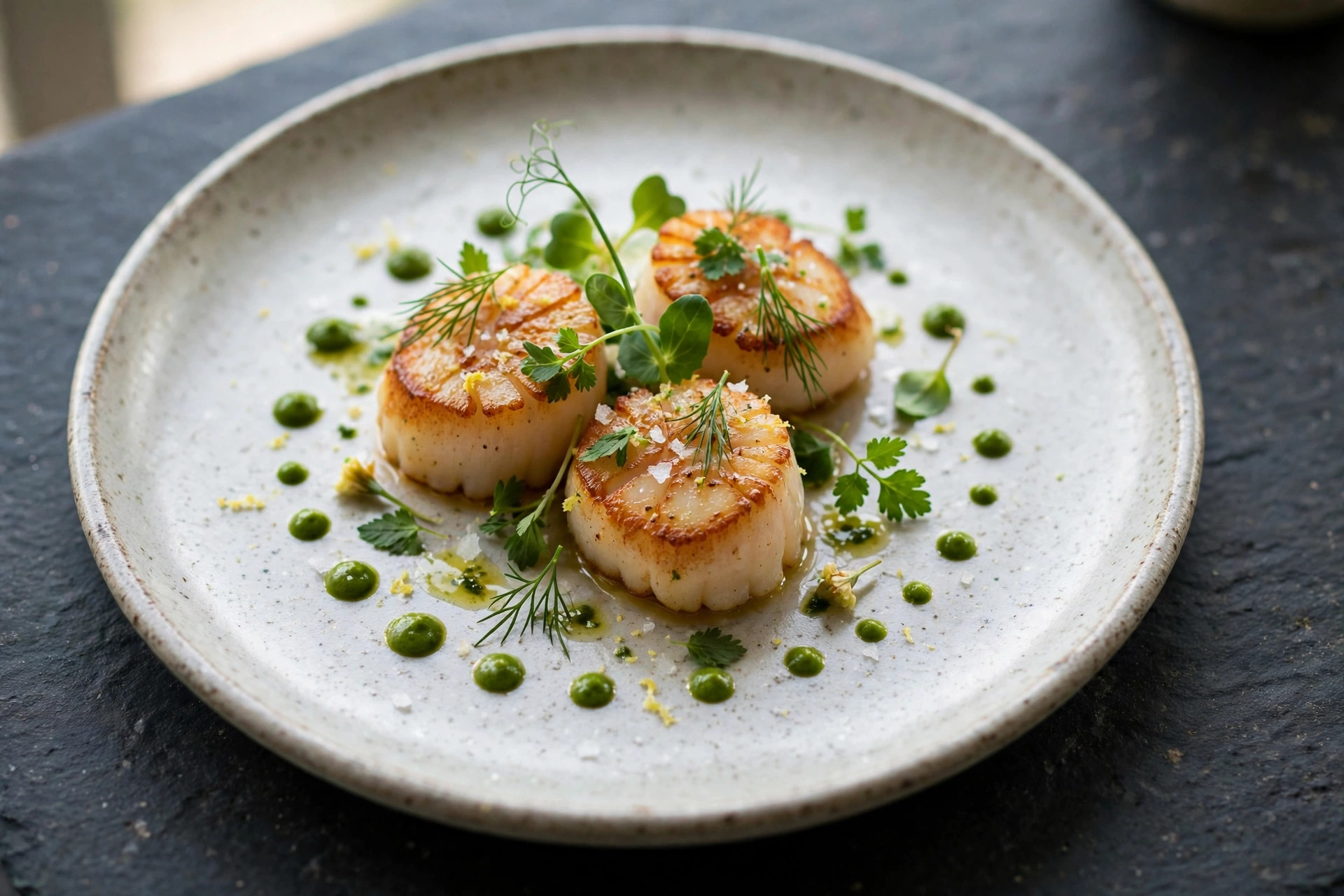
The course reveal. Post one course at a time as the menu changes, with a short caption about the ingredient or the technique. A 15-second video of a dish being plated — sauce poured, herb placed, plate wiped — outperforms a polished photo, because it shows craft. Film it in the kitchen during prep, not during service, and keep it under 30 seconds.
The chef's voice. A short clip of the chef explaining one course in their own words — why this mushroom, why this pairing, what the season gave us — builds the trust that a tasting menu depends on. Guests are not buying food; they are buying the chef's judgement. Let them hear it.
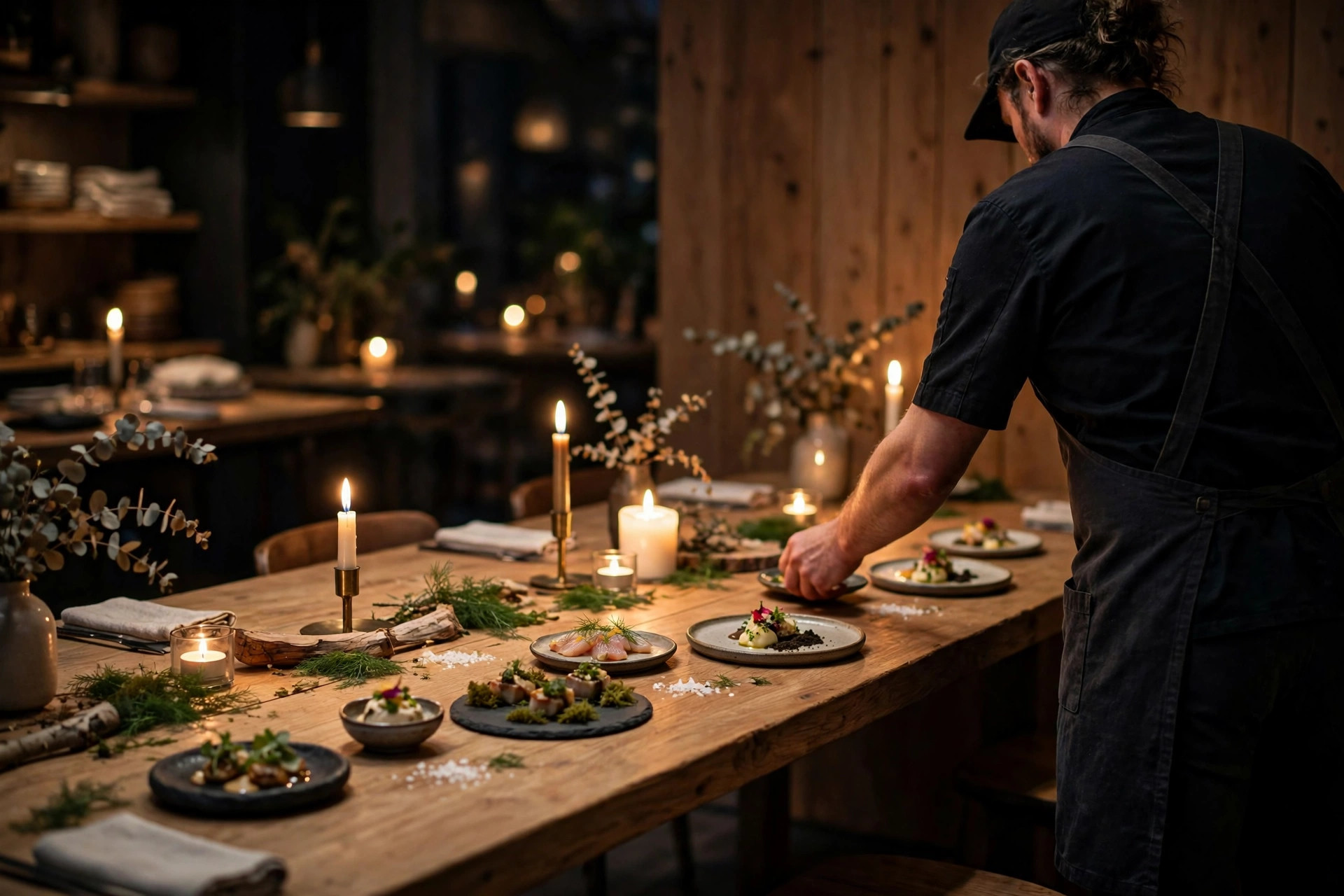
The room at service. Candlelight, a full dining room, a table mid-meal with seven small plates in a row. This is the image that sells the occasion, and it is the one most restaurants never post because they are busy serving. Ask a staff member to take two photos per service — the room before the first seating, and one table mid-meal with permission — and you have a week's content.
The season change. When the menu turns — autumn to winter, winter to spring — make it an event. A countdown, a teaser of the first new course, an email to your list before the public announcement. Seasonal change is the tasting menu's natural marketing calendar, and it gives you four launches a year instead of one.
Guests are your best photographers
Tasting menu guests photograph every course — that is free marketing, and the smart move is to make it easy. A small card on the table with your handle and a hashtag turns a table of four into four content creators. Repost the best guest photos (with credit) — they are more convincing than anything you shoot yourself, because they are proof that real people had a real evening. And invite local food writers for a tasting menu evening on a quiet weeknight: the small, local writer with 5,000 engaged followers in your city is worth more than a travel influencer with 200,000 followers worldwide.
Wine pairings, non-alcoholic pairings and upsells
If the tasting menu is the headline, the pairing is the profit. A wine pairing for a €120 menu typically costs the guest €60–€90 and the restaurant €18–€25 in pour cost — a gross margin of roughly 70% or more, better than almost anything else on the menu. Yet many restaurants present the pairing as an afterthought, a single line at the bottom of the menu. It deserves the same marketing attention as the food.
First, name the pairing. "Wine pairing €75" is a price; "Five wines from small Nordic-friendly producers, chosen by our sommelier" is a product. List the number of pours, the style, and one or two example bottles. Guests who understand what they are getting say yes far more often — well-run rooms report pairing attach rates of 50–70% when the pairing is described and offered properly, against 20–30% when it is mumbled at the table.
Second, offer a non-alcoholic pairing with the same care. This is a Nordic strength and a growing market: guests who do not drink, designated drivers, pregnant guests, and the simply curious. A pairing of fermented juices, teas, kombucha and alcohol-free wines, priced at €45–€65, is not a consolation prize — it is a product in its own right, and in cities like Copenhagen and Helsinki it is increasingly the pairing guests ask about first. The kitchen and the bar should develop it together, with the same attention to progression as the wine pairing.
How the server sells it
The pairing is sold at the table, in one sentence, at the moment the tasting menu is ordered. Train the team on a simple script: name the pairing, name the number of pours, name the price, and offer the non-alcoholic version in the same breath. "Our wine pairing is five pours for €75, and we also have a non-alcoholic pairing of juices and teas for €55 — would you like either with the menu?" That is it. No hard sell, no apology, no waiting for the guest to ask. If the attach rate is below 40%, it is usually a training issue, not a pricing issue.
The wine pairing is often the most profitable item on the table — and the one most restaurants describe in the fewest words. Name it, price it, offer it at every table.
Launching a tasting menu: a 6-week plan
A tasting menu launch is a marketing campaign, not a menu change. Treat it like one, and give it six weeks. The plan below assumes the food is ready; the work here is making sure people know about it, can find it, and can book it.
Weeks 1–2: build the foundations
Write the tasting menu page on your website with the price, course count, duration, dietary notes and a booking button. Photograph three hero courses properly — natural light, real plates, no stock images. Set the booking system up with dedicated tasting menu time slots and a deposit of €30–€50 per person. Brief the team on the story of the menu: the theme, the season, the chef's idea. If your website cannot carry this yet, a proper restaurant website with a menu page that sells is the first step — PowerfulWebsite builds restaurant websites for free, with plans from €59/month, and a tasting menu page is part of the build.
Weeks 3–4: seed the story
Post the first course reveals on social media, one or two a week. Send an email to your existing list — your regulars and past bookers are the most likely first guests — with an early-booking offer for the launch week, such as a welcome glass on arrival. Invite two or three local food writers for a preview evening on a quiet night, and ask the team to practise the full service on friends and family first.
Weeks 5–6: launch and measure
Go live with the seasonal announcement, the full page, and a short video of the chef introducing the menu. Push the launch on every channel you own — website, Google Business Profile post, Instagram, email — in the same week, so the message compounds. Then measure what matters: tasting menu covers per week, pairing attach rate, and how many first-time tasting guests rebook. If the pairing attach rate is under 40%, retrain the team. If the page gets traffic but no bookings, the price or the booking button is the problem, not the food.
Launch-week checklist
- Dedicated tasting menu page live, with price, duration and booking button
- Three hero-course photos shot and on the page
- Booking system set with tasting menu slots and deposit
- Email to your list with an early-booking offer
- Team briefed on the menu story and the pairing script
- Google Business Profile post announcing the menu
- One rehearsal service before the first paying guests
Mistakes that kill tasting menu sales
Hiding the price. The single most common mistake. Guests assume a hidden price is a high price, and they leave. Put the price on the page, in full, with the pairing and the total.
Listing dishes instead of selling the evening. A tasting menu page that reads like an ingredient inventory misses the point. Guests buy the experience — the chef, the season, the pacing, the room. Lead with that.
Too many courses, too long an evening. Ten courses sounds impressive on a poster and exhausting at the table. Past three hours, guests stop enjoying the food and start watching the clock. Five to seven courses is the range most rooms can execute brilliantly every night.
No deposit, no protection. A tasting menu kitchen prepares for each booked guest. A no-show is not an empty table; it is wasted food and wasted prep. A deposit of €30–€50 per person, stated clearly at booking, is standard practice and guests accept it. Our guide to deposits and gift cards covers how to set this up without scaring guests away.
Forgetting the dietary guests. The person with the dietary requirement is often the one choosing the restaurant for the whole table. If your page says nothing about vegetarian, vegan or gluten-free options, that table books elsewhere. State what you can do and how much notice you need.
Letting the menu go stale. A tasting menu that has not changed in six months is not a signature; it is a rut. Seasonal change is the format's engine — it gives regulars a reason to return and gives you a reason to market. Even a small change, two or three courses per season, keeps the menu alive.
Running it without a website that can sell it. A tasting menu needs a page with a price, photos and a booking button. If your website is a PDF and a phone number, the tasting menu will only ever sell to people who already know you. A modern restaurant website — with a proper menu page, booking integration and SEO — turns the tasting menu from a regulars-only secret into a product strangers can find and book.
Frequently asked questions
How much does a tasting menu cost?
In the Nordics, a tasting menu typically costs €85–€160 per person for food, with wine pairings adding roughly €60–€120 on top. Fine-dining rooms in Copenhagen, Stockholm and Helsinki at the top end charge €150–€250. Shorter lunch tastings of 3–5 courses usually sit at €45–€75. Always state clearly whether the price includes VAT, service and drinks.
How many courses should a tasting menu have?
Most successful tasting menus have 5–8 courses. Fewer than five feels like a set menu rather than an experience; more than ten stretches the evening past three hours and strains the kitchen. A 5–7 course menu with an amuse-bouche and petit fours is the sweet spot for most restaurants outside the Michelin tier.
Is a tasting menu profitable for a small restaurant?
Yes, when it is priced on its real costs. Food cost for a tasting menu usually runs 22–30% of the menu price, and the fixed format cuts waste because the kitchen knows exactly what to prepare. The risk is a long table turn of 2.5–3 hours, so the menu price has to cover the seat for the whole evening, and wine pairings — often the highest-margin item — should be offered at every table.
How do you market a tasting menu?
Sell the experience, not the dish list. Put the tasting menu on its own page on your website with the price, course count, duration and a booking button; use close-up photography of two or three hero courses; tell the story of the chef and the season on social media; and send it to your email list first. Most bookings come from guests planning a special occasion, so make the occasion easy to imagine.
Should a tasting menu be prepaid?
Prepayment or a deposit is standard practice for tasting menus, because the kitchen prepares specifically for each booked guest. A deposit of €30–€50 per person, or full prepayment for high-demand evenings, protects you against no-shows. State the cancellation terms clearly at booking — guests accept strict terms when they are visible before they pay.
What is the difference between a tasting menu and a prix fixe menu?
A prix fixe menu offers a fixed price with a choice within each course — pick one starter, one main, one dessert. A tasting menu offers little or no choice: the chef decides the sequence and every guest eats the same courses. The tasting menu is the chef's statement; the prix fixe is a structured version of normal ordering.
Want a website that sells your tasting menu?
PowerfulWebsite builds your restaurant's website for free — you only pay from €59/month. Everything is included: a tasting menu page with photos and booking, domain, hosting, maintenance and updates.
See the plans