The Welcome Email Series: Nailing the First Impression
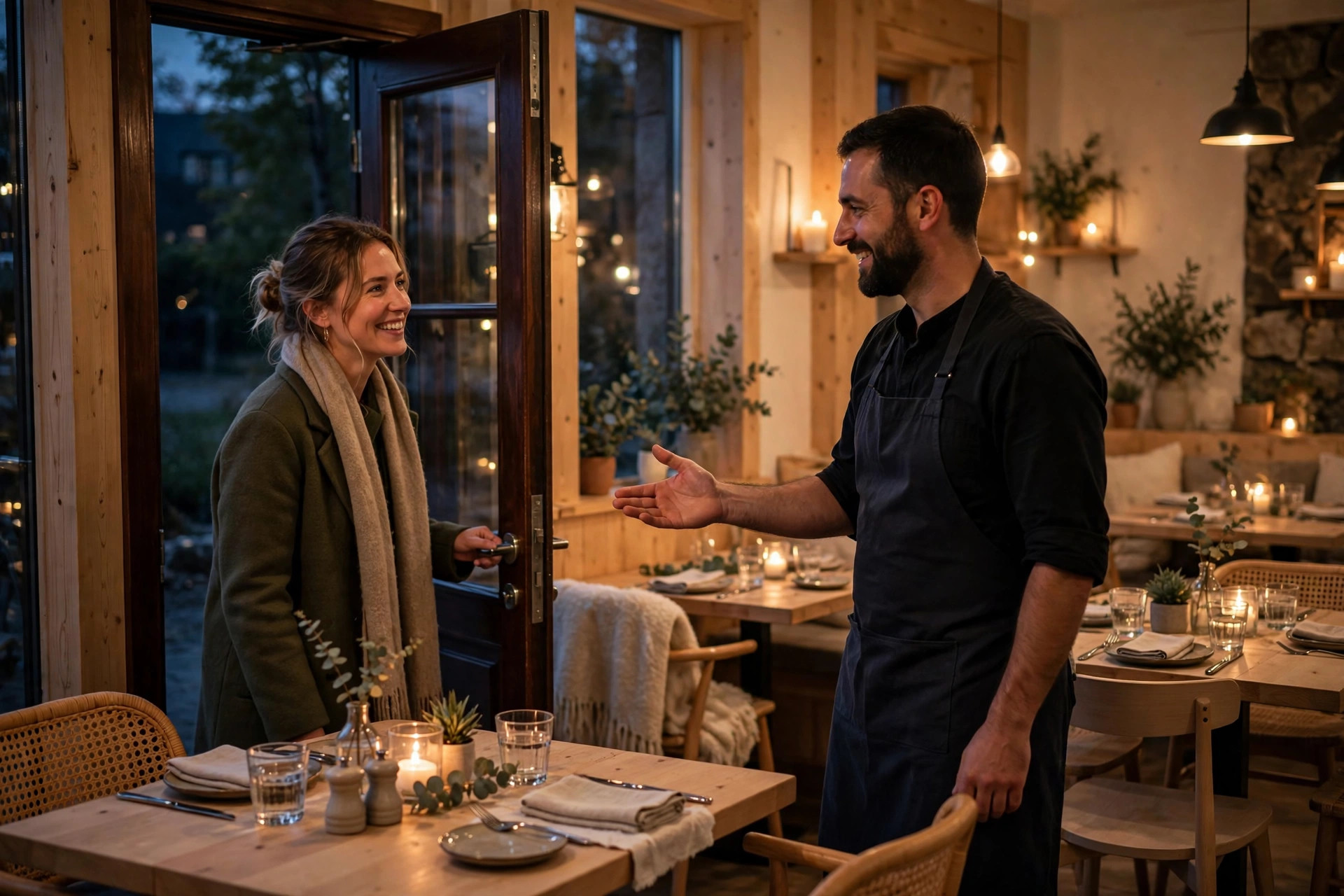
A welcome email series is a short sequence of three to four automated emails sent to a new subscriber or first-time guest over their first two weeks — and it works because the first impression is made while the visit is still fresh, not months later when they have already forgotten you. Done well, it turns a one-time visitor into a second visit, and a second visit into a habit.
Key takeaways
- A welcome series is three to four automated emails over the first fourteen days — no more, no less, for most restaurants.
- Email 1 must arrive within minutes of signup: it is the highest-opened email you will ever send, and delay kills it.
- Do not lead with a discount. Welcome, story and signature dishes first; any offer belongs in email 3 at the earliest.
- Stop the series the moment a guest books or orders again — extra sales emails after a booking feel tone-deaf.
- Only email people who consented to marketing, and make unsubscribing effortless. Consent is what makes the whole series legal and deliverable.
- Judge the series by second visits, not open rates — a series that fills tables beats a series that merely gets opened.
Every restaurant knows the feeling. A couple has a lovely Friday dinner, compliments the food, follows you on social media — and is never seen again. Not because anything went wrong, but because nothing reminded them. Life filled the gap: a busy week, a new place a friend recommended, a delivery app that made staying home easier. The guest did not reject you. They forgot you.
That is the gap a welcome email series exists to close. It is the cheapest, most reliable loyalty tool most independent restaurants own, and it is almost always underused: many restaurants collect email addresses at the till, on their website or through their booking system, and then do nothing with them until a Christmas newsletter. This guide covers the whole system — what a welcome series is, why the first two weeks matter so much, exactly what each email should say, how to stay on the right side of GDPR in the Nordics, and how to tell whether it is actually filling tables. It is written for independent restaurants, cafés and bars where the owner, not a marketing department, writes the emails.
What a welcome email series actually is
A welcome email series is a short, automated sequence of emails sent to someone who has just joined your list or visited for the first time. Each email has one job, and the jobs build on each other: welcome, introduce, invite back, listen. The automation matters as much as the content. Once the series is set up, it runs itself — every new subscriber gets the same careful first impression, whether they signed up on a Tuesday morning or a Saturday night, and nobody on your team has to remember to send anything.
It is important to understand what a welcome series is not. It is not a newsletter: a newsletter goes to your whole list on your schedule, while a welcome series goes to one person on theirs, triggered by their own action. It is not a discount machine: if every email is an offer, you are training guests to wait for a coupon before they visit, which is the opposite of loyalty. And it is not a substitute for the visit itself — no email sequence rescues cold food, slow service or a booking system that frustrates people. What it does is make sure a good first visit gets a second chance.
Where welcome subscribers come from
Guests join your list in a handful of places, and each one is a chance to start the series well. The most common are the booking confirmation page, the receipt or bill (a QR code or short link), your website's signup form, and Wi-Fi login in the restaurant. What matters is that the signup moment sets an expectation: the form should say plainly what the guest will receive — for example, "occasional news, seasonal menus and a welcome series over the next two weeks" — so the first email feels like a promise kept rather than a surprise. If you want to grow that list properly, our guide to building an email list from zero, GDPR-safe, covers the signup mechanics in detail.
Welcome series vs winback: two different jobs
A welcome series speaks to someone new; a winback campaign speaks to someone who has gone quiet. Confusing the two is a common mistake: sending a "we miss you" email to someone who visited last week is odd, and sending a "welcome to the family" email to someone who has eaten with you twenty times is worse. Keep the two sequences separate, with separate triggers — first signup or first visit for the welcome series, a long silence for winback — and make sure a guest can only be in one at a time. If you need the other half of the system, see our guide to winback campaigns for quiet customers.
Why the first fourteen days decide everything
The uncomfortable truth of the restaurant business is that most first-time guests never return. Industry data from restaurant email platforms consistently shows that a large majority of first-time visitors — in some networks as many as eight in ten — never make a second visit unless something brings them back. That is not a verdict on your food. It is a verdict on memory: a single visit, however good, rarely forms a habit on its own.
The first two weeks are when that habit is either formed or lost. The guest still remembers the room, the dish they loved and the name of the place; a message in that window lands on a warm memory rather than a cold one. Wait two months and the same message lands on someone who has to think hard about who you are — and who has probably found somewhere else in the meantime. This is also why the welcome series is the single most effective automated campaign most restaurants can build: restaurant email benchmark data for 2026 puts welcome emails among the highest-engagement messages in the industry, with the first welcome email typically opening far better than any newsletter, precisely because it arrives when attention is highest.
A guest who visits twice is a different kind of guest. The welcome series exists to manufacture that second visit — everything after it gets easier.
The second visit is the real goal
It is worth being explicit about this, because it shapes every decision in the series: the goal of a welcome series is one thing only, a second visit. Not a click, not a social media follow, not a reply — a booking or an order. Every email should be judged against that goal. A beautiful email that nobody acts on is a failed email, and a plain email that fills a table on a quiet Tuesday is a great one. Keep that standard in mind when you are tempted to add clever design, extra links or another section: each email needs one clear action, and that action should lead toward a table.
What the big platforms miss about small restaurants
Most welcome-series advice is written for online shops selling to thousands of strangers. Restaurants are different: your list is small, so every subscriber is a real person you may serve again; your product is a place and an evening, not a parcel; and your guests are local, so the call to action can be concrete — "book a table this weekend." Write for that reality.
How many emails, and how far apart
Ask ten email marketers how many emails belong in a welcome series and you will get answers from three to seven. For restaurants, the honest answer is narrower: three to four emails over fourteen days is the sweet spot. Fewer than three rarely builds enough of a relationship — a single "welcome" email is a greeting, not a series, and it leaves the guest to remember you alone. More than five usually annoys people before they have visited a second time, and every extra email is another chance to unsubscribe.
Timing matters as much as count. The first email goes immediately, within minutes of signup. The second follows two to four days later, while the first visit is still recent. The third arrives around day ten to fourteen, timed to catch the guest as they plan their next weekend or their next meal out. If you add a fourth, send it around day fourteen to twenty-one as a short, personal invitation to reply — not another sales message. Space the emails out: sending three emails in three days feels like pressure, while one email a month feels like forgetfulness. The rhythm below is a reliable starting point, and you should adjust it once your own data tells you what your guests prefer.
| Timing | One job | Call to action | |
|---|---|---|---|
| 1 — Welcome | Immediately | Deliver what was promised, set expectations | View the menu / book a table |
| 2 — Story and signature dishes | Day 3–4 | Make the restaurant memorable and human | See what we are known for |
| 3 — Reason to return | Day 10–14 | Give one concrete reason to visit again | Book for this weekend |
| 4 — Invitation to reply (optional) | Day 14–21 | Ask a question and listen | Reply to this email |
What if a guest books or orders mid-series?
Stop the series at once. This is the single most important automation rule, and the one most often forgotten. A guest who has already booked does not need a "come back soon" email — they are coming. Continuing to sell to them after they have bought feels robotic, and it teaches guests that your emails are not paying attention. Most email tools let you end an automation when a booking or order is recorded; if yours does not, check weekly and remove converters by hand. It takes minutes and it is worth it.
Send times: keep it human
For restaurants, late morning and early afternoon tend to work best for emails 2 and 3 — guests plan meals and weekends during the day. Email 1 is the exception: it should go immediately, whatever the hour. Avoid Friday evenings and Saturday afternoons, when your guests are already out and your team is busiest. And never send from a "no-reply" address: the whole point of the series is a relationship, and a no-reply address tells the guest it runs one way.
Email 1: the immediate welcome
Email 1 has three jobs and only three: thank the guest, deliver anything you promised at signup, and set expectations for what comes next. That is all. Do not try to tell your whole story, showcase the full menu, and sell a gift card in the first message — guests will not read it, and the guests who do will remember the clutter rather than the welcome.
Start with the guest's name and one warm, specific sentence — "Welcome to the table" beats "Thank you for subscribing to our newsletter" every time, because it sounds like a restaurant rather than a mailing list. If you promised something at signup — a welcome drink, a dessert on the next visit, a seasonal menu preview — deliver it here, plainly, with no hoops: a simple code or a sentence to show at the table is enough. Then say what comes next in one line: "Over the next two weeks we will send you three short emails — our story, the dishes we are known for, and one invitation." That sentence does quiet, important work: it makes emails 2 and 3 expected rather than intrusive, which keeps unsubscribes low.
Subject lines that work for email 1
The subject line should sound like it comes from a person, not a system. "Welcome — your table is waiting" or "Thanks for joining us at [restaurant name]" will outperform "Welcome to our newsletter" because they carry the restaurant's voice. Keep it short enough to read on a phone — under about fifty characters — and put the restaurant's name in the sender field, not a generic brand or a person's name the guest does not know. Guests decide in a second whether an email is from somewhere they recognise; your restaurant's name is the recognition.
The one call to action
Give email 1 exactly one clear action: a button to the menu, or a button to book a table — not both, and not five links to social media, a blog, a gift card shop and a feedback form. One action respects the guest's attention and makes the email measurable: you will know how many guests clicked, and you can compare that with later emails. If you must include secondary links, put them small in the footer, where they do not compete with the one thing you actually want the guest to do.
Email 2: your story and your signature dishes
Email 2 arrives two to four days after signup, and its job is to make your restaurant memorable. By now the guest has had time to forget the details of their visit — the name of the dish they loved, the room, the feeling. Email 2 brings those details back, and it does it through story, not inventory. A list of twenty dishes is forgettable; one dish with a story behind it is not.
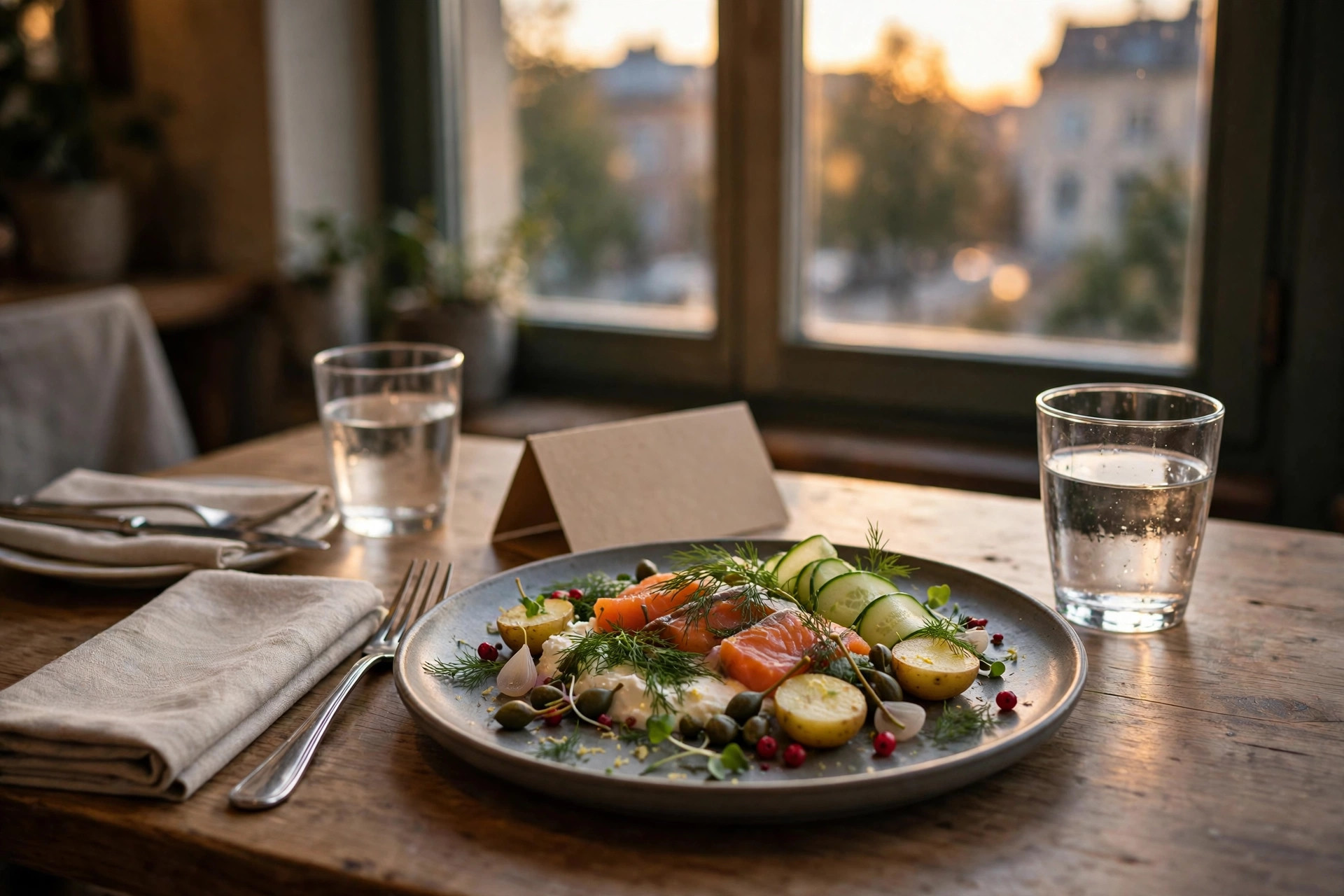
Pick one or two signature dishes and write about them properly: where the recipe comes from, why it is on the menu, what makes it yours. A family recipe, a local supplier you have worked with for years, a dish that regulars order before they sit down — these are the details guests repeat to friends, and repetition is how a restaurant enters conversation. Pair the story with a good photograph of the dish, not a stock image: guests can tell the difference, and a photograph of your actual food is worth more than any adjective. If your menu photography needs work first, our guide to food photos that sell covers how to shoot dishes with a phone and make them look like the real thing — because they are.
Introduce the people, briefly
Guests return to people as much as to food. A short paragraph about the chef or the team — two or three sentences, written like a person rather than a press release — gives the guest faces to remember. Keep it honest and specific: "Maria has run our kitchen for nine years and still tastes every sauce before service" is a story; "our passionate team delivers culinary excellence" is noise.
What not to put in email 2
Do not put an offer in email 2. It is tempting — the guest is warm, the email is being read, why not sell? — but an early discount teaches the guest that your emails are coupons, and it devalues the story you just told. Guests who return for a dish they care about are worth more than guests who return for ten percent off, and they are far more likely to return a third time without any offer at all. Save the offer, if you use one, for email 3, when it functions as a nudge rather than a bribe.
Email 3: the reason to come back
Email 3, around day ten to fourteen, is the only email in the series whose job is explicitly to produce a booking. Everything before it earned the right to ask; this email asks, clearly and once. The most effective version is not a discount but a reason: a seasonal menu that just launched, a weekend event, a dish that is only available for a short time, a quiet-weekday offer that fills your slowest service. Reasons beat discounts because they give the guest something to look forward to rather than something to save.
Make the ask concrete and easy. "Book a table for this weekend" with a button that goes straight to your booking page will outperform a vague "visit us soon" every time, because it removes a step between intention and action. If your booking flow is slow or confusing, fix that before you send email 3 — a welcome series that drives guests to a frustrating booking page is worse than no series at all, because it spends goodwill and returns nothing. And if you do include an offer, keep it simple and time-limited: one clear item or amount, one end date, no fine print. A complicated offer is a reason to postpone, and postponed bookings usually never happen.
Email 3 is the only email allowed to sell. Everything before it earned the right to ask — and one clear ask beats three vague ones.
Seasonal and event hooks that work
The best email 3 hooks are things genuinely happening at your restaurant: a new seasonal menu, a tasting evening, a local festival weekend, a quiet Tuesday offer. Guests can tell a real event from a manufactured one, and a manufactured reason erodes trust faster than no email at all. If you genuinely have nothing new to announce, a simple invitation works: "We saved your favourite table — book for the weekend" is honest, personal, and often enough.
Segment when you can, simply
If you know anything about the guest, use it — lightly. A guest who came for Sunday brunch does not need the same email 3 as a guest who booked a business lunch. Even one simple split — brunch guests get the brunch hook, dinner guests get the dinner hook — lifts results noticeably, and it makes the email feel written for the reader rather than blasted at a list. Do not over-segment: a small restaurant with three segments it can actually maintain will outperform a large restaurant with twenty segments nobody updates. Start with one split, prove it works, and only then add another.
Email 4: the invitation to reply
The optional fourth email is the quietest and, for many restaurants, the most valuable. Instead of selling anything, it asks a question: "What did you think of your visit?" or "Is there a dish you would like to see on the menu?" or simply "What brings you to our kind of restaurant?" The goal is not feedback collection — although the answers are genuinely useful — but a change in the relationship: a guest who replies to an email is no longer an address on a list, but a person in conversation with you.
Keep this email short — three or four sentences at most — and send it from a real, monitored inbox, because replies will come and unanswered replies are worse than no question at all. Read every reply personally, answer the ones that need an answer, and note the ones that reveal something: a guest who mentions a dietary need, a birthday, a favourite dish is telling you how to serve them next time. If a guest replies with a complaint, treat it as a gift: a guest who complains in private is giving you a chance that a guest who complains in a public review is not. And if nobody replies, that is fine too — the email still signals that you are a restaurant that listens, and that signal alone is worth sending.
Ending the series gracefully
Every series needs a clear end. After email 3 — or email 4, if you send one — the guest moves to your regular communication: an occasional newsletter, seasonal news, event invitations. Do not keep sending welcome-style emails indefinitely, and do not let the guest drift into silence after a warm start. The handover should be invisible to the guest and deliberate on your side: the welcome series ends, the regular rhythm begins, and the guest hears from you often enough to remember you and rarely enough to stay glad to hear from you. Once a month, plus genuine news, is a good rhythm for most restaurants.
GDPR and consent for Nordic restaurants
A welcome series only works if it is legal, and in the Nordics that means GDPR plus national marketing rules — in Finland, for example, electronic direct marketing to consumers generally requires prior consent, and the same principle runs through Swedish and Norwegian law. The rules are not complicated, but they are strict, and breaking them costs more than a fine: it costs deliverability, because spam complaints and unsubscribes damage your sender reputation and push even your wanted emails into spam folders.
The practical requirements are straightforward. Collect consent actively: a checkbox the guest ticks themselves, or a clear statement at signup that they will receive marketing emails — never a pre-ticked box, never an address taken from a booking without any marketing consent, and never a bought list. Tell guests what they signed up for, in plain language, at the moment of signup. Include a working unsubscribe link in every single email, including the welcome series, and honour unsubscribes immediately and without argument. Keep a simple record of when and how each address consented — a signup form, a booking system export, a Wi-Fi login log — so you can show it if anyone asks. And respect the difference between service messages and marketing: a booking confirmation is a service message, but a welcome series is marketing, and it needs marketing consent even when it follows a booking.
Consent checklist before you switch the series on
- Every address joined through an active, unticked opt-in — never pre-ticked, never bought, never borrowed.
- The signup form said plainly that marketing emails would follow, and roughly how often.
- Every email in the series carries a working one-click unsubscribe link.
- Unsubscribes and bounces are removed promptly, and the series stops for anyone who books mid-series.
- You can show, for any address, when and how consent was given.
What about business guests and events?
Business-to-business email has slightly different rules in some Nordic countries, but the safe approach is the same: only email businesses that have engaged with you, keep the content relevant, and always offer an easy opt-out. Consent given for an event does not automatically mean consent for ongoing marketing — ask separately, clearly, and once.
Measuring the series — and improving it
A welcome series that is never measured is a guess, not a system. The good news is that the numbers that matter are few, and you do not need expensive software to track them. Start with the four numbers below, reviewed once a month, and improve one thing at a time — changing everything at once tells you nothing about what worked.
The four numbers that matter
First, the open rate of email 1: this tells you whether new subscribers recognise you and expected your email. If it is low, fix the sender name, the subject line, or the signup expectation — not the design. Second, the click rate of each email: this tells you which content actually moves guests toward a booking, and it usually shows email 3 outperforming email 2, which is exactly as it should be. Third, the unsubscribe rate per email: a spike on one email tells you precisely which message annoyed people, which is more useful than any average. Fourth, and most important, second visits: count how many welcome-series guests book or order within thirty days of signup, and compare that with guests who never joined the list. That comparison is the real return on the series, and it is the number to quote when anyone asks whether email marketing is worth the effort.
Small tests that pay off
Once the series runs steadily, test one element at a time. Subject lines are the easiest test with the biggest payoff: try a personal subject against a plain one and keep the winner. Then test the email 3 hook — a seasonal menu against a quiet-weekday offer — and keep the one that fills more tables. Keep a one-page log of what you tested and what won; without it, you will re-test the same ideas a year later and learn nothing twice.
Judge the series by second visits, not opens. A plain email that fills a table on a quiet Tuesday beats a beautiful email nobody acts on.
When to rebuild, and when to leave it alone
A working welcome series should be reviewed twice a year, not rewritten monthly. Update the photographs when the menu changes, refresh the email 3 hook with the seasons, and check that every link and booking button still works. Rebuild only when something fundamental changes — a new concept, a new menu direction, a new booking system — or when the numbers tell you something broke: a falling email 1 open rate, a rising unsubscribe rate on one message, or a second-visit rate that has drifted down for two months running. Otherwise, leave a working series alone. Consistency is part of what makes it trustworthy: guests who receive the same warm welcome in January and in July are receiving a promise your restaurant keeps.
One practical note: the welcome series needs somewhere for guests to sign up, and that means your website's signup form has to work on a phone, in seconds, without friction. PowerfulWebsite builds restaurant websites free — you pay only the monthly plan, from €59/mo to €239/mo depending on the package, with a one-time €25 domain handling fee — and a working signup form, booking flow and menu are part of the build, not extras. If your current site loses signups to slow loading or a broken form, that is the first leak to fix, because no welcome series can rescue addresses that were never collected. For the wider loyalty picture — how the welcome series fits with stamp cards, birthday messages and winback — see our comparison of restaurant loyalty programmes.
Frequently asked questions
How many emails should a restaurant welcome series have?
Three to four emails over the first two weeks works for most restaurants: an immediate welcome, a story and menu email a few days later, a reason to return around day 10 to 14, and optionally a short reply invitation. Fewer than three rarely builds the relationship; more than five usually annoys people before they have visited a second time.
How soon after signup should the first welcome email arrive?
Immediately — within minutes of signup, while the visit or the signup moment is still fresh. The first email has the highest open rate of any email you will send, and a delay of even a day measurably weakens it. Set it to send automatically so it never waits for someone on your team to remember.
Should a welcome series offer a discount?
Not in the first email, and not necessarily at all. Leading with a discount trains guests to expect one before every visit. Start with a warm welcome, your story and your best dishes, and save any offer for the third email — and only if the guest has not already booked or ordered again by then.
What is a good open rate for the first welcome email?
The first welcome email is typically your best-performing message, with open rates often well above your newsletter average — figures in the 40 to 60 percent range are common for small, consented restaurant lists. If your first email opens far below that, check your subject line, your sender name, and whether new subscribers actually expected your email.
Is a welcome email series GDPR-compliant?
Yes, provided the list was built with consent. Only email people who actively agreed to receive marketing messages, tell them what they signed up for, include a working unsubscribe link in every email, and stop emailing anyone who unsubscribes. Never buy email lists — bought lists destroy deliverability and breach GDPR.
What should I do when a guest books during the welcome series?
Stop the series immediately. A guest who has already booked or ordered does not need more convincing, and extra sales emails after a booking feel tone-deaf. Move them to your regular guest communication instead, and let the booking confirmation and visit do the talking.
Want a website that turns first-time guests into regulars?
PowerfulWebsite builds your restaurant website free — you pay only the monthly plan from €59/mo. Everything included: domain, hosting, maintenance and updates, plus online ordering on the Restaurant plan at €239/mo.
See the packages