Christmas Menus: The 2026 Marketing Guide
Your Christmas menu should be planned in September, announced in early November, and priced as a premium prix fixe: it is the one menu of the year where guests expect to pay more and the kitchen benefits most from a fixed format. The restaurants that win December do three things — launch early enough for corporate bookers, engineer the menu for 28–32% food cost, and market it through their own channels (email, website, Google profile) instead of hoping social algorithms notice. Here is the full playbook.
Key takeaways
- December rewards the prepared: plan the menu in September–October, announce in early November, serve from late November. Corporate party bookers decide in October.
- Prix fixe beats à la carte for Christmas — simpler kitchen, stable food cost, faster turns, and guests accept premium pricing for a set festive menu.
- Price backwards from a 28–32% food-cost target; Nordic Christmas prix fixe menus typically land at €45–€95 per person, premium venues €95–€140.
- Your email list, website menu page and Google Business Profile sell more Christmas covers than any ad campaign — update all three on launch day.
- Design the vegetarian Christmas main with the same care as the meat dishes, and keep allergen information accurate — EU law requires it on seasonal menus too.
- Christmas Day 2026 falls on a Friday — the whole final week of December is prime time, so plan staffing and the New Year's Eve offer as one season.
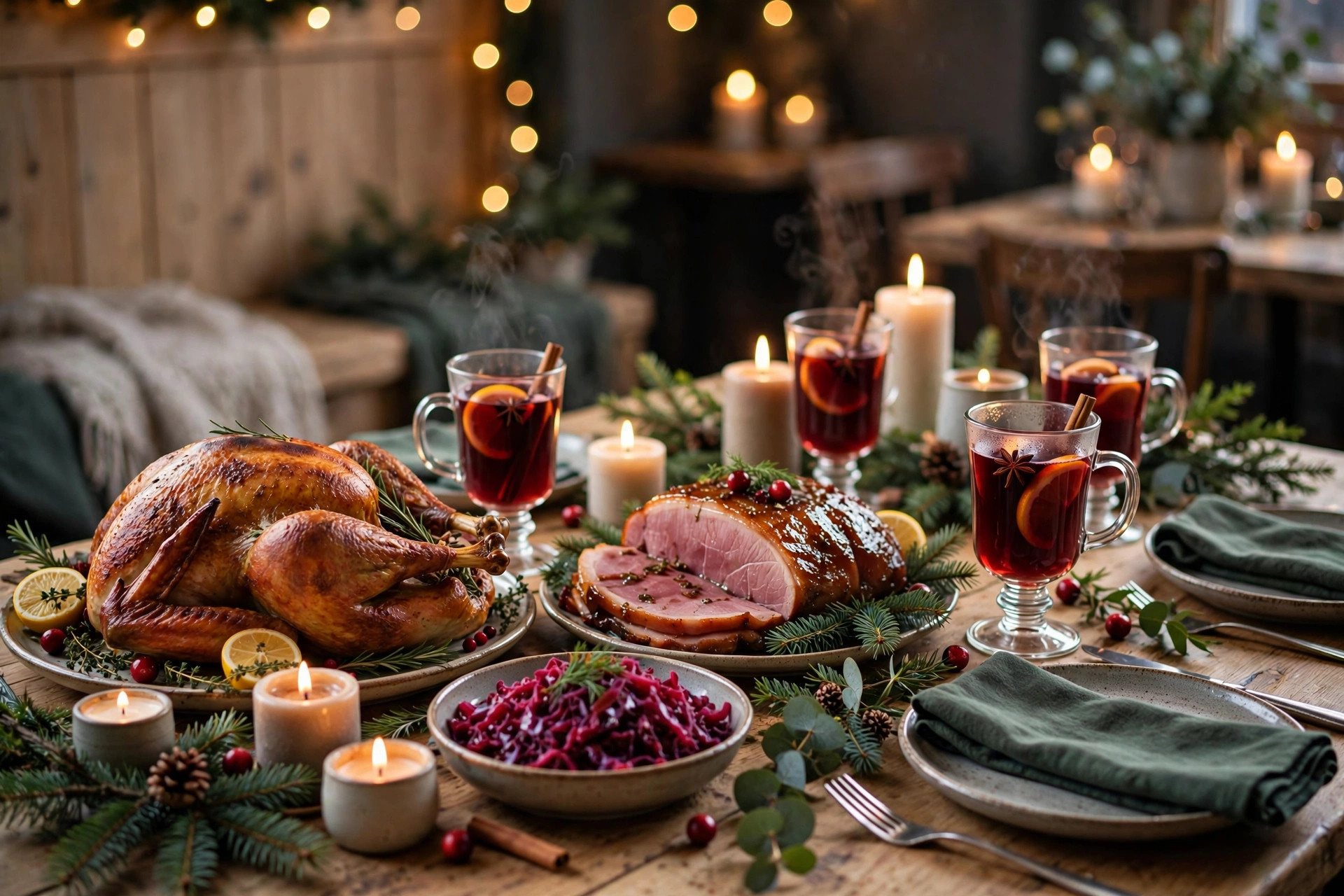
For many independent restaurants, December is the month that decides the year. Office parties, family gatherings, festive dinners with friends — the demand is real, the willingness to spend is at its annual peak, and the competition for every booking is fierce. The Christmas menu sits at the centre of all of it: it is your pricing power, your marketing story and your kitchen's operating plan in a single document.
Yet most restaurants treat the Christmas menu as a December problem. They start thinking about it in late November, rush the costing, announce it with a single Instagram post, and then wonder why the dining room is half empty on the Thursdays that should be printing money. This guide fixes that sequence. Written for independent restaurant, café and bar owners in the Nordics, it covers the economics of the festive menu, a week-by-week launch timeline for 2026, the format decision, the margin maths, the Nordic traditions your guests expect, and the marketing channels that actually fill tables — plus what to do in January, when the fairy lights come down and the bills arrive.
Why the Christmas menu is your highest-margin product
Three forces make December different from every other month, and understanding them is what separates a Christmas menu that merely exists from one that carries the quarter.
Guests expect to pay more — let them
Price sensitivity drops in December. The meal is a celebration, often paid by an employer or split among a group, and the comparison is not "what does dinner usually cost here" but "what is Christmas dinner worth". Industry surveys repeatedly show diners accept premium pricing for festive menus without the resistance a mid-year price rise would trigger. A €69 prix fixe that would raise eyebrows in March feels entirely normal on 14 December. That premium is the margin you use to survive January.
Groups buy certainty, and certainty is efficient
Christmas dining is group dining: office parties of 12, families of 8, friend groups of 6. Groups want one price, one menu, no awkward bill-splitting — and a fixed menu is dramatically cheaper for you to produce than à la carte at volume. Fewer dishes means tighter prep, less waste, faster service and fewer kitchen errors on the nights when the dining room is at its most demanding. The format guests prefer is the format your costs prefer. That alignment is rare in this business; take it.
Scarcity does the selling
A Christmas menu is available for four to six weeks and then it is gone. That deadline concentrates demand the way nothing else in the restaurant calendar does — the same psychology that makes limited-edition anything sell. Your marketing job is largely to make sure people know the deadline exists. "Served until 23 December" on every mention of the menu is worth more than any adjective.
When to launch: the 2026 timeline
The single most common Christmas mistake is starting too late. By the time many restaurants announce their festive menu in late November, the corporate bookers — the highest-value December guests — committed weeks ago. Work backwards from the season with this timeline.
September: decide and design
Lock the concept, the format and the price architecture. Test the dishes with the kitchen while there is still time to change them. Confirm suppliers for the festive ingredients — game, quality turkey or goose, root vegetables, the good chocolate for dessert — before the December rush inflates prices and lead times. Book the photographer now; every restaurant wants a shoot in November.
October: build the machine
Finalise recipes and cost every dish. Build the booking path: a dedicated Christmas page on your website with the menu, prices, dates, group sizes and deposit terms — not a PDF attached to an email, a real page guests can book from. Prepare the email announcement, the social assets and the Google Business Profile updates. If you sell gift cards, design the Christmas packaging now; gift-card season starts the moment the festive menu launches. Brief the team on the menu and the upsells.
Early November: announce
Go public in the first two weeks of November. Email your list first — it is your warmest audience and the highest-converting channel you own. Then social media, website banner, Google Post, updated menu page. The announcement should answer the organiser's real questions: what it costs, what is included, how many people it fits, and how to book. Vague festive poetry books nothing; a clear offer does.
Late November: start serving, keep selling
Begin serving the Christmas menu in the last week of November. Now the marketing shifts from announcement to evidence: photos of real dishes, guest reactions, "this weekend still has tables" posts. Corporate parties peak in the first two weeks of December; family and friend bookings fill the run-up to Christmas itself.
December: execute and capture
In December, marketing is operations: confirm every large booking, manage deposits, photograph everything for next year's campaign, and collect email addresses from every festive guest — January's marketing list is built in December. Note that in 2026 Christmas Eve falls on a Thursday and Christmas Day on a Friday, which stretches the prime booking window across two full weekends. Plan staffing for the entire final fortnight, and treat New Year's Eve as part of the same season, not a separate afterthought.
For the party-booking side of the season — deposits, packages, private dining — our companion guide to preparing for the Christmas booking season covers the operational half of December in detail.
Prix fixe vs à la carte: choosing the format
The format decision shapes everything downstream: kitchen staffing, pricing, marketing copy and the booking flow. For the vast majority of independent restaurants, the answer is prix fixe — but it is worth understanding exactly why, and when the exceptions apply.
| Prix fixe Christmas menu | À la carte festive specials | |
|---|---|---|
| Kitchen load | Low — few dishes, deep prep | High — full menu plus specials |
| Food cost control | Excellent — costed per cover | Weaker — mix varies nightly |
| Table turns | Faster — synchronised courses | Slower — staggered ordering |
| Price presentation | One premium number, easy to say yes to | Bill shock risk on celebration nights |
| Group bookings | Ideal — one price for the organiser | Awkward — bill-splitting friction |
| Marketing | Simple — one hero offer | Diffuse — many dishes, no headline |
| Best for | Most independents, party season | Fine-dining tasting formats, very small rooms |
The hybrid that works best in practice: a 3- or 4-course prix fixe as the headline Christmas offer, with 2–3 festive à la carte specials for walk-ins and regulars who want the atmosphere without the commitment. What does not work is running your full regular menu at full complexity alongside a full Christmas menu in December — that is two kitchens' worth of prep with one kitchen's staff.
Tier it
One price leaves money on the table. Offer two or three tiers — a classic example: a 3-course menu at €59, a 4-course with a welcome glögg at €79, and a premium tier with wine pairings at €119. Tiers do two jobs: they capture the corporate booker with a generous budget and the family watching the total, and they make the middle tier feel like the sensible choice, which is where your margin is engineered to be best. Reservations with well-presented upsells consistently generate significantly more revenue per booking than those without — the booking flow is a sales channel, so design it like one.
Engineering the menu for margin
A Christmas menu is costed backwards: start from the price the market will bear, subtract your target margin, and design dishes to fit what is left. The target for a festive prix fixe is typically 28–32% food cost — slightly more generous than the usual 25–30%, because December volumes and the premium price absorb it.
The price bands (Nordics, 2026)
These are typical market ranges for independent restaurants, not rules — position yourself deliberately within them:
| Tier | Typical price per person | What it usually includes |
|---|---|---|
| Casual / neighbourhood | €45–€65 | 3 courses, bread and spreads, coffee or tea |
| Mid-range independent | €65–€95 | 3–4 courses, welcome glögg or sparkling, petit fours |
| Premium / city centre | €95–€140 | 4–5 courses, champagne aperitif, wine pairing option |
| Wine pairing add-on | +€35–€55 | 3–4 pours matched to the courses |
All prices are estimates based on current Nordic market levels; cost your own menu dish by dish rather than copying a band.
Design rules for a profitable festive menu
Anchor on one hero protein, economise elsewhere. The menu needs one dish that photographs and reads as luxurious — the glazed ham, the whole roasted bird, the cured salmon board. The other courses can be built on humble, high-margin ingredients: root vegetables, cabbage, mushrooms, grains. Guests remember the hero; the margin lives in the supporting cast.
Make the vegetarian main a margin star, not a concession. Plant-based mains routinely run the lowest food cost on the menu. A roasted celeriac wellington or mushroom-chestnut pithivier that costs you €6–€8 to produce can sit proudly at the same price as the meat menu — and a growing share of every party table will choose it.
Price the supplements ruthlessly. Every "add oysters +€12" or "cheese course +€9" should carry 70%+ margin. Supplements are where prix fixe menus quietly outperform their headline price.
Publish one all-in price. Nordic consumers are allergic to drip pricing — the total creeping up with service charges, "festive supplements" and card fees. Put the full per-person price on the menu and the website. If local rules add service charges, state them upfront. Trust converts; fine print does not.
For the psychology behind how guests read menu prices — charm pricing, anchor dishes, the decoy effect — see our guide to menu pricing psychology. December is the month those tactics earn the most.
The 5-minute margin check
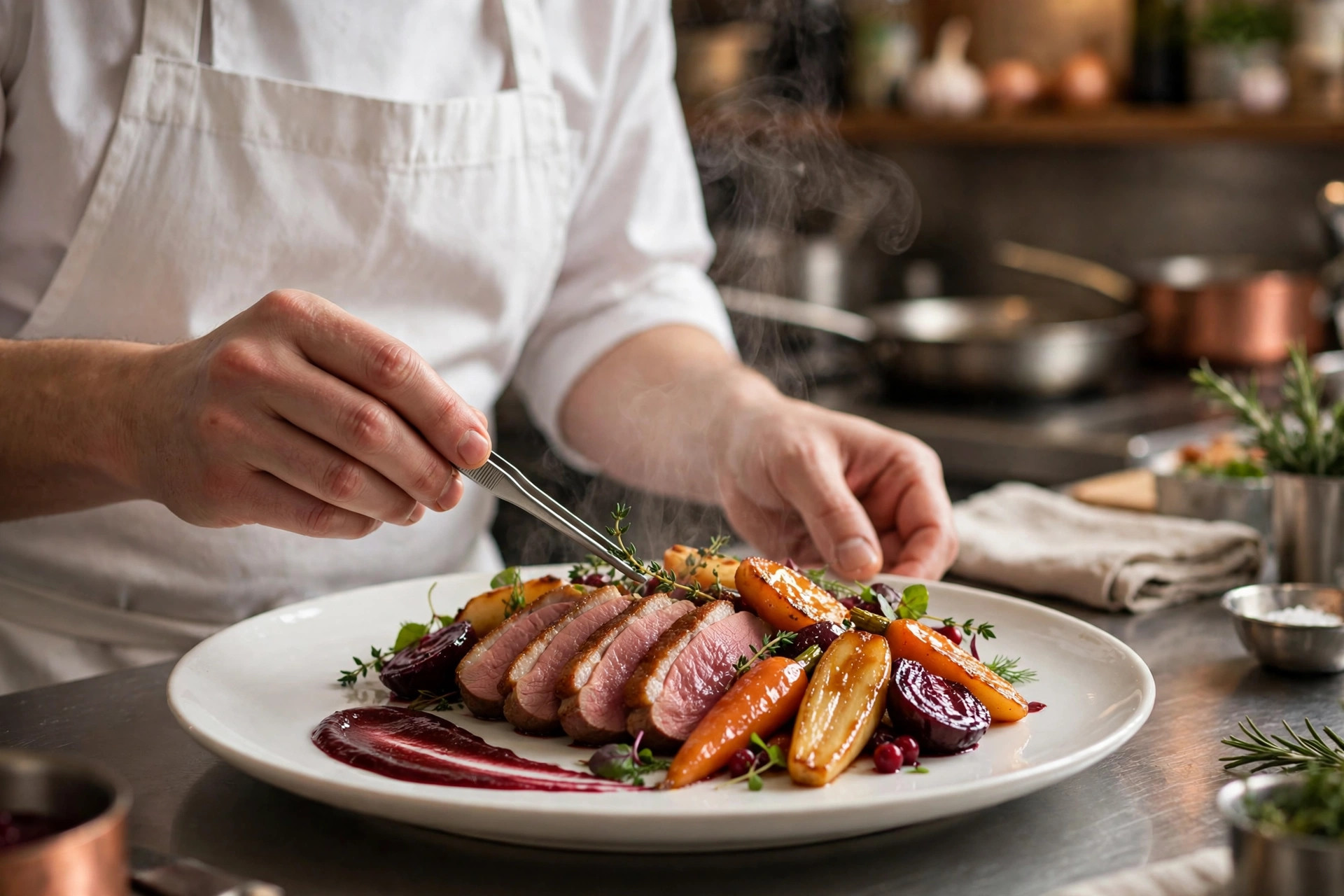
For each dish: ingredient cost per portion ÷ menu price = food cost %. Aim for 28–32% across the whole prix fixe. If the hero main runs 38%, the starter and dessert must run under 25% to compensate. Check the full menu as a weighted average — one expensive dish is fine, three is a donation.
The Nordic Christmas playbook
Generic Christmas marketing advice is written for somewhere else. In the Nordics, December dining has specific traditions, and guests notice whether you honour them.
Know your country's table
In Sweden, the julbord is the institution — the sprawling Christmas buffet with herring, salmon, ham, meatballs and rice pudding. In Finland, the joulupöytä centres on ham, root vegetable casseroles (lanttulaatikko, porkkanalaatikko), rosolli salad and prune pastries. Norway's julebord leans on ribbe (pork rib), pinnekjøtt (dried lamb ribs) and lutefisk for the traditionalists. Denmark does the julefrokost lunch with snaps. You do not have to serve the full traditional spread — a modern Christmas menu is perfectly fine — but nodding to the expected flavours (pickled herring course, a proper glögg, rice pudding with the almond) signals that you understand the assignment. Restaurants that ignore the local canon entirely often find the menu described as "nice, but not very Christmassy" — the kiss of death for a festive premium.
The little Christmas season
Finland's pikkujoulu — "little Christmas" office parties — run through November and early December, well before the main season. They are a distinct booking wave with their own menus and packages, and many restaurants treat pikkujoulu as a separate product: slightly simpler, slightly cheaper, bookable from October. If you operate in Finland, ignoring pikkujoulu means missing a third of the festive market.
Glögg is a profit centre
The welcome drink is the highest-margin item you will sell all December. A proper glögg — served hot, in the right glass, with almonds and raisins — costs little, feels ceremonial, and sets the tone for the evening's spending. Offer it as the included welcome in the premium tier and as a €7–€9 upsell everywhere else. The alcohol-free version deserves equal care; a large share of party guests are driving or moderating, and a thoughtful non-alcoholic glögg is remembered.
Lucia, Independence Day, and the calendar gaps
Finland's Independence Day (6 December) and Sweden's Lucia (13 December) create natural event hooks in the quieter early-December weekdays. A Lucia concert dinner or an Independence Day menu gives the slow Tuesdays a reason to exist. Map the national calendar onto your quiet nights before the season starts, not during it.
Marketing channels that fill December
Christmas marketing fails when it is one Instagram post and hope. It works when every channel you own carries the same offer to the same booking page. Ranked by return on effort for an independent restaurant:
1. Your email list (highest ROI, nearly free)
The announcement email, a mid-November "dates are filling" nudge, and an early-December last-call message — three emails, each with the menu, the price and a booking button. Segment if you can: past December bookers get the first invitation, corporate contacts get the party packages, regulars get the festive menu. If you have not built a list yet, start now with a simple signup — our guide to building an email list the GDPR-safe way covers the mechanics, and December is the easiest month of the year to earn signups.
2. Your website's Christmas page
Every mention of the Christmas menu — social bio links, emails, Google posts — should land on one dedicated page: the menu, prices, dates, group sizes, deposit terms, dietary notes, and a booking button or enquiry form. Not the homepage, not a PDF, not a Facebook post. A dedicated page also captures the seasonal search traffic: "christmas menu [city]" and "julbord [city]" searches spike from October, and a page built for them ranks for them. Keep the URL year-round and update it each autumn; the accumulated search equity compounds. When the page goes live, make sure the site itself looks the part — a dated website undermines a premium festive offer, which is exactly the problem a modern restaurant website solves.
3. Google Business Profile
Update your profile the day the menu launches: new photos of the festive dishes, a Google Post announcing the Christmas menu with the price and booking link, and the special holiday opening hours. A large share of "christmas dinner near me" decisions are made on the profile without ever reaching your website — if the festive offer is not visible there, you are invisible to those searchers.
4. Social media: evidence, not announcements
One announcement post, then a drumbeat of proof: dishes being plated, the dining room dressed for the season, tables of happy groups (with permission), countdown posts for the final booking dates. Short video of the hero dish being finished outperforms any graphic. Post the menu as readable text or a proper page link — screenshots of PDFs are the festive season's most ignored content format.
5. Partnerships and cross-promotion
Team up with the wine shop, the florist, the hotel, the office building next door: their customers are your December guests. Offer their staff a tasting, leave menus at their counter, co-host a small event. It costs nothing and reaches people no ad would find. Local press and food bloggers get an invitation to try the menu — a genuine review in late November is worth a month of your own posts.
6. Paid ads: optional, targeted, small
If you spend, spend late and narrow: radius-targeted social ads in late November aimed at people who engaged with your content but have not booked, plus search ads on "christmas menu [your city]" if the competition has not already bid the price into orbit. A few hundred euros, tightly geo-fenced, with the booking page as the landing page. Anything broader is usually better spent on the photographer.
The pattern that works: the announcement tells people the menu exists; the evidence — dishes, rooms, happy tables, dates filling up — is what makes them book. Post proof, not posters.
Dietary needs, allergens and the law
December concentrates every dietary requirement at once: the office party has a vegan, a coeliac, a nut allergy and someone keeping halal, and they are all at the same table. Handle this well and you win the whole group; handle it badly and the story follows you into January.
Design the vegetarian main properly
The single most common Christmas menu failure is the vegetarian option as an afterthought — a plate of side dishes, or the meat menu with the protein removed. Design a genuine vegetarian Christmas main with the same ambition as everything else: a mushroom and chestnut pithivier, a roasted celeriac wellington, a festive root-vegetable and barley feast. Offer a vegan version without making it feel like a downgrade. In a typical Nordic party group, expect 10–20% to want the vegetarian option — and the organiser choosing the venue often is the vegetarian.
Allergen information is a legal duty, not a courtesy
Under EU Regulation 1169/2011, you must provide information on 14 specified allergens for every dish you serve — including limited-run Christmas specials. You can put it on the menu, keep a separate allergen folder, or give it verbally through trained staff, but it must be accurate and available before the guest orders. Christmas menus are a particular risk because they introduce unfamiliar dishes, new suppliers and temporary staff at exactly the moment the dining room is fullest. Cost the dishes, then allergen-map them, then train the team — in that order, before the first festive service.
Ask at booking, confirm at the table
Put a dietary-requirements field on the Christmas booking form and actually read the answers. For large parties, confirm requirements again 48 hours before — people forget what they declared, and the kitchen needs the final numbers. A short confirmation message template for this lives in our guide to booking confirmations that reduce no-shows.
After Christmas: the January bridge
The restaurants that suffer in January are the ones that treated December as the finish line. The smart ones treat it as the harvest — and January as the month the harvest is eaten.
Capture every guest
Every December booking is a marketing asset for the quiet months. Collect email addresses (with consent — a simple signup card with the bill, or the booking form itself), note which guests came for parties versus dinner, and photograph everything for next year's campaign. The guest who loved your Christmas menu is the warmest possible audience for a January offer.
The bounce-back offer
Give every December guest a reason to return in the dead weeks: a voucher for January tucked into the bill folder, a "thank you" email in the first week of January with a quiet-month offer, a gift-card bonus for purchases made in December ("buy €100, get €120 for January"). Bounce-back mechanics are consistently among the highest-ROI promotions in the restaurant calendar because they convert guests you have already paid to acquire.
Gift cards: December's second revenue line
Gift cards sold in December are January and February revenue received in advance — cash now, redemption later, with a meaningful share never redeemed at all. Promote them from mid-November: at the till, on the website, in the announcement email, and as the answer to every "what should I get them?" conversation. Our guide to selling gift cards online covers the setup; the seasonal point is simply that December does the selling for you if the offer is visible.
Debrief before you forget
In the first week of January, while it is fresh: which dishes worked, which nights were soft, what the food cost actually landed at, what guests asked for that you did not have. Write it down in one page. That page is next year's Christmas plan, and it is worth more than any generic guide — including this one.
Frequently asked questions
When should a restaurant launch its Christmas menu?
Announce it in early to mid-November and start serving it in the last week of November or first week of December. Start teasing 2–3 weeks before launch on social media and email — corporate bookers plan Christmas parties as early as October, so your party packages should be bookable even earlier, ideally by late October.
How much should a Christmas menu cost?
In the Nordics, a Christmas prix fixe typically runs €45–€95 per person for 3–4 courses at independent restaurants, with premium city-centre venues charging €95–€140. Price it from your food cost backwards: aim for 28–32% food cost, add the festive premium guests expect to pay, and publish one clear all-in price rather than a list of supplements.
Should a Christmas menu be prix fixe or à la carte?
Prix fixe wins for most restaurants in December: it simplifies the kitchen, stabilises food cost, speeds up table turns for party season, and lets you charge a premium for the occasion. Keep à la carte running alongside only if you have the kitchen capacity — most independents do better with one focused festive menu plus their regular menu trimmed down.
How do I market a Christmas menu on a small budget?
Email your existing list first — it is free and converts best. Then update your website menu page, Google Business Profile and social channels with the new menu and strong photos. Partner with neighbouring businesses for cross-promotion, and ask happy December guests for reviews mentioning the Christmas menu. Paid ads are optional; owned channels do most of the work.
What should I offer vegetarian and vegan guests at Christmas?
A full vegetarian Christmas main designed with the same care as the meat dishes — not a side plate promoted to main course. Roasted celeriac wellington, mushroom and chestnut pithivier, or a festive root-vegetable feast all work. In the Nordics, 10–20% of a party group may want the vegetarian option, so engineer it for margin too, not as an afterthought.
Do I need allergen labelling on my Christmas menu?
Yes. Under EU Regulation 1169/2011, you must inform guests about 14 specified allergens in every dish, including seasonal specials — the Christmas menu is no exception. You can do this on the menu itself, in a separate allergen folder, or verbally by trained staff, but the information must be accurate and available before the guest orders.
Want a Christmas page that actually books tables?
PowerfulWebsite builds your restaurant's website free — from €59/month, everything included: the festive menu page, online booking, hosting and updates. Launch the Christmas offer on a site that sells it.
See the packages