Seasonal Menu Marketing: The Restaurant Owner's Guide
Marketing a seasonal menu means treating every menu change as a launch event: tease it 2–3 weeks out on social media and email, reveal it on launch day with strong photos and a booking link, promote it through the season, and close with a "last chance" push. Done right, each seasonal rotation brings back regulars, justifies premium prices, and gives your restaurant four built-in marketing campaigns a year.
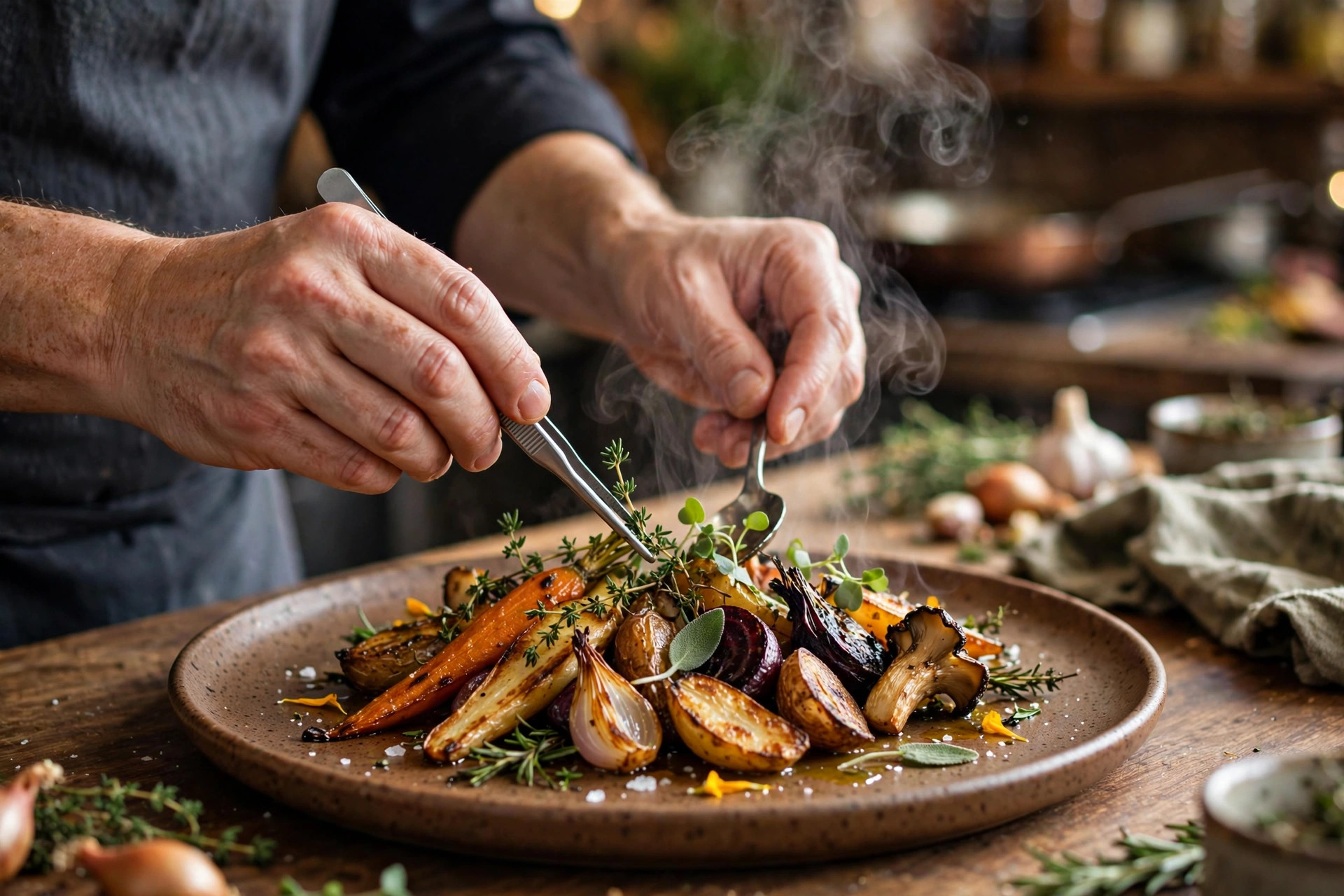
Key takeaways
- A seasonal menu is a marketing asset, not just a kitchen task: it creates urgency, justifies premium pricing, and gives regulars a reason to return four times a year.
- Follow a 6-week timeline: plan the menu 6–8 weeks out, start teasing 2–3 weeks before launch, go big on launch day, and finish with a "last chance" push.
- Email fills tables; social media creates desire; your website and Google Business Profile capture the searches. Use all three, with one clear booking call to action.
- Your staff are the most effective seasonal marketing channel you have — a trained team recommending the new dishes beats any ad.
- Keep a stable core menu and rotate a few seasonal slots: you get the marketing story without the operational risk of a full overhaul.
Most restaurants change their menu seasonally and then tell almost nobody. The kitchen works for weeks developing autumn dishes, the new menu prints, and the only announcement is a quiet swap of the PDF on the website. That is like filming a movie and skipping the premiere. The menu change is the easy part — the marketing is what turns it into revenue.
This guide is the complete playbook for marketing a seasonal menu, written for restaurant owners in the Nordics. You will get the Nordic seasonal calendar (what to build and when), a 6-week launch timeline you can reuse every season, channel-by-channel tactics for social media, email, your website and in-house promotion, an honest look at seasonal versus fixed menus on profitability, and the mistakes that kill most seasonal launches. No fluff, no "post consistently" platitudes — just the sequence that works.
Why your seasonal menu is a marketing asset
Before the tactics, the mindset. A seasonal menu does three things for your business that a fixed menu cannot, and all three are marketing effects.
Urgency: "order it now or miss it"
A dish that is available all year gets ordered "sometime". A dish that disappears when the season ends gets ordered now. This is the most powerful and most honest form of urgency in restaurants: it is not a fake countdown timer, it is nature. "Available until the chanterelles run out" is a reason to book this week instead of next month. Every seasonal item on your menu is a small, truthful deadline — and deadlines are what convert interest into bookings.
Premium pricing without the awkwardness
Guests accept higher prices for seasonal dishes without blinking, because the story justifies it: local, fresh, limited, crafted. A fixed menu that creeps up in price every year feels like inflation; a seasonal menu at a premium feels like an occasion. This is why tasting menus and seasonal specials carry the best margins in most restaurants. The season gives you permission to charge what the dish is worth.
Repeat visits on a schedule
A fixed menu is a solved problem: once a regular has tried everything, the discovery is over. A seasonal rotation re-opens the question four times a year. "Have you tried the new autumn menu yet?" is a reason for a lapsed regular to come back, a reason for a food-interested friend to recommend you again, and a reason for local media and food bloggers to write about you again. Each rotation is a built-in reactivation campaign for your entire customer base.
"A fixed menu answers the question 'what do you serve?' A seasonal menu answers the much better question: 'what's new?'"
The Nordic seasonal calendar for restaurants
The Nordics have the most dramatic seasons in Europe, and that is a gift for seasonal marketing. Each season brings ingredients, holidays and moods you can build a menu — and a campaign — around. Here is the year, quarter by quarter.
| Season | Signature ingredients | Marketing moments |
|---|---|---|
| Spring (Mar–May) | Asparagus, nettles, rhubarb, new potatoes, spring lamb | Easter menus, Mother's Day, terrace season opening, "first of the season" stories |
| Summer (Jun–Aug) | New potatoes, strawberries, peas, crayfish, grilled everything | Midsummer, crayfish parties, terrace dining, holiday tourist traffic |
| Autumn (Sep–Nov) | Mushrooms, game, root vegetables, apples, pumpkin | Hunting season, harvest themes, Halloween, pikkujoulu / Christmas party season starts |
| Winter (Dec–Feb) | Citrus, kale, preserved foods, hearty stews, glögg spices | Christmas menus, New Year's Eve, Valentine's Day, "warming winter dishes" |
Do not forget the micro-seasons
Between the big four, the Nordics have intense short seasons that food lovers obsess over: the first chanterelles, crayfish season in August, the Christmas table (joulupöytä / julbord / julebord) season, laskiainen/Shrove Tuesday buns, Runeberg tortes in February, Valentine's Day. Each one is a ready-made limited-time offer with its own built-in audience. A restaurant that marks even three or four of these a year always has something to talk about.
Match the calendar to your concept
Not every season suits every restaurant. A sushi restaurant does not need a crayfish party; a pizzeria does not need a game menu. Pick the seasonal moments that fit your identity and go deep on those, rather than doing a thin version of all of them. Two or three strong seasonal stories a year beat four forgettable ones.
The 6-week seasonal launch timeline
The difference between restaurants whose seasonal menus sell and those whose do not is rarely the food — it is the timeline. A launch needs a runway. Here is the sequence, working backwards from launch day.
| When | What happens | Channel |
|---|---|---|
| 6–8 weeks before | Menu planning: dishes, costing, supplier confirmations for seasonal ingredients | Kitchen + management |
| 4 weeks before | Recipe testing, staff tasting, allergen review, final pricing | Kitchen + staff |
| 3 weeks before | Photograph every dish properly; write descriptions; update the website menu page (as a draft) | Website (draft) |
| 2 weeks before | Teaser campaign begins: "something new is coming" posts, email teaser to your list | Instagram, email |
| 1 week before | Behind-the-scenes content: chef preparing dishes, ingredient stories; staff training on upselling the new items | Instagram Reels/TikTok, in-house |
| Launch day | Full reveal: all dishes with photos, booking link, updated website menu page live, Google Business Profile post | Everywhere |
| Launch week | Feature one dish per day on social media; table tents and menu inserts in the restaurant | Social, in-house |
| Mid-season | Guest photos and reviews reshared; "guest favourite so far" post; email to non-openers | Social, email |
| Final week | "Last chance" messaging: last 7 days, countdown, final bookings push | Email, social, website banner |
The single most skipped step is the photography, three weeks out. Restaurants try to photograph dishes on launch day, in bad light, between services — and then wonder why the social posts underperform. Book the shoot (even if the photographer is you with a phone and a window) before the launch, not during it. Great photos are the fuel for the entire campaign; everything downstream depends on them.
The launch-day checklist
- Website menu page updated and live — with photos, prices and allergen info.
- Google Business Profile post announcing the seasonal menu, with a photo.
- Launch email sent to your list with a clear "Book a table" button.
- Social posts scheduled: full reveal today, one dish per day this week.
- Table tents or menu inserts in the restaurant; staff briefed and can describe every new dish.
- QR codes and any printed materials point at the new menu, not the old one.
Instagram and TikTok: making the season visible
Social media is where desire gets built. Nobody books a table from a spreadsheet — they book because a video of your mushroom risotto made them hungry at 9pm. Seasonal menus are ideal social content because they are visual, timely and naturally serialised: a new "episode" every season.
What to post, and when
During the teaser phase, post mystery: close-ups of ingredients, the chef's hands at work, a covered dish with "next week" as the caption. Curiosity outperforms information at this stage. On launch day, post the full spread — a carousel or a 30-second video touring the new dishes. During launch week, feature one dish per day: a great photo, the story behind it, and where to book. Mid-season, shift to social proof: repost guest photos (with permission), share reviews that mention specific dishes, and post the "guest favourite so far". In the final week, post scarcity: "last chance for the autumn menu".
Behind the scenes beats polished ads
The content that performs best for restaurants is rarely the polished hero shot — it is the kitchen reality. The chef foraging mushrooms, the first test of a new dessert, the team tasting and arguing about the menu. This content does two jobs: it builds anticipation before launch, and it makes your restaurant feel like a place with people in it, not a brand. Film it on a phone, keep it under a minute, post it as Reels or TikTok. It costs nothing and consistently outperforms stock-style food photography.
Work with local food creators — carefully
One genuine post from a local food blogger or micro-influencer who actually likes your food is worth more than a month of your own posts. Invite two or three for a tasting at launch; do not script them, do not demand posts, just let them experience the menu. The creators worth working with have small, local, engaged audiences — a Helsinki food account with 5,000 local followers beats a generic account with 200,000 followers worldwide. Avoid paying for posts that read as ads; a hosted tasting that leads to an honest post is both cheaper and more credible.
"Your seasonal menu gives you four premieres a year. Most restaurants treat them like schedule changes — announce them like events instead."
Email: the channel that fills tables
Social media builds desire; email converts it into bookings. Your email list is the only audience you own outright — no algorithm decides who sees your launch announcement. If you do not have a list yet, start one now: a simple signup at the host stand ("join our list for seasonal menu previews") and on your website can add dozens of contacts a week during busy periods.
The 4-email seasonal sequence
Email 1 — the teaser (2 weeks before launch). Subject line curiosity, one beautiful photo, one line of text: "Our autumn menu arrives on 1 October. Here's a hint." No booking link yet — you are building anticipation, and you want the open rate, not the click.
Email 2 — the reveal (launch day). The full menu with photos, the story behind the season, and one unmissable booking button. This is the email that fills tables: send it in the morning so people plan their weekend around it. Keep it short — photos, three lines of text, book now.
Email 3 — social proof (2–3 weeks in). "Here's what guests are saying about the autumn menu" with two or three short quotes and guest photos. Target the people who did not open email 2 with a different subject line. Social proof converts the hesitant.
Email 4 — last chance (final week). "Last 7 days of the autumn menu." Urgency, the booking link, and the dishes that will disappear. This email routinely outperforms the launch email, because the deadline is now real.
Keep the list warm between seasons
A list you only email four times a year goes cold. Between launches, send one short email a month: a recipe, a staff story, an event announcement, a holiday greeting. The goal is simply that your name in their inbox is familiar, so the seasonal launch emails get opened. And always make unsubscribing one click — a clean, engaged list of 500 beats a dead list of 5,000.
Your website and Google Business Profile
Social and email push; your website and Google presence catch. When someone searches "autumn menu Helsinki" or "Christmas dinner restaurant Oslo", you want to be the result — and that only happens if your seasonal menu actually lives on your website as readable text.
The seasonal menu page
Give the seasonal menu its own page or a clearly marked section of your menu page — not just a PDF swap. Real text means Google can read it, guests can find it on phones, and you can link to it from every email and post. Include the season and year in the title ("Autumn menu 2026"), the full dishes with prices, and the end date ("available until 30 November"). When the season ends, do not delete the page: archive it and redirect to the current menu. Old seasonal pages accumulate search authority that helps the next season rank faster.
Google Business Profile: the free billboard
Your Business Profile is often the first thing guests see, and it has a Posts feature most restaurants ignore. On launch day, publish a post: one photo, "Our autumn menu is here — available until 30 November", with a link to the menu page. Update your menu link if it points at a PDF. Add seasonal photos to your photo gallery. These small steps take twenty minutes and put your seasonal menu in front of everyone who finds you on Google Maps — which, for most restaurants, is most new guests.
One clear call to action everywhere
Every seasonal touchpoint — email, post, website banner, table tent — should end in the same place: booking a table. Not "learn more", not your homepage, but the reservation flow. Audit the path once per season: click your own booking link on a phone and count the steps. If it takes more than a minute from "I want to try the autumn menu" to a confirmed table, fix it before you spend a euro on promotion. A website built to convert visitors into bookings is the foundation every seasonal campaign stands on.
In-house marketing: staff, table tents and chalkboards
The cheapest and most effective seasonal marketing channel is the one inside your own four walls: the guests already sitting at your tables, and the staff serving them. These people have already chosen you — selling them the seasonal menu is the easiest sale in the business.
Train the team before the launch
Before the seasonal menu goes live, the whole team tastes it. Not just the chefs — the servers, the bartenders, everyone who talks to guests. A server who has tasted the mushroom risotto and can describe it in one sentence ("earthy, creamy, the mushrooms were picked last week") will sell ten times more of it than a server reading from a card. Give the team two or three recommended pairings and one "if you only try one thing" pick. Then get out of the way: genuine enthusiasm outsells scripts.
Table tents, inserts and chalkboards
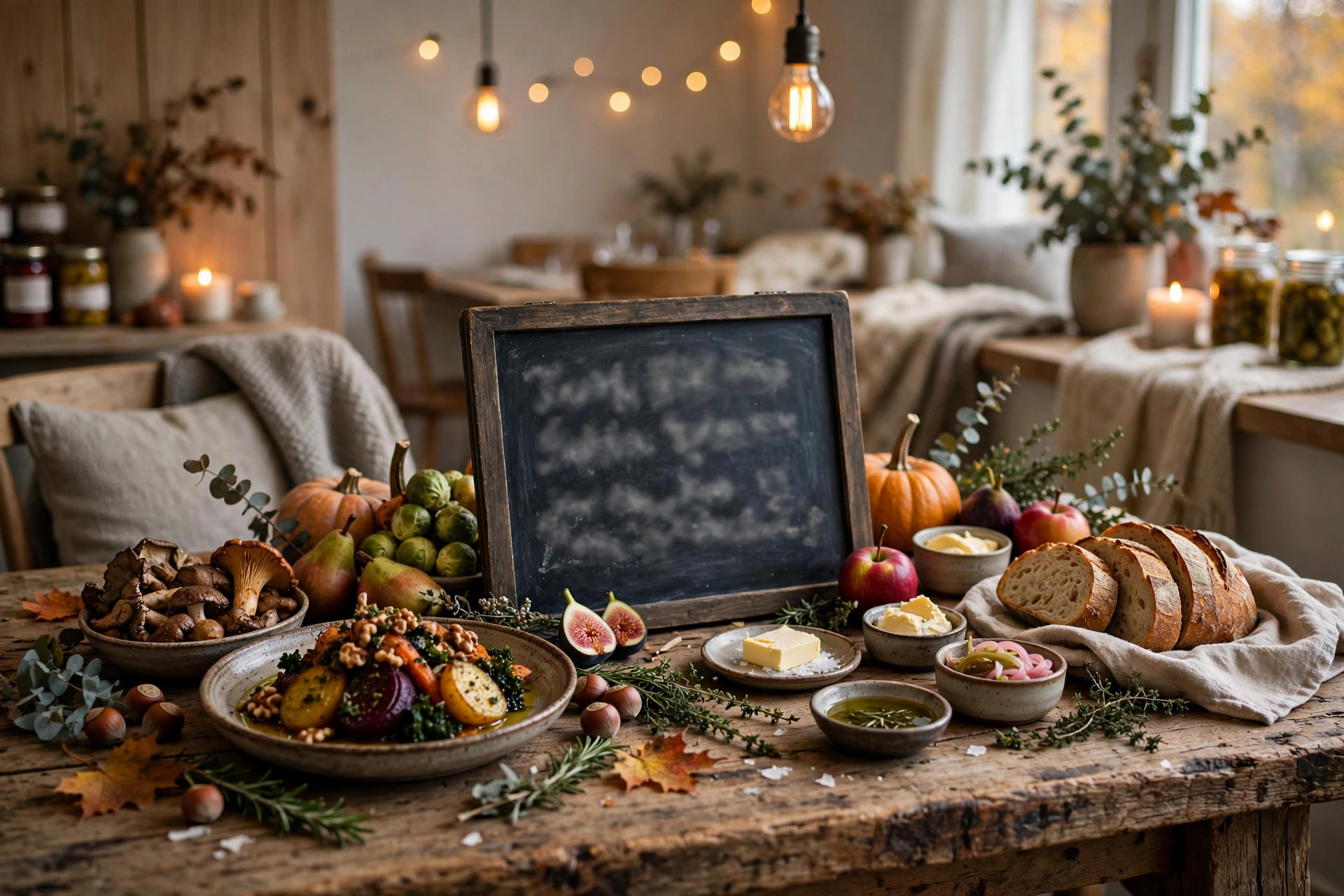
Physical prompts in the restaurant do quiet, constant work. A table tent with a photo of the seasonal special and three words of description. A menu insert — a single card slipped into the menu — announcing the new dishes. A chalkboard by the entrance with today's seasonal highlights. These cost almost nothing and reach every guest, including the ones who never saw your Instagram. Change them when the menu changes; a chalkboard advertising the spring menu in October is worse than no chalkboard.
Turn regulars into launch partners
Your regulars are your best marketing asset. Invite a few to a pre-launch tasting — a quiet evening before the official launch, on the house or at a friendly price. They feel valued, they post about it, they bring friends to the real launch, and they become the social proof for your mid-season emails. This is how small restaurants manufacture buzz without a marketing budget: treat your best guests like insiders, and they will do the marketing for you.
"A server who has tasted the dish sells it ten times better than a server who has read about it. The tasting is not a perk — it is marketing spend."
Seasonal vs fixed menu: the profitability question
Seasonal menus are not automatically more profitable — they are a trade-off, and you should go in with open eyes. Here is the honest comparison.
| Seasonal menu | Fixed menu | |
|---|---|---|
| Food cost | Often lower: in-season ingredients are cheaper and better | Stable but you pay out-of-season premiums all year |
| Pricing power | Higher: "seasonal and local" justifies premium prices | Harder to raise prices without guest pushback |
| Waste risk | Higher if badly planned: new ingredients, uncertain demand | Lower: known quantities, predictable prep |
| Labour | More: recipe development, staff retraining each rotation | Less: the kitchen runs on muscle memory |
| Marketing value | High: four launches a year, urgency, press coverage | Low: nothing new to talk about |
| Guest loyalty | Discovery keeps regulars returning | Regulars know what to expect — comforting, but static |
The hybrid most restaurants should run
You do not have to choose. The model that works for most small and mid-size restaurants is a stable core menu of your proven winners — the dishes regulars come back for — plus two to four rotating seasonal slots. The core gives you predictable costs and the comfort of familiarity; the seasonal slots give you the marketing story, the urgency and the premium pricing. When a seasonal dish becomes a runaway hit, promote it to the core menu. When a core dish fades, retire it into a seasonal slot for its farewell tour. If you want to think rigorously about which dishes earn their place, our menu pricing psychology guide covers the tactics that make menus sell more.
Keep the numbers honest
Cost every seasonal dish before launch — ingredients, labour, and realistic waste — and price it for the margin you need, not the price you hope guests accept. Track each seasonal item's sales weekly during its run. The data from this season is what makes next season's menu better: you will know exactly which dishes earned their place and which were expensive experiments.
Mistakes that kill a seasonal launch
Most seasonal launches do not fail because the food is bad. They fail for avoidable, boring reasons. Here are the ones to watch for.
Launching without telling anyone
The classic: the new menu appears, nobody announces it, and three weeks later the owner wonders why sales are flat. A menu change without a launch campaign is just a cost. Even a minimal version — one email, three social posts, updated website — beats silence by an embarrassing margin.
Photographing dishes on launch day
Bad photos kill good food online. Dishes shot in a rush, under yellow dining-room light, between services, will underperform every time — and those photos then live on your website and Google profile for months. Photograph before launch, in daylight, without time pressure. If you can only afford to do one thing well, do this.
Changing everything at once
A full menu overhaul every season exhausts the kitchen, confuses regulars and multiplies the ways things can go wrong. Rotate a portion, keep the winners, and let the menu evolve. Your regulars should recognise your restaurant in every season — otherwise you are not running a seasonal menu, you are opening a new restaurant four times a year.
Forgetting the website and Google
Restaurants will post fifteen Instagram stories about the new menu and forget to update the actual menu page on their website — the page guests find through Google. Social posts decay in days; your website and Business Profile work for the whole season. Update them on launch day, every time. And make sure the site itself is fast on phones: our mobile optimisation checklist covers what guests expect in 2026.
Running the "seasonal" menu all year
The fastest way to destroy the urgency effect is to keep "seasonal" dishes on the menu permanently because they sold well. Congratulations on the hit — now promote it to the core menu under a new description and create a new seasonal story. Scarcity only works if it is real. Guests learn quickly whether "limited time" means anything at your restaurant.
"Scarcity only works if it is real. The moment 'limited time' becomes permanent, every future launch loses its power."
Frequently asked questions
How often should a restaurant change its seasonal menu?
Four times a year is the classic rhythm — one menu per season — and it works well in the Nordics where the seasons are dramatic. Some restaurants do smaller rotations every 6–8 weeks, and many add short limited runs for events like Christmas, Valentine's Day or Midsummer on top of the seasonal base. The key is consistency: guests should learn that your menu changes, so they keep coming back to see what's new.
Does a seasonal menu actually increase sales?
It can, through three mechanisms: urgency (limited-time dishes get ordered now, not later), higher willingness to pay (seasonal and local ingredients justify premium prices), and repeat visits (regulars return to try the new menu). The effect depends on execution — a seasonal menu nobody hears about sells nothing. Marketing the change is what turns kitchen work into revenue.
How do you announce a new seasonal menu?
Start teasing 2–3 weeks before launch on social media and to your email list, reveal the full menu on launch day with strong photos and a booking link, feature one dish per day on social during the first week, and send a "last chance" message in the final week. Update your website menu page and Google Business Profile on launch day so guests searching for seasonal menus find you.
What is seasonal marketing for restaurants?
Seasonal marketing means building your promotions around the time of year: launching menus tied to seasons and holidays, using seasonal ingredients and themes in your messaging, and creating urgency with limited-time offers. For restaurants it typically combines a seasonal menu launch with coordinated social media, email, in-house promotion and local search updates.
Should small restaurants bother with seasonal menus?
Yes — arguably they benefit most. A small restaurant cannot compete on scale, but it can change its menu faster than any chain. Even a modest version works: keep your core menu stable and rotate two or three seasonal specials. That gives you the marketing story ("new autumn dishes") without the operational risk of a full menu overhaul.
How far in advance should I start marketing a seasonal menu?
Start the marketing 2–3 weeks before launch with teasers, go big on launch day, and keep promoting through the season with a final push in the last week. Planning the menu itself should start 6–8 weeks out so the kitchen can test dishes, suppliers can confirm seasonal ingredients, and you have time to photograph everything properly.
Want a website that makes every seasonal launch easy?
PowerfulWebsite builds your restaurant's website for free — you only pay from €59/month. Everything is included: menu pages you can update in minutes, domain, hosting, maintenance and updates. Seasonal changes should take an afternoon, not a web project.
See the plans