Seasonal Restaurant Advertising: A 12-Month Calendar
Restaurant demand is seasonal, so restaurant advertising should be too. A seasonal advertising calendar maps your promotions, ad spend and creative to the twelve months — leaning into Christmas, Midsummer and terrace season when demand peaks, and spending smartly in January and February when it does not. Below is a month-by-month framework built for Nordic restaurants, with the dates, budget rhythms and lead times that actually fill tables.
Key takeaways
- Plan twelve months ahead in one sitting: anchor moments (Christmas, Midsummer, Easter, Valentine's) get campaigns, the rest get lighter rhythms.
- Launch big-moment campaigns 4–6 weeks early — corporate Christmas bookings open in September, not December.
- Spend with the season: roughly 1.5–2× your base budget in December, about half in deep January.
- Rotate 3–4 seasonal creative sets instead of shooting twelve campaigns — terrace light in May, candlelight in November.
- Quiet months are for retention: gift card redemptions, loyalty offers and local regulars, not expensive acquisition.
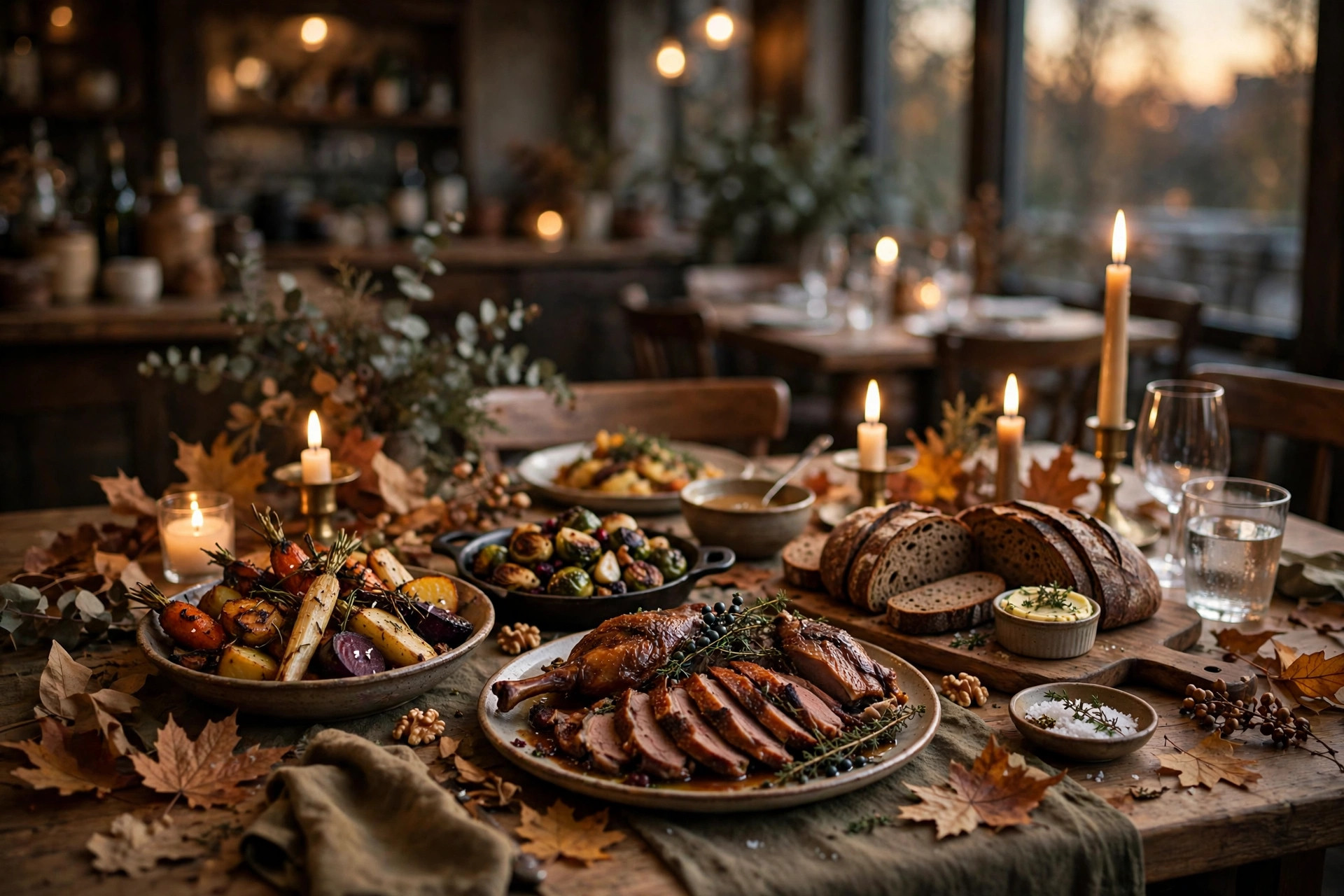
Every restaurant owner knows the year has a shape. December is a sprint, January a crawl, May a awakening, July a different kind of busy. Yet most small restaurants advertise as if every month were identical — the same boosted post, the same budget, the same photos, all year. The result is predictable: overspending in months when the room would fill anyway, and going quiet in the months when a well-timed campaign could genuinely move the needle. A seasonal advertising calendar fixes this by deciding, once a year, what you will promote, when you will spend, and what the ads will look like — before the year starts. This guide gives you the full twelve-month framework with Nordic-specific dates, realistic budget rhythms and the lead times most restaurants get wrong. Pair it with our monthly content calendar template for the organic side, and our guide to restaurant ad budgets for the numbers behind the spend.
Why seasons run restaurant revenue
Dining is one of the most seasonal consumer behaviours there is. People eat differently in February darkness than in June light; they book differently for a Tuesday in January than for a Friday in December. Three forces drive this. First, the calendar of occasions: Christmas, Valentine's Day, Easter, Mother's Day, Midsummer, graduations — each creates a wave of planned dining that can be captured only if you advertise before the planning happens. Second, the weather: in the Nordics especially, the first warm week of May and the first dark week of October visibly move foot traffic. Third, the tourism cycle: summer visitors, winter city-break travellers and the business travel calendar reshape who is in town and what they want.
Restaurants that plan seasonally get three advantages. They buy attention cheaper: advertising a Christmas menu in October costs less per booking than advertising it on 20 December when every restaurant in town is bidding. They convert better: seasonal creative (a candlelit Christmas table, a sunlit terrace) matches what people already crave. And they protect margins: planned promotions are priced deliberately, while panic discounts in a quiet week are priced desperately.
How to build your 12-month calendar
Block one afternoon in autumn — October or November — and map the coming year on a single page. You need three columns: the moment, the campaign, and the launch date. The moments come from three lists: universal occasions (Christmas, New Year, Valentine's, Easter, Mother's Day, Halloween), Nordic specifics (Midsummer, the crayfish season in August, the corporate Christmas party season, winter holidays week), and your own business rhythms (terrace opening, menu changes, anniversary, local festivals).
Anchor moments vs. filler months
Not every month deserves a campaign. Pick four to six anchor moments — the occasions that genuinely move revenue for your concept — and give each a real campaign: dedicated creative, dedicated budget, dedicated landing page or booking flow. The remaining months get a lighter rhythm: one seasonal menu push, one retention offer, steady evergreen advertising. A fine-dining restaurant's anchors might be Valentine's, Easter, Midsummer and Christmas; a lunch café's might be back-to-work January, terrace season and the autumn return. Anchor where your money is.
The lead-time rule
The most common seasonal mistake is launching when the event happens instead of when the planning starts. Corporate Christmas party bookings open in September. Valentine's tables are booked in late January. Midsummer plans are made in May. Work backwards from the booking behaviour, not the calendar date: four to six weeks of lead time for big moments, two to three weeks for smaller ones like a new seasonal menu or a food day. Put the launch dates in the calendar, not just the event dates — and set reminders, because October-you will forget what September-you planned.
The lead-time cheat sheet
6+ weeks ahead: Christmas corporate parties (B2B outreach from September), New Year's Eve. 4 weeks ahead: Valentine's Day, Easter, Midsummer, Mother's Day. 2–3 weeks ahead: seasonal menu launches, terrace opening, food days (e.g. Shrove Tuesday buns, crayfish season). 1 week ahead: weather-reactive pushes, event-week campaigns. Launch when planning starts, not when the event happens.
January–February: the low-season recovery
January is the hardest month in Nordic restaurant marketing: dark, cold, and full of customers who overspent in December and resolved to cook at home. Fighting January with heavy acquisition spending is usually a losing trade. The smart January play is retention and recovery.
Gift card redemption season
A large share of December gift card sales gets redeemed in January and February — this is revenue you have already banked, and the marketing job is simply to remind people. A short email or social campaign in early January ("Your gift card is waiting — tables available this week") converts at almost no cost. If you sell gift cards online, make the redemption path obvious on your website; every friction point here is pure lost revenue.
Dry January, Veganuary and the cosy pivot
January's food trends are real commercial opportunities: alcohol-free drinks, plant-based menus and comfort food all over-index in the new year. A "Dry January" mocktail menu or a plant-forward winter menu gives you something newsworthy to advertise without discounting. Position the restaurant as the cosy answer to the dark month — candlelight, stews, board games, long lunches — rather than competing on price with everyone's January sales. Keep paid spend at its lowest here; this is the month for email, social and your regulars. For inspiration on structuring the offer, see our guide on how to market your seasonal menu.
Valentine's Day: the February exception
Valentine's Day (14 February) is the one February moment worth a real campaign — but only for concepts where couples dine. Launch in mid-January: a prix-fixe menu, a bookable time-slot structure (two seatings protect the kitchen), and creative that sells the evening, not the discount. Valentine's rewards early planners with premium pricing; late bookers get the leftovers.
March–May: spring menus and terrace season
Spring is the optimism quarter. Daylight returns, terraces reopen, and diners start planning the social summer. Advertising shifts from retention back to acquisition.
Easter and the spring menu launch
Easter (early April) brings the first proper holiday dining wave: long lunches, family tables, the spring menu debut. Launch Easter campaigns in early March with the spring menu as the hero — lighter dishes, first local produce, the visual shift from dark winter food to bright spring plates. This is also the moment to photograph your terrace and outdoor seating for the summer creative bank; you will need those photos in May.
Mother's Day and graduations
Mother's Day (February in Norway, May in Finland and Sweden — check your market) is one of the year's highest-intent brunch occasions. Promote a dedicated brunch seating two to three weeks ahead. Late May and June bring graduations across the Nordics — family celebration dinners that book early and spend well. A "graduation dinner" package page on your website, advertised in late April, captures this cleanly.
Terrace season: advertise the weather before it arrives
The terrace opening deserves its own mini-campaign: "terrace opens 1 May" content starting mid-April, with sunlit photos and the summer drinks list. The first warm weekend will fill every terrace in town regardless — the advertising win is capturing the bookings for the weekends after, when the novelty fades and people choose between terraces. Weather-reactive boosting (a small budget push when the forecast shows 20°C+) is the highest-ROI ad spend many restaurants ever run.
June–August: tourists, terraces and Midsummer
Summer splits Nordic restaurants into two businesses: the tourist trade and the local trade. They need different campaigns, and in July they barely overlap — many locals leave town just as visitors arrive.
Midsummer: plan around the closure
Midsummer (late June) effectively closes much of Finland and Sweden for the weekend — decide early whether you are open, and if so, advertise a Midsummer menu to the people who stay: tourists, and locals who did not go to the cabin. If you close, say so clearly on your website and Google profile weeks ahead; nothing damages trust like a guest arriving at a dark door.
The tourist campaign
For restaurants in tourist areas, summer means a dedicated visitor campaign: English-language creative, "people recently in this location" targeting, review-site presence (Tripadvisor, Google) polished before June. Tourists decide fast and review publicly — the summer campaign's real payoff is the review harvest that powers autumn bookings. Keep the tourist ad set on a separate budget with its own creative; mixing it with the local campaign muddies both.
August: crayfish, festivals and the return
August is the Nordic food month: crayfish season in Sweden and Finland, food festivals, the locals returning. Crayfish parties (kräftskiva) are a genuine booking occasion — a set crayfish menu advertised from late July captures group bookings that plan ahead. Late August also starts the "back to routine" wave: lunch traffic normalises, and it is time to shift creative from sunlit terraces to warm interiors.
September–November: back to routine, game season
Autumn is the most underrated advertising season. Demand is steady, competition for attention is lower than in December, and diners are receptive — the routines are back, the dark evenings make restaurants appealing, and nobody is exhausted by Christmas noise yet.
The corporate Christmas pre-season
September is when companies plan their Christmas parties — and therefore when your B2B outreach must start. A simple, bookable "Christmas party packages" page on your website, emailed to local companies and advertised lightly on LinkedIn and Meta from September, captures the planners. By November the corporate calendar is largely set; advertising party packages in December is mostly too late. Our Christmas booking season guide covers this in depth.
Game season and the autumn menu
The autumn game and mushroom season gives Nordic restaurants their most distinctive menu story of the year — and distinctive stories are what advertising needs. An autumn menu launch in September or October, with genuinely seasonal dishes and photography to match, is the strongest "new reason to visit" between summer and Christmas. Halloween (31 October) is optional: worth a campaign for bars and casual concepts, skippable for fine dining.
Father's Day and the quiet November
Father's Day (second Sunday of November in Finland, Sweden and Norway) is a smaller but real family-dining occasion — a weekend campaign, not a month-long one. Late November is otherwise the calm before December: use it to finalise Christmas creative, brief staff, and let the corporate party bookings roll in.
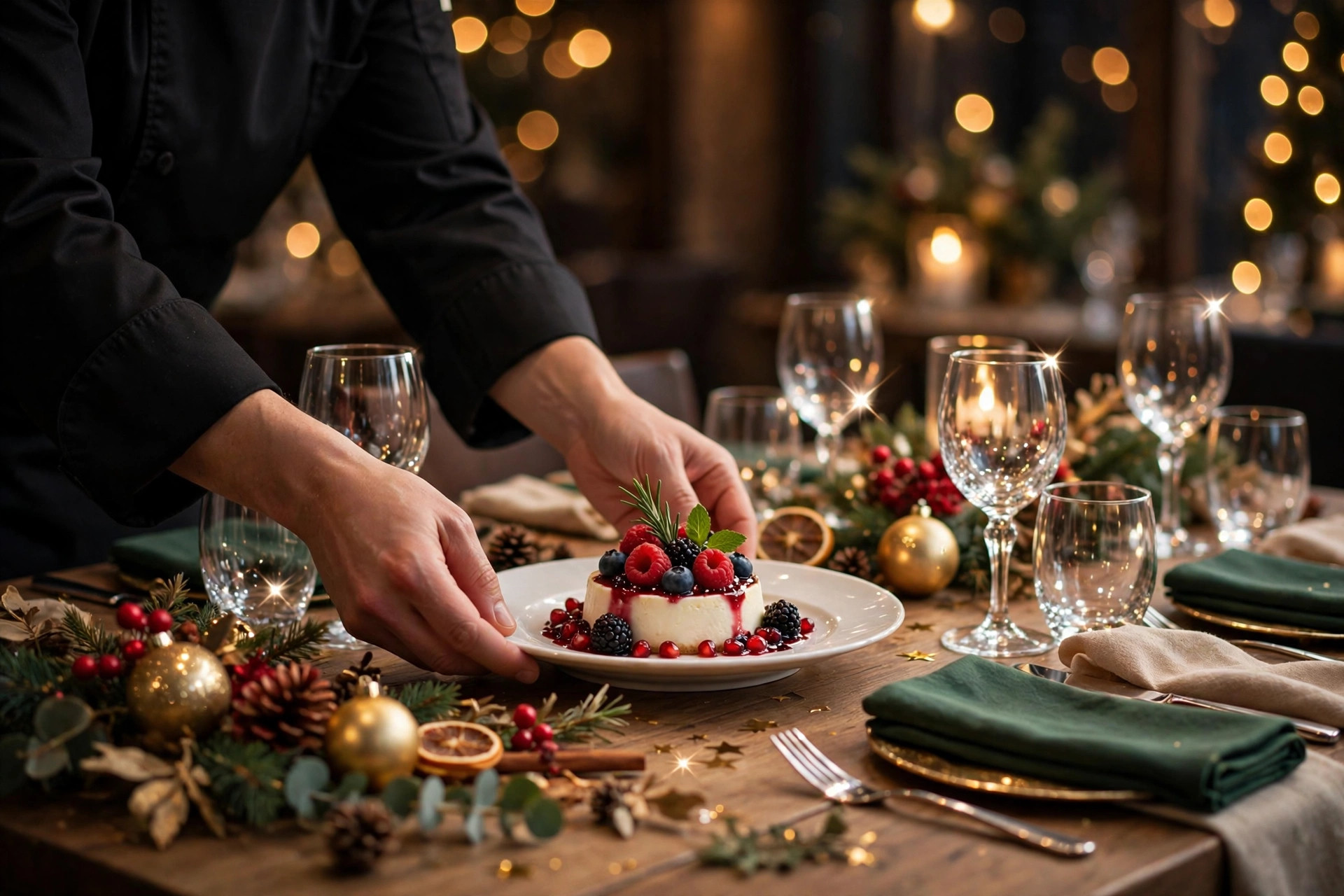
December: the peak playbook
December is the month the whole calendar builds toward — typically the highest-revenue month for Nordic restaurants, and the month where advertising mistakes cost the most.
The corporate party season
The Nordic corporate Christmas party tradition — pikkujoulu in Finland, julbord in Sweden, julebord in Norway — makes November and December the B2B dining peak. If you court this business, your advertising actually happened in September and October; December is fulfilment. Keep a small retargeting budget for last-minute bookers, but do not prospect for parties in December — the planners decided weeks ago.
Consumer Christmas: menus, gift cards, New Year's Eve
The consumer campaign has three products: the Christmas menu (launch mid-November, premium pricing, bookable time slots), gift cards (the highest-margin product you sell — advertise from late November through 23 December, with last-minute digital delivery as the hook), and New Year's Eve (launch early December; scarcity sells it, so show remaining tables honestly). Creative should be candlelit and warm — December sells atmosphere as much as food.
The December budget trap
Two traps: spending to fill a room that is already full (check bookings before raising budgets — advertising a sold-out New Year's Eve is pure waste), and panic-discounting in the first quiet week of January to "keep momentum". December's job is to maximise revenue per cover; January's job is recovery. Do not let one month's tactics bleed into the next.
The Nordic Christmas party season, in brief
Finland's pikkujoulu, Sweden's julbord and Norway's julebord turn November–December into the year's biggest group-dining season. Companies book in September–October, parties happen on Fridays and Saturdays from late November, and set menus with drinks packages are the standard product. Restaurants that publish bookable party packages early — with clear per-person pricing — capture this market; those that wait for enquiries compete on price in December.
Budgeting across the year
Translate the calendar into money with a simple rhythm: a base monthly budget, multiplied by a seasonal factor. The base covers evergreen advertising (brand search, retargeting, a light Meta presence); the factor scales with expected demand. Here is a typical pattern for a restaurant with a €400/month base budget:
| Month | Seasonal factor | Budget | Campaign focus |
|---|---|---|---|
| January | 0.5× | €200 | Gift card redemption, loyalty, Dry January menu |
| February | 0.75× | €300 | Valentine's Day campaign (mid-Jan launch) |
| March | 1× | €400 | Easter + spring menu launch |
| April | 1× | €400 | Spring menu, terrace opening teaser |
| May | 1.25× | €500 | Terrace season, Mother's Day, graduations |
| June | 1.25× | €500 | Midsummer, tourist campaign, summer menu |
| July | 1× | €400 | Tourist campaign (separate ad set) |
| August | 1× | €400 | Crayfish season, festivals, back-to-routine |
| September | 1.25× | €500 | Autumn menu, corporate Christmas outreach |
| October | 1× | €400 | Game season, Christmas party packages |
| November | 1.5× | €600 | Christmas menus, gift cards launch |
| December | 2× | €800 | Christmas, gift cards, New Year's Eve |
The annual total here is €5,400 — and the shape matters more than the sum. Two rules keep the shape honest: never spend ahead of capacity (check the booking diary before scaling December), and protect the base in quiet months (going fully dark in January means rebuilding audiences in March at higher cost). For the full methodology behind these numbers, see our paid vs. organic social budget guide.
Turning the calendar into campaigns
A calendar on paper is worthless until it becomes scheduled campaigns. The system that works for small teams has three parts: reusable creative, a channel mix per moment, and one owner.
The four-set creative system
You do not need twelve photoshoots. Four seasonal creative sets cover the year: spring/summer (terrace light, bright plates, outdoor seating), autumn (warm interiors, game and mushroom dishes), Christmas (candlelight, festive tables, gift cards), and one evergreen set (signature dishes, the room at its best) for the gaps. Shoot the summer set in May and the Christmas set in October — when the light and the food are actually right — and bank them. Each anchor campaign then needs only copy and a booking link, not a production.
Channel mix per moment
Match the channel to the planning behaviour. Big planned moments (Christmas parties, Valentine's, Midsummer) get email first — your list converts cheapest — supported by Meta ads for reach and a dedicated landing page. Impulse moments (terrace weather, weekend dining) get Meta and Instagram with dayparted schedules. High-intent moments (tourists searching "restaurants near me", New Year's Eve planners on Google) get Search ads. One campaign, three channels, one message — coordinated, not duplicated.
One owner, one review rhythm
Assign one person to own the calendar — in a small restaurant, that is usually you. Review it monthly for fifteen minutes: what launched, what worked, what the next six weeks need. The calendar is a living document; the review is what keeps it alive. Without an owner, even the best calendar becomes a PDF nobody opens after January.
Reviewing and adapting each year
In January — when it is quiet — do the annual review. For each anchor campaign, record three numbers: spend, attributable bookings or revenue, and cost per booking. Keep the winners, kill the losers, and note what surprised you. Over two or three years this becomes the most valuable marketing asset you own: a calendar tuned to your specific restaurant, your specific town, your specific customers — not generic advice.
Also review the dates themselves. Easter moves, Midsummer weekends shift, local festivals change dates, and your concept evolves — a calendar copied unchanged from last year slowly drifts out of sync. The October planning afternoon is also the moment to update next year's dates and retire the campaigns that stopped working. Seasonal advertising compounds: each year the calendar gets sharper, the creative bank gets deeper, and the quiet months get a little less quiet.
Frequently asked questions
When should restaurants start advertising for Christmas?
Corporate Christmas party bookings open as early as September, so B2B outreach should start then. Consumer campaigns — Christmas menus, New Year's Eve, gift cards — should launch by mid-November at the latest to catch the full booking window. Starting in December means you have already missed the corporate season.
How much extra should a restaurant spend on advertising in peak season?
Scale spend with expected revenue, not with hope. A common pattern is 1.5 to 2 times the base monthly budget in peak months like December, and roughly half the base budget in the quietest weeks of January. Never spend ahead of capacity — advertising a fully booked Christmas Eve is money thrown away.
Do restaurants need different ad creatives for each season?
Yes. Seasonal creative consistently outperforms generic creative because it matches what people already want: terrace photos in May, candlelit rooms in November. You do not need twelve shoots — three to four seasonal creative sets (spring/summer, autumn, Christmas, and one evergreen) rotated through the year is enough.
What should restaurants advertise in quiet months like January?
January is for loyalty, not acquisition: gift card redemption reminders, Dry January or plant-based menus, cosy winter offers for locals, and private dining for the corporate events that continue year-round. Keep spend low, keep the regulars warm, and use the quiet weeks to prepare spring campaigns.
How far ahead should seasonal advertising campaigns launch?
Four to six weeks ahead for big moments like Christmas, Valentine's Day and Midsummer, where bookings are made early. Two to three weeks is enough for smaller occasions like food days or a new seasonal menu. The rule: launch when the planning starts, not when the event happens.
Every seasonal campaign needs somewhere to convert — a fast page with the menu, the dates and the booking button. PowerfulWebsite builds restaurant websites free; you only pay from €59/mo, with everything included: domain, hosting, maintenance and updates. Seasonal landing pages for each campaign, without the agency invoice.
Want a website that turns seasonal campaigns into bookings?
PowerfulWebsite builds your restaurant's website free — you only pay from €59/mo. Everything included: domain, hosting, maintenance and updates. Campaign landing pages for Christmas, Midsummer and every season in between.
See the plans