Christmas Party Season: The Booking and Sales Guide
Christmas party season is won in October, not December: the restaurants that fill their dining rooms publish tiered party packages with clear per-person prices by late October, take deposits on every group booking, and run a booking flow that answers the organiser's questions before they are asked. Party bookings are the highest-value covers of the year — groups spend more, book earlier and forgive premium pricing — but only if you sell them like a product, with packages, terms and deadlines, instead of handling each enquiry as a custom negotiation.
Key takeaways
- Publish Christmas party packages by late October — the best December dates are typically booked by early November, and pikkujoulu enquiries start in September.
- Sell three tiers with one clear per-person price each; organisers compare packages, not dishes, and the middle tier is where your margin lives.
- Take a deposit on every group booking (€20–€50 per person is typical) with written cancellation terms — it is the single best no-show protection.
- Build one Christmas party page that answers everything: capacity, menus, prices, dates, deposits — and let groups book or enquire without emailing.
- Party nights need different staffing and service choreography than normal service: pre-orders, synchronised courses and a dedicated contact for the organiser.
- Every December group is January's marketing list — capture contacts, follow up in the new year, and turn one party into repeat business.

There is a particular kind of December evening every restaurant owner knows: the dining room full of groups, the bar three deep, the kitchen firing on all cylinders — and the till telling the story of the best week of the year. Then there is the other kind of December: the phone ringing with enquiries you answer one by one, the regulars squeezed out by chaos, the large table that no-shows on the busiest Friday and leaves a hole no walk-in can fill.
The difference between those two Decembers is rarely luck. It is whether the restaurant built a party-season system in October: defined packages with real prices, deposit terms with teeth, a booking flow that converts enquiries without a dozen emails, staffing planned for party dynamics, and upsells designed into the offer rather than improvised at the table. This guide builds that system step by step, for independent restaurants, cafés with event space, and bars that do festive group business across the Nordics — including the pikkujoulu wave that makes the Finnish season two seasons in one.
The money in party season
Before the tactics, the arithmetic that justifies the effort. Christmas party business differs from normal covers in four ways, and every one of them favours the prepared operator.
Groups outspend individuals
A party table does not behave like a table of regulars. The bill is often on the company, the occasion licences indulgence, and the per-person spend runs 20–40% above your normal average — more with drinks packages and upsells. A 20-person office party at €85 a head is a €1,700 table; you would need a full evening of two-tops to match it, with far more work per euro.
They book early and commit
Party organisers plan weeks ahead, which means October and November bookings de-risk your December before it starts. A dining room with 60% of its party nights pre-sold by mid-November can staff, order and plan with confidence; one waiting for walk-ins cannot. Early commitment is also why deposits work in December when they might feel pushy in March — the organiser expects professional terms.
The competition is thinner than it looks
Every restaurant theoretically wants party business, but few sell it properly. Most handle enquiries ad hoc: a slow email exchange, a custom quote, no published prices. An organiser comparing five venues will shortlist the two with clear packages and book the one that responds first with a complete offer. Being merely organised about party sales puts you ahead of most of the market.
December guests are next year's guests
Every party brings 10–30 people through your door who may never have visited otherwise. A fraction of them will remember the room, the food and the service — if you capture them. Party season is the cheapest customer acquisition of the year, provided you treat the guest list as an asset instead of letting it walk out with the coats.
Packages that sell themselves
Organisers do not want to "rent a room". They want a complete, stress-free evening they can approve in one email to the boss. Restaurants that sell bundled packages — menu, drinks, room, terms, one price — consistently win more bookings than those selling the pieces separately. Build three tiers; three is the number the human brain compares comfortably.
| Classic | Festive (the one you want to sell) | Premium | |
|---|---|---|---|
| Typical price pp (estimate) | €55–€70 | €75–€95 | €110–€160 |
| Food | 3-course Christmas menu | 3–4 courses, upgraded main | 4–5 courses, chef's selection |
| Welcome drink | Glögg (non-alcoholic option) | Glögg or sparkling wine | Champagne |
| Drinks | Pay as you go | 2 drinks included / drinks package option | Wine pairing or open bar period |
| Room | Main dining room, grouped tables | Semi-private area | Private dining room |
| Extras | — | Printed menus, festive dessert | Custom menus, petit fours, late-night snack |
| Minimum group | 8 | 10 | 12–15 |
Price bands are estimates for Nordic independents; cost your own packages dish by dish. The structure matters more than the numbers: a clear good–better–best ladder, one all-in price per tier, and the middle tier engineered as the obvious choice.
What every package must state
The organiser is comparing your offer against three others while answering colleagues' questions. Your package page must answer, without a phone call: how many people it fits, what the food and drink includes, the exact per-person price, which dates are available, what the deposit and cancellation terms are, and how dietary requirements are handled. Anything missing becomes a reason to pick the competitor whose page answered it. Our guide to handling group bookings like a pro covers the service side; this is the sales side.
The pikkujoulu edition
In Finland, run a parallel, simpler track for pikkujoulu — the "little Christmas" office parties that fill November and early December. A slightly lighter menu at a slightly lower price point (€45–€65), bookable from September, captures a booking wave most restaurants leave entirely to competitors. Market it as its own product with its own page, not as a footnote on the Christmas offer.
Lunch parties: the overlooked shift
December weekday lunches are party inventory most restaurants waste. A 2-course festive lunch package at €35–€55 for groups of 8+ fills the 11:30–14:00 slot that would otherwise sit half empty, uses the same kitchen prep as dinner, and introduces your restaurant to companies that might book the evening next year. Publish it; don't wait to be asked.
Deposits, cancellations and no-shows
A large party that cancels on 18 December cannot be replaced. A large party that no-shows is worse — the food is prepped, the staff are rostered, the tables sit empty on the highest-demand night of the year. December is the one month when strict terms are not just acceptable but expected. Use that.
The deposit structure that works
Take a deposit on every group booking, no exceptions, no matter how nice the organiser sounds on the phone. The standard Nordic structure: €20–€50 per person, or 30–50% of the estimated package total, taken at confirmation. Larger parties and exclusive hires scale up from there. The deposit is deducted from the final bill — frame it that way, as a prepayment rather than a fee, and resistance drops sharply.
Cancellation terms with a real deadline
Publish the terms in writing before taking the deposit, and get explicit acceptance — a checkbox on the booking form, a reply to the confirmation email. A structure that balances fairness with protection:
- More than 30 days out: full refund of the deposit. Life happens; generosity here costs little because the date will rebook.
- 14–30 days: 50% of the deposit retained. The date is getting harder to fill.
- Less than 14 days: deposit non-refundable. Inside two weeks, a large-table cancellation is a direct revenue loss.
- Final headcount: due 5–7 days before the event; the kitchen orders and staffs to that number, and reductions after the deadline are still charged at the package price.
Adjust the numbers to your market, but keep the principle: the closer to the date, the firmer the terms. Note that consumer-protection rules differ across the Nordics and between consumer and corporate bookings — corporate Christmas parties are business-to-business, which gives you wider latitude on terms, but have the wording checked once and reuse it yearly. Our deeper guide to deposits and gift cards covers the year-round mechanics.
The four-layer no-show defence
Deposits are layer one. Add three more: a written confirmation restating the date, time, headcount, package and terms (templates in our booking confirmation guide); a headcount reconfirmation 5–7 days out; and a friendly reminder 48 hours before — "looking forward to seeing your group of 18 on Friday, kitchen is prepping to that number". Each layer filters out a share of the risk. Together, they make large-party no-shows a rarity rather than a December tradition. For the general playbook beyond the festive season, see 8 ways restaurants cut no-shows.
The organiser's confirmation checklist
Every party booking confirmation should state: the date and arrival time, the final headcount and the deadline for changes, the package and per-person price, the deposit paid and the cancellation terms, dietary requirements collected so far, and a named contact at the restaurant. If any of these is missing, the booking is not really confirmed — it is a conversation.
The booking machine
The organiser has six questions, three colleagues waiting for answers, and your competitor open in the next tab. Your booking flow has one job: make saying yes easier than asking another question.
One page, everything answered
Build a dedicated Christmas party page — not a PDF, not a Facebook post, a real page on your website. It carries the packages with prices, the capacity bands, available dates or at least the booking calendar, the deposit and cancellation terms, dietary notes, photos of the dressed dining room and last year's parties, and a single call to action: an enquiry form or, better, direct booking. Every euro of party marketing — emails, social posts, Google updates — points at this page. When the page goes live in October, the website behind it has to look like a restaurant worth €95 a head; if it doesn't, that is the highest-ROI fix of your season, and a modern restaurant website with online booking built in pays for itself in a single converted party enquiry.
The enquiry form that qualifies
Ask for: preferred date(s), group size, package tier interest, contact details, dietary requirements, and anything special (speeches, AV, cake). What you don't ask for: anything you can decide yourself. Every extra field costs you enquiries. And respond fast — the industry rule of thumb is that the first complete, professional response wins the booking more often than the best offer does. Set a target: every party enquiry answered within 4 business hours, with the full package attached, not "thanks, we'll get back to you".
Phone still matters for big fish
For parties above 30 guests or exclusive hire, the form is the start, not the end. A 10-minute call with the organiser does what ten emails cannot: it surfaces the real budget, the politics (the boss's preferences), and the date flexibility. Train whoever answers the phone on the packages so the call converts instead of deferring — "let me check and call you back" is where bookings go to die. Our comparison of online booking vs phone breaks down which channel fits which booking size.
Pre-orders: the secret weapon
For parties of 12+, collect menu pre-orders with the final headcount 5–7 days out. The kitchen impact is transformative: exact prep, no waste, synchronised service, and a dining room that turns the table in 2 hours instead of 3. Frame it as a benefit to the organiser — "your group eats together, no waiting" — because it is one. Pre-order collection is also the moment to sell the drinks package upgrade, when the organiser is already in decision mode.
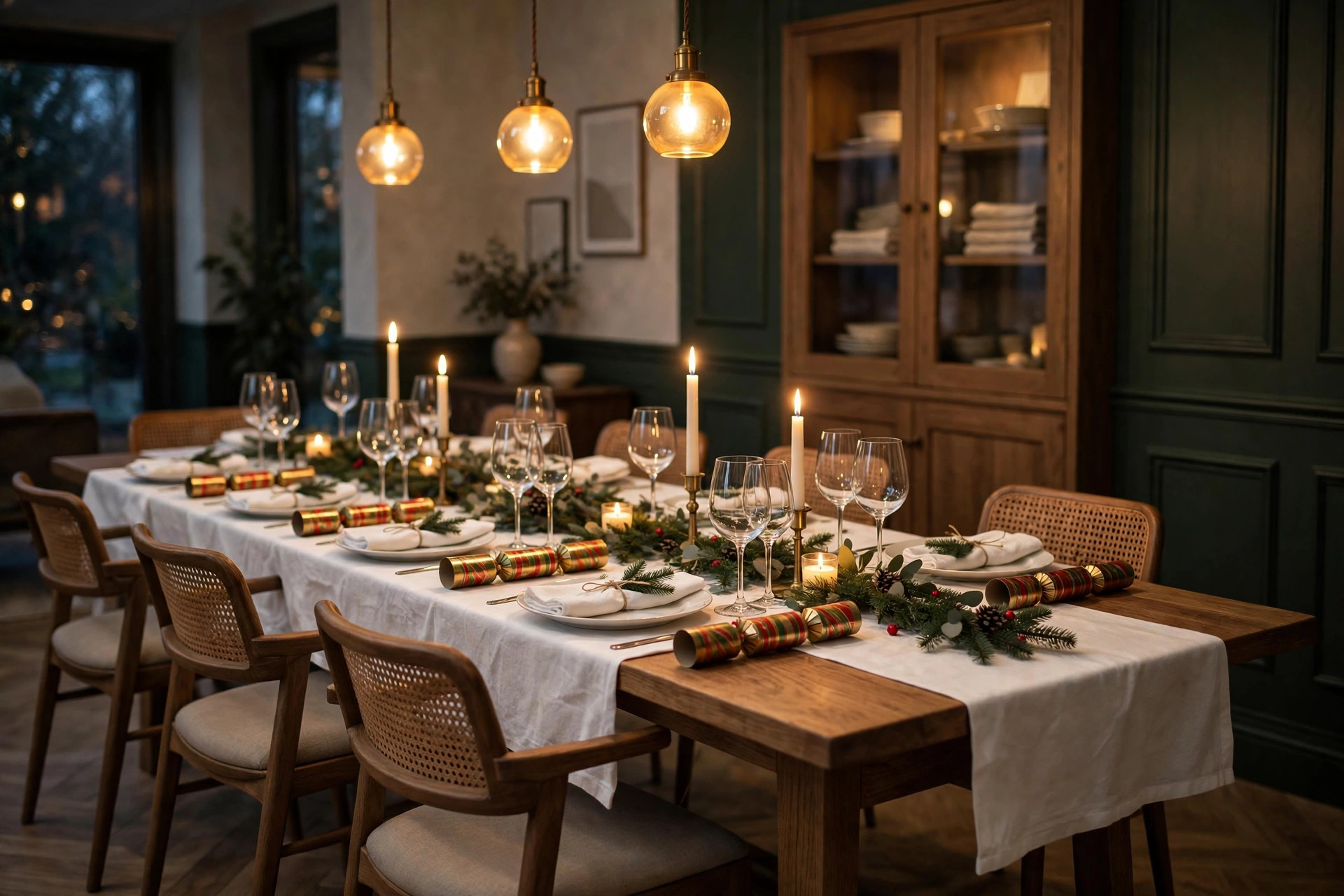
Private dining room vs exclusive hire
Parties come in three spatial formats, and pricing each correctly is where party-season profit is made or lost.
The private dining room (8–30 guests)
Your best margin per square metre. A dedicated room with a door that closes commands a premium — organisers pay for privacy, speeches without an audience, and the feeling of an event rather than a dinner. Price it with a minimum spend rather than a room fee where possible: "€1,500 minimum spend for the room" is easier to say yes to than "€400 room hire plus food", and it aligns your incentive (they spend) with theirs (no surprise fees). Publish the capacity and the minimum spend on the party page; mystery pricing costs you enquiries.
Semi-private areas (15–50 guests)
A sectioned part of the main dining room — a mezzanine, a long-table zone, a curtained corner. Lower premium than a closed room but far more flexible, and it keeps the energy of the full restaurant, which many party groups prefer. The key operational point: define the boundary clearly on the night (planters, a host stand, lighting change) so the party feels distinct without the rest of the dining room feeling second-class.
Exclusive hire (the whole venue)
Offer it, but price it against reality: exclusive hire must earn at least what the room would make on a strong December night — typically a minimum spend of 1.5–2x your average Friday revenue, plus the deposit discipline of a large event. Below that, you are discounting your best inventory to a single buyer. For most independents, two or three simultaneous large parties in zoned areas out-earn one exclusive hire with less risk — if the single buyer cancels, the whole night evaporates.
Staffing and service for party nights
A dining room full of Christmas parties is a different operation from normal service, and staffing it like a busy Friday is the most common December mistake. Party nights need their own choreography.
Staff for synchrony, not just volume
Parties eat in waves: 20 starters must land together, 20 mains must follow together. That demands more kitchen coordination and more runners than the same number of covers spread across individual tables. Roster one extra pair of hands in the kitchen on party nights and brief the floor on the wave plan — which table fires when, who runs what. The cost of the extra shift is trivial against a €1,700 table served 30 minutes faster, which is the difference between one seating and two on a peak night.
Give every party a named contact
The organiser should know one name — the person who greets the group, handles the speeches timing, sorts the bill, and solves the problems. That single point of contact is what turns a chaotic large table into a smooth event, and it is what the organiser remembers when choosing next year's venue. It does not have to be the manager; it has to be someone briefed, empowered and present.
Time-box the tables
On peak December nights, a 20-top that lingers for four hours costs you a second seating. Set expectations at booking: "the table is yours for 2.5 hours" for large parties on Fridays and Saturdays, stated kindly in the confirmation. Most groups are finished in that time anyway; the policy exists for the exceptions. Pair it with a genuinely good reason to move — "your after-dinner drinks are ready at the bar" — and nobody feels rushed.
Brief the team on the money
Staff should know the packages: what is included, what costs extra, who has the drinks package and who does not. Nothing sours a party faster than a server charging for something the organiser believed was included, or failing to offer something already paid for. A one-page cheat sheet per party, printed and on the pass, prevents nearly all of it.
Upsells that raise every bill
December guests are the most upsell-receptive of the year — the occasion, the company tab, the festive mood. The art is building the upsells into the offer so they feel like enhancements, not extractions. Bookings that include well-presented upgrades routinely generate substantially more revenue than those without; in December the effect is at its strongest.
Design the upsell ladder
- The welcome upgrade: champagne instead of glögg or sparkling wine on arrival. Offer it per person at booking — €8–€12 extra — when the organiser is already spending. Taken up by a large share of premium-tier bookings.
- The drinks package: 2–3 hours of selected wines, beers and soft drinks for a fixed per-person price (€35–€55). Organisers love the cost certainty; you love the margin on by-the-glass pours at volume.
- The table centrepiece: a sharing dessert board, a cheese course, or the "midnight snack" of mini burgers or porridge for late parties. Priced at €9–€14 per person, food cost under 30%.
- The take-home: a small gift box — your glögg spices, house chocolates, a voucher for January — at €12–€18. It extends the evening's goodwill and, with a January voucher inside, buys the return visit.
Present, don't push
Every upsell should appear once, at the natural decision point: the welcome upgrade at booking, the drinks package with the final headcount, the dessert board when clearing mains. Train staff to offer once, warmly, and accept the answer — the party guest who feels sold to all evening does not rebook. The organiser's trust is worth more than any single supplement.
The menu engineering behind it
Upsells work best when the base package is deliberately a touch austere — excellent but leaving visible room above it. If the Classic tier already includes everything, there is nothing to upgrade to. Design the tiers so each step up feels like a genuine enhancement: that is what makes the Festive tier the default choice and the Premium tier the aspiration. The costing logic is the same as for the festive menu itself — see our Christmas menus marketing guide for the margin maths.
After the party: the January pipeline
December's real prize is not December's revenue — it is the guest list. Every party puts 10–30 potential regulars in your room. Most restaurants let them leave with nothing but a receipt. Don't.
Capture the room
A simple, GDPR-compliant signup at the table — a card with the bill, a QR code to the newsletter, the booking form's marketing opt-in actually used — turns a party of strangers into an audience. The hook writes itself in December: "get our January offers and next year's party dates first". Even a 20% capture rate on a 25-person party is five new contacts per table, per night, all December.
The January thank-you
In the first week of January, email every December party contact: thank them, share a photo from the season, and make one quiet-month offer — a January tasting menu, a "beat the blues" midweek deal, early access to next December's dates at this year's prices. The last one is the cleverest: it converts this year's organiser into next year's booking before competitors even publish their packages.
Debrief the season
Before the memories fade: which packages sold, which nights were soft, what the actual food cost and labour cost landed at, what organisers asked for that you didn't offer, what went wrong on the worst night. One page, written in January, is next October's entire strategy. The restaurants that improve every December are the ones that write down what happened every January.
And the loop closes where the season started: the organiser who trusted you with the office party is the warmest possible prospect for the spring team dinner, the summer terrace booking, the client's birthday. Party season is not a month — it is the top of a year-round funnel, if you build the follow-up to catch what it pours.
Frequently asked questions
How far in advance do companies book Christmas parties?
Most companies book October to early November; the most popular December dates — especially Fridays and Saturdays — are typically gone by early November. Your party packages should be published and bookable by late October at the latest. In Finland, pikkujoulu (little Christmas) parties are often booked even earlier, in September and October.
How much should a Christmas party package cost per person?
In the Nordics, typical independent-restaurant Christmas party packages run €55–€110 per person for a 3-course dinner with a welcome drink, rising to €110–€160 with wine pairings or premium menus. Simpler lunch packages land at €35–€60. Price from your costs backwards and publish one clear all-in per-person price — organisers compare packages, not dishes.
Should I take deposits for Christmas party bookings?
Yes — deposits are standard practice for December group bookings and the single most effective no-show protection you have. A typical structure is €20–€50 per person or 30–50% of the estimated total, with clear written terms on when it becomes non-refundable. Communicate the terms before taking the booking, not after.
How do I handle no-shows for large Christmas bookings?
Layer four defences: a per-person deposit taken at booking, a written confirmation restating the final headcount deadline (usually 5–7 days before), a reminder 48 hours out asking for the final number, and a cancellation policy with teeth — e.g. the deposit is forfeit inside 14 days. Each layer removes a share of the risk; together they make large-party no-shows rare.
Should I offer exclusive hire of the restaurant for Christmas parties?
Offer it, but price it to beat a normal night. Exclusive hire should cost at least what the room would earn on a strong December evening — typically a minimum spend of 1.5–2x your average Friday revenue — otherwise you are discounting your best nights. For most independents, semi-private areas and buyouts of the private dining room deliver better margins than full exclusive hire.
What is the ideal group size for Christmas party packages?
Design packages for 8–40 guests: below 8, a normal festive menu booking is simpler; above 40, you need dedicated event planning. Publish clear capacity bands (e.g. 8–15, 16–30, 31–60) with per-person pricing for each, so organisers can self-select instead of emailing to ask.
Want a party page that books while you sleep?
PowerfulWebsite builds your restaurant's website free — from €59/month with online booking included. Publish your Christmas packages on a page that converts enquiries into deposits.
See the packages