Father's Day: The Overlooked Opportunity
Father's Day is one of the biggest family dining days of the year — yet most restaurants market it as an afterthought. The opportunity is even bigger in the Nordics, where Father's Day falls on the second Sunday of November (8 November 2026): a dark-month revenue injection and the perfect runway into Christmas bookings. Here's how to run it like a campaign — menu, promotions, a four-week marketing timeline and the operations to back it up.
Key takeaways
- In Finland, Sweden, Norway and Denmark, Father's Day is the second Sunday of November — not June. Plan for November, not for the American date.
- Father's Day dining means larger parties and higher average checks — families celebrate together and spend more per table.
- Start marketing 3–4 weeks out; search interest rises 2–3 weeks before the day, and early marketers win the best bookings.
- A few signature dishes or a prix fixe menu beats a full overhaul — it simplifies the kitchen and gives marketing something concrete to sell.
- "Dad eats free" works only with guardrails: capped value, minimum party size, limited sittings.
- Use the day as a bridge: capture emails, sell gift cards and seed Christmas bookings while families are in a celebratory mood.
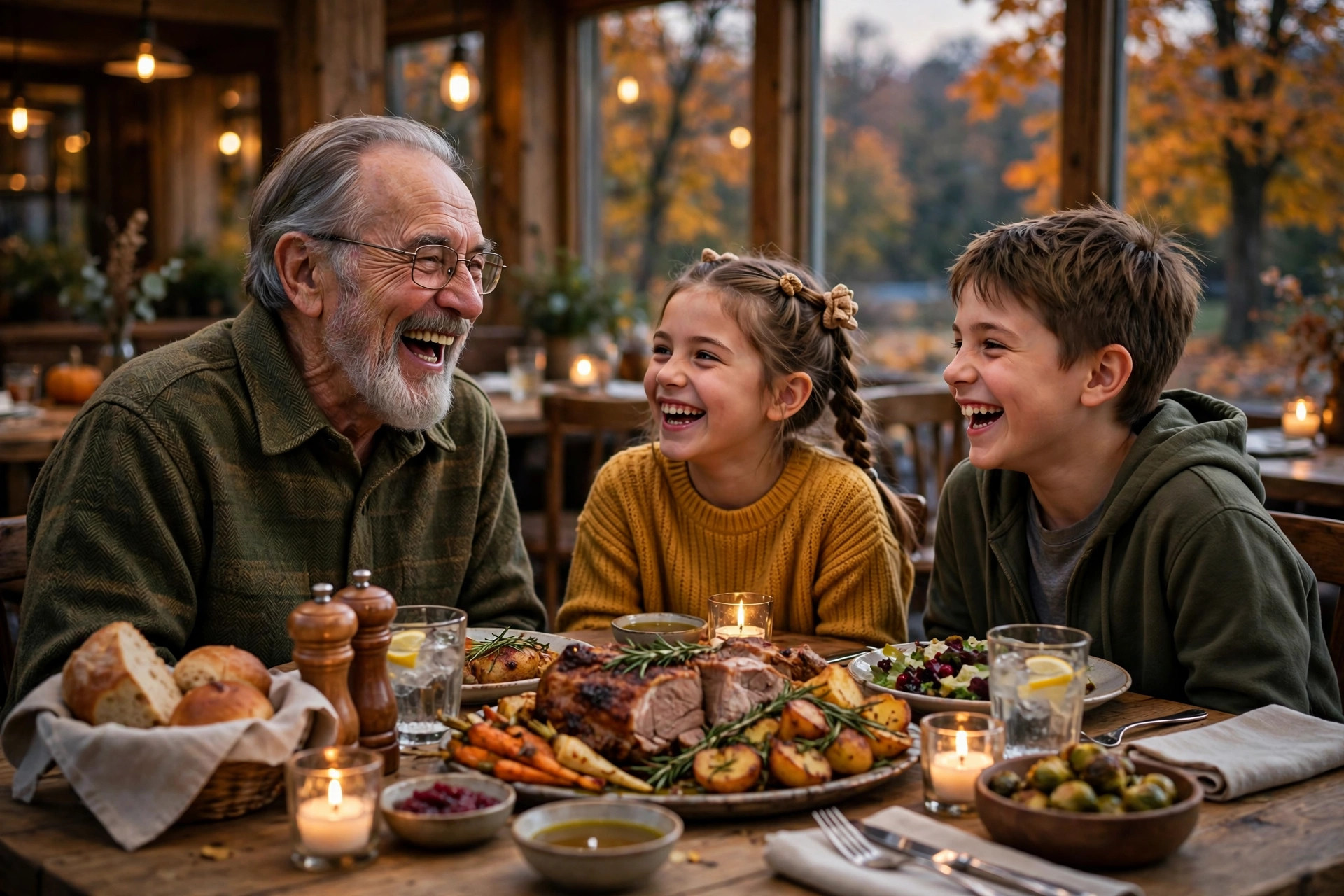
Ask a restaurant owner about their marketing calendar and you'll hear the same days: Valentine's Day, Mother's Day, Christmas. Father's Day barely registers — a social media post the week before, maybe a "dad eats free" scribbled on the blackboard. That's a mistake, and in the Nordics it's a bigger mistake than anywhere else.
Because here's what almost every English-language marketing guide gets wrong for our region: they plan Father's Day for June. In Finland, Sweden, Norway, Denmark and Iceland, Father's Day — isänpäivä, fars dag — is celebrated on the second Sunday of November. In 2026, that's 8 November. That single fact transforms Father's Day from "another summer-ish promo" into one of the smartest strategic plays on the Nordic restaurant calendar: a major family dining day landing in the darkest, quietest month of the autumn, four weeks before the Christmas season ignites. This guide shows how to exploit that — with the menu strategy, promotions, timeline and operations to run Father's Day like the campaign it deserves to be. For the full yearly picture, see our seasonal advertising calendar for restaurants.
Why Father's Day Gets Overlooked
Three reasons conspire to keep Father's Day off the serious marketing calendar.
1. The June confusion
The vast majority of restaurant marketing content online is American, and in the US Father's Day is the third Sunday of June. Nordic owners who read that content — or buy marketing templates built for it — either plan for the wrong month or conclude "that doesn't apply to us" and drop the day entirely. Both are wrong. The November date is not a handicap; it's an advantage, as we'll see.
2. It lives in Mother's Day's shadow
Mother's Day is the undisputed champion of family dining — the biggest brunch day of the year, planned weeks ahead. Father's Day feels like the smaller sibling, so it gets the smaller effort. But "smaller than Mother's Day" still puts it comfortably in the top five dining occasions of the year. Families do go out for Father's Day; they just decide later and need a nudge.
3. The "dads don't care" myth
There's a lazy assumption that fathers don't want a fuss, so restaurants don't make one. In reality, the decision-maker for Father's Day dining is usually not dad — it's his partner or his adult children. They're actively looking for somewhere that makes the day feel considered. A restaurant that clearly celebrates Father's Day wins that decision; one that doesn't is invisible to it.
The date that changes everything
Father's Day 2026: Sunday 8 November (second Sunday of November) in Finland, Sweden, Norway, Denmark and Iceland. In the US and UK it's the third Sunday of June. If your marketing supplier, template pack or agency brief says "June," it's built for the wrong market — adjust the timeline, keep the tactics.
The November Advantage
A June Father's Day competes with terraces, festivals and Midsummer. A November Father's Day competes with… darkness. That's precisely why it's valuable.
A revenue injection in the year's quietest stretch
Early November is one of the toughest periods on the Nordic restaurant calendar: the autumn energy has faded, Christmas hasn't started, and the weather discourages spontaneous dining. A major family occasion landing right in the middle of it is a gift. Father's Day gives November a peak where there otherwise isn't one — and because fewer restaurants market it seriously, the competition for those family bookings is thinner than at Christmas or Valentine's.
The Christmas bridge
Father's Day sits roughly four weeks before the Christmas party season begins in earnest. That makes it the ideal moment to seed December revenue: every Father's Day table is an audience for your Christmas menu announcement, your gift-card push and your party-booking drive. Families in a celebratory mood, already spending, are the warmest possible prospects for "while you're here — our Christmas bookings are open." Our Christmas booking season guide covers how to convert that momentum.
Built-in atmosphere
November darkness is a feature, not a bug, for Father's Day dining. Candlelight, fireplaces, hearty food, dark beer — the season does your atmospherics for you. Lean into it: a November Father's Day should feel like a warm refuge, and your photography and social content should sell exactly that feeling.
The Business Case: Why the Numbers Work
Father's Day dining has structural economics in its favour. Understanding them helps you price and plan with confidence.
Bigger parties, bigger checks
Holiday dining means multi-generational tables: grandparents, parents, kids. Average party sizes run roughly a quarter to a third larger than a normal weekend, and larger parties order more — starters, desserts, bottles instead of glasses. Industry data from the US market (where the holiday is well measured) has shown Father's Day revenue running more than 20% above a normal day, with per-person spending in the $60–80 range. Nordic figures will differ, but the mechanism is universal: celebration + family + a full table = a strong average check.
Late, reactive booking behaviour
Unlike Mother's Day, which families plan weeks ahead, Father's Day decisions happen closer to the date — research on booking behaviour shows a compressed, reactive buyer journey, with a meaningful share of planners still undecided two weeks out. That's an opportunity, not a threat: it means sustained marketing in the final 10 days still converts, and "last tables available" messaging works better here than for almost any other occasion.
Gift-card economics
Father's Day is a gift-card holiday. Diners buy gift cards for dad in the week before, and dads receive them on the day — both flows run through your till. A well-placed gift-card offer ("buy €100, get €20 bonus") in late October captures the gifting spend and pre-sells future visits at zero food cost today.
The Father's Day Menu: Bold Flavours, Simple Execution
You don't need to reinvent your kitchen. You need a menu that signals Father's Day — hearty, generous, a little indulgent — and that your team can execute flawlessly at volume.
What "dad food" means in the Nordics
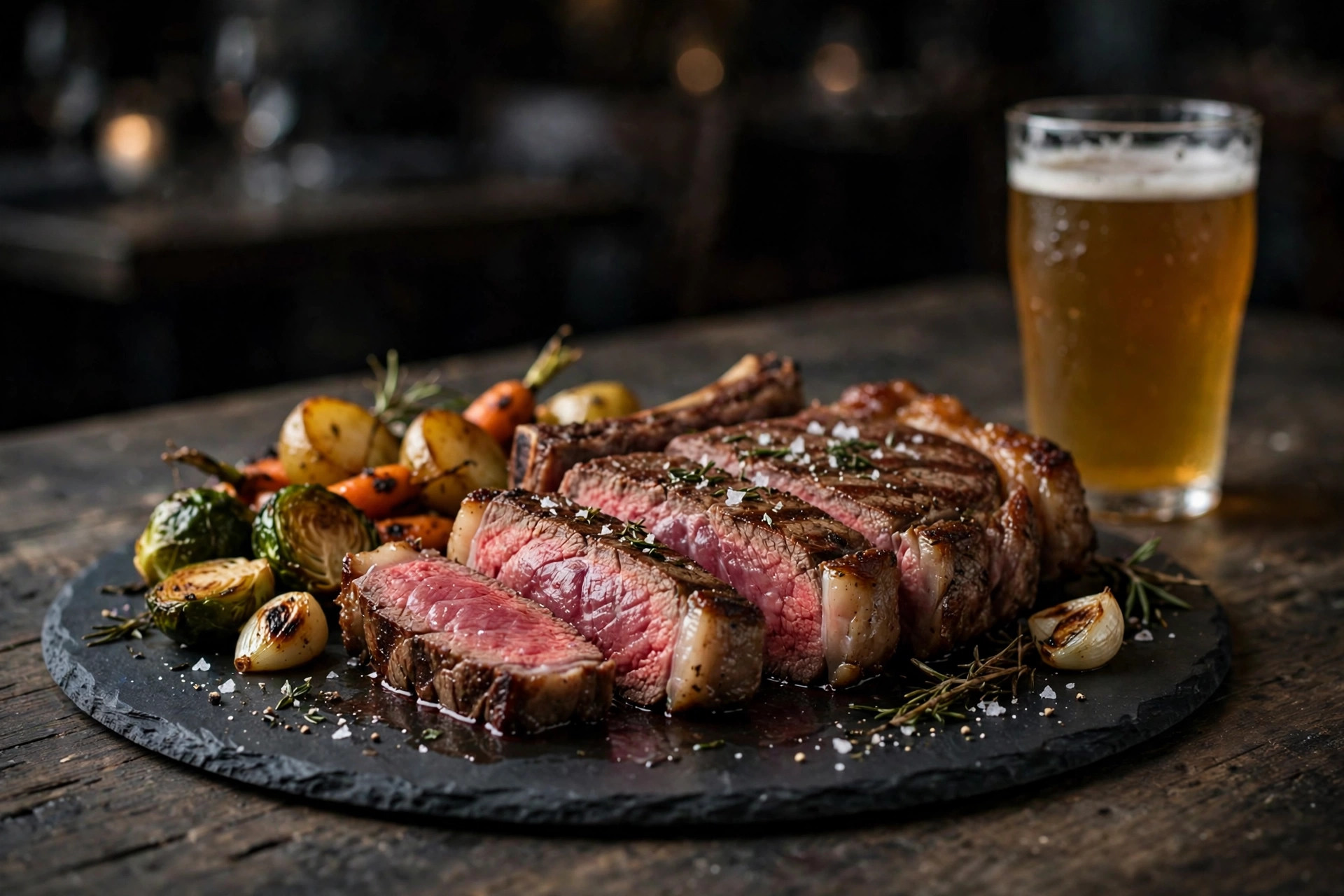
Think fire and comfort: grilled steaks, slow-cooked meats, game in season (November is prime game season — reindeer, venison, wild boar), hearty fish dishes, proper potatoes. November is arguably the best eating month of the Nordic year, and a Father's Day menu built on autumn game and root vegetables practically writes itself. Our autumn flavours guide has the seasonal playbook.
The prix fixe advantage
A fixed-price Father's Day menu — say, three courses at a set price — does four jobs at once: it simplifies the kitchen during a high-volume service, it makes the average check predictable, it speeds up table turns, and it gives your marketing a concrete, quotable offer. As a rough guide, casual restaurants typically price Father's Day menus 15–25% above their normal average check; the celebratory context supports it. Publish the price openly — families choosing between restaurants reward transparency.
Don't forget the drinks
A Father's Day drinks feature — a craft beer flight, a whisky or aquavit pairing, a "dad's old fashioned" special — lifts the check and gives the day a sense of occasion. And keep the zero-proof options visible too: multi-generational tables include non-drinkers, and nobody should feel like an afterthought.
Promotions That Actually Fill Tables
Not every promotion earns its keep. Here's an honest comparison of the Father's Day tactics worth considering.
| Promotion | Cost to you | Effort | Best for |
|---|---|---|---|
| Dad eats free (capped dish) | Medium — one comped main per table | Low | Filling quiet sittings; parties of 4+ |
| Prix fixe Father's Day menu | Low — priced to protect margin | Medium | High-volume Sunday service; kitchen simplicity |
| Gift-card bonus (buy €100, get €20) | Low — future visit at today's cash | Low | Pre-selling November/December revenue |
| Weekend-long celebration (Fri–Sun) | Low | Medium | Spreading demand; easing Sunday crush |
| Mother's Day receipt offer | Low — % off or free drink | Low | Converting May guests into November bookings |
| Photo contest / social activation | Minimal — a prize meal | Low | Reach and user-generated content |
Making "dad eats free" profitable
It's the classic for a reason: it converts families who'd otherwise stay home, and the rest of the table orders normally — so the party's total check usually rises. The guardrails matter: cap it to a specific dish or a maximum value (e.g. "up to €25"), require a minimum party size of three or four, and limit it to the sittings you need to fill. Run the numbers beforehand: if your average party is four and the average check per person is €45, comping one €22 main to win a €180 table is arithmetic that works.
The Mother's Day piggyback
This is the most underused tactic in the list. In May, give every Mother's Day table a card: "Bring this back on Father's Day — 10% off / a free round of drinks." You've just pre-sold November with your May marketing budget, at the cost of a printed card. Start this the next Mother's Day; for this year, note it for 2027.
Stretch it across the weekend
Father's Day doesn't have to be 24 hours. Running the celebration Friday through Sunday spreads demand, eases the Sunday kitchen crush, and captures families who can't do Sunday. It also triples your "last chance" urgency window for marketing.
The Marketing Timeline: Four Weeks Out
Father's Day rewards the early marketer disproportionately — discovery starts early, but most restaurants only start promoting in the final week, by which point the best tables are taken. Here's the timeline.
4 weeks out (mid-October): lay the foundation
- Finalise the menu and the promotion; photograph the hero dishes while the kitchen is calm.
- Publish the Father's Day page on your website — a real page with the menu, prices and a booking button, not a PDF. This is what Google will rank when searches start rising.
- Update your Google Business Profile: add a Father's Day Post, confirm Sunday opening hours.
- Launch the gift-card bonus offer; gift-card searches peak in the 2–3 weeks before the day.
3 weeks out: announce
- Email your list: the announcement email is your highest-converting send. Lead with the menu and the booking link.
- Start social content: the menu, the room dressed for the occasion, "tables are limited" framing.
- Put table cards and a poster in the restaurant — your current guests are your warmest prospects.
2 weeks out: convert the planners
- Search interest is now climbing. Make sure your website's Father's Day page is live, fast and bookable — this is where a proper restaurant website pays for itself. If online booking still means "call us," you're losing the planners who decide at 22:00 on a Tuesday.
- Second email to non-openers; SMS to loyalty members if you have the channel.
- Partner cross-promotions: the barber shop, the menswear store, the local brewery — Father's Day audiences overlap neatly.
Final week: urgency
- "Last tables" messaging across every channel. Scarcity is honest here — Sunday seatings genuinely fill.
- Promote the Friday/Saturday sittings to overflow demand.
- Brief the team on upsells: the drinks feature, the dessert, the gift card at the table.
A note on channels: email to your own list will outperform everything else per euro spent — which is why building that list (GDPR-safe) is the highest-leverage marketing investment a restaurant can make. Paid social can amplify in the final 10 days, but it should amplify a campaign that already exists, not substitute for one.
Operations: Staffing and Service for a Peak Sunday
A great campaign that collapses in service is worse than no campaign — it burns the guests you just paid to acquire. Father's Day Sunday is a peak service wearing a family-dinner costume: high volume, emotional stakes, multi-generational tables with complex needs.
Staffing
- Staff like a Saturday night. Father's Day Sunday will match or exceed your busiest Saturday. Roster accordingly — including the kitchen.
- Brief the occasion. A two-minute pre-shift: the menu, the promotion mechanics (who qualifies for "dad eats free," how the gift-card bonus works), the upsell priorities.
- Protect the experience. Large family tables need more time, not less. Slightly longer seating windows beat rushed turns and bad reviews.
Inventory and prep
Plan the menu 3–4 weeks out so purchasing is deliberate, not panicked. A limited Father's Day menu is your friend here: fewer dishes, tighter prep, less waste. And confirm your Sunday supplier situation — a November Sunday with no backup delivery is not the day to discover a gap.
The booking flow
Take deposits or card guarantees for large tables — our guide to deposits and gift cards covers how to do this without scaring guests off. Send booking confirmations with the practical details (parking, timing, the menu link) a few days before; it cuts no-shows and pre-sells the experience. If your booking system can't do this automatically, that's a process worth fixing before November, not during it.
Turning Father's Day Guests Into Regulars
The day itself is revenue; the follow-up is the real prize. A Father's Day table contains your ideal future guests — local families, celebrating, already spending. Don't let them walk out as strangers.
- Capture the contact. A simple, GDPR-compliant email capture — the bill folder card, a QR code at the table, the booking confirmation — turns one visit into a relationship. Offer the obvious trade: "Get our Christmas menu first."
- Sell the next visit at the table. Gift cards presented with the bill ("for Christmas — or dad's birthday") convert at remarkable rates when the experience was good.
- Seed December. Mention the Christmas party bookings, the New Year's Eve plans, the January plans — whatever comes next. Father's Day guests are already in celebration mode; give the celebration a sequel.
- Follow up. A thank-you email the following week, with a photo from the day and an invitation back, closes the loop. Most restaurants never send it; that's exactly why it works.
Run this playbook well and Father's Day stops being a single Sunday. It becomes the start of your most profitable eight weeks of the year — which is precisely why it deserves better than an afterthought post and a blackboard scribble. And when the Christmas rush arrives, the website that took your Father's Day bookings without a phone call — built free, from €59/month with PowerfulWebsite — will do the same for every party enquiry in December.
Father's Day vs Mother's Day — plan them differently
Mother's Day is the bigger, earlier-planned brunch occasion; our Mother's Day guide covers that playbook. Father's Day is the hearty November dinner with later, more reactive bookings — which means urgency marketing and last-minute availability work better, and the Christmas upsell is built in. Run both, but don't copy-paste the plan.
Frequently Asked Questions
When is Father's Day in Finland, Sweden and Norway?
Father's Day is celebrated on the second Sunday of November in Finland, Sweden, Norway (and Denmark and Iceland) — in 2026, that is 8 November. This is different from the US and UK, where it falls on the third Sunday of June.
Why do most restaurant marketing guides talk about Father's Day in June?
Because most English-language marketing content is written for the US market, where Father's Day is in June. Nordic restaurant owners should ignore the June timing and plan for November instead — which is actually a bigger advantage, as November needs the revenue more.
How far in advance should restaurants promote Father's Day?
Start 3 to 4 weeks before the day. Search interest for Father's Day dining starts rising about 2–3 weeks out, and the best tables go to whoever markets first. Publish your menu and open reservations at least three weeks ahead.
Is a "dad eats free" promotion profitable?
It can be, with guardrails: limit it to a specific dish or a capped value, require a minimum party size, and run it only at sittings you need to fill. The rest of the table orders at full price, so the average check per party usually rises.
Do I need a full special menu, or are a few specials enough?
A few well-chosen specials are enough for most restaurants. A dedicated Father's Day menu — even just 4–6 signature dishes plus a prix fixe option — signals intention, simplifies the kitchen, and gives your marketing something concrete to promote.
How is Father's Day different from Mother's Day for restaurants?
Mother's Day is the bigger brunch day; Father's Day skews toward hearty dinners, larger family groups and later bookings. Families plan Father's Day later and more reactively, so last-minute marketing and availability messaging work better than for Mother's Day.
Want a Father's Day page that books while you sleep?
PowerfulWebsite builds your restaurant's website free — you only pay from €59/month. Publish your Father's Day menu with online booking weeks ahead, and let the planners find you on Google instead of calling your competitor.
See the packages