Autumn Flavours: Mushrooms, Game and Seasonal Menus
An autumn menu built around Nordic wild mushrooms and game is one of the most profitable moves a restaurant can make: in-season ingredients cost less, guests happily pay premium prices for them, and a well-costed seasonal menu typically runs at 25–32% food cost while lifting average spend per table. This guide covers which species to use and when, how to buy game, how to cost every dish, and how to market the season from September to November.
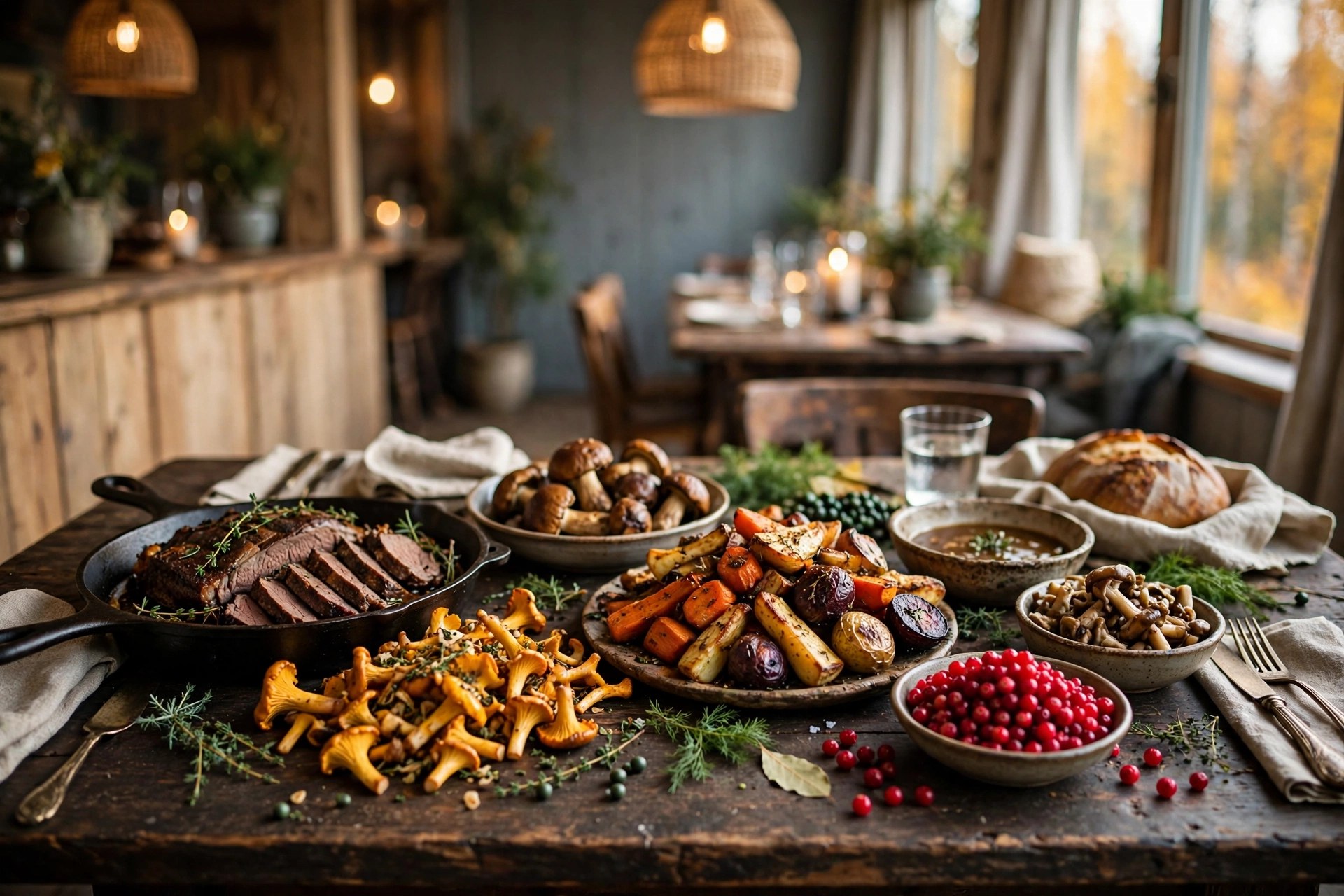
Key takeaways
- Launch in two phases: teaser dishes in early September, the full autumn menu from late September to November.
- Chanterelles (Aug–Oct), porcini (late summer–early autumn), black trumpet and funnel chanterelle (Sep–Nov) are the four mushrooms that carry a Nordic autumn menu.
- Game meat is cheapest and best during the autumn hunting season — venison and moose support premium pricing at 70%+ gross margins.
- Cost every dish from real supplier invoices and keep food cost at 25–32%; never build a seasonal menu on estimated ingredient prices.
- Keep 20–30% of the menu rotating through the season so regulars return more than once.
- Publish the autumn menu on your own website first — it is the page guests, Google and AI assistants all quote.
Every autumn, Nordic restaurants get a gift that no supplier catalogue can match: forests full of wild mushrooms, hunting seasons that fill the game larder, and guests who are actively hungry for the flavours of the season. Nobody needs convincing that a chanterelle toast belongs on an October menu — the craving is already there. Your job is not to create demand. Your job is to capture it profitably.
This guide is for restaurant, café and bistro owners across the Nordics who want an autumn menu that is genuinely seasonal, honestly costed, and marketed well enough to move tables. We cover the mushroom calendar, game sourcing, menu engineering for seasonal dishes, the marketing timeline, and the food-safety rules around wild mushrooms that too many operators learn about the hard way. If you want the broader strategy behind seasonal marketing, our guide to marketing your seasonal menu pairs well with this one.
Why autumn is your best menu season
Most restaurant owners think of Christmas as the big season and treat autumn as the quiet corridor between summer terraces and the festive rush. That framing leaves money on the table. Autumn has three structural advantages that no other season offers at the same time.
First, ingredients are at their cheapest precisely when they are at their best. Seasonal produce follows simple supply and demand: when chanterelles flood the market in September, wholesale prices fall. When moose season opens, game dealers compete for your order. You get peak flavour at trough prices — the exact opposite of, say, asparagus in March or strawberries in February, where you pay premium prices for mediocre produce.
Second, guests expect to pay more. A mushroom risotto in October feels like an occasion; the same dish in April feels like leftovers. Game carries a luxury perception that lets you price venison fillet €8–12 above a comparable beef dish (typical Nordic bistro ranges, estimates) without resistance. Seasonal framing is one of the few pricing levers that increases both willingness to pay and perceived value at the same time — the core mechanic behind menu pricing psychology.
Third, autumn cooking suits batch production. Braises, stews, soups, slow-roasted game and mushroom sauces are make-ahead friendly. That means lower labour pressure during service, shorter ticket times, and less waste — because a game stew made on Tuesday is better on Wednesday, not worse. Compare that with summer's à la minute grilling, where every order hits the line at full intensity.
The result: a well-run autumn menu routinely delivers the best food-cost percentage of the year while also lifting average spend. It is the season where the kitchen's interests and the accountant's interests point in exactly the same direction.
The Nordic autumn pantry: mushrooms
No ingredient says "Nordic autumn" like wild mushrooms. The Nordic forests produce an extraordinary range, and the season runs longer than most kitchens exploit — from the first chanterelles of summer through funnel chanterelles that survive light frost into early winter. Here are the four species that should anchor your menu, in calendar order.
Chanterelle — the crowd-pleaser (August to October)
The golden chanterelle (kantarell) is the mushroom most guests recognise and the easiest to sell. Mild, fruity, forest-fresh flavour; works in everything from the classic toast with butter and onion to risottos, pastas and cream sauces. It is abundant in a good year, which keeps wholesale prices reasonable — typically €15–25 per kilo at wholesale in season (estimate; varies wildly by year and region). Because supply is high, this is your volume mushroom: the one that appears in three or four dishes, not one.
Porcini — the luxury signal (late summer to early autumn)
Porcini (boletus, karljohan/steinsopp) is the king of Nordic mushrooms: nutty, meaty, with a depth that dried porcini powder can extend into sauces and butters all year. Fresh porcini season is short and unpredictable, so price it accordingly — this is your premium mushroom, the one that justifies a €4–6 supplement or anchors your most expensive starter (estimates). Buy extra in a good week and dry or pickle the surplus; preserved porcini are a legitimate winter asset.
Black trumpet — the chef's mushroom (September to November)
Black trumpet (svart trumpet/musta torvisieni) looks like nothing and tastes like everything: deep, smoky, almost meaty. Guests rarely order it by name, which makes it a perfect "chef's pick" dish — something the menu describes vividly and the staff recommends personally. It pairs exceptionally with game, which is no coincidence: both peak at the same time.
Funnel chanterelle — the long season (September to first snow)
Funnel chanterelle (trattkantarell/suppilovahvero) fruits late and tolerates light frost, extending your mushroom season weeks past the first cold snap. Milder than true chanterelle but excellent in cream sauces, gratins and soups. In a year when porcini fails, funnel chanterelle is your insurance policy.
| Mushroom | Peak season | Typical wholesale price (estimate) | Best menu role |
|---|---|---|---|
| Chanterelle | Aug – Oct | €15–25/kg | Volume dishes: toast, risotto, pasta |
| Porcini | Aug – Sep | €30–60/kg | Premium starter, supplement dish |
| Black trumpet | Sep – Nov | €20–40/kg | Chef's recommendation with game |
| Funnel chanterelle | Sep – Nov+ | €12–20/kg | Sauces, soups, gratins |
Prices are wholesale estimates for the Nordic market and swing hard with the foraging year — a dry September can double chanterelle prices in a week. Which is exactly why you cost dishes from invoices, not from memory (more on that below).
Preserve the surplus
Mushroom gluts are predictable: in a good week, buy 30–50% more than you need. Chanterelles pickle beautifully, porcini dry well, and black trumpet becomes an intense powder that lifts winter sauces. Preservation turns a two-week glut into a two-month menu asset — and it is the honest version of "seasonal" that guests respect.
Game on the menu
Autumn is hunting season across the Nordics, and game is the protein that makes an autumn menu feel like an event rather than a theme. Moose, red deer, roe deer, wild boar, reindeer and game birds (grouse, ptarmigan, duck) all come into season as the leaves turn. The meat carries the landscape the animal lived in — deeper, earthier and leaner than farmed meat — and guests know it.
What to buy and when
Moose season typically opens in late September or October depending on the country and region; red deer and roe deer follow similar calendars. Wild boar, where available, has a longer season. Reindeer is available year-round in the north but reads as autumnal on any menu south of the Arctic Circle. Game birds peak in early autumn. Ask your game dealer for the exact season dates in your region — they shift slightly every year and differ between Finland, Sweden and Norway.
The margin case for game
Game bought in season from a dealer is often price-competitive with quality beef, yet it supports a meaningful price premium on the menu. A venison fillet at €34–42 (typical Nordic bistro range, estimate) against a wholesale cost of €18–24/kg for whole cuts leaves a gross margin most beef dishes cannot touch. The cuts matter: fillet and sirloin for premium mains (served pink — game dries out fast when overcooked), shoulder and leg for braises and stews where the margin is even better because the raw material is cheaper.
Cooking game well
Two rules cover most mistakes. First, do not overcook lean cuts: fillet and sirloin should be pink in the middle or they turn dry and tough. Second, pair with the season: lingonberries, juniper, black trumpet mushrooms, root vegetables, brown butter and rich game stocks are the classic companions because they work — acidity cuts the richness, juniper lifts the earthiness. A game stew with juniper and lingonberries, made a day ahead, is one of the highest-margin, lowest-stress dishes a kitchen can serve in October.
Sourcing game legally
Buy game through licensed game dealers or directly from hunters with the proper documentation — never informally. You need traceability for the same reason you need it for everything else: if there is ever a food-safety question, "a guy I know" is not a supply chain. Build the relationship before the season starts; the best cuts go to the restaurants that ordered in August, not the ones calling in October.
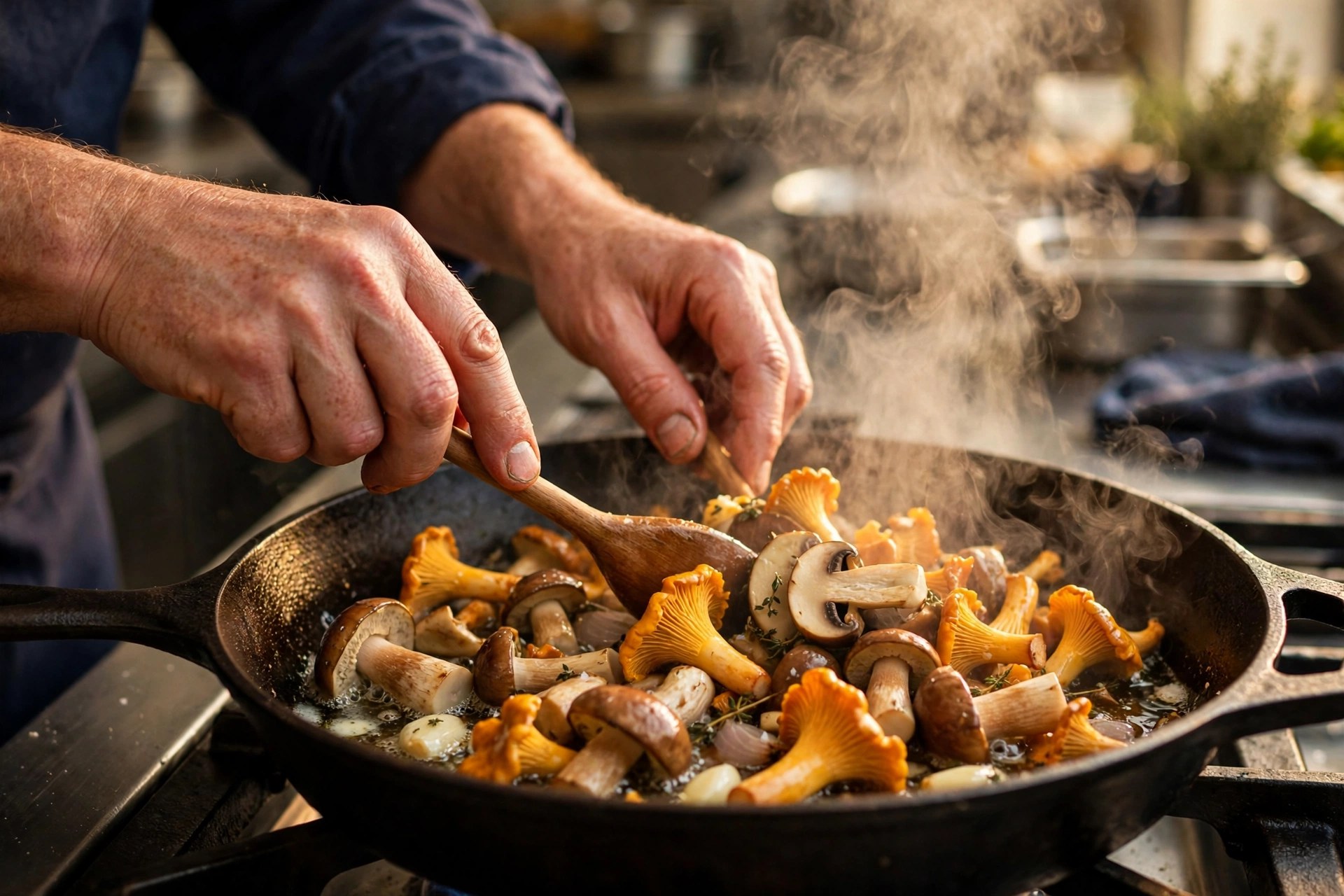
Costing and pricing the autumn menu
Seasonal menus fail financially for one boring reason: nobody costed them properly. A dish that "feels" profitable at €28 can quietly run at 40% food cost because the porcini price doubled mid-season and nobody recalculated. Here is the costing discipline that keeps autumn profitable.
Cost every dish from invoices, not memory
Break each dish down to its ingredients — including the butter, the cream, the garnish — and price each line from your most recent supplier invoice. Do not include labour in the plate cost (that lives in your overall P&L), but do include everything that goes on the plate. Seasonal ingredients move fast: re-cost mushroom dishes every two to three weeks during the season, or set the menu price with enough headroom to absorb a bad foraging week.
Use menu engineering, not gut feel
Classify every dish by profitability and popularity into the classic four boxes: Stars (profitable and popular — promote hard), Puzzles (profitable but slow — reposition on the menu, train staff to recommend), Ploughhorses (popular but thin margin — nudge the price up or trim the portion), Dogs (neither — remove). Your POS sales data tells you which is which after two to three weeks; before that, cost against the closest comparable dish already in rotation and estimate conservatively.
Price the season, not the dish
A useful target: keep overall autumn menu food cost at 25–32%. Individual dishes can stray — the porcini starter might run 35% while the root-vegetable soup runs 18% — as long as the mix averages out. Price the premium dishes (game fillet, porcini) confidently; guests expect autumn luxury to cost more, and underpricing a luxury dish does not sell more of it, it just earns less per cover.
Watch the hidden costs
Two autumn-specific traps: waste on short-season ingredients (porcini bought for one dish that nobody orders) and menu reprint costs if you run paper menus. The fix for the first is cross-utilisation — every expensive ingredient should appear in at least two dishes. The fix for the second is a digital menu: seasonal items can be added, repriced or retired in minutes, and last year's sales data stays in the system for next autumn's planning.
Structuring your autumn menu
You do not need to replace your whole menu. The most effective autumn strategy for most restaurants is a core-plus-seasonal model: keep 70–80% of your proven core menu untouched and add a seasonal layer of 20–30% — a separate autumn insert, a "From the forest" section, or a short tasting menu alongside the regular offering.
The anatomy of a good autumn insert
Aim for six to nine seasonal items: two starters (one mushroom, one game or root vegetable), three to four mains (a game dish, a mushroom dish, a fish or vegetarian autumn dish, one hearty braise), one or two desserts (apple, pear, plum, lingonberry, brown butter, cardamom), and one autumn drink — a warm cocktail, a spiced non-alcoholic option, or a mushroom-infused savoury drink for the adventurous. Fewer, better dishes beat a sprawling seasonal list every time: each additional dish splits your purchasing volume and raises waste risk.
Write descriptions that sell
Name the origin: "chanterelles from [region]", "moose from [area]". Specificity is the whole point of seasonal marketing — "wild mushrooms" is a commodity phrase, "funnel chanterelles picked last week" is a story. Keep descriptions short (one appetising line), put the two highest-margin dishes first and last in each section (guests remember the ends of a list), and mark seasonal items visually so the eye finds them.
Rotate within the season
The mushroom calendar is your rotation schedule: lead with chanterelle dishes in September, shift the emphasis to porcini and black trumpet in October, finish with funnel chanterelle and preserved mushrooms in November. Each rotation is a small marketing event — "the October menu has landed" — that gives regulars a reason to book again. Announce each phase on your website's menu page and your Google Business Profile so the updates reach people searching, not just followers.
Sourcing: foragers, hunters and wholesalers
Autumn sourcing has a Nordic superpower: everyman's rights (jokamiehenoikeus / allemansrätten / allemannsretten) mean the forests are open to everyone for berry and mushroom picking. That does not mean your kitchen staff should forage your commercial supply — but it does mean the supply chain is short, local and transparent in a way few other seasons allow.
The three supply channels
Wholesale produce suppliers are the reliable backbone: graded, traceable, invoiced, available in volume. Use them for your core mushroom dishes. Specialist foragers and mushroom dealers supply the interesting species (black trumpet, porcini, matsutake if you are lucky) in smaller quantities — perfect for chef's specials. Game dealers and hunting contacts cover the meat side; as noted above, the relationship must exist before the season.
Buy the glut
When a supplier calls with a chanterelle glut at a knockdown price, the profitable answer is usually yes — provided you have a preservation plan (pickling, drying, freezing) and at least two dishes that absorb the volume. The restaurants that make real money in autumn are the ones whose freezers and pickle shelves are full by mid-October.
Never gamble on identification
Serving a misidentified wild mushroom is not a bad review — it is a liability event. Buy from suppliers who identify and grade professionally, and if anyone on your team forages, every batch gets verified by someone qualified before it touches a plate. The false morel (korvasieni) is the famous cautionary tale: delicious when correctly prepared, dangerous when not — and firmly a spring mushroom, not an autumn one, which is exactly the kind of detail a professional supplier gets right and an enthusiastic amateur gets wrong.
Marketing your autumn menu
The best autumn menu in the city still needs guests to know it exists. Autumn marketing has a natural narrative arc — the season itself does half the storytelling — so your job is timing and visibility, not invention. Our seasonal advertising calendar covers the year-round rhythm; here is the autumn-specific playbook.
Start with your own website
Publish the autumn menu as a proper page on your own site before you post it anywhere else. This is the page Google shows when someone searches "autumn menu restaurant [your city]", the page AI assistants quote, and the page your social posts link back to. A menu that only exists as an Instagram story is invisible to everyone searching with intent. If your site makes menu updates painful, that is a business problem worth fixing — PowerfulWebsite builds restaurant sites where the menu is editable in minutes, not a ticket to a developer.
The launch sequence
Three weeks before launch: tease on social media — forest photos, mushroom close-ups, "something is coming" without revealing dishes. Update your Google Business Profile with an autumn post. Launch week: publish the menu page, send one email to your list (subject lines with "autumn menu" consistently outperform generic newsletters), post the hero dishes. Mid-season: announce the rotation ("October: porcini and game"), share a short video of the kitchen at work, invite a local food writer. Late season: "last weeks of the autumn menu" creates genuine urgency — and it is true.
Photography matters more in autumn than any other season
Autumn food is photogenic — deep colours, steam, candlelight — and it photographs best in natural daylight. Shoot the hero dishes once, properly, and reuse the images across the website, Google profile, email and socials for the whole season. Blurry phone photos of a beautiful game dish are a marketing own goal; if you cannot shoot it well yourself, our food photography basics guide covers the phone-only techniques that actually work.
The 20% rule for seasonal social content
You do not need daily autumn content. Two strong posts per week — one dish, one story (the forager, the hunter, the preserve shelf) — outperform daily filler. Every post should link or point to the menu page on your website, where the booking button lives. Social media creates desire; your website captures it.
Safety, allergens and wild mushroom rules
Seasonal excitement never overrides food law. Autumn menus introduce two specific compliance areas worth getting right before launch, not after a problem.
Wild mushrooms: the rules
Only serve species you can verify, from suppliers you can trace. Train the whole team — not just the kitchen — on which mushrooms are on the menu and what the risks of misidentification are. Keep supplier documentation for every wild mushroom delivery the same way you keep it for meat and fish. If a guest asks "are these safe?", the answer must be a confident yes backed by a real supply chain, not a shrug. National food safety authorities in all three Nordic countries publish guidance on wild mushrooms; when in doubt, check the current guidance rather than relying on tradition.
Allergen labelling still applies
Seasonal dishes need the same allergen information as permanent ones — and autumn is allergen-dense: cream and butter (milk), game stocks with gluten-containing thickeners, nut garnishes, egg in fresh pasta. EU rules require allergen information to be available for every dish, including daily specials and seasonal inserts. Our EU allergen labelling guide walks through exactly what must be declared and how to present it without cluttering the menu.
Game meat handling
Game is lean and behaves differently from farmed meat: it needs proper hanging/ageing (your dealer's job), careful temperature control (your job), and honest cooking (pink for tender cuts, slow and low for working cuts). If you are new to game, start with one dish — a braise is the most forgiving — and expand next year. One excellent game dish beats three mediocre ones.
Week-by-week autumn launch plan
Here is a realistic timeline for a restaurant launching its autumn menu in late September. Adjust the dates to your season, but keep the sequence.
Six weeks out (mid-August)
Confirm game suppliers and mushroom dealers; agree indicative pricing and volumes. Draft the menu structure (which slots are seasonal, which dishes fill them). Brief the team on the concept. Order any preservation supplies (jars, salt, vinegar) while they are cheap and available.
Four weeks out (late August)
Finalise dishes and cost every one from current invoices. Write the menu copy. Book the photography session for launch week. Update the website's menu page template so publishing is a ten-minute job. Plan the email and social calendar.
Two weeks out (early September)
Soft-launch one or two teaser dishes ("first chanterelles of the season"). Start the social teasing. Publish a Google Business Profile post. Train front-of-house on the dishes, the stories behind them, and the upsell path (which wine, which dessert follows the game main).
Launch week (late September)
Publish the full menu page on your website. Send the email. Post the hero content. Brief the team on the Puzzles — the profitable dishes that need active recommending. Check food cost on the first week's sales and adjust fast if a dish is mispriced.
Mid-season (late October)
Rotate the menu emphasis toward late-season species and game. Publish the "October menu" update. Review the menu-engineering boxes with real sales data: promote Stars, reposition Puzzles, fix or cut Dogs. Preserve the glut.
Season close (late November)
Announce the final weeks, then retire the menu cleanly — archive the dishes and their sales data rather than deleting them, so next year's planning starts from evidence. Write down what worked while it is fresh: which supplier, which dish, which price. Future you will be grateful.
Frequently asked questions
When should a restaurant launch its autumn menu?
Launch the first autumn dishes in early to mid-September and run the full menu from late September through November. Most guests start craving autumn flavours as soon as the evenings turn cold, but launching before the ingredients are truly in season forces you to buy at peak prices — which is why a two-phase launch (early teasers, then the full menu) usually works best.
How much should an autumn seasonal menu cost to produce?
Food cost for autumn seasonal dishes typically runs 25–32% of the menu price when you buy mushrooms and game in season from local suppliers. Foraged mushrooms bought at market can cost €15–35 per kilo at wholesale, so cost every dish from actual supplier invoices and aim for a contribution margin that keeps the menu profitable even in a poor foraging year.
Which mushrooms are best for a restaurant autumn menu?
Chanterelles (August–October), porcini (late summer–early autumn), black trumpet and funnel chanterelle (September–November, even into frost). Chanterelles are the crowd-pleaser, porcini are the luxury signal, and the dark autumn mushrooms pair best with game. Never serve self-foraged wild mushrooms commercially without a verified supplier or certified identification — misidentification liability is entirely yours.
Is game meat profitable for restaurants?
Yes, when bought in season. Moose and venison wholesale prices drop during the hunting season (autumn), and game dishes support premium pricing because guests perceive them as rare and special. Venison fillet can carry a 70%+ gross margin at typical Nordic bistro prices. The catch is supply: build relationships with hunters and game dealers before the season, not during it.
How do you market a seasonal autumn menu?
Start teasing 2–3 weeks before launch on your website, Google Business Profile and social media. Photograph the dishes in natural autumn light, publish the menu on your own site (not just Instagram), send one email to your list at launch, and keep 20–30% of the menu rotating so regulars have a reason to come back twice in the season.
Want a website that turns your autumn menu into bookings?
PowerfulWebsite builds your restaurant's website for free — you only pay from €59/mo. Everything included: domain, hosting, maintenance and updates. Publish seasonal menus in minutes, take online bookings, and let Google find you.
See the plans