TikTok Ads for Restaurants
TikTok ads can fill tables for restaurants — but only when they are aimed at people who live near you, built around video that already works organically, and judged by cost per booking rather than views. This guide covers the real costs (including TikTok's minimum budgets that surprise small restaurants), the formats worth your money, local targeting, and the creative formula that turns scrollers into diners.
Key takeaways
- TikTok's minimum budgets are the real barrier for small restaurants: $50 per day at campaign level and $20 per day at ad group level — budget roughly $500 to $1,000 for a proper first test.
- Spark Ads — boosting a proven organic video — are the best starting format for most restaurants, because the ad keeps its social proof and looks native.
- Local targeting is everything: a viral video in the wrong city fills zero tables, so geo-target tightly and send traffic to a booking page.
- The winning creative formula is a 15–30 second video with the hook in the first two seconds, sound on, and a clear reason to visit.
- Judge TikTok ads by cost per booking, not views or likes — and refresh creative every two to three weeks before fatigue sets in.
- If your guests are mostly over 50 or your catchment area is tiny, Meta or Google ads will usually return more per euro than TikTok.
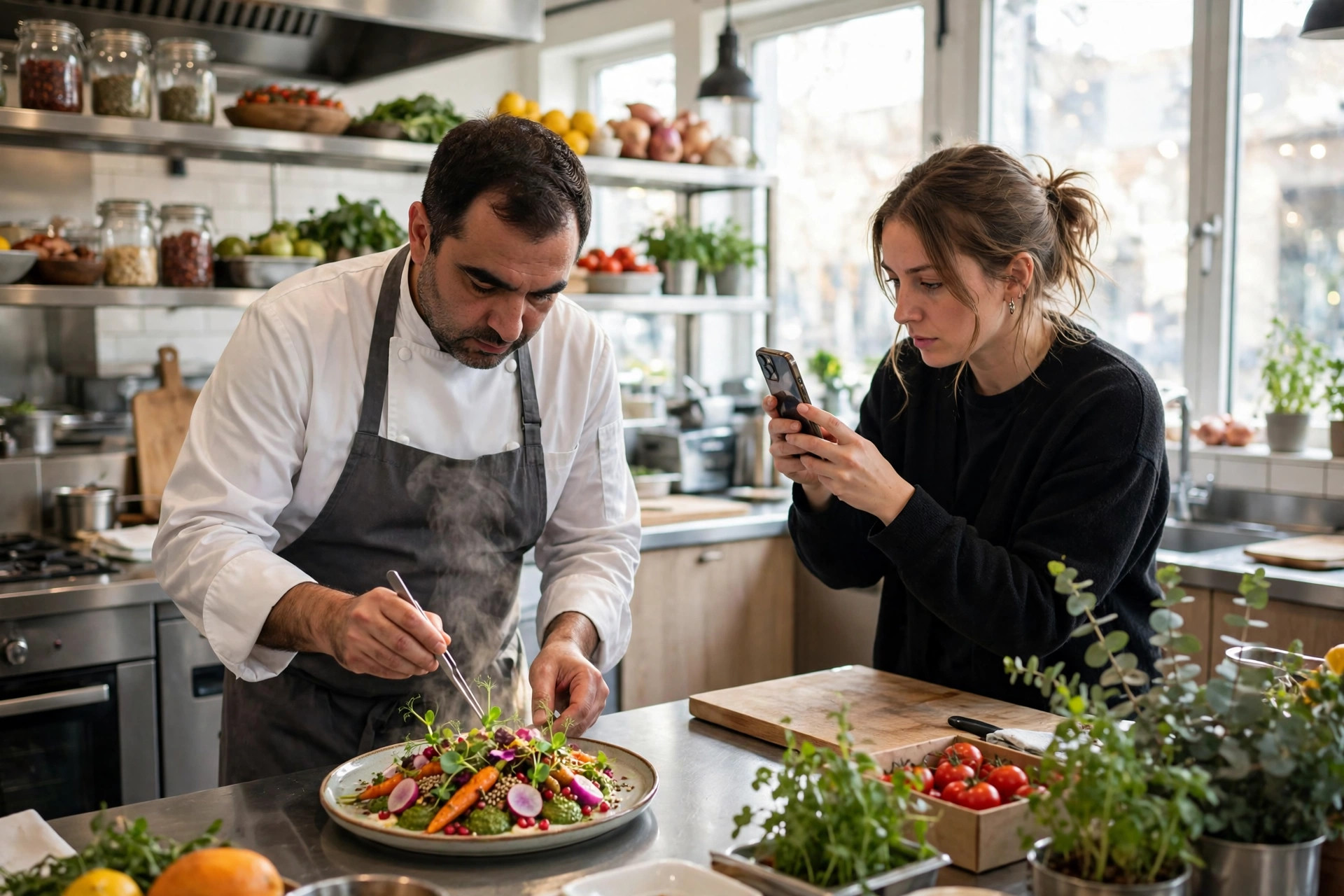
Every restaurant owner has heard the story: a small place posts one video, it goes viral, and suddenly there is a queue around the block. It happens — but it is not a marketing strategy, and it is not what TikTok ads are for. TikTok ads are the paid, controllable version of that luck: you choose the video, you choose the audience, you choose the budget, and you can measure whether it brought bookings. Used that way, they are one of the most cost-effective ways for a restaurant to reach younger diners. Used badly — broad targeting, polished corporate video, no booking link — they are one of the fastest ways to spend a month's marketing budget on views from people who will never visit.
This guide is written for restaurant, café and bar owners who already have some presence on TikTok or are considering it, and who want to spend money on the platform deliberately. It assumes you can film a decent phone video and you have a website or booking page that works on mobile. If you are starting from zero on TikTok itself, read our beginner's guide to TikTok for restaurants first — the organic foundations there are what make paid ads affordable later. And if you are weighing TikTok against other channels, our guide to how much a restaurant ad budget should be will help you place it in the overall plan.
Why TikTok ads work for restaurants — and when they don't
Food is one of the few categories TikTok's algorithm genuinely loves. Eating is visual, sensory and social; a sizzling pan, a cheese pull or a beautifully plated dessert stops thumbs in a way that a photo of a shopfront never will. The For You Page also distributes content by watch time and completion rather than follower count, which means a small restaurant's video can reach thousands of nearby strangers without first building an audience. That is the opportunity, and it is real.
But the fit is not universal, and being honest about that saves money. TikTok's audience skews young: if your core guests are over 55, or if your restaurant's appeal is quiet fine dining rather than shareable experience, the platform will work harder for your competitors than for you. Similarly, if your catchment area is a small town or a rural area, TikTok's location targeting may not narrow tightly enough to avoid waste — you may pay to reach people an hour's drive away. And if you cannot produce video at all — no one on staff willing to film, no phone-friendly dishes — paid TikTok will amplify a weakness rather than fix it.
The honest test is simple: do at least a third of your current guests look under 40, does your food or your room look good on a phone screen, and can someone on your team film three short videos a week? If the answer to all three is yes, TikTok ads deserve a test budget. If two or more are no, put the same money into Meta ads or Google search ads first, and revisit TikTok when the answer changes.
TikTok ads are not a lottery ticket for virality. They are a local targeting tool that happens to run on video — judge them like any other ad, by bookings per euro.
The ad formats that matter for a restaurant
TikTok sells many formats, but a restaurant needs to understand only a few. Everything else is either priced for national brands or irrelevant to filling tables this weekend.
| Format | What it is | Best for a restaurant | Watch out for |
|---|---|---|---|
| In-Feed Ads | Video ads that appear in the For You feed, like organic posts | Most campaigns: menu launches, events, offers | Must look native or users swipe past |
| Spark Ads | Boosting an existing organic post, keeping its likes and comments | Best starting format: promote a video that already works | Needs a good organic post first |
| TopView | Full-screen video when the app opens | Big launches and openings with a large budget | Premium pricing; overkill for a weekly offer |
| Branded Hashtag Challenge | Users create videos around your hashtag | Chains and big campaigns with community goals | Expensive and unpredictable for one location |
| Promote (in-app boost) | Simple boost from inside the TikTok app | A first, low-effort test | Limited targeting and measurement |
For almost every independent restaurant, the right starting point is a Spark Ad. The reason is social proof: when someone sees your ad and it already has hundreds of likes and real comments, they treat it differently from a cold commercial. It also de-risks the creative decision — you are spending money on a video that viewers have already voted for with their attention, rather than guessing which new video might work. The workflow is simple: post organically for a few weeks, watch which videos earn the best completion rates and comments, then put budget behind the top one or two.
In-Feed Ads are the second tool, and the right choice when you need a video that was made specifically as an ad — for example a limited-time offer with a clear end date, or a video that points directly at a booking page. They behave the same way in the feed, but they start with zero engagement, so the first seconds of the video have to work harder. TopView and hashtag challenges are worth knowing about and almost never worth buying for a single location: their minimum spends and production demands belong to brands with national budgets, not to a restaurant that needs forty extra covers on Friday.
How much do TikTok ads actually cost?
This is where most restaurant guides mislead by accident: they quote the per-impression price, which sounds cheap, and skip the minimum budgets, which are what actually decide whether TikTok is affordable for you. Both matter, so here are both.
The minimums that surprise small restaurants
TikTok requires a minimum of $50 per day at campaign level and $20 per day at ad group level. A campaign cannot launch below those floors, and a lifetime-budget ad group must cover the daily minimum times the number of days it runs — so a 31-day ad group needs at least $620 before TikTok will accept it. Compare that with Meta, where a campaign can run on a dollar a day, and the difference is stark: TikTok's media is cheap, but its entry ticket is not.
In practice, that means a meaningful first test costs roughly $500 to $1,000 over two to four weeks: enough spend to reach a decent local audience several times, test two or three videos, and produce enough bookings to judge. Less than that, and you are mostly paying to learn that you did not spend enough. If that test budget is more than you can comfortably risk, TikTok ads should wait — start with the in-app Promote button on your best organic video for a smaller amount, or put the budget into Meta ads, and return to TikTok Ads Manager when you can fund a real test.
What you pay per impression and per click
Once you are past the minimums, the media itself is genuinely competitive. Typical TikTok CPMs (cost per thousand impressions) run around $4 to $9, with some recent industry snapshots putting TikTok near $4 to $6 against Meta's $6 to $7 in comparable markets — though both move with season, targeting and competition, and Nordic CPMs can differ from US benchmarks. Click costs for restaurant campaigns commonly land around $0.50 to $2.00. What those numbers do not tell you is the cost that matters: cost per booking. A cheap impression that never books is still a wasted impression, just a cheap one. Track cost per booking from day one, and compare it with the gross profit a new guest brings — the method is covered in full in our guide to calculating restaurant advertising ROI.
The budget rule for a first TikTok test
Budget $500 to $1,000 over two to four weeks, split across two or three videos, aimed at one tight local audience. That is enough to learn your true cost per booking. Anything smaller mostly teaches you that you spent too little — and anything much larger before you know your numbers is gambling, not marketing.
One more cost owners forget: the creative. TikTok rewards volume and freshness, and a single video rarely carries a campaign for more than a few weeks. Budget staff time for filming — an hour or two a week, usually during a quieter shift — and treat it as part of the campaign cost. A restaurant that films its own content honestly will usually out-perform one that pays an agency for polished videos, because TikTok audiences actively prefer the authentic, slightly rough look. That is one of the rare cases in advertising where the cheaper option is also the better one.
Setting up your first campaign, step by step
Setting up properly takes an afternoon. Skipping steps here is how restaurants end up with impressive view counts and no bookings, so work through it in order.
- Create a TikTok Ads Manager account and a Business Centre. This is separate from your regular TikTok account. Add your business details and a payment method, and connect your restaurant's TikTok profile so you can run Spark Ads from it.
- Install the TikTok Pixel on your website. The pixel is a small piece of code that reports back when someone who saw your ad visits your site, views the menu or completes a booking. Without it, you are flying blind on conversions. If your site is on a platform that supports it, this takes minutes; if not, ask your web provider — and if your website cannot take a pixel at all, that is a sign the site needs attention before the ads start.
- Choose the right objective. For a restaurant, that is usually traffic to a booking or ordering page, or conversions if the pixel is tracking bookings. Awareness objectives buy cheap views and teach you nothing about bookings — avoid them for a first campaign.
- Build one tight ad group, not five broad ones. One location radius, one age band that matches your guests, food and dining interests. Splitting a small budget across many ad groups starves each one of the data it needs to optimise.
- Upload two or three videos, not one. TikTok needs options to learn which creative works. Give it your best organic performers first, and let the platform shift spend toward the winner.
- Set the destination carefully. Every ad should land on a page where a visitor can book a table or place an order in under a minute, on a phone, with no account creation. Sending paid traffic to a generic homepage is the single most common way restaurants waste TikTok spend — our landing page guide for restaurant ads covers exactly what that page needs.
- Launch, then leave it alone for a few days. TikTok's system needs time to learn who responds. Checking hourly and tweaking daily resets that learning and makes results worse, not better.
Creative that converts: the restaurant formula
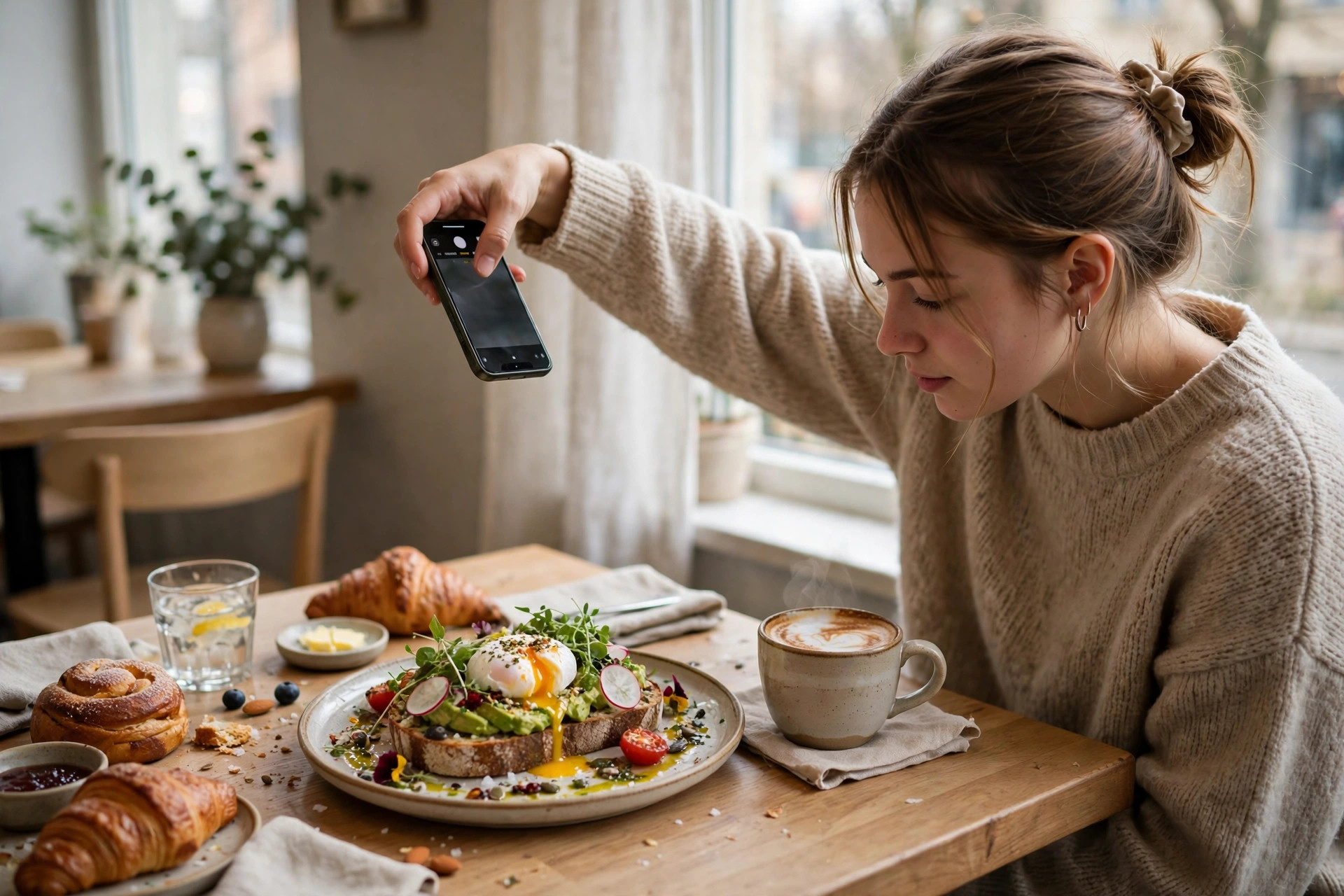
TikTok creative follows different rules from every other advertising you have done, and restaurants that ignore them pay for the lesson. The platform rewards content that feels like content, not like an ad — and it punishes polish. A shaky phone video of a real dish being finished, with real kitchen sound, will usually beat a professionally shot commercial with a voiceover. That is not a theory; it is the consistent pattern across restaurant accounts of every size.
The first two seconds decide everything
Viewers decide whether to keep watching in about two seconds. Open with the payoff, not the setup: the sizzling pan, the cheese pull, the first cut into a dessert, the surprising price on screen. Never open with your logo, your exterior, or a slow pan of an empty room — those are the three fastest ways to lose a viewer. Text on screen should carry the message for sound-off viewers, but the video should also work with sound on, because sound is one of TikTok's strongest engagement signals.
The formats that reliably work for restaurants
- The dish reveal: a signature dish built or plated from start to finish in 20 seconds. Anticipation plus payoff is the most saveable format on the platform.
- Behind the scenes: morning prep, the first bread out of the oven, the team tasting a new dish. It builds the personal connection no food photo can.
- POV and first reaction: a guest's genuine first bite, a "come with me" walk through the restaurant, a first-timer trying the house special.
- The offer, done honestly: a limited lunch deal or a new menu item, shown rather than announced — the dish on the table, the price on screen, the booking link one tap away.
- The regular's story: a staff member or a loyal guest explaining, in their own words, why this place matters to them. It reads as a recommendation, not an ad.
Whatever format you choose, keep the video vertical (9:16), 15 to 30 seconds long, and shot on a phone in your actual restaurant. Stock footage and generic food photography are instantly recognisable and instantly skipped. And never, ever put a watermark from another platform on a TikTok ad — the algorithm demotes it and viewers read it as recycled. For copy, keep the caption short, put the location and the offer in the first line, and use a small number of relevant hashtags plus your own branded one. Our guide to ad copy that brings table bookings covers the wording in more depth.
On TikTok, a shaky phone video of a real dish beats a polished commercial almost every time. Authenticity is not a style choice here — it is the distribution strategy.
Targeting locals, not the whole internet
Targeting is where restaurant TikTok campaigns are won or lost, and it is also where the platform's defaults work against you. Left alone, TikTok will happily show your ad to the whole country, because a bigger audience is easier for the algorithm to fill. Your job is to fight that default.
Location first, everything else second
Set your country and your city, then narrow by radius around your restaurant wherever the platform allows it. A restaurant that draws most guests from within 10 to 15 kilometres should not be paying to reach people 100 kilometres away. If TikTok's radius options in your market are coarse, compensate by layering in city-level targeting and by making the ad itself location-specific — name the neighbourhood in the caption and the video text, so even a viewer outside your area self-selects out.
Age, interests and the layers that help
Layer age bands that match your actual guests — most restaurants will target roughly 18 to 45, adjusted to their own clientele — and food, dining and local-lifestyle interests. Avoid stacking too many interest layers on a small budget: each layer shrinks the audience, and a tiny audience cannot give the algorithm enough data to optimise. One location, one broad age band, one or two interest groups is plenty for a first campaign.
What not to do
Do not target nationally "to see what happens" — what happens is you pay for views from people who cannot visit. Do not exclude everyone outside a tiny radius either, or the campaign may never spend its budget at all; if delivery stalls, widen slightly rather than abandoning the campaign. And do not copy targeting from a chain or a different city: a strategy that works for a burger chain in a capital city will not automatically work for a single bistro in a smaller town. Your own booking data — where your guests actually come from — is the best targeting brief you have.
Measuring what matters: cost per booking
Views, likes and follower growth are the numbers TikTok shows you most proudly, and they are the numbers that matter least to a restaurant. The only metrics that should decide whether a TikTok campaign continues are bookings, orders, and what each one cost.
Build the attribution before you need it
Three tools, all cheap: the TikTok Pixel tracking bookings or orders on your site; a dedicated booking link or promo code used only in the TikTok campaign, so redemptions are unambiguous; and a "how did you hear about us" question at booking or at the table. The pixel tells you about online conversions, the code tells you about guests who saw the ad and booked by phone or in person, and the question catches everything else. Together they give a defensible cost per booking — and the method for turning that into honest ROI is covered in our guide to calculating restaurant advertising ROI.
What a good cost per booking looks like
There is no universal figure, because it depends on your average spend and margin. The rule is simple, though: your cost per booking should be comfortably below the gross profit of one guest's visit. If a guest spends €30 and your gross margin is 65%, one visit is worth about €19.50 in gross profit — so a TikTok cost per booking of €8 to €12 leaves room, and €20 does not, unless those guests reliably return. Track the number weekly, not daily: daily swings on a small budget are noise, and reacting to noise is how campaigns get killed the day before they would have worked.
Separating the ad's effect from everything else
A busy weekend during a campaign is not proof the campaign worked — it might be the weather, a local event, or your regulars. Compare campaign weeks with the same weekdays before the campaign, and watch whether total covers actually rise, not just whether the ad account reports conversions. If the ad metrics look excellent but the restaurant is no busier, attribution is flattering you. Trust the till over the dashboard.
If the ad dashboard says the campaign is brilliant but the restaurant is no busier, trust the till. Attribution flatters; covers don't lie.
Scaling winners and refreshing creative
When a campaign works, the temptation is to double the budget immediately. Resist it. TikTok's auction responds badly to sudden jumps: doubling spend overnight usually raises your cost per booking rather than doubling your bookings, because the system starts reaching further into less interested audiences to spend the money. Scale in steps of 20% to 30% at a time, wait a few days, check the cost per booking, and only then scale again.
Creative fatigue is the other clock ticking on every campaign. The same video shown to the same local audience too often stops working — comments dry up, completion rates fall, cost per booking creeps up. For a local restaurant audience, that usually happens after two to three weeks of steady spend. The fix is not a bigger budget but a fresh video: rotate in a new dish reveal, a new behind-the-scenes clip, or a seasonal offer, and keep the winner running alongside the newcomer until the newcomer proves itself. A healthy TikTok account for a restaurant is a small pipeline — two or three proven videos running, one or two new ones being tested, and a filming habit that feeds the pipeline every week.
Over time, this is where TikTok compounds in a way other channels do not: your organic account grows from the same videos you advertise, your retargeting pool grows from the people who watched but did not book, and your best-performing creative becomes a library you can reuse for seasonal campaigns. Our guide to retargeting for restaurants covers how to turn those video viewers into second-chance bookings at low cost.
Common TikTok ad mistakes
Boosting before you have organic proof
Spending on a video nobody liked organically is paying to amplify a guess. Post first, watch completion rates and comments for a week, and only then put money behind the winners. The organic test is free; skipping it is the most expensive shortcut on the platform.
Targeting the whole country
Covered above, and still the most common waste: a restaurant paying for national reach. If your ad's comments include people asking where you are and being disappointed by the distance, your targeting is too broad.
Sending traffic to a homepage
Every extra click between an ad and a booking loses guests. The ad should land on a page with the offer, the menu highlight and a booking button — nothing else competing for attention. If your website cannot do that, fixing the site is a better investment than increasing the ad budget, and a site that converts is also what turns organic TikTok views into bookings. PowerfulWebsite builds restaurant websites for free, with plans from €59/mo to €239/mo including ordering, so the fix does not need a large upfront budget.
Judging on views instead of bookings
A million views in the wrong city, or from the wrong age group, is a vanity metric with a bill attached. Set the cost-per-booking target before the campaign launches, write it down, and let it make the renewal decision — not the view count.
Letting one video run until it dies
Creative fatigue is predictable, so plan for it. A restaurant that films one video and runs it for two months will conclude TikTok "stopped working", when in fact the audience simply got bored. Refresh every two to three weeks, and the channel keeps working.
Frequently asked questions
How much do TikTok ads cost for a restaurant?
TikTok requires a minimum of $50 per day at campaign level and $20 per day at ad group level, so a realistic first test costs roughly $500 to $1,000 over two to four weeks. Typical CPMs run around $4 to $9 per thousand impressions. The minimums — not the per-impression price — are what make TikTok more expensive to start than Meta for a small restaurant.
Are TikTok ads worth it for a small restaurant?
They are worth testing if your target guests are under 40, your food photographs or films well, and you can commit to making several short videos. They are a poor fit if your guests are mostly older, your catchment area is very small, or you cannot produce video regularly — in those cases Meta ads or Google search ads usually return more per euro.
What is a Spark Ad, and should restaurants use it?
A Spark Ad is TikTok's format for boosting an existing organic post from your account, so the ad keeps its likes, comments and shares. For restaurants it is usually the best starting format, because you promote a video that has already proven people like it, and the ad looks native rather than like a commercial.
How do I target only people near my restaurant on TikTok?
Use location targeting in TikTok Ads Manager: set your country and city, then narrow by radius around your restaurant where available, and layer in age and food-related interests. Always send ad traffic to a booking or ordering page for your location — broad national targeting is the fastest way for a restaurant to waste a TikTok budget.
How long should a restaurant TikTok video be?
15 to 30 seconds works best for restaurant ads: long enough to show the dish, the room and the reason to visit, short enough that most viewers watch to the end. Put the hook — the sizzling pan, the cheese pull, the surprising price — in the first two seconds, because that is when viewers decide whether to swipe away.
Can I just boost a video from the TikTok app?
Yes — TikTok's in-app Promote button is the simplest way to start, and it works for a first test. But it offers far less control over targeting, objectives and measurement than Ads Manager. Once you are spending regularly, move to Ads Manager so you can target by location properly, track bookings, and compare campaigns.
Want a website that brings table bookings?
PowerfulWebsite builds your restaurant's website for free — you only pay the monthly plan from €59/mo. Everything included: domain, hosting, maintenance and updates. Plans run from €59/mo to €239/mo, with the Restaurant plan including an ordering system, plus a one-time €25 domain handling fee.
See the packages