Ski Holiday Season: Filling Tables With Winter Tourists
Ski season restaurant marketing is a different game from the rest of the year: for roughly twenty weeks, your dining room fills with guests who do not know the area, decide where to eat on their phones, and spend more per head than your locals ever will — then vanish in May. The restaurants that win the season are the ones that are findable, bookable and built around the skier's day: a visible winter menu, a real après-ski offer, and partnerships with the hotels and ski schools that send guests your way.
Key takeaways
- The Nordic ski season runs roughly late November to late April, but revenue concentrates in three peaks: Christmas–New Year, February school holidays, and Easter.
- Ski tourists decide where to eat on their phones, usually the same day — your Google Business Profile, recent reviews and online booking matter more than any flyer.
- Après-ski (roughly 15:00–18:00) is the highest-margin window of the day: drinks-led, high turnover, and it adds a service without adding a dinner shift.
- Build the winter menu around what cold, hungry skiers actually want: hearty, fast, shareable food and a strong zero-proof drinks list.
- Hotels, ski schools and rental shops are your best sales team — formalise the relationship before the season, not during it.
- Do the work six weeks before opening: website, photos, reviews and booking flow, then spend your in-season energy on service, not marketing.
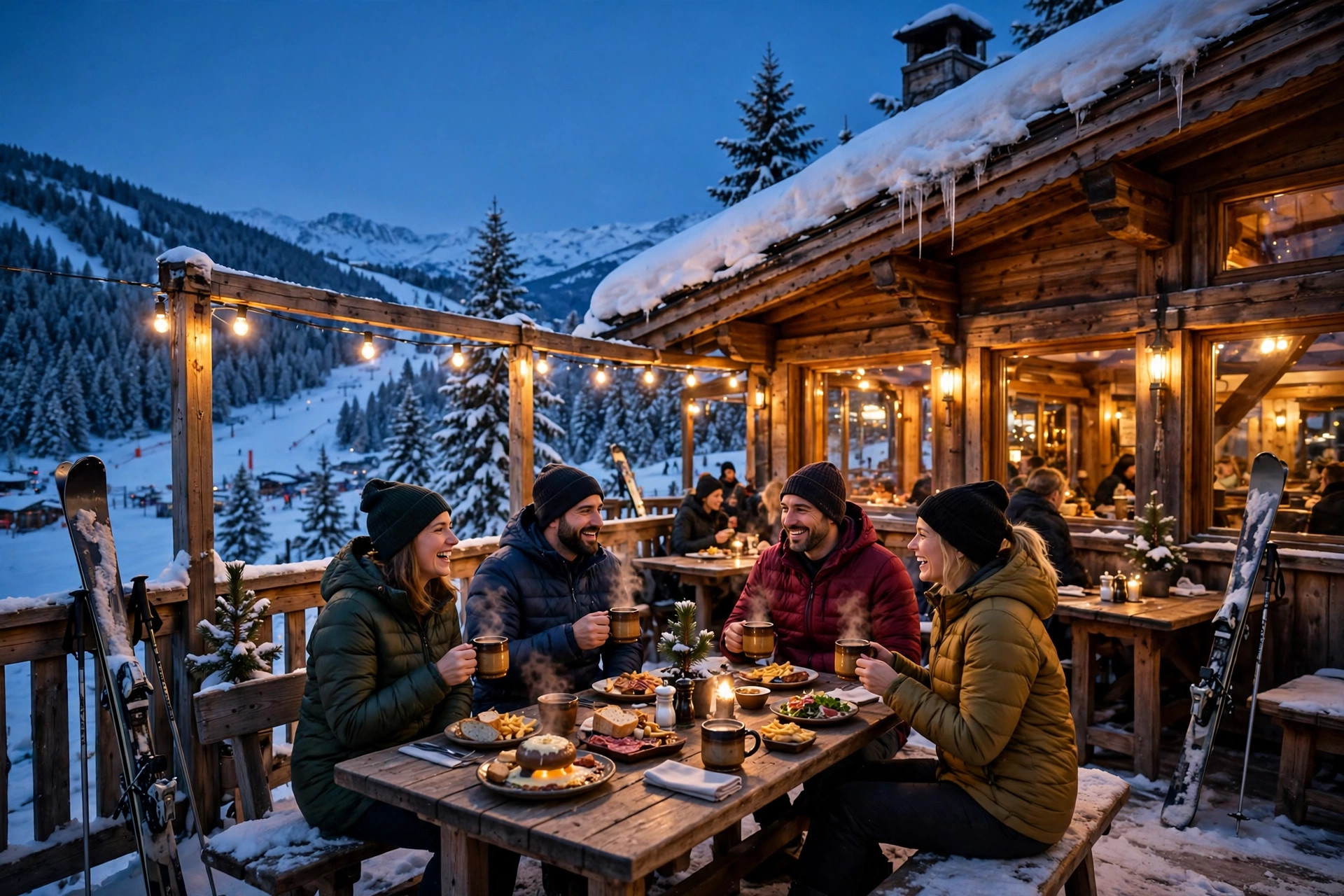
Every November, the same transformation happens in Levi, Åre, Hemsedal, Ruka and every other Nordic ski town. The streets that were quiet in October fill with rental cars, ski racks and families in matching jackets. For a restaurant owner in a ski resort, those twenty weeks are the year: the season can deliver the majority of annual revenue, and the difference between a good season and a great one is rarely the food — it is whether the tourists who are already in town, already hungry and already spending, end up at your tables or at the place two doors down.
This guide is a practical plan for ski season restaurant marketing, written for restaurant, café and bar owners in Nordic ski resorts — and for any restaurant within driving distance of the slopes that wants a share of the winter trade. We cover the season calendar and the three peak periods, who your ski guests really are, how they choose where to eat, what to serve them, how après-ski works as a profit centre, and the partnerships that fill tables while you are busy cooking. Pair it with our seasonal advertising calendar for restaurants, which maps every campaign of the year in one place.
Why Ski Season Is a Different Business
A ski-resort restaurant does not have a steady year with a winter bump. It has two different businesses sharing one kitchen: a local business from May to November, and a tourist business from late November to late April. The tourist business has different customers, different decision-making, different spending patterns and different margins — and it rewards different marketing. Treating the season as "the same restaurant, busier" is the most common mistake resort owners make.
The season calendar: twenty weeks, three peaks
The main Nordic resorts open in late November or early December and close in late April or early May, but the season is not evenly busy. Revenue concentrates in three peaks, and your marketing should too.
| Period | Typical dates | Who is in town | What it means for your restaurant |
|---|---|---|---|
| Season opening | Late Nov – mid Dec | Early-season skiers, locals, weekenders | Quiet weeks to test the menu and train staff; low marketing spend |
| Christmas & New Year | ~20 Dec – 2 Jan | Families, international visitors, big spenders | Highest spend per head; book dinners early; premium menus sell |
| January quiet weeks | Early – mid Jan | Fewer tourists, price-sensitive guests | Value offers and locals' nights; see our quiet January strategy |
| February school holidays | Mid Feb – early Mar | Families with children, domestic tourists | Family-friendly menus, early seatings, kids eat well |
| March & Easter | Mid Mar – early Apr | Families, sun-seekers, long-stay guests | Terrace season begins; Easter menus and group bookings |
| Season close | Mid – late Apr | Spring skiers, locals | Wind down; collect reviews and emails for next season |
The practical consequence is simple: do not spread your marketing budget evenly across five months. Spend it in the six weeks before opening and during the three peaks, when the guests are actually in town and deciding where to eat tonight. A euro spent on the first week of January buys far less than a euro spent in the week before Christmas.
Tourists spend differently — and that changes everything
A ski tourist is on holiday. They have already paid for travel, accommodation, lift passes and rental gear; the restaurant bill is the smallest part of a trip that already cost hundreds or thousands of euros. Holiday guests are less price-sensitive, more willing to try the expensive dish, more likely to order dessert and a second drink, and far more likely to book than to cook in their cabin. Every empty table in peak week costs you far more than an empty table in October — your job is not to convince people to spend, but to make sure they spend it with you.
The season is short, so mistakes are expensive
A city restaurant that has a bad week can fix it next week. A ski-resort restaurant that gets its Google listing, menu or booking flow wrong in December has lost the most valuable weeks of the year — and the guests you lose in December do not come back in February, because they are different people every week. That is why the pre-season checklist at the end of this guide matters more than any single in-season tactic.
Know Your Ski Guest: Who Actually Books a Table
"Ski tourists" is not one audience. A resort week brings at least four distinct groups through your door, and each one books differently, eats differently and responds to different marketing. Knowing which groups your restaurant actually serves is the first step to filling tables efficiently.
Families with children
The February school-holiday crowd and much of the Christmas crowd. They book early, for 4–6 people, and decide as a group — which means the restaurant has to work for the pickiest member, usually a child or a teenager. What they care about: a kids' menu that is not an afterthought, early seating times (17:00–18:00), space for ski boots and bulky jackets, and a website that shows the menu and prices before they commit. A good experience in February is marketing for next February.
Couples and groups of friends
The après-ski crowd and the late-evening crowd. They decide late, often on the mountain or in the lift queue, and they are the most spontaneous bookers you will get. They care about atmosphere, drinks and the feeling that they are in the right place — which is why your photos and your review score matter more to them than your prices. Groups of friends are also the highest spenders per head on drinks, and the most likely to post photos and tag your restaurant.
International visitors
In the big Nordic resorts, a large share of peak-season guests come from the UK, Germany, the Netherlands and increasingly from Asia. They book in English, rely heavily on Google Maps and TripAdvisor, and will not phone you — partly because of language, partly because of roaming and time zones. If your website is only in the local language, you are invisible to them. An English menu, opening hours and booking page is not a nice extra in a ski resort; it is the difference between being found and not being found.
Season workers and locals
Do not forget the people who live in the resort all winter: ski instructors, lift staff, hotel workers and the locals who stay year-round. They eat out all season, they come on quiet weeknights, and they are your word of mouth — a ski instructor who likes your restaurant will send dozens of guests your way over a season. A staff discount, a locals' night or simply remembering their names buys loyalty no ad campaign can. Our guide to making tourist reviews work for you explains how to turn happy guests into the review base that convinces the next week's arrivals.
One guest, three decisions a day
A skier makes three separate eating decisions every day: lunch on the mountain, après-ski drinks, and dinner in the village. Most restaurants only compete for one of them. Win two — say, après-ski and dinner — and you have doubled your revenue from the same guest without finding a single new customer.
How Ski Tourists Choose Where to Eat
Understanding the decision matters more than any single channel, because ski tourists decide differently from your regulars. They do not know the area, they have no habits and no favourites, and they are choosing under time pressure — cold, tired and hungry, with a phone in one gloved hand. The restaurants that win are the ones that make the decision easy.
The phone decides: Google Maps and reviews first
The single most important marketing asset for a ski-resort restaurant is not your Instagram account or your website — it is your Google Business Profile. When a tourist types "restaurants near me" at 17:40 after a day on the slopes, Google shows a map, a star rating, a handful of photos and opening hours. That is the whole decision for most people. Three things decide whether they tap you: a rating of 4.3 stars or better, recent reviews (a review from last week says "this place is great right now"; a review from 2023 says nothing), and photos that look like the food they want to eat tonight. Our complete guide to Google Business Profile for restaurants walks through the setup step by step, and our guide to getting more Google reviews covers the ethical way to build review volume fast — including the simple trick of asking at the happiest moment, when the bill is paid and the guest is still smiling.
Your website has one job in season: answer and book
When a tourist does reach your website, they want three things in under ten seconds: what do you serve, what does it cost, and can I book a table tonight? Everything else is decoration. That means your winter menu must be on the website as real text, not a PDF — tourists search for dishes and dietary options, and search engines cannot read a PDF menu properly. Prices should be visible; hiding them creates a back button, not curiosity. And the booking button must work on a phone, in English, without a phone call. If your site cannot do that today, fixing it is the highest-return job of your pre-season. A modern restaurant website with online ordering and booking built in costs from €59/month with PowerfulWebsite — the build itself is free — which is less than the revenue of a single full table on a peak-season Saturday.
Timing: the 16:00–18:00 decision window
Dinner decisions in a ski resort are mostly made between 16:00 and 18:00, as people come off the mountain. That is when your Google posts, your social media and your booking availability matter most. A short post at 15:30 — "tables available tonight from 18:00, walk-ins welcome" — reaches people at the exact moment they are deciding. The same logic applies to your opening hours: if your kitchen opens at 17:00 but Google says 18:00, you have lost an hour of bookings every day for five months.
Social proof in the right language
Tourists trust other tourists. A review in their own language from someone who skied the same resort last week is worth more than any ad you can buy. Encourage reviews with a simple "we'd love a review" card on the table, with a QR code straight to your Google review page — and reply in the language the review was written in, even if that means using a translation tool. A restaurant that answers its reviews looks alive; one with unanswered one-star reviews from last season looks abandoned.
The Ski-Season Menu: What Sells After a Day on the Slopes
Skiing burns a remarkable amount of energy — a full day on the slopes can use 2,000–3,000 calories — and your menu should be built for people who arrive cold, hungry and ready to eat properly. The ski-season menu is not your summer menu with a snowflake on it. It is a different offer for a different appetite.
Hearty, fast and shareable
After six hours in the cold, guests want food that is hot, filling and quick. Stews, braised meats, root vegetables, creamy soups, pasta and fondue-style sharing dishes all sell well in ski season — and they hold well, scale to a full dining room, and are forgiving when the whole resort arrives at once at 18:30. Sharing platters deserve a special mention — a "skier's board" for two, a fondue for the table — because they solve the group-decision problem, raise the average spend, and photograph well. Keep the menu tight: 8–12 mains executed perfectly will earn you more than 25 dishes done adequately. For the mechanics, see our guide to marketing your seasonal menu.
Local and Nordic, honestly
Ski tourists — especially international ones — want to eat something they cannot get at home. Reindeer, Arctic char, wild mushrooms, cloudberries, rye bread, local cheeses: the Nordic larder is your differentiation, and it is the reason a tourist picks your restaurant over the pizza place. Name the local suppliers on the menu where you can; provenance is part of the experience, and it justifies a premium price far better than any discount ever will. But be honest about it — "local" should mean local, not a label on an imported product.
Children, allergies and dietary needs — plan for them
Two things that lose you a whole table in ski season: no credible children's menu, and no clear answer on allergies. Families decide as a group, and one child who will not eat anything on the menu vetoes the restaurant for six people. A short kids' menu with real food — not just nuggets — and a clear, confident allergen labelling system are basic infrastructure in a resort restaurant, not extras. The same applies to vegetarian and vegan options: a group with one vegan member will choose the restaurant that feeds them well, and there are more of them every season. EU allergen rules are covered in our guide to allergen labelling for restaurants.
Drinks: the quiet profit centre
Drinks are where ski-season margins live. Mulled wine (glögi), hot chocolate with a twist, local craft beer, aquavit and a thoughtful zero-proof list all sell at strong margins, and the cold weather gives people a reason to order a second round. Build a short winter drinks list — five or six drinks that belong to the season — and train staff to suggest one with every order.
Price it for the season, not for the year
Peak-season pricing is not gouging; it is the market. Your costs are higher in season — seasonal staff, heating, snow clearing, higher wages — and your guests know they are on holiday. A clear, confident price list that reflects the season is fair and expected. What guests resent is not a €28 main course; it is a €28 main course they did not expect, or a bill with unexplained extras. Put prices on the website and on the menu, keep them consistent across every channel, and review them once mid-season rather than changing them weekly.
Après-Ski: The Highest-Margin Hours of the Day
Après-ski — the social hours right after the lifts close, roughly 15:00 to 18:00 — is the most underused profit centre in Nordic ski resorts. The big Alpine resorts built entire businesses on it; many Nordic restaurants still treat it as an accident. It should be a product.
Why après-ski pays
The economics are unusually kind. Guests arrive in groups, order drinks first and food second, turn over quickly, and are in a spending mood — the day's skiing is done and nobody is in a rush to get home. A drinks-led service needs fewer kitchen staff than a dinner service, uses the same room you already heat, and fills the dead hours between lunch and dinner. For many resort restaurants, a good après-ski service adds the equivalent of a full extra sitting to the day, at a fraction of the cost of one.
Building the offer
A working après-ski offer has four parts. First, a short menu: drinks and sharing plates only, nothing that slows the kitchen. Second, a space that works for groups — high tables, a bar area, a terrace with heaters and blankets if you have one. Third, atmosphere: music, ideally live or a DJ on peak days, warm light, and a room that looks like a party from the outside. Fourth, timing: open the moment the lifts close, and advertise the hours clearly — "après-ski daily 15:00–18:00" on your door, your website and your Google profile. The classic mistake is to run après-ski as an unadvertised happy hour; it is an event, every day, and people plan around it.
From après-ski to dinner: the conversion
The smartest après-ski operators do not just sell drinks — they convert drinkers into diners. A guest who has had a good time at your bar at 16:30 is the easiest dinner booking you will ever make. Offer après-ski guests first refusal on dinner tables, or simply a friendly "we have a table for four at 18:30 if you'd like it." Even a modest conversion rate — one table in five — turns your bar into your best booking channel.
Partnerships That Fill Tables
The cheapest marketing in a ski resort is not advertising. It is the recommendation of someone the guest already trusts: the hotel receptionist, the ski instructor, the rental shop assistant, the chalet host. These people answer the question "where should we eat tonight?" dozens of times a week, and their answer fills tables. Building those relationships is the highest-return marketing a resort restaurant can do — and it costs almost nothing.
Hotels and accommodation: your front desk sales team
Start with the hotels, cabins and apartment operators within walking distance. Visit them before the season with a simple proposition: you will look after their guests, and in return they recommend you. Make it easy: a one-page sheet with menu highlights, opening hours and booking link, plus a standing arrangement for their guests (a welcome drink, a reserved table, a small discount). A formal partnership — a "dinner package" sold with the room, or a voucher in the welcome pack — is the most effective version, but even an informal understanding, renewed each season, moves real numbers.
Ski schools, rental shops and guides
Ski instructors spend all day with your guests, and at the end of the lesson the conversation turns to dinner. A ski school that recommends you is worth more than any ad, because the recommendation comes with trust already attached. The same applies to rental shops and guides. The practical approach is the same as with hotels: visit before the season, offer the staff a meal so they can recommend you honestly, and give them something to hand over — a card with a booking QR code, or a simple "mention the ski school and get a welcome drink" offer that lets you track which partner sent the guest.
Tour operators and travel agents
For the bigger resorts, tour operators selling package holidays are worth pursuing: they plan guests' weeks in advance, and a restaurant that can handle groups with a set menu at a fixed price is an easy addition to their programme. Contact them in September or October, before their winter catalogues are finalised.
The resort itself: events, races and festivals
Most resorts run a winter events calendar: opening weekend, competitions, torchlight descents, Easter festivals, live music. Being part of those events — catering the after-party, hosting the prize-giving, running a food stall — puts your name in front of every visitor in town at once. It also builds the relationship with the resort management, who control the marketing channels (the resort website, the app, the piste map) that reach guests before they arrive. Ask early: the best slots go to the restaurants that ask in autumn, not the ones that notice the poster in January.
Pricing and Packages for the Winter Weeks
Ski-season pricing is a balancing act: peak weeks can carry premium prices, quiet weeks need a reason to come, and the whole season has to be simple enough for a tired tourist to understand in ten seconds. Packages — rather than discounts — are the tool that does the work.
Packages beat discounts
A "ski week dinner package" — five dinners for the price of four, or a set three-course menu every evening of the stay — sells certainty to the guest and guaranteed covers to you. It also solves the group-decision problem and locks in revenue before the guest arrives. Discounts, by contrast, train guests to wait for the next deal and erode the premium positioning your resort location should give you. If you do use price offers in the quiet weeks, make them value-added (a free dessert, a welcome drink, an upgrade) rather than a percentage off the bill.
Peak, shoulder and quiet: three price levels, clearly labelled
Most resort restaurants can run three price levels across the season without confusing anyone: peak (Christmas–New Year, February holidays, Easter), shoulder (the weeks around the peaks) and quiet (early season and January). The difference can be a premium set menu in peak weeks and a value menu in quiet weeks, rather than changing the price of every dish. The key is transparency: publish the seasonal menus and prices on your website, so a guest booking in November knows what January will cost.
What the numbers look like
As a rough guide, a mid-range ski-resort restaurant in the Nordics typically sees mains in the €22–€38 range in peak season, with set menus at €45–€65 per person and après-ski drinks at €8–€14. These are broad estimates, not rules — your prices depend on your resort, your concept and your costs.
Your Pre-Season Checklist: The Six-Week Countdown
Everything in this guide converges on one thing: the six weeks before the season opens. Do the work then, and the season largely runs itself. Leave it until December, and you will be fixing your website while your competitors are filling their tables. Here is the countdown.
Six weeks before opening: the foundations
Update your website with the winter menu, winter opening hours and the booking link — in English as well as the local language. Refresh your Google Business Profile: hours, photos and description. Check that your booking system works on a phone and that the confirmation email is in English. Order the table cards with the review QR code, and visit your hotel and ski-school partners to renew the season's arrangements.
Four weeks before: the menu and the team
Finalise the winter menu and the après-ski offer, and cost them properly. Train the team on the menu, the allergen information and the review ask. Take fresh photos of the dining room, the terrace and the signature dishes — photos taken in daylight in November will look better than anything you can shoot in a dark January. Plan the social media content for the first three weeks of the season in advance, so you are not inventing posts during service.
Two weeks before: the launch
Publish a "winter season opening" post on Google and social media. Email last season's guests — the list you collected all last winter — with the opening date and the winter menu. Open the booking calendar for the Christmas and New Year weeks and announce it; scarcity is real in peak weeks, and announcing availability early fills the best nights first. Check everything once more on a phone, as a tourist would: search your restaurant on Google Maps, open your website, try to book a table. If any step is awkward, fix it now.
During the season: the weekly rhythm
Once the season is running, your marketing becomes a weekly rhythm, not a project. Monday: check reviews and reply to them. Tuesday: post the week's après-ski and dinner availability. Wednesday: check the booking calendar for the coming weekend and push any gaps. Friday: brief the weekend team on specials and group bookings. And every week, collect guests' email addresses — with consent, under GDPR — because that list is the most valuable thing you will own when next November comes. Our guide to building an email list from zero, GDPR-safe, covers the mechanics.
The one number to watch
Track one number through the season: covers per available seat per week, split by lunch, après-ski and dinner. It tells you instantly which part of the day is working and which needs attention — and it stops you from mistaking a busy après-ski for a busy restaurant. If dinner covers are flat while après-ski is booming, your conversion offer needs work. If lunch is empty while dinner is full, your daytime visibility is the problem. One number, three splits, checked every Monday.
Ski season is the best opportunity a Nordic resort restaurant gets all year: twenty weeks of guests who are already in town, already spending, and actively looking for somewhere good to eat. The restaurants that fill their tables are rarely the ones with the biggest advertising budget — they are the ones that are easy to find, easy to book, honest about what they serve, and built around the skier's day. Do the pre-season work, look after your partners, and when the lifts stop in May, collect the reviews, keep the email list warm, and start planning next winter while this one is still fresh.
Frequently Asked Questions
When does ski season start in the Nordics?
In the main Nordic resorts — Levi, Ylläs and Ruka in Finland, Åre and Sälen in Sweden, Hemsedal and Trysil in Norway — the season typically opens in late November or early December and runs to late April or early May, depending on snow. The busiest weeks are Christmas and New Year, the February school holidays, and Easter. Plan your marketing to peak in those weeks, not spread evenly across five months.
How do I attract ski tourists to my restaurant?
Ski tourists choose restaurants on their phones, usually the same day. Keep your Google Business Profile accurate and full of fresh photos and recent reviews, make your menu and opening hours easy to find on your website, and be bookable online — most tourists will not phone a restaurant in a foreign country. Then give them a reason to pick you: a clear ski-season menu, visible après-ski hours, and partnerships with hotels and ski schools that recommend you by name.
What is après-ski and how can my restaurant profit from it?
Après-ski is the social time right after the lifts close, roughly 15:00 to 18:00, when skiers come down the mountain hungry, thirsty and ready to spend. It is the highest-margin window of the day for many resort restaurants: drinks-led, high turnover, and driven by atmosphere rather than full meals. A dedicated après-ski offer — a short drinks and sharing-plates menu, live music or a DJ on peak days, and a terrace or bar area built for groups — can add a full extra service to your day without adding a full dinner service.
Do ski tourists book restaurants in advance?
It depends on the meal. Dinners in peak weeks — Christmas, New Year, February school holidays and Easter — are often booked days ahead, especially by families and larger groups. Lunches and après-ski are mostly walk-in, decided on the mountain or in the lift queue. The practical answer: take online bookings for dinner, keep lunch and après-ski flexible, and always show live availability or a clear "walk-ins welcome" message so a tourist deciding at 16:30 knows what to do.
How much should a ski resort restaurant spend on marketing?
There is no fixed percentage that fits every resort restaurant, but a useful rule is to spend most of your budget in the six weeks before the season and during the three peak periods, when the guests are actually in town. A small resort restaurant can run an effective ski season on a few hundred euros a month: Google Business Profile optimisation and review generation cost almost nothing, a simple seasonal website update is a one-off, and targeted social ads to people already in the resort area are cheap because the audience is small and specific. Spend on being findable first; spend on paid ads second.
Want a website that brings table bookings?
PowerfulWebsite builds your restaurant's website for free — you only pay from €59/month. Everything included: domain, hosting, maintenance and updates. The Restaurant plan (€239/month) adds your own ordering system.
See the packages