YouTube Ads for Restaurants: Video That Converts
YouTube ads work for restaurants when three things are tight: the video, the radius and the budget. A 15–30 second clip of your best dish, shown only to people within a few kilometres of your door, can fill a slow Tuesday for roughly €10–€50 a day. What YouTube ads cannot do is book tonight's tables on their own — they build craving and memory, and the booking happens later, usually through your website or your Google Business Profile.
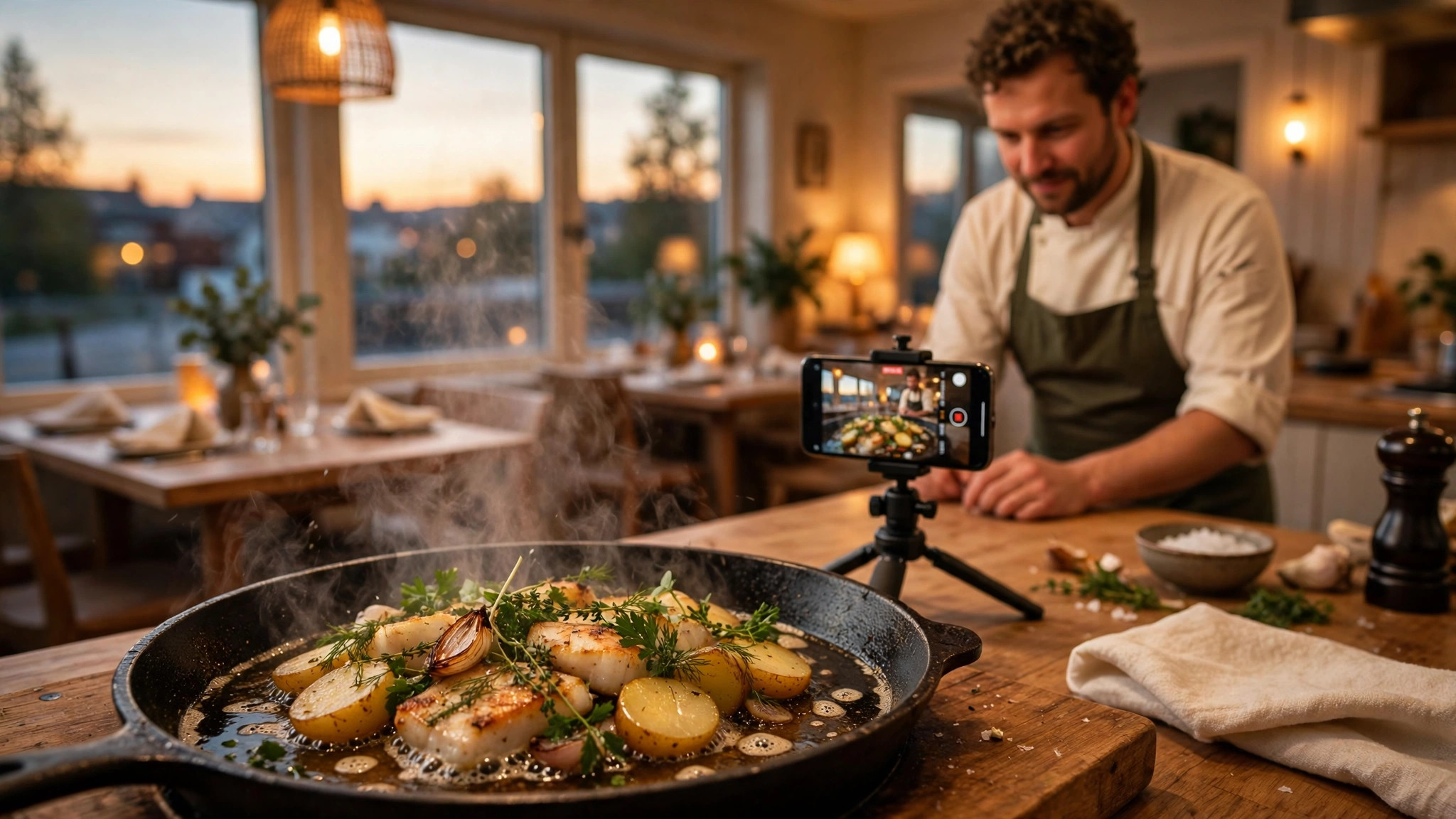
Key takeaways
- YouTube ads are a craving and awareness channel, not a same-hour booking machine — use them for openings, slow weekdays and seasonal menus.
- Expect roughly €0.01–€0.30 per view and €4–€23 per 1,000 impressions in 2026; a first test of €300–€500 over two weeks is enough to learn from.
- Skippable in-stream ads are the best starting format: you only pay when someone watches 30 seconds, the whole ad, or clicks.
- Target a tight radius (3–5 km in a city), schedule around meal times, and send every click to your menu, ordering or booking page — never to a slow homepage.
- Judge the campaign on bookings and orders, not views. Track with UTM links and conversion tracking, and give it 7–14 days before deciding.
No other advertising format lets a small restaurant show its food moving, steaming and being enjoyed — for a few cents a view, to people who live ten minutes away. That is the promise of YouTube ads for restaurants, and it is real. The catch is that a meal is a low-ticket, impulse-driven purchase, so the economics only work when you are disciplined about who sees the ad, what they see, and what happens when they tap. This guide covers the whole chain: what YouTube ads can and cannot do, what they actually cost in 2026, which formats fit a restaurant, how to film an ad that converts, how to target only nearby diners, and how to tell whether the money came back.
What YouTube ads can — and cannot — do for a restaurant
YouTube is the second-largest search engine in the world, and its viewers watch with the sound on, on the biggest screen in the house or in their hand. For a restaurant, that combination is powerful: food is visual, appetite is emotional, and a ten-second clip of a cheese pull or a cocktail pour does something a photo and a paragraph cannot. YouTube ads can build local awareness faster than almost any other format, promote a new location or a new menu, and put your dining room in front of people who are already watching food, travel and local-life content. They are also unusually forgiving on budget: because skippable ads only charge you when someone actually watches, a modest daily spend buys thousands of local impressions.
What they cannot do is just as important. A YouTube ad will not reliably drive a reservation tonight the way a well-timed local search does. The person watching a recipe video at 21:00 is not deciding where to eat at 21:30 — they are deciding where to eat next Friday, or remembering your name when a friend suggests dinner. Treat YouTube as the channel that makes your restaurant top-of-mind, and let search, your Google Business Profile and your booking page close the sale. Restaurants that expect direct-response results from a branding format are the ones that conclude, wrongly, that "YouTube doesn't work".
When YouTube ads are the right tool
- A new opening or a new location. Nobody knows you yet, and video is the fastest way to show what the room feels like.
- A slow daypart you want to fill. A Tuesday lunch or a Sunday evening campaign, scheduled only around that meal, is the most measurable use of the format.
- A seasonal offer with a deadline. A Christmas menu, a terrace opening, a tasting-menu weekend — anything with a date attached gives the ad urgency.
- Building a local brand over months. A small always-on budget keeps your name in front of the same neighbourhood, so you are the obvious choice when the occasion comes.
How much do YouTube ads cost in 2026?
YouTube has no fixed price list. Every impression goes to auction, so your bid, your audience, your location and your format all move the price. That sounds vague, but published 2026 benchmarks give a usable range — treat these as estimates for planning, not quotes, because a restaurant targeting central Helsinki will pay more than one targeting a small town in Ostrobothnia.
| What you pay for | Typical 2026 range (estimate) | What it means for a restaurant |
|---|---|---|
| Cost per view (CPV), skippable in-stream | €0.01–€0.30 per view | You only pay when someone watches 30 seconds, the whole ad, or clicks. A skip in the first 5 seconds costs nothing. |
| Cost per 1,000 impressions (CPM) | €4–€23 per 1,000 | The price for bumper and non-skippable ads, where you pay for the airtime whether or not anyone liked it. |
| Daily budget | €10–€50 a day | Most small businesses set this range. Google's official minimum daily budget is €10. |
| First test budget | €300–€500 over 2 weeks | Enough local views to judge the result. Less than that and you are reading noise. |
| Video production | €0–€200 with a phone | A phone, a tripod and a clip-on microphone. A professional shoot typically starts around €500–€1,500. |
Do the arithmetic for your own town before you commit. At a cost per view of €0.10, a €20 daily budget buys about 200 real views a day from people near you — people who chose to keep watching past the skip button. Over a two-week test that is roughly 2,800 views. If even 2% of them tap through to your booking page and a quarter of those book, that is about 14 bookings from a €280 test. Those are illustrative numbers, not a promise — your food, your offer and your landing page move them a lot — but they show why the format is affordable, and why it is also easy to waste: the same €280 aimed at a whole country buys views from people who will never visit your city.
What moves the price up or down
Competition is the biggest lever. Bidding on diners in a capital city at Friday dinner time costs more than bidding on a weekday morning in a smaller town. Audience narrowness matters too: a tight radius with a food-interested audience costs more per view but far less per booking than a broad blast. Creative quality is the hidden lever — an ad people watch to the end earns better placement and lower effective costs. Season matters as well: December, Valentine's week and the weeks before Mother's Day are more expensive, because every restaurant is bidding for the same attention. If your budget is fixed, advertise in the quiet weeks, not the loud ones.
Budget rule of thumb
Never judge a YouTube campaign on two days of data. Google's own guidance for conversion-based bidding is to fund a campaign with at least 15 times your target cost per action and to hold for 7–14 days before changing anything. A €20-a-day test starved after 48 hours tells you nothing except that you stopped early.
The five ad formats, and which one fits a restaurant
YouTube sells video in several formats, and they are bought and billed differently. Choosing the wrong one is the most common beginner mistake — a restaurant that buys non-skippable ads to "make sure people watch" usually pays more to annoy more people. Start with the format that matches your goal, not the one that sounds most impressive.
Skippable in-stream ads — start here
The classic pre-roll: your video plays before, during or after another video, and the viewer can skip after 5 seconds. You pay per view — only when someone watches 30 seconds, watches the whole ad if it is shorter, or clicks. This is the best format for almost every restaurant, because the skip button does your targeting for you: people who don't care leave for free, and you only pay for the ones who stayed. Aim for 15–30 seconds. Shorter than 15 and you cannot say anything; longer than 30 and you are paying for attention most viewers won't give.
Non-skippable in-stream ads — use sparingly
These run 15–20 seconds and cannot be skipped, billed per 1,000 impressions. They guarantee the full message is seen, but they cost more and demand flawless creative — a weak non-skippable ad is the fastest way to make your restaurant's name irritating. Reserve them for a short, sharp message you are confident about, such as a single dish and a single date, and keep the frequency low.
Bumper ads — six seconds, one image
A fixed 6-second ad that cannot be skipped, billed per 1,000 impressions. Six seconds is enough for one memorable image — a cheese pull, a cocktail pour, a terrace at sunset — plus your name. Bumpers are a good companion to a longer campaign: the in-stream ad tells the story, the bumper keeps your name in front of the same people. They are a poor standalone format, because nobody books a table from six seconds of video.
In-feed ads — for people already searching
These appear as a thumbnail next to search results, on the homepage and beside related videos, and you pay when someone clicks. They work well when your video answers a question people actually search for — "best pizza in Tampere", "where to eat near the harbour" — because the viewer chose your thumbnail. If you already publish long-form video for your restaurant, in-feed ads are a cheap way to put that work in front of searchers.
YouTube Shorts ads — the vertical option
Shorts ads run between vertical short videos, and Demand Gen campaigns can place your vertical video there automatically. A 15–30 second vertical cut of your best dish works well here, especially for lunch and café audiences who scroll on their phones. Film vertically on purpose; a horizontal video cropped into a vertical slot looks like an afterthought and performs like one.
One practical note: Google has been moving video advertisers to Demand Gen campaigns, which replaced the old Video Action Campaigns — Google removed the ability to create new Video Action Campaigns in April 2025 and completed the migration in 2026. Demand Gen bids toward a booking, a form fill or a call rather than a raw view, and its reach extends beyond YouTube into Shorts, Discover and Gmail. If you follow an older tutorial that tells you to build a Video Action Campaign, use Demand Gen instead.
What to film: the 15-second ad that makes people hungry
Restaurants have the best raw material of any local business: food in motion, close up, well lit. Cheese pulling, sauce pouring, steam rising, a packed dining room at the hour you want to fill. Ten seconds of gorgeous food beats any amount of talking about your food. The structure that works for a 15–30 second restaurant ad is simple, and it is worth following exactly.
The first 5 seconds decide everything
The viewer can skip after 5 seconds, so your best dish must be on screen in the first 2. Open on the food at its best moment — the dip, the sear, the pour — not on your logo, not on the outside of your building, and never on a talking head introducing themselves. Your logo and your name belong at the end, when the viewer has already decided they are hungry. Test this brutally: show the first 5 seconds to someone who has never seen your restaurant and ask them what you sell. If they hesitate, reshoot.
The middle: show the room at the hour you want to fill
A Tuesday lunch ad should show a Tuesday lunch: daylight, people enjoying themselves, plates arriving. A dinner ad should show evening light and a full room. Viewers buy the experience as much as the dish, and the room is what separates you from a delivery app. Keep the shots moving — three to five shots in 15 seconds is about right — and let the sound do work: sizzle, clink, laughter, music with a pulse. Most viewers watch with sound on, which is one of YouTube's advantages over silent social feeds.
The last shot: your front door, your name, one action
End with your front door filmed from the street, so people nearby recognise it when they drive past, then your name and a single call to action: book a table, order takeaway, or see the menu. One action only. An ad that asks viewers to book, follow, download and visit the website asks them to do nothing. Send the click to the page that matches the promise — the menu, the ordering page or the booking page — not your homepage. Craving is fleeting, and every extra tap loses a share of it.
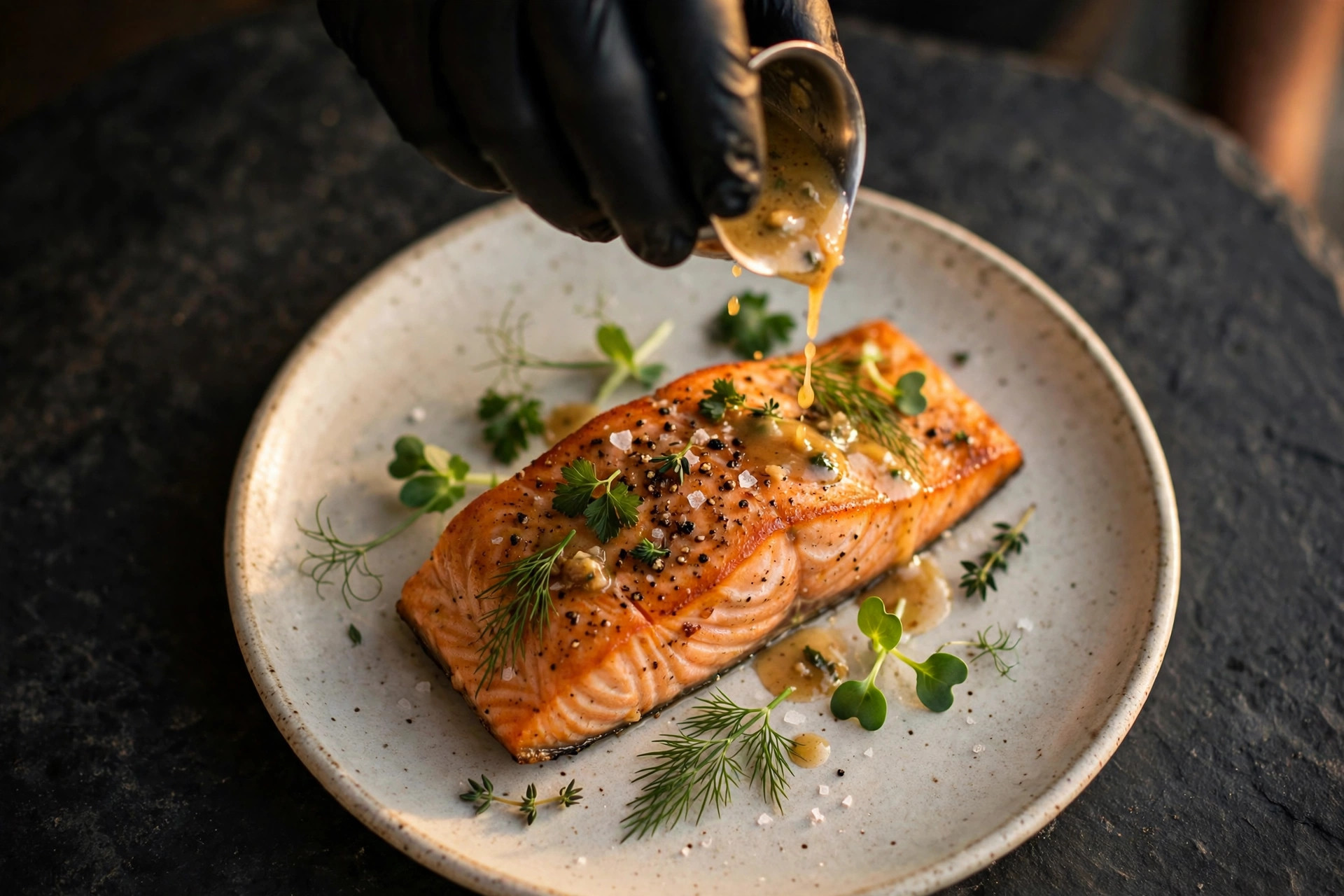
What to film, shot by shot
- Shot 1 (0–2 s): the dish at its best moment — the pull, the pour, the steam.
- Shot 2 (2–6 s): the dish being served or eaten, a genuine reaction.
- Shot 3 (6–11 s): the room at the hour you want to fill, people enjoying themselves.
- Shot 4 (11–15 s): your front door from the street, your name, one call to action.
You do not need a crew for this. A modern phone, a small tripod, a clip-on microphone and a window are the whole starter kit — roughly €100–€200 if you own the phone already. Film during a real service, not an empty room at 10:00, and shoot each dish three times so you can pick the best take. If you already have good food photography from your phone, you know the hardest part already: light, angle and a clean plate.
Targeting: how to reach only the diners near you
Targeting is where restaurant YouTube campaigns are won or lost. A meal is a local purchase: almost nobody crosses town on a whim for dinner, and nobody flies in from another country because of a 15-second ad. Every euro spent showing your ad to someone who cannot realistically visit you is a euro thrown away, so the radius is the first setting to get right and the last one to widen.
Start with a tight radius
In Google Ads you can target a radius around your address. For a city restaurant, start with 3–5 km; for a smaller town, 10–15 km. That sounds small, and it is meant to be: your regulars and your realistic new guests live inside it. Only widen the radius for a genuine destination offer — a tasting menu, a Christmas party package, a well-known speciality people travel for — and even then, widen it deliberately and watch whether bookings actually follow. A wider radius buys cheaper views and worse results, which looks like success in the dashboard and feels like failure in the dining room.
Layer audiences on top of location
Location alone is not enough. Layer on Google's audiences: people interested in dining out, food and drink, or travel to your area; people who have searched for restaurants or recipes recently; and, most valuable of all, your own data — past website visitors and past bookers uploaded as a customer list, used for retargeting and for finding similar people. Retargeting deserves a special mention: someone who visited your booking page and left is the warmest audience you own, and a short YouTube reminder ad is often the cheapest booking you will ever buy. Keep it polite — cap how often the same person sees the ad — and never retarget people who already booked.
Schedule around meal decisions, not around the clock
People decide where to eat in narrow windows: roughly 10:00–13:00 for lunch and 16:00–19:00 for dinner. Schedule your ads into those windows and you spend your budget when the decision is being made. A lunch campaign running at 23:00 is paying to remind people of a meal they cannot eat for another twelve hours. Use dayparting from the start, and if you run a weekend-only offer, run the ads only on the days that lead into it. The same logic applies to the calendar: start a Valentine's campaign in January, a Mother's Day campaign in April, a terrace campaign in March — people plan a special meal early, and the restaurant that reaches them first often gets the booking.
The same logic applies to the calendar: start a Valentine's campaign in January, a Mother's Day campaign in April, a terrace campaign in March — people plan a special meal early, and the restaurant that reaches them first often gets the booking.
Setting up your first campaign in Google Ads
You run YouTube ads through Google Ads. Most of the complexity is optional, and the defaults are mostly sensible for a first campaign.
Before you open Google Ads
- Upload the video to your YouTube channel as unlisted or public. Ads run from a video on your channel, so this is a prerequisite, not an afterthought.
- Decide the destination. The booking page, the menu, or the ordering page — the page that fulfils the promise in the ad. Check it on a phone: it must load fast and the booking button must be visible without scrolling. Our guide to landing pages for restaurant ads covers the structure that converts.
- Set up conversion tracking. In Google Ads, define a conversion for a completed booking or order, and tag the thank-you page. Without this, you are flying blind and Google cannot optimise toward bookings.
- Add UTM parameters to the ad link (for example utm_source=youtube&utm_medium=cpc&utm_campaign=tuesday-lunch) so the visits show up clearly in Google Analytics.
The campaign itself, in order
- Create a Demand Gen campaign and choose "bookings" or "online orders" as the goal.
- Set the daily budget — €20 a day is a sensible start — and a two-week end date so the test cannot run away from you.
- Set the location to a radius around your address (3–5 km in a city) and exclude everywhere else.
- Add your audiences: dining-out and food-and-drink interests, plus your website visitors for retargeting.
- Set the schedule to the meal windows that matter (10:00–13:00 and 16:00–19:00).
- Upload the video, add a headline and a call to action, and link it to the booking or ordering page.
- Launch, then leave it alone for at least 7 days. Early data is noise; changing bids on day two is the most common way to ruin a good test.
If the Google Ads interface feels like too much, managed services exist that build and run a restaurant's YouTube campaign from a single video and a Google listing, with promotions starting from around €50. They are a reasonable shortcut for a first test — but keep ownership of the Google Ads account and the data, whoever runs the campaign.
YouTube ads vs Facebook ads for restaurants
Every restaurant marketer eventually asks this, and the honest answer is that the two platforms do different jobs. Facebook and Instagram are usually the stronger choice for a small local restaurant; YouTube is the stronger choice when you have real video and a brand to build. The comparison below is drawn from how the platforms actually behave for local businesses in 2026, not from their sales pages.
| Factor | YouTube ads | Facebook / Instagram ads |
|---|---|---|
| Buying tool | Google Ads | Meta Ads Manager |
| Typical cost | About €0.01–€0.30 per view; €4–€23 CPM (estimates) | About €8–€14 CPM in many 2026 benchmarks (estimate) |
| Audience mindset | Watching or searching for a topic, sound on | Scrolling a feed, sound often off |
| Local targeting | Radius around your address, plus audiences | More precise: exact radius, interests, behaviours, lookalikes |
| Creative | Video only, 6–30 seconds and longer | Images, video, carousels, collections |
| Strength | Awareness, craving, search-intent audiences | Direct response, retargeting, cheap bookings |
| Weakness | Weak same-hour intent; needs good video | Attention is shallow; creative fatigue is fast |
| Measurement | Google Ads conversion tracking | Meta Pixel and Conversions API |
The practical conclusion most independent restaurants reach is this: start with Meta if your budget is small, your creative is mostly photos, or you want bookings quickly. Start with YouTube if you have a clear video, your guests research before choosing, or you want to build demand that later converts through search and Meta. Many restaurants end up running both — YouTube to build the craving, Meta and search to catch the booking — and that is a sensible division of labour, provided each campaign is judged on its own job. Our full comparison of Google vs Meta ads for restaurants goes deeper into the same trade-off from the search side.
One comparison trap to avoid: do not compare a YouTube cost per view with a Meta cost per impression and conclude YouTube is cheaper. They are different units. Compare the cost per booking or the cost per order on each platform, over the same two weeks, with the same offer.
Measuring results: what to track when bookings are the goal
YouTube makes measurement both easy and misleading. The dashboard is full of numbers that go up — views, view rate, impressions — and almost none of them is the number that matters. A video with 50,000 views from people who will never visit your city is worth less than a video with 500 local views and five bookings.
The three numbers that matter
- Cost per booking or order. Total spend divided by bookings or orders that came from the campaign. This is the verdict. Everything else is diagnosis.
- Click-through rate to the booking page. If people watch but never tap, the video entertains but the offer or the call to action is weak.
- View rate and average view duration. A view rate below 20% or an average watch time under 5 seconds means the opening is wrong — reshoot the first shot, not the whole ad.
Attribution is imperfect — plan for it
Attribution is imperfect — plan for it. Someone sees your ad on Tuesday, searches your name on Friday, and books through Google: the booking is real, but the ad platform may not get the credit. Watch the trend, not a single week: bookings from your postcode, branded searches for your restaurant name, and direct visits to your booking page, before and during the campaign. UTM links and conversion tracking catch the direct path; the lift in branded search catches the rest. For a deeper method, see our guide to how restaurants calculate advertising ROI.
Once a week, spend ten minutes on three checks: spend and cost per booking in Google Ads; bookings and orders in your booking system, tagged by source; and branded searches in Google Search Console. If cost per booking is falling and bookings are rising, raise the budget by 20% and repeat. Keep the routine boring. Boring and weekly beats brilliant and never.
Seven mistakes that burn a restaurant's YouTube budget
Most wasted YouTube spend comes from a short list of avoidable errors. Check your campaign against each one before you raise the budget.
- Targeting the whole country. A national radius buys cheap views from people who will never eat with you. Keep the radius tight and earn the right to widen it with bookings.
- Leading with your logo. The first 5 seconds are for your best dish. A logo intro is an invitation to skip — and a skipped ad still cost you the impression.
- Sending clicks to the homepage. Craving is fleeting. Link to the menu, the ordering page or the booking page that matches the ad's promise.
- Judging the campaign after two days. Google needs 7–14 days of data to optimise, and so do you. Early numbers are noise.
- Running one video forever. The same ad shown to the same people stops working. Refresh the opening shot every few weeks, and retire any video whose view rate has fallen by half.
- Advertising with a broken landing page. A slow booking page or a menu that only exists as a PDF wastes every click you paid for. Fix the destination before you buy the traffic — a fast website that presents your menu and booking clearly is part of the campaign, not an afterthought. That is exactly what a PowerfulWebsite site is built to do: the build is free, and plans run €59–€239/mo including hosting, maintenance and updates, with the Restaurant plan at €239/mo including the ordering system.
- Comparing the wrong numbers. Cost per view is not cost per booking. Judge the campaign on bookings and orders, and compare platforms on the same metric.
Avoid these seven and a modest YouTube budget does honest work: it puts your food in front of the people most likely to eat it, at a price a small restaurant can afford, while you run the dining room. The restaurants that get the most from YouTube ads are not the ones with the biggest budgets. They are the ones with the tightest radius, the hungriest opening shot, and the shortest path from the ad to the table.
Frequently asked questions
How much do YouTube ads cost for a restaurant?
Most small restaurants can test YouTube ads for €10–€50 a day. Published 2026 benchmarks put skippable in-stream ads at roughly €0.01–€0.30 per view and €4–€23 per 1,000 impressions, with the exact price set by auction. Google's minimum daily budget is €10. A sensible first test is €300–€500 over two weeks, targeted at a tight radius around your restaurant, so you buy enough local views to judge the result.
Are YouTube ads worth it for a small restaurant?
They are worth it for specific jobs: a new opening, a slow weekday you want to fill, a seasonal menu, or building awareness in your neighbourhood. They are a poor tool for filling tonight's tables, because video builds craving and memory rather than same-hour intent. If your goal is bookings tonight, search ads and your Google Business Profile usually convert better for the same money.
How long should a restaurant YouTube ad be?
15 to 30 seconds is the sweet spot for a skippable in-stream ad. Put your best dish on screen in the first 2 seconds, show the dining room in the middle, and end with your street, your name and one action — book, order or see the menu. Six-second bumper ads work for a single memorable image, such as a cheese pull or a cocktail pour, but they cannot carry a message. Avoid 60-second ads unless you are telling a real story.
Can I target YouTube ads to people only near my restaurant?
Yes. In Google Ads you can target a radius around your address — for most restaurants 3–5 km in a city, or 10–15 km in a smaller town — and layer on audiences such as people interested in dining out or food and drink. You can also schedule ads around meal times, for example 10:00–13:00 for lunch and 16:00–19:00 for dinner, so your budget is spent when people are deciding where to eat.
Do I need a professional video for YouTube ads?
No. A 15–30 second clip filmed on a modern phone — your best dish at its best moment, a busy dining room, your front door from the street — outperforms a polished corporate video for most restaurants. Good light and clear sound matter more than a camera. What you do need is a real hook in the first 5 seconds, because viewers can skip and you only pay when they watch 30 seconds or the whole ad.
YouTube ads vs Facebook ads — which is better for restaurants?
Facebook and Instagram usually win for a small local restaurant: their geographic targeting is more precise, a single campaign covers both feeds, and the cost per booking is often lower. YouTube wins when you have strong video and want to build awareness — its viewers watch with sound on and with intent, and a view costs only a few cents. The practical answer is to test both with a small budget and keep the one that produces cheaper bookings.
Want a website that turns your videos into bookings?
PowerfulWebsite builds your restaurant's website free — you only pay from €59/mo. Everything included: domain, hosting, maintenance and updates, with your videos and menu presented to convert viewers into guests.
See the packages