Easter at Your Restaurant: Campaign Ideas
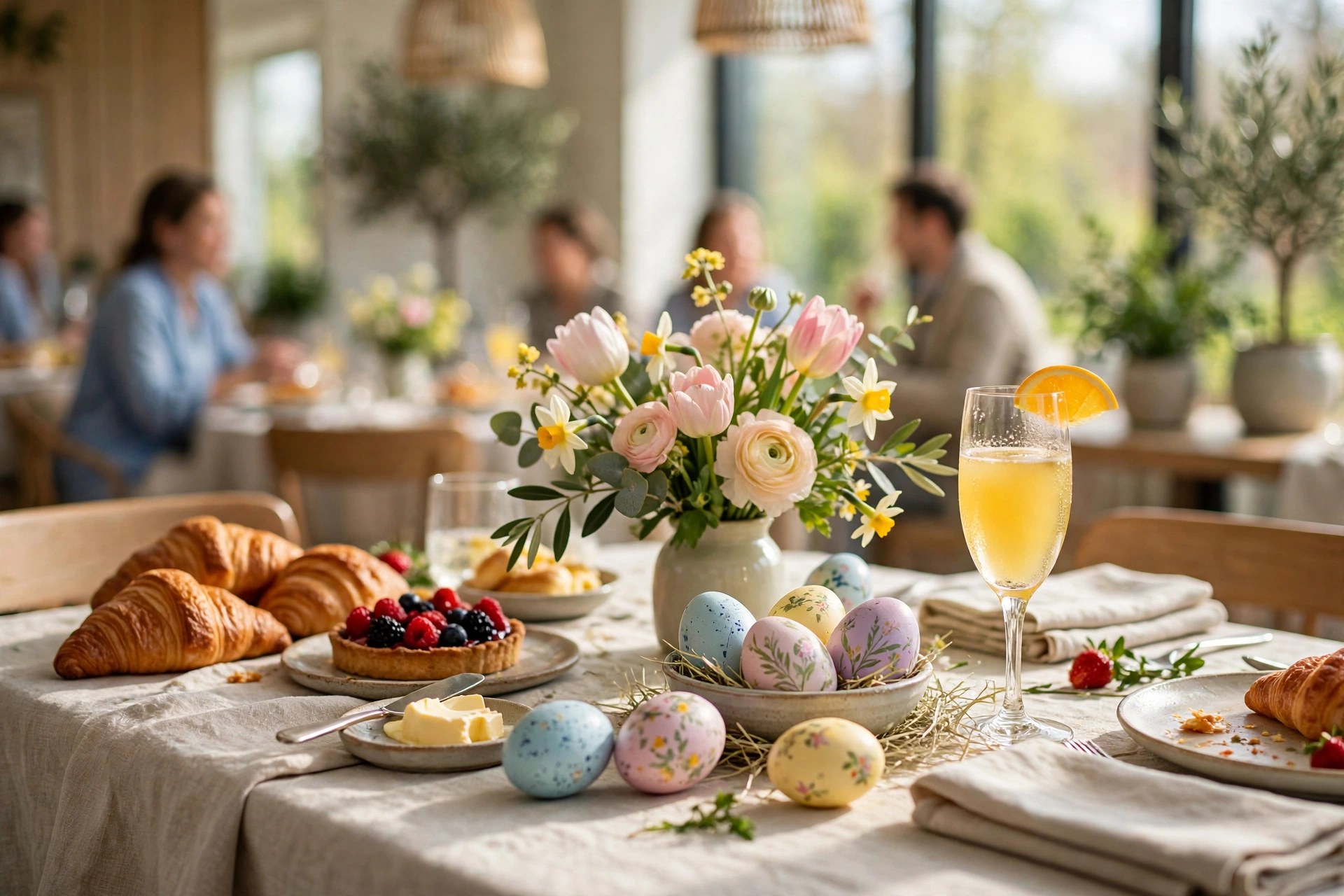
Easter is one of the strongest family dining occasions of the year — industry data ranks Easter Sunday among the top holidays for family restaurants, and a well-executed Easter brunch can generate two to three times a normal Sunday's revenue. The restaurants that win Easter do three things: they open bookings early, they run a simple prix fixe or buffet format the kitchen can execute at volume, and they market one clear offer for six weeks instead of improvising in the final days.
Key takeaways
- Easter ranks among the top holidays for family dining; brunch is the format with the broadest demand and the best revenue per seating.
- Start the campaign 5–6 weeks before Easter Sunday; guest spending peaks in the final two weeks, but family planners book 3–4 weeks out.
- Run one clear format — prix fixe, buffet or à la carte — and cost it to 28–33% food cost from real supplier prices.
- Typical Nordic Easter brunch pricing runs €39–89 per adult (estimates); add a €12–20 beverage package to lift the average ticket.
- Take deposits or full prepayment for Easter bookings — holiday no-shows are the most expensive kind.
- Market on your own channels first (website menu page, Google Business Profile, email); paid ads only fill the last tables.
Easter sneaks up on restaurants. One week it is a date on the calendar, the next it is the weekend — and the restaurants with full books are the ones that started six weeks ago. The good news: Easter is one of the most forgiving holidays to market. The demand is structural (families gather, people eat out), the format is proven (brunch), and the playbook below has been refined by thousands of restaurants. You do not need a big budget. You need a clear offer, an early start, and operations that can handle the rush.
This guide covers the full Easter campaign: why the holiday matters commercially, which format to run, how to price it, the week-by-week marketing timeline, family-friendly ideas, and the operational details — deposits, staffing, preorders — that separate a profitable Easter from a chaotic one. For the year-round rhythm behind holiday campaigns, see our seasonal advertising calendar.
Why Easter deserves a campaign
Not every holiday deserves a full campaign. Easter does, for three measurable reasons.
First, the demand is concentrated and family-driven. Industry analyses of restaurant holiday performance consistently place Easter Sunday among the top three holidays for the family dining segment — families brunch together after morning services or gatherings, in large multi-generational groups. Large groups mean high covers per booking and strong average tickets: grandparents order the good wine, kids order dessert.
Second, the revenue multiple is real. Operators report that a well-executed Easter brunch generates two to three times a normal Sunday's revenue. That multiple comes from three compounding effects: higher prices than a normal brunch (holiday pricing is expected), higher occupancy (holiday demand fills every seat), and higher spend per guest (beverage packages, desserts, celebration mindset).
Third, Easter converts seasonal guests into regulars. The "once-a-year" Easter crowd — relatives visiting from out of town, lapsed regulars, first-timers drawn by the occasion — is a prospecting opportunity. A great Easter experience, followed by a well-timed "thanks for coming" email, turns holiday traffic into repeat business. This is the same logic behind treating every holiday as a customer-acquisition event, not just a revenue event.
Easter vs the other spring holidays
How does Easter compare? Valentine's Day drives the highest per-couple spend but in small parties and a single seating; Mother's Day is the overall top family dining day in most markets. Easter sits just below Mother's Day for family dining but has a structural advantage: the four-day Easter weekend (Good Friday through Easter Monday in the Nordics) gives you multiple revenue days, not one. Smart operators run the brunch on Sunday, a family dinner format on Saturday, and takeaway bundles across the whole weekend.
The Easter brunch anchor
If you run one Easter offer, make it brunch. It is the format with the broadest demand, the simplest operations, and the clearest marketing story. Here is what a strong Easter brunch looks like.
The menu: spring-forward and familiar
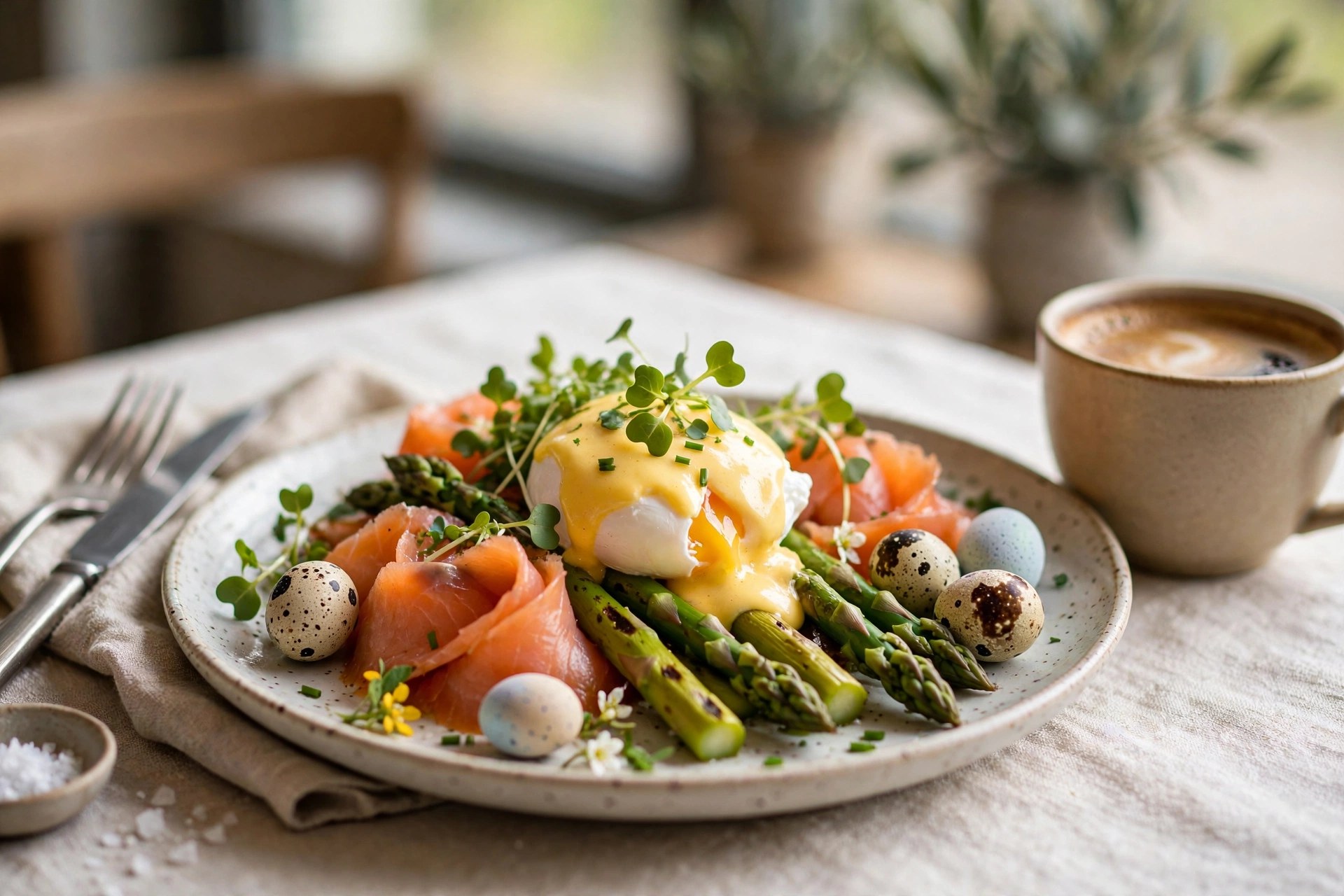
Easter brunch menus work best as a tight set of 8–12 items that feel like spring: asparagus, peas, spring lamb, fresh herbs, citrus, strawberries, rhubarb. Include one indulgent signature (a brioche French toast, a seafood Benedict), one lighter option (a spring salad, a cured-fish plate — very Nordic), a solid egg dish, and a proper dessert. Familiar formats with seasonal ingredients outperform adventurous tasting menus at brunch: guests are celebrating, not exploring.
Two seatings, tight turns
Run two seatings (e.g. 10:30 and 13:00) with 90-minute table times. Easter brunch guests arrive on time — family logistics demand it — which makes seating discipline easier than on a normal Sunday. Publish the seating times at booking; it sets expectations and protects your turn rate. With two full seatings at holiday prices, the maths gets attractive fast.
The beverage package
A fixed-price drinks add-on — sparkling wine, mimosas or a spring spritz, typically €12–20 per person (estimates) — is the highest-margin line on the Easter P&L. Take-up rates of 40–60% are normal when the package is presented at booking rather than at the table. Present it as part of the offer ("brunch €59, with bubbles €74") rather than an upsell; framing it as a package doubles conversion versus asking tableside.
The brunch maths (illustrative)
60 seats × 2 seatings × €59 average = €7,080 in brunch revenue for the day, before beverage packages. At 50% take-up on a €15 drinks package, that is another €900 — nearly pure margin. Compare that with a normal Sunday brunch at €29 average and single seating: the Easter multiple is not a myth, it is arithmetic.
Prix fixe vs buffet vs à la carte
Three formats dominate Easter service. Each has a clear profile — pick the one that fits your kitchen, your room and your clientele, and commit to it. Running a "bit of everything" is how Easter goes wrong.
| Format | Best for | Typical adult price (Nordics, est.) | Operational notes |
|---|---|---|---|
| Prix fixe (3 courses) | Bistros, neighbourhood restaurants | €45–69 | Easiest kitchen flow; predictable prep; simplest costing |
| Buffet | Hotels, large rooms, family venues | €59–89 | Highest perceived value; needs volume to control waste; strong visual marketing |
| À la carte + specials | Cafés, fine dining with regulars | €39–59 avg. spend | Lowest commitment; hardest to forecast; weakest marketing story |
Prix fixe is the default recommendation for most independent restaurants: the kitchen knows exactly what to prep, the food cost is calculable to the euro, and "three-course Easter brunch, €59" is a marketing message that fits in a subject line. Buffet wins on perceived abundance and photographs beautifully, but waste discipline is critical — price it 15–20% above your computed cost to cover the overproduction buffer. À la carte suits venues where Easter is a normal service day with a spring twist, but it gives you the weakest story to market and the hardest prep to forecast.
Pricing your Easter offer
Easter pricing follows the same discipline as any seasonal menu: cost from invoices, target a food-cost band, and price with confidence. The holiday gives you pricing power — use it honestly.
The price bands (Nordic estimates)
Based on published 2026 Easter menus across Nordic cities, adult brunch pricing clusters as follows: neighbourhood bistro prix fixe €45–59, city-centre buffet €65–89, fine-dining Easter lunch €75–110. Children's prices typically run at half the adult price, with under-4s free — the family maths has to work or parents book elsewhere. These are market observations, not prescriptions: your price must clear your own food-cost target of 28–33% with your suppliers and your volumes.
Early-bird incentives beat discounts
Do not discount Easter — discounting a high-demand day trains guests to wait. Instead, reward early commitment: a complimentary glass of sparkling wine for bookings made three weeks out, or a small Easter gift (chocolate, a jar of house pickles) for the first seating. The incentive pulls demand forward, which is what you actually need: early bookings let you plan production and staffing with confidence. This is the same pre-order logic that protects margins across all holiday trading.
Price the whole weekend
Easter is four days in the Nordics. The Sunday brunch is the anchor, but the weekend has more inventory: a Good Friday fish-forward dinner (tradition does the marketing), a Saturday family dinner, Easter Monday takeaway bundles for the drive home. Each day gets its own simple offer; together they turn one busy Sunday into a four-day revenue event.
The six-week campaign timeline
Consumer spending data for Easter shows purchase activity peaking in the two weeks before the holiday — but restaurant bookings lead spending. Family planners choose the venue three to four weeks out. Your campaign must therefore open bookings early and build the marketing wave toward the spending peak.
Week 6–5: open bookings, announce
Publish the Easter menu page on your website with the format, price, seating times and booking link. Post the announcement on your Google Business Profile and social channels. Send the first email: "Easter bookings are open." Keep it short — the offer is the message.
Week 4–3: reveal the menu
Publish the actual dishes with photography. This is the content that gets shared in family group chats — the real decision-making unit for Easter. A second email ("the Easter menu is here") and social posts of the hero dishes. Start the early-bird incentive.
Week 2: the push
Spending peaks now. Post daily-ish on social (stories count), run a tightly geo-targeted ad if budget allows, email the list again with seating availability ("second seating still has tables"). Update the website with live availability — "sold out" on the first seating is social proof, not a problem.
Holy Week: confirm and fill
Send booking confirmations with practical details (arrival time, parking, kids' arrangements). Release a small number of held-back tables for the final push. Post "last tables" content. Then stop marketing and execute.
Easter Monday: the follow-up
Thank-you email to every Easter guest within 48 hours, with a soft incentive to return ("spring menu launches in May — book ahead"). This is where Easter's customer-acquisition value is captured. Add the guests to your list properly (consent, GDPR) — our GDPR-safe list-building guide covers the mechanics.
Families, kids and the Easter experience
Easter is the most family-oriented dining occasion of the spring. Restaurants that design for kids — genuinely, not grudgingly — win the parents' booking and the grandparents' approval.
Design the kids' experience, not just a kids' menu
A proper children's Easter menu at half price is table stakes. The differentiators are experiential: an Easter egg hunt in or around the restaurant (ticketed or free with brunch), egg-decorating kits at the table, a visit from the Easter bunny for photos, colouring sheets with an Easter theme. These cost little and generate the photos parents post — which is your marketing, done by your guests. Our kids' menu guide covers the food side in depth.
Think about the adults too
Not every Easter guest has kids. A quiet corner for couples, an adults-oriented Saturday evening format (Easter dinner with a spring tasting menu), or simply a well-managed room where the egg hunt does not overrun the dining space — segmentation keeps everyone happy. If space allows, run the family brunch and an adults' seating as separate products with separate marketing.
The takeaway bundle
Easter travel is real: guests drive to family gatherings and need something to bring. An Easter takeaway bundle — a cake, a box of pastries, a ready-to-heat side dish — sold with a preorder deadline captures spending from people who will never sit in your dining room. Price bundles at €25–45 (estimates), require preorder by Wednesday of Holy Week, and make pickup brutally simple: a marked table, a name list, no queue.
Marketing channels that fill Easter tables
Easter marketing works best as a stack: owned channels first, social second, paid last. Each layer has a job.
Your website: the menu page
The Easter menu page is the single most important marketing asset of the campaign. It must show the format, the price, the dates, the seating times and a working booking button — above the fold, on mobile. This is the page Google ranks when someone searches "easter brunch [your city]", the page AI assistants quote, and the page every social post and email links to. If updating it requires a developer ticket, fix that before Easter, not during it — PowerfulWebsite builds restaurant sites where seasonal pages go live in minutes.
Google Business Profile
Post the Easter offer on your profile the day bookings open, add Easter opening hours (including exceptions — guests check this on holidays more than any other time), and upload the brunch photos. Holiday-weekend "is it open?" searches are high-intent; the restaurants with complete profiles capture them. Our Google Posts guide has the format details.
Email: three sends, no more
One announcement (bookings open), one menu reveal, one final-availability reminder. Three well-timed emails outperform a drip campaign for a single-date event — urgency is built in. Subject lines with "Easter" and a specific detail ("Easter brunch menu is here") consistently beat generic ones. Keep the list clean and consented; see how to lift email open rates for the tactics.
Social and paid
Organic social carries the story: behind-the-scenes prep, the egg hunt setup, the first brunch service. Short video outperforms static images for event content — our 30 Reels ideas include holiday formats worth stealing. Paid ads enter only in the final two weeks, tightly geo-targeted, with one job: fill the remaining tables. No ad spend compensates for a missing menu page.
The channel priority order
Website menu page → Google Business Profile → email list → organic social → paid ads. Each layer only works if the previous one exists. Most Easter campaigns that "didn't work" skipped straight to social posts linking nowhere.
Deposits, gift cards and no-show defence
Holiday no-shows are the most expensive kind: the demand was real, the turn-aways were real, and the empty table cannot be resold at 11:00 on Easter Sunday. Defence is a system, not a hope.
Take money at booking
For prix fixe Easter formats, full prepayment per person is standard and expected — guests understand that a holiday set menu is a commitment. For à la carte Easter service, take card details with a clear no-show charge (e.g. €25–40 per person, stated at booking). Either way, the policy must be visible before the guest confirms, not buried in terms. Our deposits and gift cards guide covers the wording and the legal framing.
Confirm twice
Automated confirmation at booking, then a reminder 48 hours before with a one-tap "confirm or release" action. Guests whose plans changed will release the table if you make it easy — which is what you want. Every released table in Holy Week will resell; a no-show will not. See booking confirmation templates for copy that works.
Sell Easter gift cards in March
Easter gift cards sold in the weeks before the holiday do double duty: revenue now, and a guest who must visit later. Position them as the easy Easter gift ("give them brunch") and fulfil digitally — no plastic, no postage. Gift card buyers are also your warmest remarketing audience for the spring menu launch.
Operations, staffing and the Easter weekend
Marketing fills the tables; operations decide whether Easter was profitable or merely busy. The holiday has specific operational traps.
Staff the peak, protect the team
Easter weekend staffing must be confirmed weeks ahead — holiday shifts are unpopular, so publish the rota early and consider a holiday bonus or time-off-in-lieu trade rather than a last-minute scramble. Cross-train one extra person on the pass and one on the booking desk; Easter's failure points are always the handoff between front and back of house under load.
Prep for the format you chose
Prix fixe and buffet formats exist to make the kitchen's life predictable — so prep accordingly. Batch the components that improve with time (stocks, braises, desserts), par-cook what holds well, and build a mise en place list sized for two full seatings, not one. The most common Easter kitchen failure is prepping for a normal Sunday and discovering at 12:30 that the second seating has no backup.
Preorders for everything peripheral
Takeaway bundles, cakes, large-group extras — all preorder with a hard Wednesday cutoff. Preorders convert uncertain demand into committed production, which is the entire margin-protection strategy for holiday trading. Anything not preordered by the cutoff does not exist; say so kindly and firmly at the point of enquiry.
Debrief before May
In the week after Easter, write down what happened while it is fresh: covers per seating, average spend, food cost, no-show rate, what sold out, what was left over, which supplier delivered late. Archive the menu with its sales data. Next year's Easter planning — and your Christmas preparation, which starts sooner than you think — begins from this document.
Frequently asked questions
When should restaurants start marketing Easter?
Start 5–6 weeks before Easter Sunday. Consumer spending data shows purchase activity for Easter peaks in the two weeks before the holiday, but reservations for brunch open earlier — guests who plan family gatherings book 3–4 weeks out. Open bookings first, then build the marketing wave: announcement, menu reveal, early-bird incentive, final reminder.
How much should an Easter brunch cost?
In the Nordics, a restaurant Easter brunch typically runs €39–89 per adult depending on format and city, with children's prices roughly half. Prix fixe three-course brunches sit in the middle of that range; hotel-style buffets at the top. Price from your actual food cost — a well-costed Easter brunch should hold 28–33% food cost — and add a beverage package (€12–20 per person) to lift the average ticket.
Is Easter brunch or Easter dinner more profitable?
Brunch, for most restaurants. Easter is one of the top family dining occasions of the year, and brunch captures the post-service family crowd in a single high-turnover seating window. A well-executed Easter brunch can generate 2–3 times a normal Sunday's revenue. Dinner works for fine-dining rooms with an established evening audience, but brunch has broader demand.
Should restaurants require prepayment for Easter bookings?
For Easter brunch, yes — a deposit or full prepayment per person is standard practice at the restaurants that do this well. Holiday no-shows are expensive because the demand is real: every empty Easter table is a table you turned away. Take card details at booking as a minimum; full prepayment for prix fixe formats is cleaner and most guests expect it on holidays.
How do you handle Easter marketing on a small budget?
Your own channels do the heavy lifting: the Easter menu page on your website, a Google Business Profile post, one email to your list, and organic social posts. Paid ads only make sense once the organic basics are live — a small, tightly geo-targeted campaign in the final two weeks can fill the last tables, but no ad spend fixes a missing menu page or a broken booking flow.
Want a website that fills your Easter brunch?
PowerfulWebsite builds your restaurant's website for free — you only pay from €59/mo. Everything included: domain, hosting, maintenance and updates. Publish your Easter menu in minutes, take deposits online, and get found on Google.
See the plans