Festival Season Restaurant Marketing: The Nordic Playbook
Every Nordic summer, hundreds of thousands of people descend on festival cities with open wallets and empty stomachs — and the restaurants that plan for it can make a festival week their best of the year. This playbook covers the festival calendar that matters, the high-speed festival menu, staffing the surge, partnerships with organisers, and the follow-up that turns one-time visitors into regulars.
Key takeaways
- A major festival week can deliver a month's worth of covers in days — but only for venues that plan menus, staffing and hours around it.
- Publish a dedicated festival page on your website 4–6 weeks out: hours, festival menu, walking time from the venue. It is what guests, Google and AI assistants all quote.
- Run a short, fast festival menu (6–10 dishes, under 12 minutes each) with late hours targeted at pre-event and post-event windows — not concert hours.
- Take deposits or prepayment on festival-weekend bookings: demand is high, no-shows are expensive, and prepaid covers let the kitchen plan.
- Capture every guest's contact details during the surge; a thank-you message within a week converts one-time visitors into returning regulars.
- Partner early: festival organisers, hotels and crew catering lock in months ahead — the conversation starts in winter, not June.
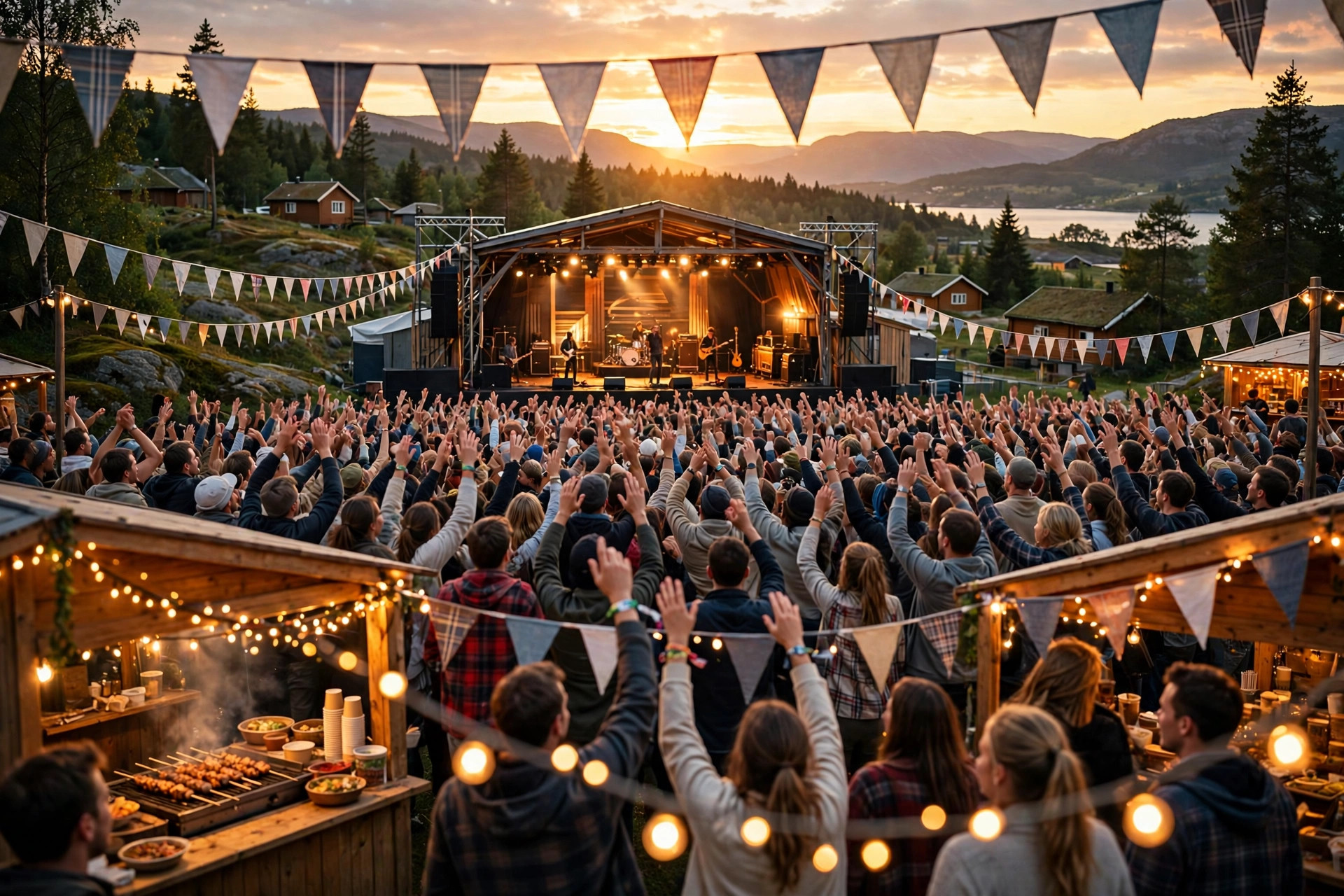
There is a particular week every summer when a mid-sized Nordic city doubles in population. The trains are full, every hotel is booked, and the streets fill with people who have travelled specifically to be there — for the music, the atmosphere, and, crucially, the food and drink around it. Roskilde Festival alone draws more than 130,000 people to a Danish town of 50,000. Flow fills Helsinki in August, Way Out West takes over Gothenburg, Øya packs Oslo's Tøyenparken, Ruisrock turns Turku's island into a city of its own. For restaurants in the blast radius, these are not normal weeks. They are the weeks the year's numbers are made — or missed.
This guide is for restaurant, café and bar owners in Nordic festival cities who want to ride the event wave deliberately instead of just surviving it. We cover the festival calendar worth planning around, how to become the warm-up and wind-down spot, the festival menu that keeps a kitchen fast under pressure, surge staffing, partnerships with organisers, the marketing channels that actually reach festival-goers, and the quiet weeks after — including the follow-up that converts a one-time visitor into a regular. For the year-round rhythm this fits into, see our seasonal advertising calendar for restaurants.
The festival economy: why one week matters
A festival week is not a busy week. It is a different market wearing your city's name for a few days: the customer base triples, the average age drops, the spending pattern changes (fast, social, late), and the normal rules of the week — quiet Mondays, the lunch crowd, the regulars' table — are suspended. Restaurants that treat it as "a busy week" staff a bit heavier and hope. Restaurants that treat it as a separate season redesign the offer for a different customer, and take a disproportionate share of the spend.
The economics are straightforward. Festival visitors are in spending mode: they have paid for tickets, travel and accommodation, and the marginal cost of a good dinner feels small against the trip. They eat in groups, they eat late, they order drinks, and — this is the part most venues undervalue — they are trying your city, not just your restaurant. A great festival-week experience does not just win a table for the night; it wins the "where should we eat" decision for every future visit, and the recommendation they give friends back home. The lifetime value of a festival guest acquired in July can dwarf the margin on their first meal.
The two mistakes that cost the most
The first mistake is doing nothing different: normal menu, normal hours, normal staffing, while the street outside carries ten times the footfall. The kitchen drowns, the wait stretches, the reviews mention the wait — and the revenue that walked past goes to the competitor who planned. The second mistake is doing everything bigger without focus: the full menu at full complexity with extra staff who do not know it, open all hours for thin returns. Festival weeks punish complexity. The winners simplify the offer, concentrate the hours, and execute a narrow plan brilliantly.
Know your festival calendar
Not every festival matters to every restaurant. The ones that move your numbers are the ones whose audience sleeps, eats and walks near you — and whose dates you have marked before the year begins. Build your own calendar in January; the partnership conversations (below) start in winter, and the marketing needs a 4–6 week runway.
| Festival | City | Typical timing | Why it matters for restaurants |
|---|---|---|---|
| Roskilde Festival | Roskilde, Denmark | Late June – early July | 130,000+ attendees; the town's population nearly triples. Non-profit, city-wide impact; 2026 edition reported as its most profitable yet. |
| Flow Festival | Helsinki, Finland | August | Urban festival in Suvilahti; design- and food-conscious crowd with high spend per head. Strong restaurant spillover across the city. |
| Way Out West | Gothenburg, Sweden | August | City-centre festival in Slottsskogen; sustainability-minded audience that rewards venues with credible food values. |
| Øya Festival | Oslo, Norway | August | Tøyenparken location; draws a national audience that eats out across Grünerløkka and the centre. |
| Ruisrock | Turku, Finland | Early July | Island festival; the city fills for the weekend. Late-night and pre-ferry dining windows are the opportunity. |
| Pori Jazz | Pori, Finland | July | Older, higher-spending audience than the rock festivals; dinner bookings, not just late-night volume. |
This is the headliner list, not the whole calendar. Below it sits a long tail that can matter more for a neighbourhood venue: city festivals, food festivals, pride weekends, harbour festivals, university start weeks. Map the events within a 20-minute walk of your door, not just the famous names — a 5,000-person street festival outside your window can beat a 50,000-person event across town. And note the audience differences: a jazz festival crowd books dinner tables; a rock festival crowd wants speed and late hours. One calendar, different plans.
Mark the crew and the build-up too
The audience arrives for the weekend, but the crew, artists, vendors and journalists arrive days earlier — and they eat every day, on expense accounts, at odd hours. The build-up week is quieter, easier to serve, and excellent for testing your festival menu under load before the real surge. Introduce yourself to the production office early; "we feed crews" is a pitch that lands with festival operations teams who are tired of solving catering at midnight.
Become the warm-up spot
The most valuable position in festival week is not "restaurant near the festival" — it is the place the evening starts or ends. The pre-event dinner (17:00–20:00) and the post-event late night (23:00–01:00) are the two windows when festival-goers actively choose a venue. During concert hours the streets empty; at midnight they flood back, hungry, social and ready to spend. Plan your hours, your menu and your staffing around these two peaks, and let the middle of the evening breathe.
The pre-event dinner play
Groups heading to a festival want three things: to eat well, to eat fast, and to know they will make the first act. Sell exactly that: a "festival dinner" — two courses, 45 minutes, out the door by 19:30, with the walking time to the venue printed on the menu. Take bookings with deposits, because a 19:00 table that no-shows during festival week is the most expensive empty table of your year. Publish the offer on your website's festival page and your Google Business Profile at least a month out — this is the search ("dinner before [festival] [city]") you want to own.
The afterparty, done legally
The post-event window is where bars and late-night kitchens win. If your licence allows it, the "official afterparty" partnership with the festival is the single highest-leverage deal available — but it is negotiated months ahead, not in June. Without it, the honest version works fine: late kitchen, a short late-night menu, DJs or playlists that match the festival's energy, and staff who understand that the 00:30 crowd wants food in ten minutes and a good story. Check noise rules and licence hours before you promise anything; the afterparty that gets shut down at 00:45 is worse than no afterparty.
The festival menu: speed and stamina
Your regular menu was designed for a normal week. Festival week needs a different instrument: shorter, faster, more forgiving, and priced for groups making quick decisions. The festival menu is a tactical menu — it exists for two to four weeks, it makes the kitchen fast, and then it retires with honour.
The rules of the festival menu
Six to ten dishes, no more. Every dish executable in under 12 minutes, most under 8. Shared plates and handheld formats dominate because festival groups share — a table of six ordering "three of everything to share" is faster to serve and higher in value than six individual decisions. One vegetarian centrepiece and one substantial meat/fish option, both prominent: mixed groups choose the venue where nobody is an afterthought, and the person with the dietary requirement decides where the group goes. Fixed-price sets (two courses at one price, three at another) speed up ordering, simplify the kitchen, and raise the average spend — the set menu is the festival week's margin engine. Price in round numbers; nobody wants to do maths at midnight.
Design for the line, not the photo
Choose dishes that survive a slammed pass: braises, flatbreads, rice and noodle bowls, skewers, anything that holds for ten minutes without dying. Retire the dishes that need precise timing, delicate plating or à la minute sauces — they are what break a kitchen at 300 covers. Cross-utilise ruthlessly: five dishes sharing three base preparations beats ten dishes with ten mise en place lists. And cost it honestly — festival week is not the time to discover that your bestselling sharing board runs at 45% food cost. Our menu pricing psychology guide covers the set-menu mechanics in detail.
Drinks: the quiet profit centre
Festival crowds drink — before, during (elsewhere), and after. A short festival drinks list with two batch cocktails, local beer and a simple spritz formula keeps the bar fast while the margins stay healthy. Batch the cocktails in the afternoon; free-pouring individual craft cocktails for a 200-person post-event wave is how bars lose both speed and money. Price water fairly and keep it visible; the venue known for looking after people at 1am earns the loyalty that lasts.
The 12-minute rule
Time every festival-menu dish during a test service before the week begins. Anything over 12 minutes from order to table under load gets cut or reworked — not because 13 minutes is a tragedy, but because in a slammed service the slow dishes compound: they occupy the pass, delay everything behind them, and turn a fast menu into a slow one. The test service also reveals the real bottleneck (often the fryer, the grill, or the single person who plates desserts) while there is still time to fix it.
Staffing for the surge
Festival week breaks normal rotas. The demand curve has two sharp peaks per day (pre-event and post-event), the volume is multiples of normal, and the customers are less forgiving of waits because they have somewhere to be. Staffing for the surge means staffing the peaks, protecting the team, and making temporary staff effective within hours.
Forecast from evidence, staff for peaks
Start with last year's festival week covers by day-part, add your pre-bookings, and adjust for this year's festival size and your marketing. Then build the rota around the two peaks — not the daily average. Split the team into two waves (early and late) so nobody works the full 16-hour day; exhausted staff make the mistakes that reviews remember. Put your strongest people on the two positions that set the pace: the door (managing the queue, the waitlist and expectations) and the pass (keeping the kitchen's rhythm). Everything else can be good rather than brilliant.
Make temporary staff useful in one shift
Festival week is when venues hire extra hands — students, seasonal workers, friends of the team. They will not learn your whole operation, so do not try: brief them on exactly three things — the festival menu (which is short, by design), the one upsell line, and the practical basics (toilets, card machine, where to stand). Pair each temp with a veteran, give them one station, and keep them there. A temp who runs food for six hours brilliantly is worth more than a temp who half-learns three jobs. And pay them properly and feed them well; the good ones come back next year, and experienced festival-week staff are worth their weight in gold.
Protect the core team
The surge is a sprint, and sprints need recovery built in. Schedule the days after the festival lighter, publicly thank the team (and mean it), and consider a real bonus tied to the week — even a modest one changes how the next surge feels. Burnout from one festival week can cost you a good employee for the whole autumn; the maths on that trade is never in your favour. Our group bookings guide covers the large-party mechanics that festival weeks run on.
Capture the one-time guest
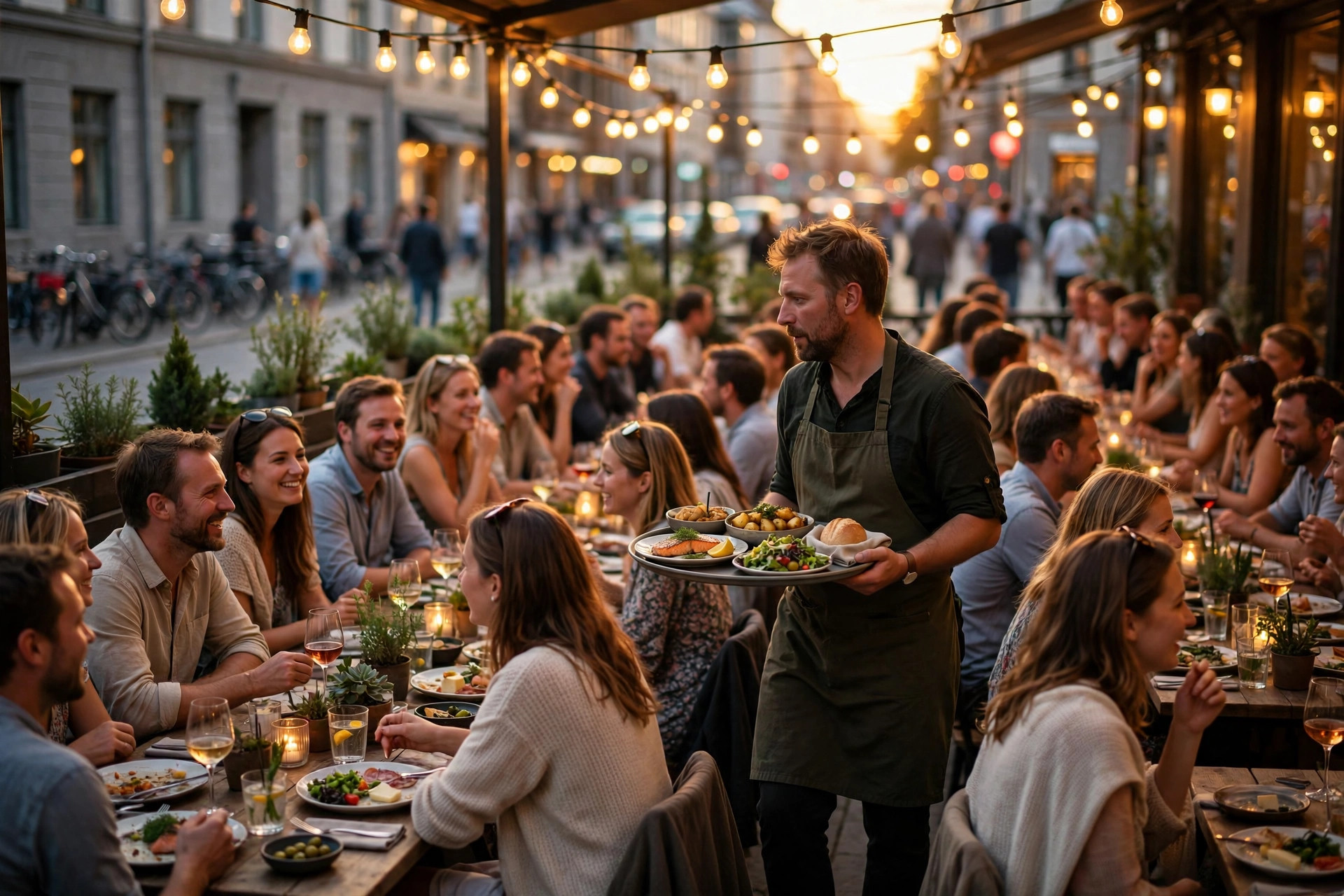
Here is the uncomfortable truth about festival weeks: most of the guests will never come back — unless you give them a reason and a reminder. A one-time visitor who leaves without a trace is a transaction. The same visitor with an email address, a loyalty signup or a booking account is an asset. The difference costs almost nothing to create and pays for years.
Make the capture effortless
Every touchpoint is a capture point if you design it that way. Wi-Fi login that asks for an email (GDPR-clean, with a clear opt-in). A QR code on the table and the receipt: "Join the list — first to hear about next year's festival menu" with a small immediate incentive (a free coffee next visit, 10% off a quiet Tuesday). Reservations that require a name, phone and email — which you should be doing anyway for festival-weekend deposits. The key insight: festival guests are in a generous, experience-collecting mood. Sign-up rates during festival week routinely beat normal weeks by multiples — but only if you ask, and only if the ask takes ten seconds.
The follow-up that converts
Within a week of the festival, send one message: thank them for coming, remind them of the night (a photo of the terrace at full tilt works), and give them a reason to return — a quiet-week offer, an invitation to the autumn menu launch, early access to next year's festival bookings. Keep it short, personal and single-purpose; this is not the newsletter, it is a thank-you with a door left open. Venues that do this consistently report the same pattern: a meaningful share of festival-week guests return within three months, and the ones who return once tend to stay. The alternative — silence — means the best week of your summer produces customers exactly once.
Partnerships that multiply
The highest-leverage festival marketing is not advertising — it is being officially part of the event. Partnerships multiply because they borrow the festival's audience, credibility and channels instead of buying attention one click at a time. They also lock in early: the serious conversations happen in winter.
The festival organiser
Festivals need food partners at every level: crew and artist catering, VIP hospitality, food-truck pitches inside the grounds, and the official afterparty venue. Each is a different conversation with a different decision-maker, and each is usually settled months before the lineup is even announced. Even without a formal deal, ask to be listed: many festivals publish "where to eat in [city]" guides for visitors, and inclusion is often just an email away. The pitch that works is operational, not poetic — capacity, speed, late hours, experience with volume — because the organiser's problem is logistics, not romance.
Hotels, hostels and the visitor infrastructure
Every festival visitor sleeps somewhere, and accommodation staff get asked "where should we eat?" dozens of times a day during festival week. A simple arrangement — a printed recommendation card at reception, a small commission or reciprocal deal, a dedicated booking link — puts your venue in front of guests at the decision moment. Hostels and budget hotels are especially valuable: their guests are the most price-aware and the most numerous, and they cluster in exactly the neighbourhoods where independent restaurants thrive.
Crew catering: the unglamorous goldmine
Feeding a festival crew is not glamorous — it is 200 covers at fixed times, simple food, invoiced properly — but it is the most predictable revenue of the whole season. Production teams plan catering months ahead and pay reliably, because a hungry crew is a festival's nightmare. If your kitchen can do volume simply, pitch the production office in spring: menus, capacity, delivery to site, dietary handling. One crew contract can underwrite the entire festival week's staffing cost before the first guest walks in.
Marketing channels that work
Festival-goers plan on their phones, decide late, and search with intent: "restaurants near [venue]", "late night food [city]", "dinner before [festival]". Your marketing job is to be the obvious answer to those searches — and to be visible in the festival's own channels, where attention is already concentrated.
Your website: the festival page
Publish a dedicated festival page 4–6 weeks before the event: the festival menu, festival-week opening hours, the pre-event dinner offer, walking/transit time from the venue, the booking link with deposit terms. This page is what ranks for the intent searches, what AI assistants quote when someone asks where to eat near the festival, and what your social posts and the festival's own listings link to. A festival page that only exists as Instagram stories is invisible to everyone searching with intent — and search intent is where the high-value bookings come from. If publishing a page like this on your current site is a project, fix that before festival season: PowerfulWebsite builds restaurant sites where a new campaign page goes live in minutes, on plans from €59/mo with the build free.
Google is the front door
Update your Google Business Profile for festival week: special hours, a festival post with the menu, fresh photos of the terrace at its best. Most festival dining decisions happen on Google Maps, within a kilometre of where the searcher stands — the venue with updated hours, a festival-relevant post and recent photos wins the tap. Our Google Business Profile guide covers the setup; festival week is when it pays off most visibly. Keep NAP consistency across every listing, because a wrong closing time on one platform during festival week costs real covers.
Social: show the surge, don't just announce it
Festival-week social content should feel like a broadcast from inside the best night in town: the terrace filling up, the kitchen at full speed, the 1am crowd happy. Post during the event, not just before it — real-time proof beats polished announcements for the audience deciding where to go right now. Use the festival's hashtags alongside your own, tag the location, and reshare guest posts immediately; user-generated content during the surge is more convincing than anything you produce. One caution: never fake the crowd. An empty terrace with a "what a night!" caption is the fastest way to lose credibility with an audience that can see through it.
The two-list rule for festival marketing
Run two lists in parallel from January: the outreach list (festival organiser, hotels, hostels, local press, influencers — contacted in winter and spring) and the content list (your festival page, GBP updates, email announcements, social proof — published 4–6 weeks out). Partnerships need months; content needs weeks. Venues that start both in June get neither.
After the encore: the quiet weeks
Every festival is followed by the same thing: a quiet week. The visitors leave, the city exhales, and the covers drop back to normal — or below, because the team is tired and the regulars stayed away from the crowds. The venues that plan for the comedown protect the year's numbers; the ones that don't give back a chunk of what the festival paid.
Schedule the recovery
Plan lighter rotas for the week after, give key people real days off, and do the deep clean and the maintenance that the surge postponed. This is also the moment for the team debrief while memories are fresh: what sold, what broke, which shift pattern worked, what the temps need to learn before next time. Write it down — the debrief document is next year's plan, and next year's festival dates are usually announced within months.
Market the quiet
The week after a festival is the perfect time to talk to your regulars: "the crowds are gone, your table is waiting" is an honest, appealing message, and a quiet-week offer to the email list fills the dip. It is also when the festival follow-up messages (above) go out to the captured guests. And start the next cycle: the midsummer and summer menu guide and our terrace season guide cover the long summer stretch that festival weeks punctuate — because in the Nordics, the season is short, and every week of it should work.
Frequently asked questions
How can a restaurant attract festival-goers?
Be findable and be fast. Publish a festival page on your website with opening hours, the festival menu and walking time from the venue; update your Google Business Profile with festival-week hours; run a shortened high-speed menu with late hours; and partner with the festival itself — official afterparty venue, crew catering, or a listed recommendation. Most festival-goers decide where to eat on their phones, within a kilometre of where they are standing.
Should restaurants extend opening hours during festivals?
Usually yes, but extend strategically rather than across the board. The profitable windows are pre-event dinners (17:00–20:00) and post-event late night (23:00–01:00), not the concert hours themselves when the streets empty. Model the extra labour cost against realistic covers: two strong extra hours beat six thin ones. Announce the extended hours on your website and Google profile at least two weeks ahead so they are indexed before the festival.
What is a good festival menu for a restaurant?
Short, fast and forgiving: 6–10 dishes max, every one executable in under 12 minutes, built around shared plates and handheld formats that suit groups. Price it simply — a set festival menu with 2–3 courses at a fixed price speeds up decisions and lets the kitchen run a tight line. Keep one vegetarian and one substantial option prominent; festival crowds are mixed groups and the person who cannot eat anything decides where the group goes.
How do you staff a restaurant for a festival weekend?
Forecast from last year's festival week plus your pre-bookings, then staff for the peaks (pre-event and post-event), not the average. Brief temporary staff on exactly three things: the festival menu, the upsell, and where the toilets are. Split the team into two waves so nobody works the full 16-hour day, and put your strongest people on the door and the pass — those two positions set the pace for the whole service.
How do you turn festival visitors into regular customers?
Capture the contact while the experience is fresh: Wi-Fi login, a QR code for the loyalty signup with a festival-week incentive, or booking-requiring details at reservation. Then follow up within a week — a short thank-you message with a quiet-week offer or an invitation to your next event. Festival visitors who had a great night are unusually open to returning; the restaurants that win them are the ones that ask.
Want a website that fills your tables all festival summer?
PowerfulWebsite builds your restaurant's website for free — you only pay from €59/mo. Everything included: domain, hosting, maintenance and updates. Publish a festival page in minutes, take prepaid bookings online, and let Google send you the crowds.
See the plans