Terrace Season Opening: A Marketing Guide
The restaurants that earn the most from their terrace start marketing it 6 to 8 weeks before opening day. A good terrace launch is not one social media post — it is a timed campaign across your website, Google Business Profile, email list and social channels, built around one opening event that gives people a reason to come on day one.
Key takeaways
- Start terrace marketing 6–8 weeks before opening day — guests plan spring outings early.
- Nordic terrace permits take 4–12 weeks; apply in January or February for a spring opening.
- One opening event (a launch night or weekend) beats a dozen generic "we're open" posts.
- Update your website and Google Business Profile before social media — that is where bookings come from.
- Track terrace revenue per available seat hour (RevPASH) to price the menu and justify the investment.
- Always market with a weather contingency: guests come when the plan is rain-proof.
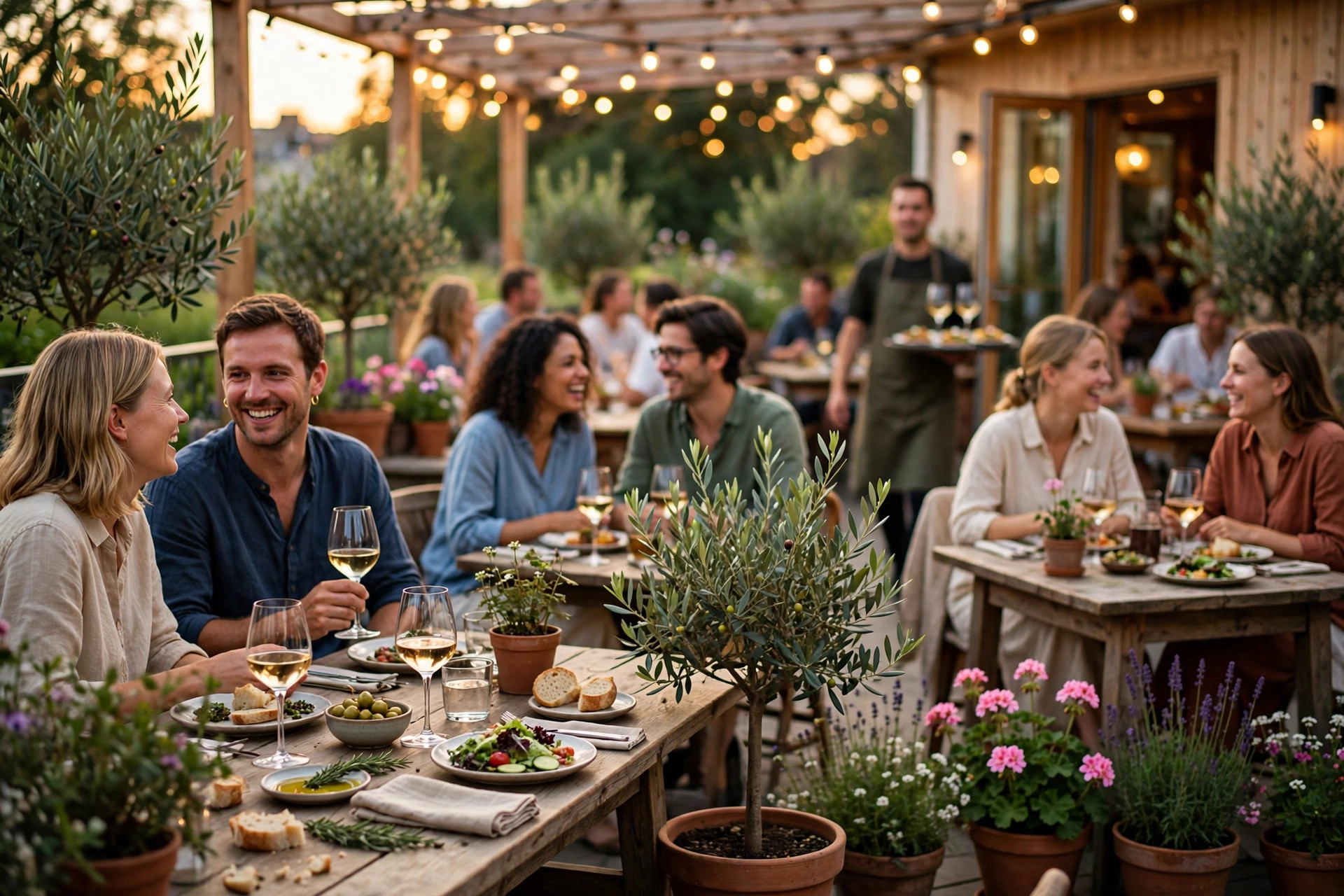
After a long Nordic winter, the first warm weekend of the year is a gold rush for restaurants with outdoor seating. But there is a difference between restaurants that happen to have a terrace and restaurants that treat the terrace as a product launch. The second group fills tables while the first group posts a photo of empty chairs and wonders why nobody came. This guide walks through the full playbook: the marketing timeline, the permits you need in Finland, Sweden and Norway, the launch event that fills day one, the digital groundwork, the pricing math and the weather contingency that protects it all. It is written for restaurant owners in the Nordics, where the terrace season is short, the weather is unreliable and the competition for the first sunny weekends is fierce.
When to start marketing: the 8-week countdown
The single most common mistake in terrace marketing is timing. Most restaurants start thinking about their terrace in the week it opens. By then, the guests you want have already made their spring plans, and your competitors' launch posts have filled their feeds. Guests decide where to spend the first warm weekends surprisingly early — survey data from the hospitality industry consistently shows that spring dining plans are made weeks in advance, not on the day the sun comes out.
Work backwards from your planned opening date. If you want the terrace open for the first week of May, your marketing starts in mid-March. That sounds early, but it is exactly right: it gives you time to tease, announce, remind and then launch, which is the rhythm every successful product launch follows. Here is a realistic countdown:
| When | Marketing action | Channel |
|---|---|---|
| 8 weeks out | Announce the opening date; open early-bird bookings for the launch event | Website, email, Google Business Profile |
| 6 weeks out | Reveal the terrace menu; start behind-the-scenes content | Website, Instagram, TikTok |
| 4 weeks out | Publish the launch event details; press invite to local media | All channels + local press |
| 2 weeks out | Countdown posts; email reminder to your list; update Google Posts weekly | Email, social, Google Posts |
| Opening week | Live coverage, guest photos, weather-proof messaging | Stories, reels, Google Photos |
| Week 2–4 | Weekly terrace features; collect reviews mentioning outdoor seating | Google reviews, social |
The logic is simple: each week you go earlier, you convert a few more planners into bookers. An annual seasonal advertising calendar makes this repeatable instead of improvised — you will want one before next year's season too.
Get the paperwork right: Nordic terrace permits
Marketing a terrace that opens late because the permit did not arrive is a special kind of pain, so treat paperwork as step one of marketing, not step zero. In nearly all Nordic cities, placing tables and chairs on public land — pavements, squares, harbour fronts — requires a municipal permit, and serving alcohol outdoors requires your serving licence to explicitly cover the terrace area. These are separate approvals in Finland, Sweden and Norway, and processing typically takes 4 to 12 weeks.
What to apply for, and when
In Finland, apply to the city for the terrace area permit (terassilupa) and separately notify or apply to the Regional State Administrative Agency (Aluehallintovirasto) if alcohol will be served on the terrace. In Sweden, you need a permit for using public land (upplåtelse av offentlig plats) from the municipality and an extended serving permit (serveringstillstånd covering the uteplats). In Norway, the same logic applies through the municipality (uteservering) plus the bevilling for alcohol service outdoors. Fee levels vary wildly by city — a pavement terrace in central Helsinki can cost several thousand euros per season, while a small side-street spot in a smaller city might be a few hundred. Build the fee into your terrace pricing math from the start; it is a real cost that too many owners treat as a surprise.
Practical timeline: start applications in January or February for a spring opening. Permits are marketing inputs — you cannot announce an opening date you cannot guarantee, and nothing burns trust like "grand opening postponed".
Turn the opening into an event
"Our terrace is now open" is an announcement, not an event, and announcements do not fill tables. An event gives people a date, a reason and a deadline. The classic format is a launch night or a launch weekend: terrace-only menu, live music or a DJ, a signature drink created for the season, and early-bird pricing that rewards the people who book first.
Designing the launch night
Keep it simple enough to execute well. A three-part structure works: a tasting portion (the new terrace menu as small plates), a drinks portion (a seasonal spritz or beer flight — our guide to putting your drinks list online covers how to merchandise it), and an atmosphere portion (lights, music, maybe a local artist). Sell tickets or take deposits for a fixed number of seats; scarcity is what converts "maybe" into "booked". A restaurant in a competitive city street can fill its launch from its email list alone — if it has one. If it does not, this is the year to start building it, because every launch gets cheaper the bigger your list is.
The opening-weekend offer
Not every restaurant wants a formal launch night. The alternative is an opening-weekend offer: 10–15% off the terrace menu, a free aperitif for bookings made in advance, or a "first 50 guests" gift. The mechanism matters more than the discount size — advance bookings let you staff correctly and give you content (a full terrace on day one photographs itself). A small social media contest ("tag who you'd bring to our terrace") during opening week multiplies reach for almost zero cost, as long as you run it within platform rules.
The launch-day checklist
- Opening date announced 8 weeks out; early-bird bookings open
- Terrace permit and alcohol licence confirmed in writing
- Terrace menu finalised and published on your website
- Google Business Profile updated with terrace photos and hours
- Email invitation sent to your full list 2 weeks out
- Weather contingency plan published (rain plan guests can see)
- Staff rostered and briefed; photographer or content slot assigned
Update your digital storefront
Here is the uncomfortable truth about terrace marketing: social media gets the applause, but your website and Google Business Profile get the bookings. Industry research keeps confirming that most first-time restaurant guests find the restaurant through search, not through your feed. The order of operations matters — update the digital storefront before you start posting.
Your website
Create a terrace section or page on your website before the launch campaign begins. It should show real photos of the space, the terrace menu, opening dates and hours, and a booking button. "Terrace" should appear in the page title and headings so search engines connect you with queries like "restaurant terrace Helsinki" or "outdoor dining Oslo". If your website makes seasonal updates painful, that is a structural problem worth fixing once — a modern restaurant website should let you publish a seasonal page in an afternoon, not start a web project. (PowerfulWebsite builds restaurant sites free, with monthly plans from €59/month covering hosting, updates and maintenance.)
Google Business Profile
This is the highest-ROI terrace marketing move most restaurants skip. Update your profile with fresh terrace photos, add "outdoor seating" as an attribute, mention the terrace in your business description, and publish weekly Google Posts during the season with opening dates, events and terrace-only offers. Reviews that mention the terrace help you rank for terrace-related searches, so ask happy terrace guests to mention it in their review. A full walkthrough is in our Google Posts guide — Posts are free and they show up directly in search results.
Build a summer content plan
Once the storefront is ready, social media is where the terrace becomes a story. The mistake is posting only finished, perfect terrace photos. The content that actually builds anticipation is the process: the furniture arriving, the planting, the first test dinner, the string lights going up. People follow narratives, not announcements.
Formats that work for terraces
Short video dominates: a 15-second clip of the terrace at golden hour will outperform a static photo by a wide margin. Post consistently rather than intensively — three to five posts a week through the launch period beats a single burst. Use location tags and local hashtags (think #terassikausi, #uteservering, #utepils depending on your market), and encourage guests to tag you: user-generated content is the cheapest terrace advertising there is. Our Instagram strategy guide for 2026 has the full playbook for formats and posting rhythm.
Make the terrace photogenic on purpose
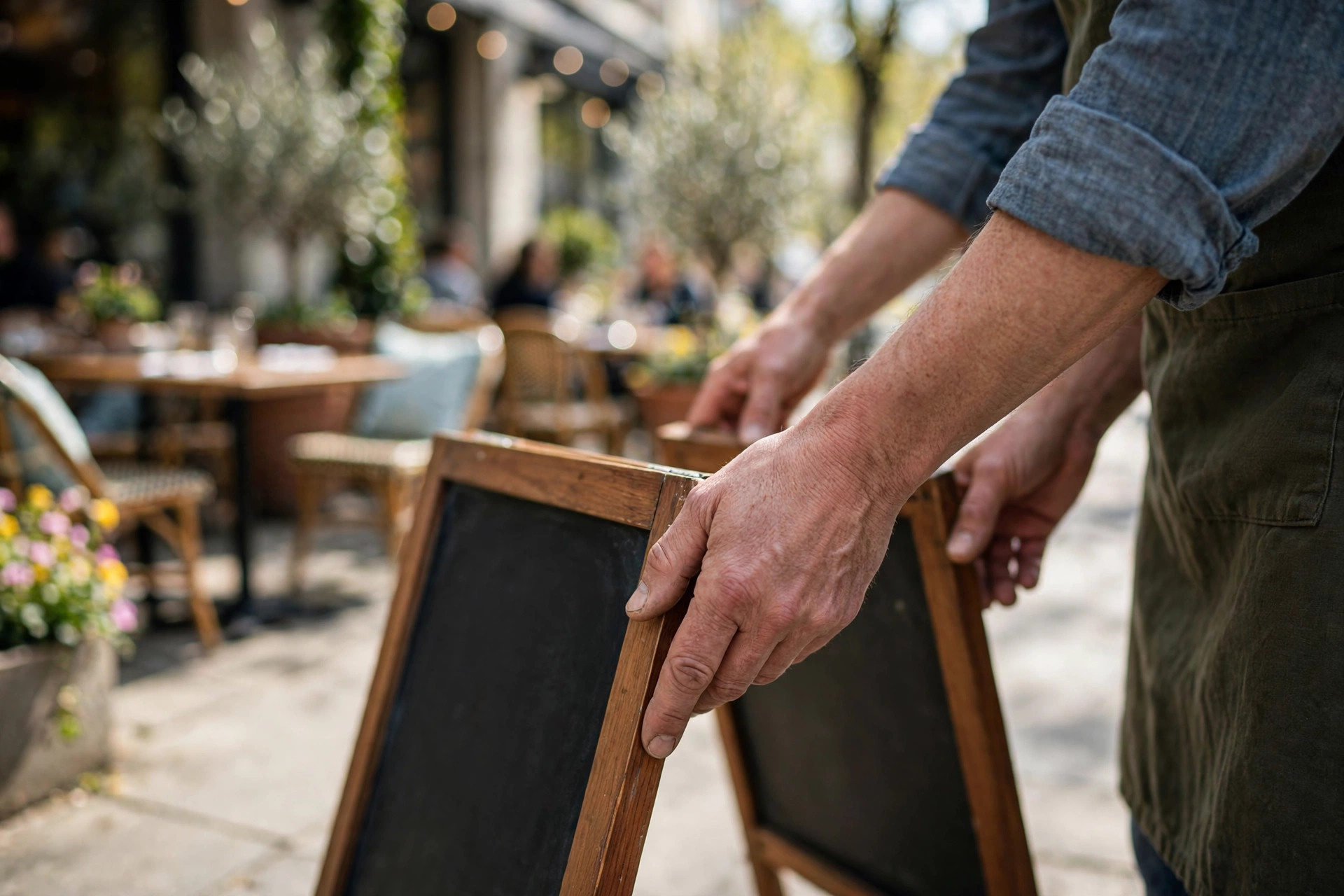
This is a design decision with marketing returns. A photogenic corner — a living wall, a mural, distinctive lighting, an unusual sign — becomes a self-running content machine because guests photograph it for you. Outdoor signage that stops people works the same way on the street: it converts foot traffic into walk-ins and walk-ins into posts. One well-placed photo spot can generate more reach than a month of paid ads.
Email your regulars first
Your regulars are your cheapest marketing channel and the most neglected one. Before you spend a euro on ads, send a proper terrace-opening email to your list: the opening date, the launch event, early-bird booking, and a genuine note about what is new this year. Open rates for restaurant emails to an engaged list typically run far above industry averages for cold marketing — these are people who already like you.
If you do not have a list, the terrace season is the perfect excuse to build one. A simple "get notified when our terrace opens" signup on your website, collected from February onwards, gives you an audience that costs nothing to reach. Keep it GDPR-clean from day one: clear consent, a visible unsubscribe link, no purchased lists. The mechanics are covered in our guide to building an email list from zero, GDPR-safe. One email sequence — announcement, reminder, last call — can fill a launch weekend without a single ad euro.
Price the terrace menu like a separate business
A terrace is not free revenue on top of the restaurant — it has its own cost structure, and pricing should reflect that. Permit fees, extra staffing, weatherproofing, furniture wear and a shorter service window all eat margin. The restaurants that price the terrace menu as a separate business make money; the ones that copy indoor prices onto outdoor tables often discover the terrace "doesn't pay".
The terrace menu itself
Terrace guests behave differently from dining-room guests: they order more drinks, linger longer in good weather, and value speed and simplicity. Design a shorter menu around high-margin, fast-turn items — grilled dishes, sharing plates, spritzes, local beers. OpenTable's data from 2025 showed outdoor brunch guests staying about 5% longer and spending about 6% more than indoor guests, which means the terrace can be your most profitable seating if the menu is built for it. Price the menu to cover the terrace's full seasonal cost plus your target margin, and be explicit with yourself about the numbers: permit fees, extra staff hours, heating and furniture amortisation, divided by expected covers. For the digital side, a digital menu done right lets you adjust terrace pricing and offerings without reprinting anything.
Estimate before you commit
For a small existing terrace, budget roughly €1,000–€3,000 per season for maintenance, planting, signage, lighting and the launch campaign. Building from scratch — a basic 20-seat setup with heaters and weatherproofing — typically lands between €8,000 and €25,000 depending on the city and furniture quality. These are estimates to start planning with; get local quotes before committing. And keep the numbers honest: if the terrace cannot cover its costs at realistic occupancy, shrink the concept before you shrink the marketing.
Keep the numbers honest
Terrace math only works on paper first. Write down every seasonal cost — permits, extra staff, heating, furniture wear, launch marketing — and divide by realistic covers, not best-case weekends. If the margin survives a rainy June, the concept is sound. If it only works in perfect weather, redesign it before you spend a euro on marketing.
Have a weather plan
Nordic weather is the terrace's biggest business risk, and the restaurants that handle it well turn it into a marketing advantage. Guests in Finland, Sweden and Norway are used to unpredictable summers — what they do not forgive is a restaurant with no plan. Publish your weather policy where guests can see it: the website, the booking confirmation, the launch posts.
What a good weather plan looks like
Three layers. First, equipment: a retractable awning or quality parasols for light rain, patio heaters for cold snaps (a few good heaters can extend your season by weeks on both ends), wind barriers for exposed spots. Second, operations: a clear rule for when the terrace closes and where guests move, decided before the season, not argued about on a rainy Friday. Third, communication: tell guests the plan in advance. "Terrace open rain or shine — covered seating for everyone" removes the hesitation that kills bookings when the forecast looks grey. Photograph the terrace in real weather, not just golden hour — guests trust a terrace that looks good on a cloudy day.
Staff and run the terrace profitably
A terrace doubles your seating and roughly doubles your chaos if staffing is not planned. The service pattern is different: faster drink turnover, more walk-ins, weather-driven rushes. Roster with flexibility — part-time and on-call shifts for weather-variable days — and brief staff on the terrace menu until they can sell it without thinking. The terrace-only signature drink should be every server's easiest upsell.
Operational details that protect revenue: a clear table-numbering system visible from inside, a card-terminal setup that works outdoors, a plan for the 7 PM sun that blinds half the tables (parasol rotation is a real job), and a closing routine that secures furniture fast when a storm rolls in. These sound mundane, but every one of them is a revenue leak or a bad review waiting to happen.
Measure what the terrace actually earns
After the season, most owners know whether the terrace "felt" busy. Few know whether it was profitable. The metric that matters is revenue per available seat hour — RevPASH — calculated separately for the terrace and the dining room. It tells you the truth that total revenue hides: a terrace that looks full at 60% occupancy with slow turnover can earn less than a dining room running tighter.
Track weekly: terrace covers, average spend per terrace guest, terrace revenue as a share of total, and the weather alongside the numbers (a simple "sunny/overcast/rain" tag explains most variance). Compare against your launch campaign calendar — which weeks had events, which had email pushes — so next year's marketing budget goes to what actually moved covers. Keep it simple; a spreadsheet beats an expensive dashboard you never open. For a broader framework on what to measure and why, see our seasonal advertising calendar, which turns one season's learnings into next season's plan.
Frequently asked questions
When is the best time to open a restaurant terrace in the Nordics?
Most Nordic restaurants open terraces between late April and early June, depending on location. Southern Finland, Sweden and Norway can often open in April; northern cities typically wait until late May. The marketing should start 6 to 8 weeks before opening day, because that is when guests start planning their spring and summer outings.
How much does it cost to open a restaurant terrace for the season?
For a small existing terrace, expect roughly €1,000–€3,000 in seasonal costs: furniture maintenance, planting, signage, lighting and a launch campaign. If you are building the terrace from scratch, a basic 20-seat setup with weatherproofing typically runs €8,000–€25,000 depending on city permit fees, heating and furniture quality. These are estimates — get local quotes.
Do I need a permit to open a restaurant terrace?
Yes, in nearly all Nordic cities you need a permit to place tables and chairs on public land such as pavements, and you need a serving licence that covers the outdoor area for alcohol service. Applications usually take 4 to 12 weeks, so apply in January or February for a spring opening.
How do I promote my restaurant terrace on Google?
Update your Google Business Profile: add terrace photos, add "outdoor seating" as an attribute, mention the terrace in your business description, and post weekly Google Posts about terrace events and opening dates. Google is where most first-time guests discover you, so keep it current.
What should I do if it rains on my terrace opening day?
Always have a weather contingency: a retractable awning or parasols for light rain, heaters for cold snaps, and an indoor fallback for the launch event. Communicate the plan on your website and social media so guests come regardless of the forecast.
Want a website that sells your terrace season?
PowerfulWebsite builds your restaurant's website for free — you only pay from €59/month. Everything is included: seasonal pages you can update in minutes, online booking, domain, hosting, maintenance and updates.
See the packages