Midsummer: Marketing Your Summer Menu
Midsummer is the Nordics' biggest celebration and one of the trickiest weekends in the restaurant calendar: the cities empty out just as demand peaks elsewhere. The restaurants that win Midsummer start marketing in February, sell multi-week Midsummer menus and events instead of one dinner, and deliberately target the tourists and locals who stay behind.
Key takeaways
- Start Midsummer marketing in February — bookings peak in April and May.
- Sell a multi-week Midsummer season, not one weekend: the weeks before earn more than Midsummer Eve itself.
- Cities empty out at Midsummer, so market deliberately to tourists and the locals who stay.
- Events beat à la carte: picnic baskets, ticketed dinners and a Midsummer Day brunch sell earlier and protect revenue.
- Publish an English Midsummer page by April — tourists search in English, weeks ahead.
- Use deposits or prepayment on Midsummer bookings; no-shows hurt most on the year's biggest weekend.
Every Nordic restaurant owner knows the paradox of Midsummer. It is the most celebrated weekend of the year — bonfires, maypoles, the midnight sun, tables heavy with new potatoes and strawberries — and simultaneously the weekend when half your regulars leave the city for their cottages. Marketing a Midsummer menu is therefore not about one dinner. It is about a season-within-a-season: several weeks of Midsummer-themed selling, anchored by events, priced with intent, and marketed to an audience that is partly different from your usual crowd. This guide covers the whole playbook, from the February planning timeline to the follow-up email in July that turns Midsummer guests into year-round regulars. It is written for restaurant owners in Finland, Sweden and Norway, where Midsummer is not just a holiday but a cultural institution.
Midsummer is a marketing problem
Most holidays bring people to restaurants. Midsummer, in the Nordics, sends a large share of them away from restaurants — to summer cottages, family gatherings and bonfire shores. In Finland, Juhannus empties Helsinki, Tampere and Turku with remarkable efficiency; in Sweden, Midsommar does the same to Stockholm and Gothenburg; in Norway, Sankt Hans thins out Oslo. This is the core marketing problem: your normal audience shrinks exactly when the occasion is biggest.
The restaurants that make Midsummer profitable understand they are marketing to a different mix of people than usual. The audience has three parts: tourists, who are in town precisely because it is the midnight-sun season; locals who stay behind, often younger or international residents without a cottage to go to; and the pre-Midsummer crowd — everyone still in the city in the weeks before, hungry for the season's flavours before they leave. Each part needs a different message, which is why Midsummer marketing starts with audience thinking, not menu thinking.
Start in February: the Midsummer timeline
By the time most restaurants start thinking about Midsummer, the booking window is half closed. Midsummer dinner decisions — especially for groups, company outings and tourist itineraries — are made in April and May. If your Midsummer page, menu and event tickets do not exist by then, you are not in the consideration set. February is when the work starts: menu concept, pricing, event formats, photography planning.
| When | Action | Why it matters |
|---|---|---|
| February | Finalise Midsummer menu concept and event formats; set prices | Everything downstream depends on this |
| March | Publish the Midsummer page on your website; open event bookings | Early planners and tourists start searching |
| April | Email campaign #1 to your list; pitch local media and tourist sites | Peak booking window opens |
| May | Weekly social content; Google Posts; pre-Midsummer menu weeks begin | Urgency builds; revenue starts early |
| Early June | Email campaign #2; last-availability push; confirm all bookings | Final seats fill; no-shows prevented |
| Midsummer week | Live content; collect photos and reviews | Content fuels next year's campaign |
| July | Thank-you email; invite guests back for summer menus | Midsummer guests become regulars |
This is the same discipline as any seasonal campaign — our seasonal advertising calendar template exists precisely so you do not reinvent the timeline every year.
Design a Midsummer menu that sells
A Midsummer menu is not a normal seasonal menu with a flower on top. It is an occasion menu: guests are buying the celebration, the tradition and the story as much as the food. That changes how you design it. The menu should feel unmistakably like Midsummer — the flavours people associate with the holiday — while being engineered for a busy kitchen and a profitable food cost.
Anchor on the classics
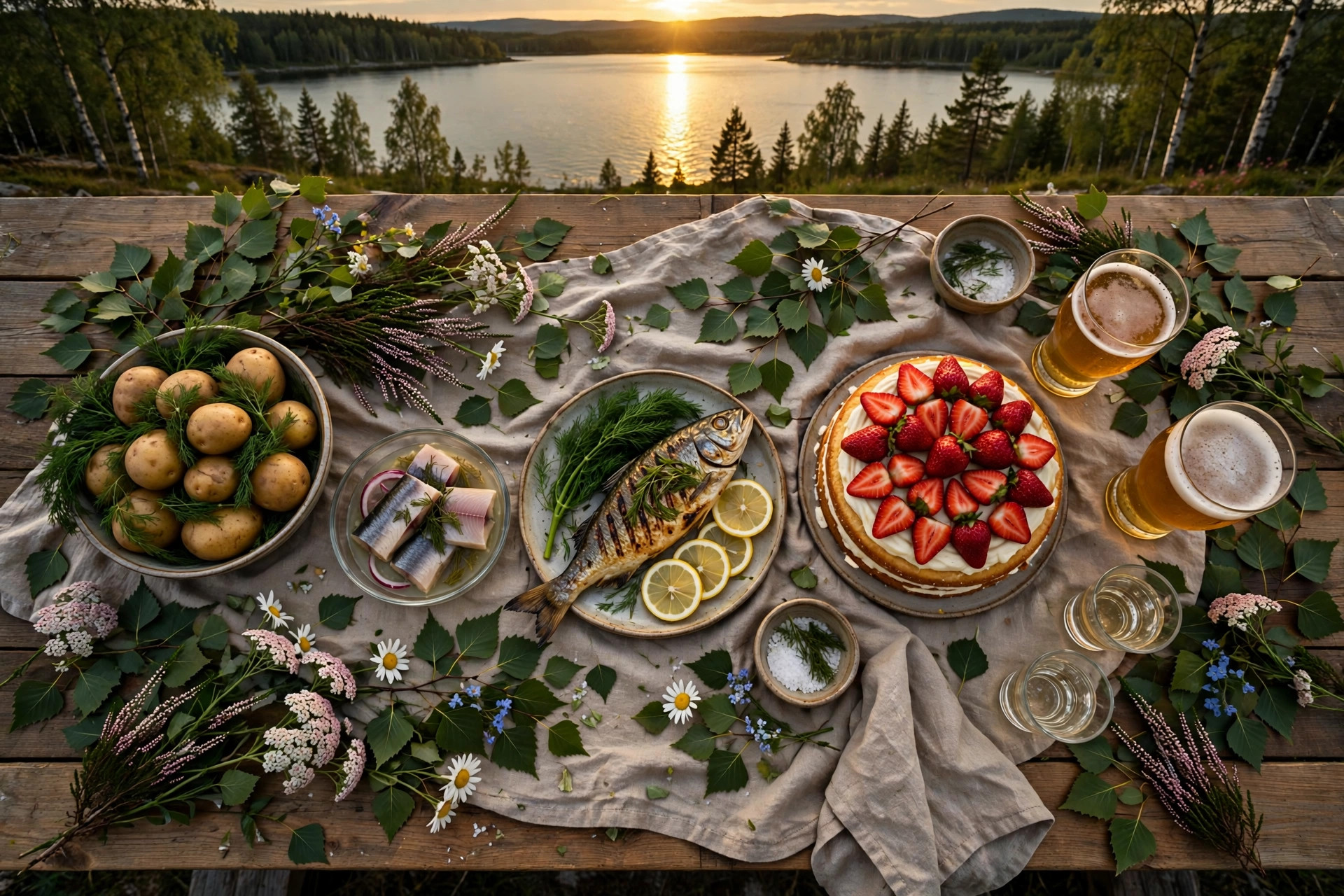
The traditional Nordic Midsummer table is remarkably consistent across Finland, Sweden and Norway: new potatoes with fresh dill and butter, pickled herring in several styles, gravlax or warm-smoked salmon, grilled whitefish, grilled sausages, and a strawberry sponge cake to finish. These are the flavours guests expect, and deviating too far from them is a marketing risk — people searching for a "Midsummer menu" want to recognise it. The creativity goes into presentation and a modern twist on one or two courses, not into reinventing the holiday. A three- or five-course format works best for restaurants: it paces the evening, justifies the price, and lets the kitchen prep efficiently.
Build the drinks pairing in from the start
Midsummer drinking is ritualised — snaps and aquavit with the herring, pale lagers and crisp whites through the meal — and the drinks pairing is often where the margin lives. Design a Midsummer drinks flight or pairing as part of the menu, not as an afterthought, and merchandise it properly: put the drinks list online with the Midsummer pairings featured, because guests deciding between restaurants compare the whole package. A signature Midsummer cocktail with summer herbs or berries also gives you a photogenic hero product for social media.
The Midsummer menu formula
- 3 or 5 courses anchored on recognisable classics: herring, salmon, new potatoes, grilled fish, strawberries
- One modern twist maximum — tradition is the product
- Drinks pairing designed with the menu, priced to carry margin
- Vegetarian Midsummer menu as a full equal, not an afterthought (demand grows every year)
- Children's Midsummer menu if you target families — parents book where kids are welcome
Price the Midsummer menu
Midsummer is a premium occasion and guests expect premium pricing — but "premium" needs a number that works. Start from the food cost and the reality of the weekend: holiday pay for staff, shorter service windows, and the risk of a thin Midsummer Eve. As a rule of thumb, occasion menus in Nordic city restaurants typically land in the €65–€120 range per person for three to five courses, with drinks pairings adding €35–€60. These are estimates to plan against, not quotes — your costs decide your price — but they tell you the market expects a real number, not a discount.
Two pricing mechanics matter more than the headline price. First, prepayment or deposits: Midsummer bookings made weeks ahead have the year's highest no-show risk, and a prepaid menu converts a vague intention into committed revenue. Second, tiering: offer the full five-course experience and a shorter three-course version, plus the drinks pairing as an add-on. Tiering raises average spend because guests self-select upward, and it gives your marketing two price points to talk about instead of one.
Sell the weeks before, not just the weekend
Here is the insight that changes the economics: the two or three weeks before Midsummer are often more profitable than Midsummer weekend itself. The city is still full, the weather is improving, everyone is in a Midsummer mood — and your competitors are all focused on the weekend. A "Midsummer season menu" served through June captures the pre-holiday appetite of people who will be at their cottages on the actual weekend.
Market it as the Midsummer menu, available from early June: the same dishes, the same story, none of the weekend's operational risk. This extends your selling window from a few days to a few weeks, smooths kitchen load, and gives your email and social campaigns something to sell long before the holiday. It is the same logic as Christmas menu marketing — the season is longer than the day — applied to summer's biggest holiday. And if you run a terrace, the Midsummer menu weeks are the perfect bridge into your terrace season marketing: same audience, same appetite for summer.
Turn Midsummer into events
Events solve Midsummer's two hardest problems: they sell earlier than à la carte (a ticket is a commitment), and they give people a reason to choose you over a cottage. Four formats cover most restaurants:
The formats that work
The ticketed Midsummer dinner. A fixed multi-course menu on Midsummer Eve or the Saturday, prepaid, with a set seating. This is your flagship: market it from March, cap the seats, and let scarcity do the work.
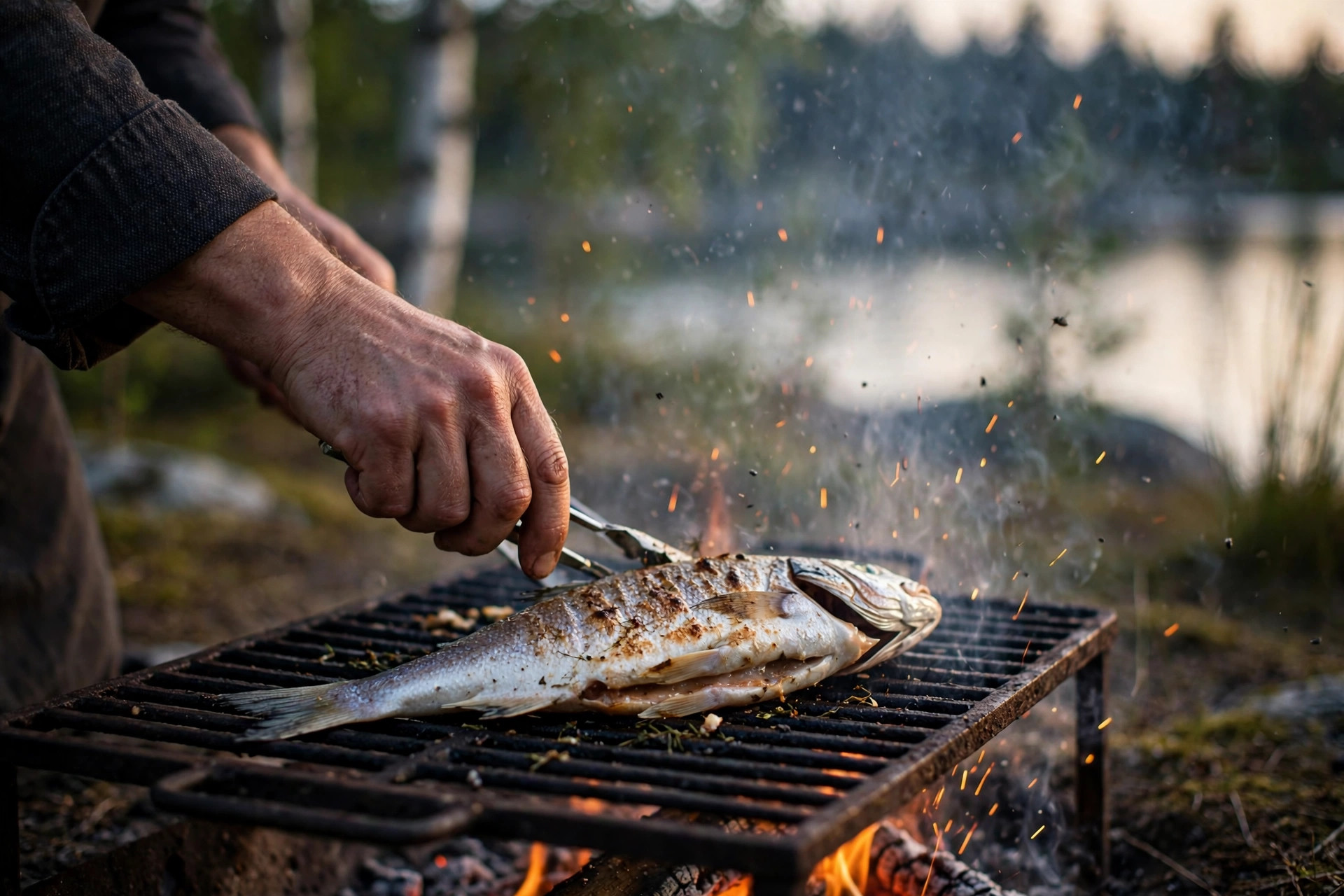
The picnic basket. Midsummer is celebrated outdoors, and a restaurant-quality picnic basket — herring, gravlax, new potatoes, strawberries, packed to travel — captures the guests who are leaving town. Sell it as pre-order only, with pickup on Midsummer Eve morning. It is pure incremental revenue from people who would never have booked a table.
The Midsummer Day brunch. After a night of bonfires, a lavish late-morning brunch is exactly what the stay-behind crowd wants. Our Mother's Day brunch guide covers the mechanics of selling a big brunch; the Midsummer version adds the holiday menu and a later start.
The Midsummer cocktail evening. For bars and casual restaurants: a summer-herb cocktail menu with a snack plate, ticketed as "2 cocktails + snacks". Lower commitment than dinner, higher margin per guest, and it photographs beautifully.
Every event needs its own page on your website with the date, price, what's included and a booking button — and a digital menu that shows the Midsummer offering without a PDF download.
Market to tourists and the stay-behind crowd
Tourists are Midsummer's most under-served restaurant audience. They arrive for the midnight sun with money to spend and no cottage to go to, and they plan in English, weeks ahead. If your Midsummer offering only exists in Finnish, Swedish or Norwegian, you are invisible to them.
The English Midsummer page
By April at the latest, publish an English-language page: "Midsummer dinner in [your city]" with the menu, prices, dates and booking. Use the word "Midsummer" deliberately — it is what tourists search for. Mark your Midsummer opening hours on your Google Business Profile (holiday hours are a top reason tourists pick one restaurant over another), and add "Midsummer" to your business description during June. The stay-behind locals find you through the same channels, so one page serves both audiences.
Partnerships multiply this: tourist information sites, hotel concierges and local experience platforms all need Midsummer recommendations. A short, professional pitch in March — your Midsummer menu, a photo, a booking link — can put you on lists that tourists actually read. This is relationship marketing with a long tail: a concierge who sends you guests at Midsummer sends them in August too.
Email and social: the Midsummer campaign
The Midsummer campaign has a natural narrative arc, which makes it one of the easiest seasonal campaigns to run well. The story writes itself: the menu reveal, the countdown, the sold-out warnings, the celebration itself. What matters is the cadence — two emails and a steady social rhythm, not a single blast.
The two-email sequence
Email one, in April: the Midsummer announcement. The menu, the events, early booking, one beautiful photo. Email two, in early June: last availability, the picnic-basket deadline, the weather-proof promise. Both link to the Midsummer page, not to your homepage. If you are still building your list, Midsummer is the perfect reason to start — a "be first to hear about our Midsummer menu" signup converts well in spring. The GDPR-safe mechanics are in our email list guide.
Social content that sells the season
Show the making, not just the finished plate: the first new potatoes arriving, the herring being pickled, the terrace being dressed with birch leaves and wildflowers. Midsummer table-setting content — the linen, the flowers, the candles — performs exceptionally well because it sells the dream, not just the dinner. Post the countdown ("3 weeks to Midsummer — 12 seats left for the Eve dinner") to convert followers into bookers. And collect everything: this June's photos are next February's campaign assets.
Bookings, deposits and no-shows
Midsummer concentrates every booking risk into one weekend: guests book early, plans change, the weather tempts them to the cottage instead. The defence is structural. Take deposits or full prepayment on all Midsummer event bookings — guests accept this on premium occasions without complaint, and it transforms your no-show rate. Send a confirmation email one week out and a reminder 48 hours before, with the practical details: start time, dress code if any, the weather plan. Make the cancellation terms explicit and fair: full refund up to a week before, deposit kept after that is standard and defensible.
For à la carte Midsummer service, use time-limited seatings rather than open bookings; it protects turnover on a night when every table counts. And have a waitlist — Midsummer demand is lumpy, and a waitlist converts cancellations into revenue instead of empty tables. The full mechanics of deposits and prepayment are covered in our guide to securing your bookings.
Staffing and kitchen prep for the Midsummer rush
Midsummer is a holiday weekend, which means holiday pay, thin staffing and a kitchen running hot — plan for all three. The fixed Midsummer menu is your best operational friend here: fewer dishes means tighter prep, faster plating and less waste than à la carte on a night when the whole team is stretched. Build the menu around dishes that can be largely prepared ahead — pickled herring, gravlax, cold sauces, the strawberry cake — so the evening service is assembly and finishing, not cooking from scratch.
Roster generously and early. Holiday weekends are the worst time to discover you are short-staffed, and Midsummer Eve shifts are hard to fill at the last minute. Confirm the roster at least three weeks out, with a clear plan for who covers the picnic-basket pickup window on Midsummer Eve morning — that is a separate operation from dinner service and it needs its own hands. Brief the whole team on the story behind the menu, not just the dishes: guests, especially tourists, ask about the traditions, the snaps songs, the bonfires. A server who can explain what Juhannus or Midsommar actually is sells the experience, not just the food, and that is what gets remembered in reviews.
Finally, protect the team. Midsummer service is long and emotional — it is everyone's holiday too. A staff meal before service, clear end times, and a genuine thank-you afterwards cost little and buy a lot of goodwill for the next holiday season. The restaurants with the best Midsummer reviews are almost always the ones whose staff wanted to be there.
After Midsummer: turn guests into regulars
The campaign does not end on Midsummer Day. You have just served a large number of guests — many of them first-timers, tourists and stay-behind locals — at the emotional peak of the year. A thank-you email in early July, with a photo from the evening and an invitation to the summer menu or terrace season, converts a meaningful share of them into repeat guests. Ask for a Google review while the memory is fresh; Midsummer reviews mentioning the event help next year's campaign rank.
Then do the debrief while it is fresh: what sold out, what needed discounting, which channel drove the bookings, what the weather cost you. Write it down. Next February, when the timeline starts again, you will have a plan instead of a memory. That is how Midsummer stops being a gamble and becomes a system — and the seasonal calendar is where the system lives. (PowerfulWebsite builds restaurant websites free, with plans from €59/month — including the seasonal pages and booking flows this playbook depends on.)
Frequently asked questions
When is Midsummer in 2027?
In 2027, Midsummer Eve in Sweden is Friday 25 June and Midsummer Day is Saturday 26 June. In Finland, Juhannus is celebrated on Saturday 26 June, with Juhannusaatto on Friday 25 June. In Norway and Denmark, Sankt Hans is on 23–24 June.
What food do restaurants serve at Midsummer?
Traditional Nordic Midsummer dishes include new potatoes with fresh dill, pickled herring, gravlax or warm-smoked salmon, grilled whitefish, grilled sausages and a strawberry sponge cake for dessert. Most restaurant Midsummer menus build a multi-course format around these classics with a modern twist.
How far in advance should I market a Midsummer menu?
Start marketing in February, about 4 months before Midsummer. Bookings for Midsummer dinners and events typically peak in April and May, and the picnic-basket and event pre-sales that protect your revenue need lead time.
Should my restaurant stay open on Midsummer Eve?
It depends on your location. City-centre restaurants with tourist traffic often do well on Midsummer Eve; neighbourhood restaurants in residential areas usually lose money because locals leave town. Look at your last two years of covers, or open only for a ticketed event rather than full service.
How do I attract tourists to my restaurant at Midsummer?
Publish an English-language Midsummer page on your website, mark Midsummer opening hours on your Google Business Profile, and use 'Midsummer' keywords in your descriptions. Tourists search in English weeks ahead, so the page needs to exist by April at the latest.
Want a website that sells your Midsummer season?
PowerfulWebsite builds your restaurant's website for free — you only pay from €59/month. Everything is included: event pages you can publish in minutes, online booking with deposits, domain, hosting, maintenance and updates.
See the packages