Halloween Restaurant Marketing: Theme Nights and Campaigns
Halloween restaurant marketing works when you treat 31 October as a theme night, not a discount: a themed menu running all week, one flagship event with advance bookings, décor that photographs well, and a campaign that starts in September. Halloween sits in the slow stretch between summer terraces and Christmas, guests arrive already in the mood to spend, and a well-run Halloween week can lift a quiet October by 20–40% in covers — without a single euro of discounting. Start in September, sell the experience, and protect the price.
Key takeaways
- Halloween demand builds through October and collapses on 1 November — be live by the first week of October.
- A themed prix fixe menu running 26–31 October beats a single-night party: it spreads demand across your slowest weeknights.
- Do not discount for Halloween. Add perceived value — a limited cocktail, a themed dessert, a real contest prize — and protect your margin.
- Design for groups of four to eight: Halloween traffic is group traffic, and reservations beat walk-ins for staffing and prep.
- A strong campaign costs a typical independent €150–€500 all-in, reusable décor the biggest line.
- Halloween is growing in the Nordics but smaller than in the US — and it overlaps with All Saints' Day, so keep one family-friendly, low-scare track.
Every year the same thing happens. A restaurant decides in the second week of October to "do something for Halloween", discovers that anything worth doing needed three weeks of lead time, and settles for a pumpkin at the host stand. Then the decorations are still up when the Christmas bookings start, and the whole thing is written off as a waste of effort.
The restaurants that get real money out of Halloween are not more creative. They are earlier, and more disciplined: one format, priced properly, published on a page that takes bookings, promoted in a sequence that starts weeks before the night. This guide builds that campaign for independent restaurants, cafés and bars in the Nordics — what is different about Halloween here, which formats fill tables, how to build a themed menu that protects margin, and how to measure whether it worked. It slots into your seasonal advertising calendar between the autumn menu launch and Christmas, and the same packaging logic carries into our Christmas party guide.
Why Halloween works for restaurants
Halloween is the most underrated date on the restaurant calendar, and the reasons are structural rather than spooky. Start with the calendar position: late October is a dead zone. The summer terrace season is over, the autumn menu has been running for a month, and the Christmas rush has not started. It is the stretch of the year when a restaurant most needs a reason for people to go out — and Halloween hands you one, free, every year, on the same date.
Then there is the spending mood. In the United States, Halloween spending was expected to reach a record $13.5 billion in 2026, with around three quarters of consumers planning to celebrate, according to the National Retail Federation. The Nordic numbers are smaller, but the dynamic is the same: customers are actively looking for reasons to spend, and an invitation to a themed night feels welcome rather than intrusive. Halloween carries almost no expectation of discounting — nobody walks in on 31 October expecting a coupon — which makes it one of the few promotional dates where you can add perceived value without subtracting price.
Most importantly, Halloween traffic is group traffic. Friends coordinating a night out, parents looking for something to do after trick-or-treating, coworkers extending an office party. Groups of four to eight are the norm, and the most profitable tables in the building: one decision-maker, one bill, a shared starter, a round of drinks, a dessert each. Build for parties of four to eight and you are building for the actual demand. Build for couples on a date night and you are building for a different holiday.
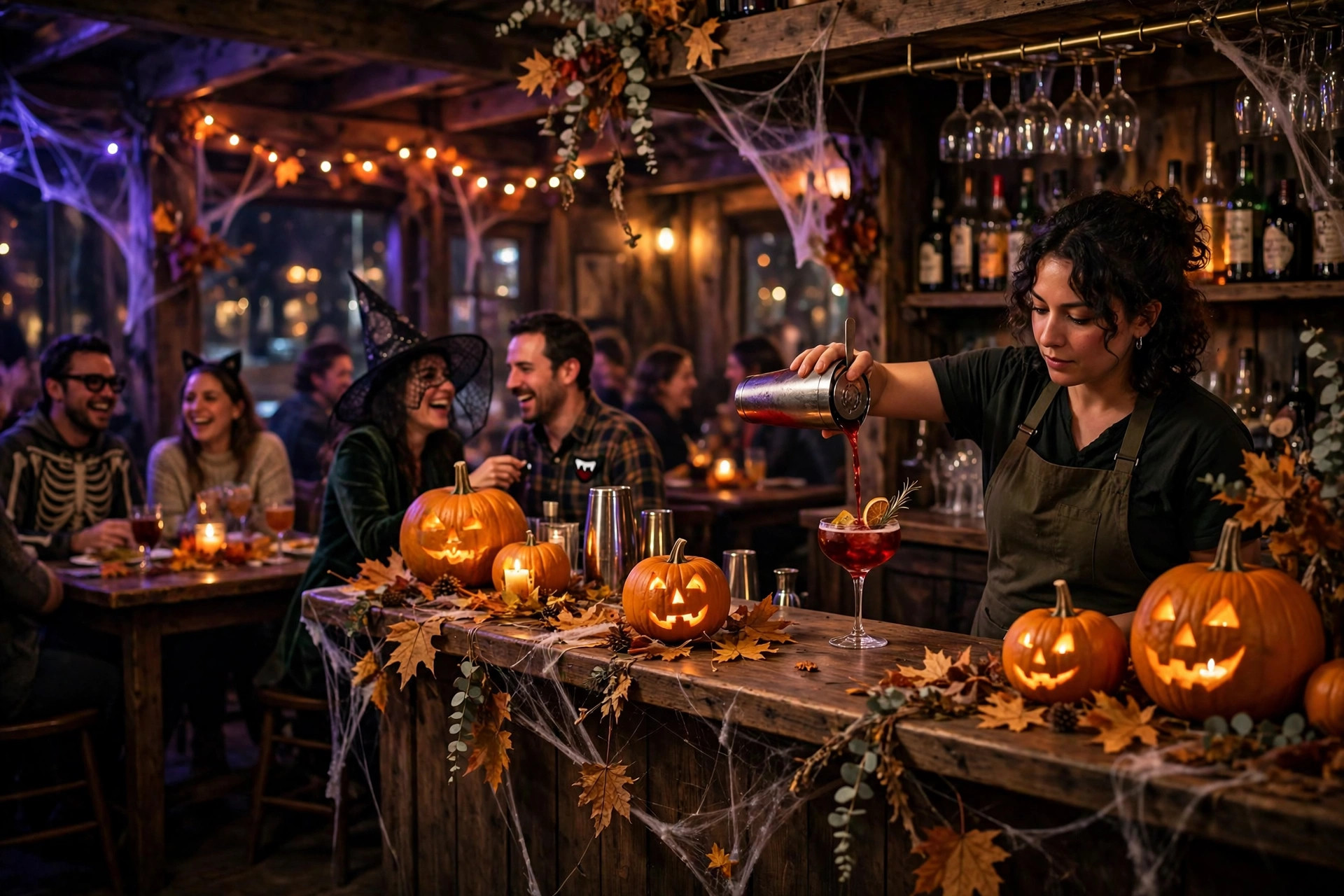
Finally, Halloween creates the photograph. A themed cocktail, a carved pumpkin on the bar, a dining room in candlelight, a staff in costume — images people take and share without being asked. A photographed restaurant is a recommended restaurant, and Halloween gives you a week of shareable content without a media budget. For many independents that is the main return on the campaign, because the photographs keep working long after the pumpkins are gone.
Halloween is the one night of the year when your guests bring the entertainment themselves — a costume, a group, an idea of a night out. Your job is to build them a stage, not to discount the tickets.
What Halloween is not
It is worth saying plainly what Halloween is not. It is not a children's holiday in a restaurant context, though families matter. It is not a discount event — treating it as one trains customers to wait for a price cut. And it is not a one-night gamble: a campaign that depends entirely on a single Saturday is one a rainy evening can sink.
Halloween in the Nordics: what is different
Most Halloween marketing advice is written for the United States, and importing it wholesale is the fastest way to waste money in Helsinki, Stockholm or Oslo. The Nordic Halloween is real and growing — but smaller, later, and layered over traditions American guides never mention.
First, the scale. Halloween arrived in the Nordics as an import, and it is still catching up. Trick-or-treating, costume parties and pumpkin carving all exist — but the holiday does not dominate October the way it does in the US. That is good news: the competition for attention is thinner, the costs are lower, and a single well-executed theme night can own the evening in your neighbourhood. It is also a warning: do not budget as if you were running a US Halloween. A €2,000 production with actors and a haunted house is a bet on a market that may not exist in your town yet. Start with the room, the menu and the drinks, and let the scale grow with the demand.
Second, the calendar overlap. Halloween on 31 October sits directly against All Saints' Day — pyhäinpäivä in Finland, alla helgons dag in Sweden, allehelgensdag in Norway — a quiet, reflective day when many families visit cemeteries and light candles for the dead. In Finland it is a public holiday, usually the Saturday between 31 October and 6 November. Your Halloween week shares the calendar with a solemn family occasion, and the tone matters. The restaurants that do Halloween well run two tracks: a playful, spooky evening for adults, and a gentle, low-scare daytime offer — pumpkin painting, a children's menu, a sweet treat for trick-or-treaters. The family track is not just polite; it brings parents through the door, and parents book the table.
Third, the darkness. By late October the Nordic evening is properly dark — in Helsinki the sun sets around 17:00 — and darkness is your production budget. Candlelight, orange and purple lighting, a fog machine at the door: in October these land harder here than anywhere, because the contrast with the ordinary evening is so strong. A candlelit dining room on a dark October evening does not need much else, and the photographs will look like a film set without further spend.
Pick your format: theme nights that fill tables
There is no shortage of Halloween ideas. The shortage is of formats that produce bookings. The table below compares the formats that work for independent restaurants on the only metric that matters: whether the format turns interest into a reservation you can staff for.
| Format | Effort | Booking driver | Best for | Watch out for |
|---|---|---|---|---|
| Themed prix fixe week (26–31 Oct) | Medium | Strong — bookable all week | Most restaurants | Menu must be genuinely different, not renamed dishes |
| Costume party with contest | Medium | Strong — reserved seating | Bars, casual dining | Prize must be worth winning or nobody dresses up |
| Murder mystery dinner | High | Very strong — ticketed | Private rooms, 20–40 guests | Needs a host or script; rehearse once |
| Horror movie screening | Low | Moderate — themed snacks | Cafés, bars, small rooms | Licensing: check public screening rules |
| Family spookfest (daytime) | Medium | Strong — parents book ahead | Family restaurants, cafés | Keep it low-scare; no gore for children |
| Halloween quiz or trivia night | Low | Moderate — team bookings | Bars, pubs, casual dining | Needs a good host; run weekly in October |
| Vampire wine night / spooky spirits night | Medium | Moderate — drinks-led | Wine bars, cocktail bars | Pair with food; drinks-only crowds linger without spending |
The format to start with, if you run one thing, is the themed prix fixe week. Halloween falls on a Saturday in 2026, the strongest possible draw — but the entire preceding week is also available. A three-course seasonal menu running 26–31 October spreads demand across your slowest weeknights instead of concentrating it on the one night you would have filled anyway. Price it as a set menu — a fixed price, a fixed set of choices, a limited time — and it does three jobs at once: predictable prep for the kitchen, a price the organiser can approve without a phone call, and a product your marketing can sell for a whole week instead of a single evening.
The flagship night
Inside the week, run one flagship night — an event with a name, a start time, a booking requirement and a prize. For most restaurants that is a costume party with a contest: reserved seating, categories (best costume, best group, scariest), and a prize worth winning — a dinner for four, a private event credit, a bar tab. A meaningful prize is what makes people commit to a costume and bring friends; a €20 voucher is not. For restaurants with a private room, the murder mystery dinner is the higher-margin alternative: ticketed in advance, a fixed menu, a host or a script, and a price that reflects a full evening of entertainment. Our guide to selling your private dining room online covers the mechanics.
The family track deserves its own slot: a Saturday or Sunday afternoon spookfest, or an early-evening session before the adult night begins. Pumpkin painting or carving, a children's menu, a sweet treat for every child in costume, and a room that is festive rather than frightening. Market it as a safe, warm alternative to trick-or-treating in the dark, and parents will book it — and the session fills an afternoon daypart that would otherwise be empty.
One flagship night with a real prize, one themed menu all week, one family-friendly daytime session. That is a Halloween campaign. Everything else is decoration.
The Halloween menu: theatre without discounting
The menu is where Halloween campaigns are won or lost, and the principle is simple: theatre on the plate, margin in the pricing. The worst Halloween menus are the regular menu with the dishes renamed — "zombie brains" for mashed potatoes — which guests see through instantly. The best are genuinely seasonal, with a few theatrical dishes and drinks built around ingredients already in season: pumpkin, mushrooms, game, root vegetables, dark berries, apples.
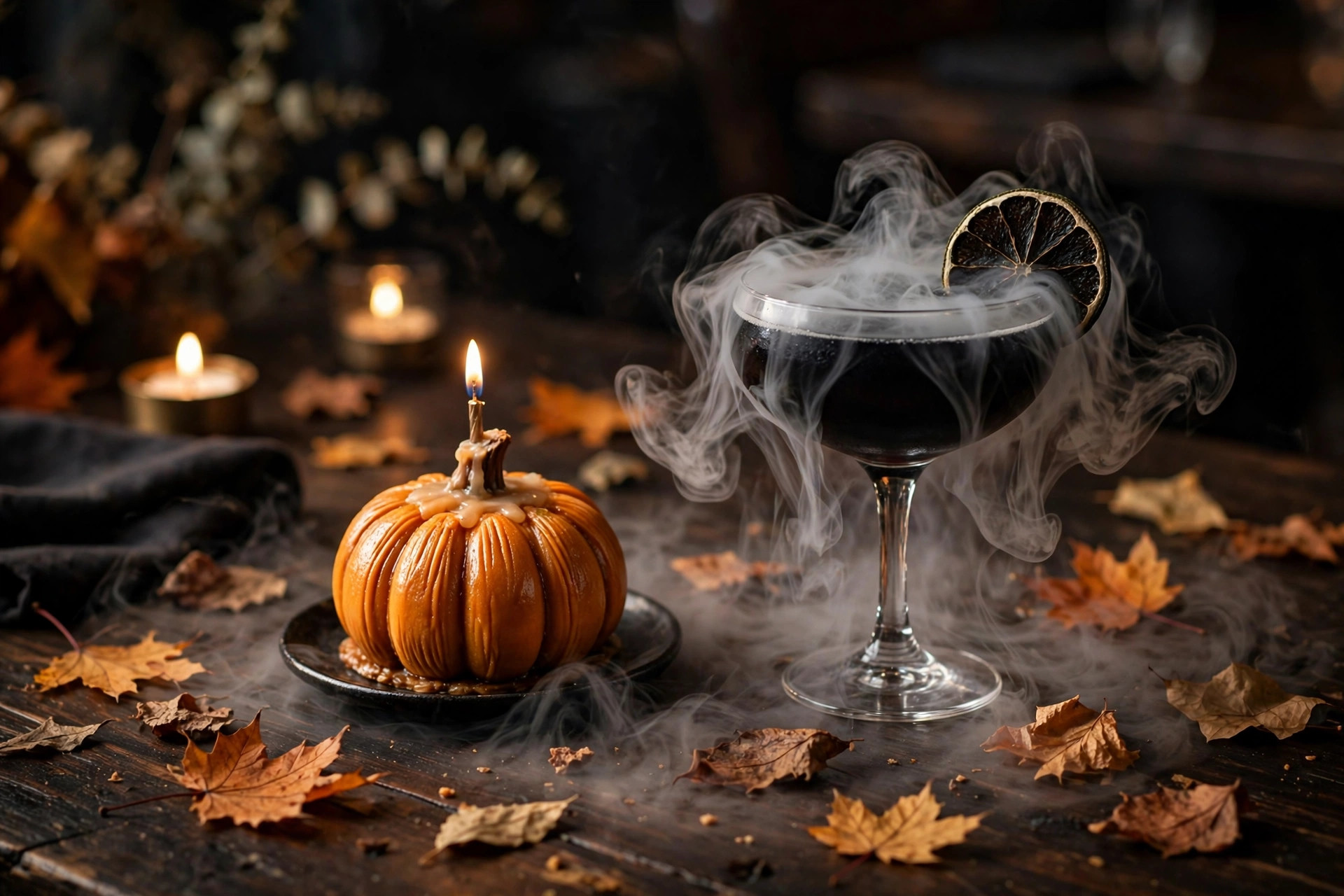
Start with the drinks, because drinks are where the margin and the photographs live. A signature Halloween cocktail — a dark red sangria, a black vodka martini, a pumpkin old fashioned, a smoking cocktail with dry ice — should be the most photographed item on your menu, and priced as a premium, not a promotion. Two or three themed drinks are enough; a whole page is a kitchen nightmare. Add one non-alcoholic option with the same theatre — a "witch's brew" with dry ice and a candy rim — because designated drivers and teenagers want the photograph too, and a €9 mocktail with a €2 cost is the best margin on the menu.
For food, build around dishes you can execute at volume. A three-course set menu works best: a starter with autumn character (pumpkin soup, mushroom toast, beetroot-cured fish), a main already on your menu with a seasonal twist (game, slow-braised beef, a rich vegetarian option built on mushrooms and roots), and a dessert with theatre (a chocolate dessert with a dry-ice reveal, a pumpkin dessert with a candle, a dessert the table shares). Price the set menu as a single number — €45–€65 per person is a realistic Nordic range — and make the themed dessert or the signature cocktail part of the set, not an extra. The set menu also protects your kitchen: three choices per course, pre-orders for large parties, and a prep list that does not change all week.
Takeaway and delivery: the second Halloween
Halloween is also a takeaway night, and one most restaurants ignore. Families ordering in before trick-or-treating, groups hosting their own parties, offices running a Halloween lunch — all need food, and the restaurant that offers a Halloween takeaway bundle captures it. A family meal bundle for four to six, a trick-or-treat add-on with every delivery order, a batched cocktail kit for home parties: low-effort, high-margin products that sell through your existing channels. Offer a free Halloween dessert with every direct order and you give customers a reason to order direct instead of through a platform — our comparison of Wolt vs Foodora and our guide to own delivery vs platforms cover the economics. Update the takeaway menu on your website for the week; a bundle that only exists on a social post is a bundle nobody can order.
Pricing the week, not the night
Resist the temptation to discount. Halloween guests have already decided to go out and are willing to spend; a 20% discount on the one night of the year when demand exceeds supply is a gift to people who would have paid full price. Add perceived value instead: a themed dessert in the set menu, a welcome drink, a sweet treat to take home, a contest prize. The customer experiences generosity; you keep the margin. The same applies to drinks: a "haunted happy hour" with reduced prices trains the room to wait for the discount, while a limited-edition cocktail at a premium price trains the room to order it now, before it is gone. Scarcity sells; discounts do not.
The timeline: from August planning to 1 November
Halloween campaigns fail on timing more than on ideas. The timeline below is the whole strategy; if you do nothing else, follow it.
Late August to early September is for deciding. Choose the format — the themed week, the flagship night, the family session — and decide which two or three moments you are actually going to run. A restaurant that does Halloween properly beats one that does five things badly. Book the entertainment now if you need it: a DJ, a quiz host, a murder-mystery actor, a makeup artist for the staff. Order the décor now, while it is in stock and before the prices rise. And fix the website: every Halloween campaign sends traffic to your site, and a booking page that is slow, confusing or missing the offer will waste the whole campaign. If the site needs work, that is the job for August, not October — a modern restaurant website with online booking built in costs €59–€239/month with PowerfulWebsite, and the Halloween week alone can pay for the year.
Mid-September is for building the list. If you do not have a customer email list, this is the moment to start one — a WiFi sign-in prompt, a QR code on the table, a "join the list for Halloween" card. Halloween-themed emails see markedly higher open rates than ordinary emails, because people are in a playful mood; but that only helps if you have addresses to send to. Photograph the menu and the dressed room now, while the kitchen is calm, so October is spent promoting rather than producing.
Early October is for going live. Everything needs to be running by the first week of October: the page, the themed menu, the booking link, the Google Business Profile post, the first social posts, the first email. Interest builds through the month and collapses on 1 November, so a campaign launched on 25 October captures almost none of the demand. The email sequence is three sends: a teaser 3–4 weeks out, the main promotion 2 weeks out (full menu, event details, prices, booking link), and a last-chance send 3–4 days before. Each email has one job and one link: the Halloween page.
The week itself is for delivering, and 1 November is for the debrief. Take the decorations down promptly — a pumpkin on 3 November looks like a restaurant that has given up — and write down what happened while it is fresh: covers by night, average spend, which format sold, what the kitchen would change. That note is next year's campaign plan, and it costs nothing to write.
The Halloween timeline
Late Aug – early Sep: decide the format, book entertainment, order décor, fix the website. Mid-Sep: build the email list, photograph the menu and room. Early Oct: go live — page, menu, bookings, Google post, teaser email. 2 weeks out: main promotion. 3–4 days before: last-chance email. 26–31 Oct: the themed week and flagship night. 1 Nov: decorations down, debrief written.
Promoting the night: email, social and Google
A Halloween event that nobody hears about is a private party at full cost. Promotion is half the campaign, and the channels are few enough to do well.
Email is the workhorse. It is the only channel you own, it reaches people who have already eaten with you, and Halloween subject lines outperform ordinary ones — playful, specific, with a deadline. The three-email sequence from the timeline is the structure: teaser, main promotion, last chance. Each email should carry one photograph (the cocktail, the dressed room, the dessert), the dates, the price, and a single booking link. Do not send a fourth; the third is the last chance, and a fourth is spam. If you are building your list from scratch, our guide to building an email list from zero, GDPR-safe covers the lawful way — consent, a clear unsubscribe, and no bought lists, ever.
Social media is the showcase. Post the food and the room, not stock pumpkins: a short video of the bartender making the signature cocktail, a photograph of the dining room in candlelight, the staff trying on costumes, the pumpkin carving in progress. Run a hashtag giveaway or a costume contest that requires a tag and a booking — the contest is the promotion, and the user-generated photographs are the distribution. Post when your audience is actually scrolling (early evening, not 10 a.m.), and pin the Halloween post to the top of the profile for the whole month. Our guides to social media contests and Instagram strategy cover the mechanics.
Google is the closer. Update your Google Business Profile for the week: a post about the Halloween menu and the flagship night, photographs of the dressed room, and the booking link. Parents and groups searching "Halloween restaurant near me" or "Halloween dinner [city]" in the last week of October will see the profile before they see your website, and a profile that says nothing about Halloween will lose to one that does. The same applies to opening hours — if the flagship night runs later than usual, say so on the profile, or guests arriving at 22:00 will find a locked door. See our guide to Google Posts and our complete Google Business Profile guide.
Partnerships: the free distribution channel
The cheapest promotion is someone else's audience. Partner with the bar or nightclub nearby: dinner with you, dancing with them, a combined ticket or a shared post. Partner with the local Halloween event — a haunted house, a pumpkin patch, a cinema screening — and offer their ticket holders a discount on a pre-show dinner; a discount on a bundled meal is different from discounting your core menu, and it brings a new audience. Partner with a local influencer, but pay in experience, not cash: a table for four at the flagship night in exchange for honest coverage. And tell the local schools and offices — a short note to the neighbourhood costs nothing and reaches exactly the parents you want. Local, specific and early beats national, generic and late, every time.
Budget, margin and what to measure
Halloween campaigns are cheap to run and easy to overspend on. Budget backwards from the revenue the week should produce, and buy only what earns its place.
| Budget line | Typical cost | Notes |
|---|---|---|
| Reusable décor (pumpkins, lighting, cobwebs, candles) | €80–€200 | Buy once, reuse 3–5 years; LED candles, not real flame near fabric |
| Menu photography (one shoot) | €0–€150 | DIY with a phone and good light, or one professional hour |
| Email sequence (3 sends) | €0 | Your list, your tool; no media cost |
| Local social ads (2–3 weeks) | €50–€150 | Tightly targeted to your city; point at the booking page |
| Contest prize (dinner for four / bar tab) | €60–€120 at cost | Cost, not menu price; the prize is marketing spend |
| Entertainment (DJ, quiz host, actor) | €0–€300 | Optional; a quiz host or a staff-run contest costs nothing |
| Total, typical independent | €150–€500 | Against a week that should add €1,500–€5,000 in revenue |
The numbers are estimates for a typical Nordic independent in 2026; your costs will vary with your city and format. The point is the ratio: a campaign that costs €300 and adds ten extra tables of four at €50 a head has paid for itself five times over. The décor is the biggest line, and it should shrink every year, because the pumpkins, the lighting and the cobwebs come back out of the cupboard. If your Halloween budget grows every year, you are buying decoration instead of building an asset.
Measure three numbers and ignore the rest. Covers by night, for the week of 26–31 October, against the same week last year — the demand effect. Average spend per head for the week, against your normal October average — the margin effect, which should rise, because the set menu and signature drinks lift it. And bookings made in advance, as a share of the week's covers — the control effect, which tells you whether the campaign de-risked the week or just created a busy Saturday you could not staff for. Add one qualitative measure: count the tagged posts and the reviews that mention Halloween. A week that produces twenty tagged photographs and three such reviews has built an asset that outlasts October.
If your Halloween budget grows every year, you are buying decoration instead of building an asset. The pumpkins should come back out of the cupboard, not out of the shop.
Christmas is the real prize
There is a longer game here. Halloween is the rehearsal for Christmas: the same packaging logic, the same booking flow, the same email sequence, the same Google post, the same team running a themed week. A restaurant that runs Halloween well in October runs Christmas party season well in December — and Christmas is worth ten Halloweens. Treat the Halloween campaign as the dress rehearsal, keep the notes, and carry the system forward into our Christmas menu guide and the Christmas party season guide. The campaign you build in September pays twice: once in October, and once in December.
Running the night: staffing, safety and the morning after
Staffing follows the booking shape, which is why reservations matter more than walk-ins. A flagship night that is 80% pre-booked can be rostered precisely: one server per 15–20 guests for plated service, a dedicated bartender for the signature cocktail, a host at the door for the costume contest and the photographs. A night that depends on walk-ins cannot be rostered at all — the choice is between overstaffing an empty room and understaffing a full one. That is the operational argument for the booking requirement, and it is worth making to any owner who thinks "just turn up" is a strategy. It is not; it is a gamble with the wage bill.
Safety is the part of Halloween that American guides skip and Nordic owners cannot. Dry ice is a theatrical effect and a hazard: never serve it in a drink, handle it with gloves, and make sure ventilation is adequate. Real candles near fabric, cobwebs and costumes are a fire risk — LED candles give the same light without the risk, and they are cheaper over three years. A fog machine needs a clear floor and a fire alarm it will not trigger; check both before the night, not during it. Costumes and masks need a door policy: staff should be able to see faces at the entrance. And alcohol: a themed cocktail menu that is priced to move will move, so brief the team on the house's serving policy before the first shaker is lifted, not after the third round.
Children change the safety picture further. If you run a family session, keep the room low-scare: no sudden noises, no gore, no actors jumping out. Separate the family session from the adult night by time, not just by a curtain — a child who wanders into the adult costume party at 21:00 will remember it, and not fondly. Keep sweet treats nut-free where possible, label allergens clearly, and have a first-aider on the team. None of this is onerous; all of it is the difference between a family that returns and one that does not.
The morning after
Do the debrief before the decorations come down. Three questions, in writing: what sold, what dragged, and what would we change? What sold is usually the set menu and the signature cocktail; what dragged is usually the format added at the last minute; what you would change is usually the timing — start earlier, promote sooner, take bookings sooner. Photograph the room before you strike it, post the best images the same week, and thank the staff publicly. Then file the note with the budget, the photographs and the numbers, and put next year's dates in the diary. Halloween 2027 will arrive in September whether you are ready or not.
Frequently asked questions
How far in advance should a restaurant start planning Halloween?
Start planning in late August or early September and have everything live by the first week of October. Halloween demand builds through the month and collapses on 1 November, so a campaign launched on 25 October captures almost none of it. The theme, the menu, the bookings page and the first social posts should all be ready before October begins.
Is Halloween worth it for restaurants in the Nordics?
Yes — if you treat it as a theme night, not a discount event. Halloween is smaller in the Nordics than in the US, but it is growing fast, it falls in the slow stretch between summer terraces and Christmas, and guests arrive already in the mood to go out and spend. A well-run Halloween week can lift a slow October week by 20–40% in covers, mostly from groups of four to eight.
How much should a restaurant spend on Halloween marketing?
A typical independent restaurant can run a strong Halloween campaign for €150–€500 all-in: reusable décor, a themed menu shoot, one email sequence and a small local social-media budget. The décor is the biggest line, so buy pieces you can reuse for three to five years and keep the spend tied to the revenue the week is expected to produce.
What is the best Halloween event format for a restaurant?
For most restaurants, a themed prix fixe menu running the whole Halloween week (26–31 October) beats a single-night party: it spreads demand across slow weeknights instead of concentrating it on the one night you would have filled anyway. Add one flagship night — a costume party, a murder mystery dinner or a horror-movie screening — with advance bookings and a real prize.
Should restaurants discount for Halloween?
No. Halloween guests have already decided to go out and are willing to spend, so discounting gives away margin for no extra demand. Add perceived value instead: a limited-edition cocktail, a themed dessert included in the set menu, a costume-contest prize, a free sweet treat for children. Protect the price and sell the experience.
How do restaurants promote a Halloween event?
The mix that works is: a dedicated page on your website with the menu and a booking link, a three-email sequence (teaser, main promotion, last chance), social posts that show the food and the room rather than stock pumpkins, a Google Business Profile post, and a booking requirement so the demand becomes reservations you can staff for — not unpredictable walk-ins.
Want a Halloween page that books while you sleep?
PowerfulWebsite builds your restaurant's website free — from €59/month with online booking included. Publish your Halloween menu and flagship night on a page that turns interest into reservations.
See the packages